Quick Verdict: Is the Traverse EV Worth It?
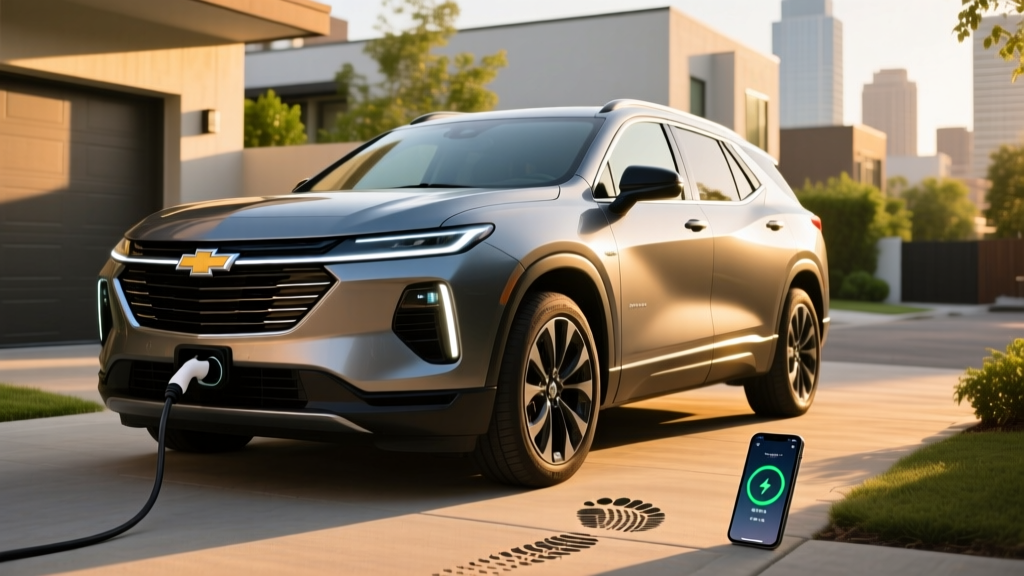
The Traverse EV is Chevrolet's upcoming three-row electric SUV built on GM's Ultium platform, targeting families who need space, range, and modern tech. Expected to arrive for the 2026 model year, it aims to compete directly with the Kia EV9, Hyundai Ioniq 9, and Rivian R1S. If you need three rows, want over 300 miles of EPA-estimated range, and can charge at home, the Traverse EV should be on your shortlist — but real-world highway and cold-weather range will likely fall 15–25% below the sticker, and public charging infrastructure remains a variable depending on your region.
What We Know: Traverse EV Specs and Preliminary Data
As of early 2026, Chevrolet has confirmed the Traverse EV will join its Ultium-based lineup alongside the Blazer EV, Equinox EV, and Silverado EV. While final EPA certification numbers are still pending for some trims, here is what GM has disclosed and what we can reasonably project based on the platform's architecture:
| Specification | Expected / Announced |
|---|---|
| Platform | GM Ultium (BTX) |
| Battery Capacity (usable) | ~102 kWh (est., NMC chemistry) |
| EPA Range (target) | 300–320+ miles (FWD); ~285–300 mi (AWD) |
| Motor Config | Single-motor FWD / Dual-motor AWD |
| Horsepower | ~290 hp (FWD); ~350+ hp (AWD est.) |
| 0–60 mph | ~7.0 sec (FWD); ~5.5 sec (AWD est.) |
| Max DC Fast Charge Rate | ~190–200 kW (peak) |
| 10–80% DC Charge Time | ~30 minutes (est.) |
| Level 2 (AC) Charge Rate | 11.5 kW / ~34 mi/hr |
| Connector | NACS (native Tesla Supercharger access) |
| Seating | 3 rows / up to 7 passengers |
| Towing Capacity | ~3,500–5,000 lbs (est., with trailering pkg) |
| Battery Warranty | 8 years / 100,000 miles |
| Starting MSRP (est.) | ~$48,000–$52,000 (base FWD) |
Note: Specs marked "est." are projected from GM's Ultium platform data and comparable models like the Blazer EV. Final EPA-certified figures will be confirmed closer to launch. Always verify at chevrolet.com before purchasing.
Real-World Range: What the EPA Sticker Won't Tell You
EPA Target: 300–320 miles
Expect in practice: ~255–280 miles on mixed highway driving at 70+ mph; ~220–250 miles in sub-freezing winter conditions with cabin heat.
Every EV buyer should internalize this: the EPA range estimate is a laboratory-derived combined cycle figure. It does not reflect sustained highway speeds, cold-weather battery performance, or aggressive driving. Based on real-world testing of similarly sized Ultium-platform vehicles like the Blazer EV, here is what you should plan for:
- City/suburban mixed driving (mild weather): You'll come close to or even slightly exceed the EPA number thanks to regenerative braking in stop-and-go traffic.
- Highway cruising at 70–80 mph: Expect a 12–18% reduction. Aerodynamic drag dominates at speed, and a large three-row SUV has the frontal area to show it.
- Cold weather (below 32°F): Lithium-ion batteries lose efficiency in the cold, and cabin heating draws significant power. Plan for 20–30% range loss unless the Traverse EV includes a heat pump (GM has been adding these to newer Ultium models — confirm at purchase).
- Towing: If you hitch up a trailer, cut your range roughly in half. This is physics, not a Chevy problem — every EV suffers similarly.
The practical takeaway: if your daily commute is under 60 miles round-trip and you charge at home, range is a non-issue. If you regularly drive 250+ miles one-way, you'll need to plan DC fast-charging stops.
Charging the Traverse EV: Home and Public Networks
Understanding charging is where most first-time EV buyers get overwhelmed. Here's the framework:
| Level | Power | Miles Added per Hour | Use Case |
|---|---|---|---|
| Level 1 (120V outlet) | ~1.4 kW | ~4 mi/hr | Emergency / overnight top-up only |
| Level 2 (240V home) | 11.5 kW | ~34 mi/hr | Daily home charging — full charge in ~9 hrs |
| DC Fast Charge | Up to ~200 kW | ~180+ mi in 20 min | Road trips — 10–80% in ~30 min |
Home Charging Setup Costs
Most Traverse EV owners will want a Level 2 home charger. Here's a realistic cost breakdown:
| Item | Cost Range |
|---|---|
| Level 2 charger hardware (e.g., ChargePoint Home Flex, Wallbox Pulsar Plus) | $400–$700 |
| Electrician labor (240V/50A circuit run) | $500–$2,000 |
| Electrical panel upgrade (if needed, 100A → 200A) | $1,500–$3,500 |
| Permit & inspection | $50–$250 |
| Total (typical install, no panel upgrade) | $950–$2,950 |
| Total (with panel upgrade) | $2,450–$6,450 |
Important: Have a licensed electrician evaluate your panel before purchasing. Older homes with 100-amp service may not support a 50-amp EV circuit without an upgrade. This is the single most overlooked cost in EV ownership planning.
Public DC Fast Charging and the NACS Advantage
The Traverse EV will ship with a native NACS (North American Charging Standard) port, meaning direct access to Tesla's Supercharger network — now the largest and most reliable DC fast-charging network in the U.S. with over 25,000 stalls. You'll also have access to Electrify America, EVgo, and other networks via adapters or native compatibility.
At a 200 kW-capable DC fast charger, the Traverse EV's ~102 kWh battery should charge from 10% to 80% in roughly 30 minutes. However, understand the charge curve: peak charging speed (up to ~200 kW) is only sustained at lower states of charge (roughly 10–40%). Above 60% SoC, the rate tapers significantly to protect battery health. This is why we quote 10–80% times rather than "full charge" times — charging past 80% on DC is painfully slow and generally unnecessary for road trips.
Traverse EV vs. Gas Traverse vs. Kia EV9: Cost Comparison
The most common question family SUV buyers ask: does going electric actually save money? Let's run the numbers against the gas-powered Chevrolet Traverse and the segment-leading Kia EV9.
| Metric | 2026 Traverse EV (AWD est.) | 2025 Gas Traverse (AWD) | 2025 Kia EV9 (AWD) |
|---|---|---|---|
| Starting MSRP | ~$52,000 | ~$41,000 | ~$59,900 |
| Fed. Tax Credit (§30D) | Up to $7,500* | $0 | Up to $7,500* |
| Effective Starting Price | ~$44,500 | $41,000 | ~$52,400 |
| Fuel/Energy Cost per Mile | ~$0.04–$0.06 (home) | ~$0.16–$0.20 (gas) | ~$0.04–$0.06 (home) |
| Annual Fuel/Energy (15k mi) | ~$600–$900 | ~$2,400–$3,000 | ~$600–$900 |
| EPA Range / Tank | ~300 mi | ~440 mi (22 mpg × 20 gal) | ~270–300 mi |
| Maintenance (annual est.) | ~$200–$400 | ~$600–$1,000 | ~$200–$400 |
*§30D tax credit eligibility depends on MSRP caps ($80,000 for SUVs), buyer income limits ($300k MFJ / $150k single), and battery critical-mineral/component sourcing requirements. Credits can now be transferred at point of sale as an instant discount. Verify current eligibility at irs.gov.
5-Year Total Cost of Ownership Snapshot
| Cost Category | Traverse EV (est.) | Gas Traverse |
|---|---|---|
| Purchase (after credit) | $44,500 | $41,000 |
| Energy/Fuel (5 yrs, 15k mi/yr) | $3,000–$4,500 | $12,000–$15,000 |
| Maintenance (5 yrs) | $1,000–$2,000 | $3,000–$5,000 |
| Insurance (5 yrs, est.) | $9,000–$12,000 | $7,500–$10,000 |
| Home Charger Install | $1,500–$3,000 | $0 |
| Depreciation (est. 5-yr) | $18,000–$22,000 | $15,000–$19,000 |
| Estimated 5-Yr Total | $77,000–$88,000 | $78,500–$90,000 |
The math is tight. The Traverse EV's higher upfront cost is offset within 3–5 years by dramatically lower energy and maintenance expenses — especially if you qualify for the full §30D credit and charge primarily at home on off-peak electricity rates. Insurance tends to run 10–20% higher for EVs due to repair cost structures, which narrows the gap.
Common Traverse EV Misconceptions — Addressed with Data
| Myth | Fact |
|---|---|
| "EV batteries need replacing every few years and cost $20,000." | GM's Ultium batteries carry an 8-year/100,000-mile warranty guaranteeing minimum 70% capacity retention. Real-world degradation data from similar GM Ultium packs shows ~5–8% loss over 100k miles. A full replacement, if ever needed out of warranty, would likely cost $12,000–$18,000 — but most packs outlast the vehicle. |
| "There aren't enough chargers for road trips." | With NACS access to 25,000+ Tesla Superchargers plus Electrify America and EVgo networks, most interstate corridors have DC fast chargers every 50–80 miles. Rural routes in the Mountain West and Plains states remain thinner — plan accordingly using A Better Route Planner or PlugShare. |
| "The Traverse EV won't handle cold winters." | Cold reduces range 20–30%, but preconditioning (warming the battery while plugged in) mitigates charging-speed loss. GM's Ultium platform includes active thermal management. You'll still have 200+ usable winter miles — enough for most daily needs. |
| "I need a $7,500 tax credit to make this work." | Even without the credit, the per-mile energy savings (~$0.05 vs ~$0.18 for gas) saves $1,500–$2,100 annually at 15,000 miles. The credit accelerates payback but isn't the sole financial argument. |
| "Charging takes too long." | At home on Level 2, you plug in when you arrive and wake up to a full battery — it takes zero active time. On road trips, a 25–30 minute DC fast charge every 2.5–3 hours aligns naturally with rest and food stops. |
First-Time EV Buyer Checklist: What You Must Know Before Purchasing
Buying the Traverse EV (or any EV) involves considerations that don't exist with gas vehicles. Work through this list before signing:
- Home charging access: Do you have a garage, driveway, or dedicated parking spot with access to a 240V outlet or the ability to install one? Without home charging, EV ownership becomes significantly less convenient and more expensive (public DC charging costs 2–4× more per kWh than home electricity).
- Electrical panel capacity: Get a licensed electrician to confirm your panel can handle a 50-amp dedicated circuit. Budget $1,500–$3,500 if an upgrade is needed.
- Daily driving pattern: If your round-trip commute is under 100 miles, any modern EV handles it effortlessly. If you regularly exceed 250 miles, confirm DC fast-charging availability along your route.
- Climate considerations: If you live where winters regularly drop below freezing, factor in 20–30% winter range loss. A garage helps — preconditioning works best when the car is plugged in.
- Tax credit eligibility: Check your modified adjusted gross income, the vehicle's MSRP against the $80,000 SUV cap, and current battery-sourcing requirements on irs.gov. The credit can be applied at point of sale as an instant price reduction.
- Insurance quotes: Get quotes before purchasing. EV insurance premiums run 10–20% higher on average due to specialized repair requirements and higher vehicle values.
- HOA and rental restrictions: If you live in a condo or HOA-governed community, confirm you can install a charger. Some states have "right to charge" laws; others don't.
Decision Framework: Should You Buy the Traverse EV?
Choose the Traverse EV if:
- You need three rows for family hauling and want zero tailpipe emissions
- You can install Level 2 charging at home
- Your daily driving is under 150 miles round-trip
- You qualify for the §30D tax credit (or your state offers additional EV incentives)
- You value access to the Tesla Supercharger network via NACS
- You want lower per-mile operating costs and less routine maintenance
Consider the gas Traverse or a PHEV alternative if:
- You have no viable home charging option and rely entirely on street parking
- You regularly tow heavy loads (trailers, boats) over long distances
- You frequently drive 400+ mile routes through rural charging deserts
- Your budget is strictly under $40,000 and you can't wait for the credit
- You live in an extreme cold climate (regularly below 0°F) and need maximum range certainty
Consider the Kia EV9 or Hyundai Ioniq 9 if:
- The Traverse EV's final pricing or specs don't meet your needs at launch
- You want a model that's already on sale and fully EPA-certified today
- You prioritize specific features (e.g., EV9's 800V ultra-fast charging architecture for ~18-minute 10–80% charges)
Frequently Asked Questions
When will the Chevy Traverse EV be available to buy?
GM has confirmed the Traverse EV for its Ultium lineup, targeting the 2026 model year. Exact on-sale dates vary by trim and region. Check chevrolet.com or your local dealer for the most current availability.
Will the Traverse EV qualify for the $7,500 federal tax credit?
It's expected to be eligible, but the §30D credit has strict requirements: the vehicle MSRP must not exceed $80,000 (SUV cap), the buyer's modified AGI must fall under $300,000 (married filing jointly) or $150,000 (single), and the battery must meet critical-mineral and component sourcing thresholds that tighten annually. The credit can be transferred to the dealer at point of sale for an instant price reduction. Always verify on fueleconomy.gov before purchasing.
How long does it take to charge the Traverse EV at home?
On a Level 2 (240V, 11.5 kW) home charger, a full charge from near-empty takes approximately 9 hours. Most owners plug in each evening and wake up to a full battery — it's more like charging a phone than fueling a car. On a standard 120V outlet (Level 1), expect ~4 miles of range per hour of charging, which is only practical for emergency use or very low-mileage drivers.
How does the Traverse EV compare to the gas Traverse in daily driving?
The EV delivers instant torque for confident merging, a near-silent cabin, and one-pedal driving via regenerative braking that reduces brake wear. You'll never visit a gas station for daily driving. The trade-off is reduced range certainty on long, cold, or towing-heavy trips where the gas Traverse's 440-mile range and 5-minute refueling remain advantages.
What happens if the battery degrades significantly?
GM's battery warranty covers 8 years or 100,000 miles with a minimum 70% capacity retention guarantee. If your battery falls below that threshold within the warranty period, GM will repair or replace it at no cost. Based on data from earlier Ultium and LG-sourced packs, most EV batteries lose only 5–10% capacity over 100,000 miles — far less than most buyers fear.
Can I use Tesla Superchargers with the Traverse EV?
Yes. The Traverse EV will come with a native NACS charge port, giving you direct access to Tesla's Supercharger network without an adapter. This is a significant advantage over CCS-equipped vehicles, as Superchargers consistently rank highest in reliability and availability among U.S. charging networks.