The Short Answer on the Chevy Tahoe EV
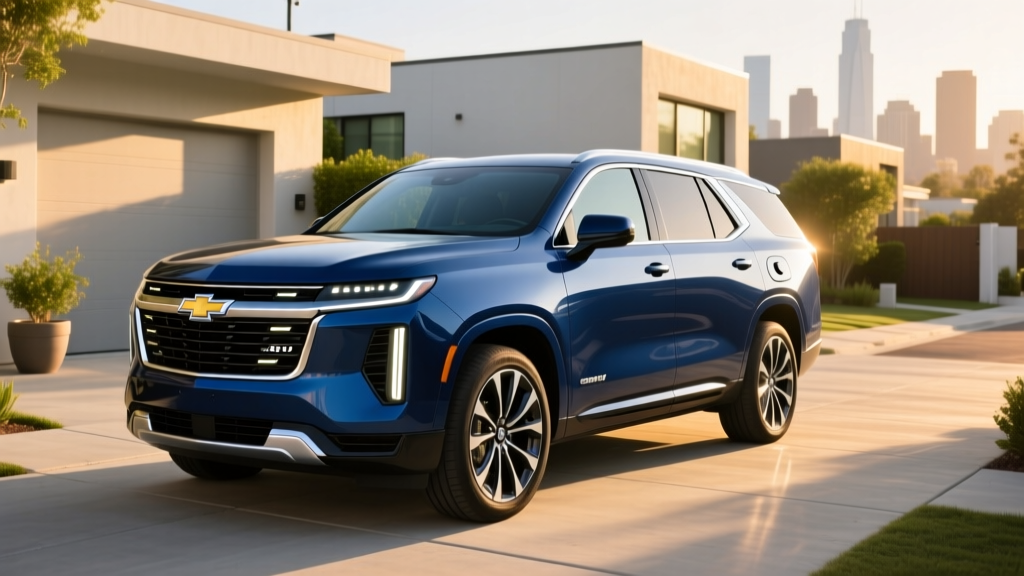
The 2026 Chevy Tahoe EV is the first full-size, body-on-frame electric SUV from Chevrolet, built on GM's BT1 electric truck platform (shared with the Silverado EV and Sierra EV). It targets buyers who need three-row seating, serious towing capacity, and over 300 miles of EPA-estimated range — but want to eliminate fuel stops and reduce maintenance. Expect a starting MSRP near $78,000, a usable battery pack around 200+ kWh, DC fast charging up to 350 kW, and a maximum towing rating up to 10,000 lbs when properly equipped. It is currently in production ramp-up for the 2026 model year.
What the Chevy Tahoe EV Actually Is (and Isn't)
The Chevy Tahoe EV is not a battery swap into the existing gas Tahoe's sheet metal. It's a ground-up electric vehicle riding on GM's dedicated BT1 platform — the same architecture underpinning the Chevrolet Silverado EV. That means a skateboard chassis with the battery pack integrated into the frame rails, dual-motor all-wheel drive availability, and a flat floor enabling more interior volume than the gas Tahoe's transmission tunnel allows.
GM confirmed the Tahoe EV alongside the Suburban EV, both slated for the 2026 model year with production at the Factory ZERO plant in Detroit-Hamtramck. The Tahoe EV is the shorter-wheelbase variant (three rows), while the Suburban EV stretches further for maximum cargo and legroom.
What it isn't: a budget family hauler. The Tahoe EV will compete in the premium full-size SUV segment against the Rivian R1S, the upcoming Tesla Model X refresh, and luxury offerings like the Cadillac Escalade IQ. Buyers cross-shopping a base gas Tahoe LT at ~$58,000 should expect a significant step up in entry price.
Range, Battery, and Charging: The Numbers That Matter
Full-size electric SUVs live or die by their range and charging speed. A 5,500+ lb vehicle pushing a brick-wall frontal area needs a massive battery to deliver credible highway miles. Here's what we know from GM's preliminary specifications and platform data:
| Specification | 2026 Chevy Tahoe EV (Preliminary) |
|---|---|
| Battery Chemistry | NMC (Nickel Manganese Cobalt) — Ultium pouch cells |
| Usable Battery Capacity | ~200 kWh (estimated, based on Silverado EV Max Range) |
| EPA-Estimated Range | ~320–350 miles (target; final EPA pending) |
| Real-World Highway Range | ~260–290 miles (70+ mph, moderate temps) |
| Cold-Weather Range (20°F) | ~220–260 miles (est. 25–30% reduction) |
| Peak DC Fast Charge Rate | Up to 350 kW (800V architecture) |
| 10–80% DC Fast Charge Time | ~25–30 minutes (estimated at 350 kW stall) |
| Level 2 Home Charging (240V) | Up to 19.2 kW onboard charger |
| Level 2 Full Charge Time | ~11–13 hours (0–100%) |
| Drivetrain | Dual-motor AWD (e4WD) available |
| Estimated Horsepower | Up to 655 hp (top dual-motor config) |
| 0–60 mph | ~4.5 seconds (est., dual-motor) |
| Max Towing Capacity | Up to 10,000 lbs (properly equipped) |
| Seating | 7–8 passengers (3 rows) |
Real-World Range Reality Check
The EPA sticker will likely read 320–350 miles, but full-size electric SUVs see significant range compression at highway speeds and in cold weather. On a 75 mph interstate run in 40°F weather with a roof box, plan for 220–250 miles between charges. The 200+ kWh battery is an advantage here — even with 30% cold-weather loss, you're still working with a large absolute number. Preconditioning the battery before DC fast charging is essential to hit peak 350 kW rates; without it, expect tapering that adds 5–10 minutes to your stop.
Charging curve note: Peak 350 kW is not sustained across the entire session. Like the Silverado EV, the Tahoe EV will likely hold peak rate from roughly 10–40% State of Charge (SoC), then step down progressively. A realistic average rate across a 10–80% session is closer to 200–250 kW, which is why the 10–80% time is ~25–30 minutes rather than the theoretical ~17 minutes at sustained peak.
Chevy Tahoe EV vs. Gas Tahoe: Cost and Efficiency Comparison
The most common question from full-size SUV buyers: does going electric actually save money on a vehicle this large? Let's run the numbers against the current gas-powered Chevy Tahoe with the 5.3L V8.
| Metric | 2026 Chevy Tahoe EV (AWD, est.) | 2025 Chevy Tahoe 5.3L V8 4WD |
|---|---|---|
| Base MSRP | ~$78,000 | ~$58,200 |
| EPA Efficiency | ~70–75 MPGe (est.) | 16 city / 20 hwy / 17 combined MPG |
| Energy Cost per Mile | ~$0.04–$0.06 (home L2, $0.14/kWh avg) | ~$0.18–$0.22 ($3.40/gal avg) |
| Annual Fuel/Energy (15,000 mi) | ~$600–$900 | ~$2,700–$3,300 |
| Annual Maintenance | ~$300–$500 | ~$800–$1,200 |
| 5-Year Fuel/Energy Cost | ~$3,000–$4,500 | ~$13,500–$16,500 |
| 5-Year Maintenance Cost | ~$1,500–$2,500 | ~$4,000–$6,000 |
| Federal Tax Credit (§30D) | Up to $7,500 (eligibility varies) | $0 |
The gas Tahoe costs roughly $0.19/mile in fuel alone at current national averages. The Tahoe EV on home Level 2 charging at $0.14/kWh costs approximately $0.05/mile — a 74% reduction in energy cost per mile. Over five years and 75,000 miles, that's roughly $10,000–$12,000 in fuel savings.
Add in reduced maintenance (no oil changes, no transmission fluid, far less brake wear thanks to regenerative braking), and the five-year operating savings reach $13,000–$16,000. That narrows the ~$20,000 MSRP gap substantially, though the EV still carries a higher upfront cost.
| 5-Year Ownership Cost | Tahoe EV (est.) | Gas Tahoe V8 |
|---|---|---|
| Purchase Price (after credit) | ~$70,500 | ~$58,200 |
| Energy/Fuel | ~$3,750 | ~$15,000 |
| Maintenance | ~$2,000 | ~$5,000 |
| Insurance (est.) | ~$12,000 | ~$9,500 |
| Estimated Depreciation | ~$28,000 | ~$22,000 |
| Total 5-Year Cost | ~$116,250 | ~$109,700 |
The total cost of ownership gap narrows to roughly $6,500 over five years, with the EV's higher insurance premiums and steeper depreciation (common for EVs in the current market) offsetting much of the fuel and maintenance savings. By year seven or eight, the EV likely breaks even or pulls ahead — assuming stable electricity rates and no major battery issues.
Federal Tax Credit and Incentive Eligibility
The IRS §30D Clean Vehicle Credit offers up to $7,500 for qualifying new EVs, but eligibility depends on several factors that change annually:
- MSRP Cap: SUVs must have an MSRP at or below $80,000. The Tahoe EV's base trim should qualify, but higher trims (High Country, Z71 with max-range battery) may exceed the cap.
- Buyer Income Limits: Modified AGI must not exceed $150,000 (single), $225,000 (head of household), or $300,000 (joint filers).
- Battery Component Sourcing: A percentage of battery components must be manufactured or assembled in North America (threshold increases annually through 2029).
- Critical Minerals: A percentage of critical minerals must be sourced from the U.S. or free-trade-agreement countries.
- Point-of-Sale Transfer: Buyers can transfer the credit to the dealer at purchase, reducing the sale price directly rather than waiting for a tax refund.
GM's Ultium batteries are manufactured in the U.S. (at plants in Ohio and Tennessee), which positions the Tahoe EV favorably for the battery-component requirement. However, critical-mineral sourcing rules tighten each year. Always verify current-year eligibility on the fueleconomy.gov tax credit page before purchasing.
Home Charging: What Tahoe EV Buyers Must Plan For
A 200+ kWh battery is a massive energy reservoir. Charging it at home requires serious electrical infrastructure. Here's what you need to know:
| Charging Level | Power (kW) | Miles Added per Hour | Full Charge Time (0–100%) |
|---|---|---|---|
| Level 1 (120V, 12A) | ~1.4 kW | ~3–4 miles/hr | ~60+ hours (impractical) |
| Level 2 (240V, 48A) | ~11.5 kW | ~28–32 miles/hr | ~18–20 hours |
| Level 2 (240V, 80A) | ~19.2 kW | ~45–50 miles/hr | ~11–13 hours |
| DC Fast (350 kW) | Up to 350 kW | ~800+ miles/hr (peak) | 10–80% in ~25–30 min |
The 80-amp Level 2 reality: To fully utilize the Tahoe EV's 19.2 kW onboard charger, you need a hardwired Level 2 station on a 100-amp dedicated circuit. Most homes have a 200-amp main panel — dedicating 100 amps to a single EV charger may require a panel upgrade to 400 amps or the installation of a secondary sub-panel, especially if you already have electric HVAC, an electric range, and a dryer.
| Item | Estimated Cost Range |
|---|---|
| Level 2 Charger (48A, hardwired) | $500–$800 |
| Level 2 Charger (80A, hardwired) | $700–$1,200 |
| Electrician Labor (standard install, 50-ft run) | $1,500–$3,000 |
| Panel Upgrade (200A → 400A, if needed) | $2,500–$5,000 |
| Permit & Inspection | $200–$500 |
| Total (no panel upgrade) | $2,200–$4,300 |
| Total (with panel upgrade) | $4,700–$9,700 |
For daily driving of 40–60 miles, a 48A Level 2 charger adding ~30 miles per hour of charging is sufficient — plug in overnight and you'll wake up fully charged. The 80A setup matters most for days when you arrive home nearly empty and need a full battery by morning, or for households with two EVs sharing one charger.
Apartment/condo dwellers: If you cannot install home charging, the Tahoe EV's 200+ kWh battery means fewer public charging sessions (once every 4–6 days for average commuters), but each session takes longer due to the large pack. Relying exclusively on public DC fast charging will cost roughly $0.35–$0.50/kWh at networks like Electrify America or EVgo, pushing your per-mile cost to $0.12–$0.18 — much closer to gas Tahoe fueling costs.
Common Misconceptions About Full-Size Electric SUVs
| Myth | Fact |
|---|---|
| "EV batteries won't last and cost $30,000 to replace." | GM's Ultium battery warranty covers 8 years / 100,000 miles with a capacity-retention threshold (typically 70%). Industry data shows most EV batteries retain 85–90% capacity at 100,000 miles. Full replacement is rare and costs are declining. |
| "The Tahoe EV can't tow anything real." | GM targets up to 10,000 lbs max towing. However, towing at max capacity will reduce range by 40–50%. A 5,000-lb trailer on the highway will likely yield 160–200 miles of range. Plan charging stops accordingly. |
| "You'll save $7,500 no matter what." | The §30D credit has income caps, MSRP caps, and sourcing requirements. Not every buyer or trim qualifies. Verify before signing. |
| "Electric SUVs are worse in winter." | Range drops 20–30% in sub-freezing temps, but AWD traction, instant torque, and no cold-start issues are advantages. Preconditioning while plugged in mitigates much of the range loss. |
| "Public charging is unreliable everywhere." | Reliability varies by network. Tesla Superchargers (now open to NACS-equipped GM vehicles) consistently post 95%+ uptime. Electrify America and ChargePoint have improved but remain inconsistent in rural areas. |
Decision Framework: Is the Chevy Tahoe EV Right for You?
Choose the Chevy Tahoe EV If:
- You have home charging access (garage or driveway with 240V circuit capability) — this is non-negotiable for cost-effective ownership.
- Your daily driving is under 80 miles round-trip, with occasional road trips of 200–300 miles where DC fast charging is available along your route.
- You need three-row seating and cargo volume but want to reduce your fuel and maintenance spend significantly.
- You plan to keep the vehicle 5+ years, allowing the operating savings to close the upfront price gap.
- You value instant torque, quiet highway cruising, and the ability to "refuel" while you sleep.
Stick With the Gas Tahoe (or Consider a Hybrid) If:
- You cannot charge at home and public charging infrastructure in your area is sparse.
- You regularly tow over 7,000 lbs on long trips — range while towing makes EV road trips stressful with current charging infrastructure.
- Your budget is firmly under $65,000 and you need a new full-size SUV now.
- You drive in extreme cold (below 0°F) frequently and your trips exceed 200 miles between charging options.
- You plan to sell or trade in within 3 years — higher EV depreciation may erase operating savings in a short ownership window.
First-Time EV Buyer Checklist for the Tahoe EV
- Get an electrician quote before ordering. Know your panel capacity and whether an upgrade is needed. Budget $2,200–$9,700 for home charging setup.
- Verify §30D eligibility. Check your income, the specific trim's MSRP, and current-year sourcing rules on IRS.gov.
- Download charging apps now. PlugShare, A Better Routeplanner (ABRP), and your preferred network's app (Tesla, Electrify America, EVgo) — learn the DC fast charging landscape on your most common routes.
- Insurance shop early. EV insurance premiums run 15–25% higher than gas equivalents for full-size SUVs. Get quotes before committing.
- Understand the charge curve. Don't plan road trips around "350 kW" peak speeds. Plan around 200–250 kW average rates and 25–30 minute stops every 200–250 miles.
- Set charging habits. For daily use, charge to 80% to preserve battery longevity. Use 100% only for road trips. NMC chemistry benefits from not sitting at full charge for extended periods.
Frequently Asked Questions
When will the Chevy Tahoe EV be available to buy?
GM has targeted the 2026 model year for Tahoe EV production, with the vehicle manufactured at Factory ZERO in Detroit-Hamtramck. Availability began as a production ramp-up — initial units reaching dealers in limited volumes. Check with local Chevrolet dealers for current inventory and allocation timelines.
How much does it cost to charge a Tahoe EV at home?
At the U.S. residential average of ~$0.14/kWh, fully charging a ~200 kWh battery from empty costs approximately $28. In practice, most owners charge 50–70% daily (adding 150–200 miles), costing $14–$20 per session. Over a year of 15,000 miles, expect $600–$900 in home electricity costs.
Will the Tahoe EV qualify for the $7,500 federal tax credit?
The base trim should fall under the $80,000 SUV MSRP cap, making it potentially eligible. However, buyer income limits, battery-sourcing requirements, and point-of-sale transfer rules all apply. Higher trims (High Country, fully loaded) may exceed the MSRP cap. Verify on fueleconomy.gov before purchasing.
How does towing affect the Tahoe EV's range?
Expect a 40–50% range reduction at maximum towing capacity (10,000 lbs). With a moderate 4,000–5,000 lb trailer at highway speeds, plan for roughly 180–220 miles of range. DC fast charging while towing requires planning — not all charging stations accommodate trailers without unhitching.
What's the battery warranty on the Chevy Tahoe EV?
GM provides an 8-year / 100,000-mile battery and powertrain warranty on its Ultium-based EVs, covering defects and excessive capacity degradation (typically defined as falling below 70% of original capacity). This is standard across the segment and matches competitors like Ford and Rivian.
Is the Tahoe EV self-driving?
No. The Tahoe EV will offer GM's Super Cruise (on compatible mapped highways) and potentially Ultra Cruise, both of which are SAE Level 2 driver-assistance systems. The driver must remain attentive, keep eyes on the road, and be prepared to take over at any time. These are not autonomous driving systems.