Quick Answer: The 2026 Chevy Suburban EV at a Glance
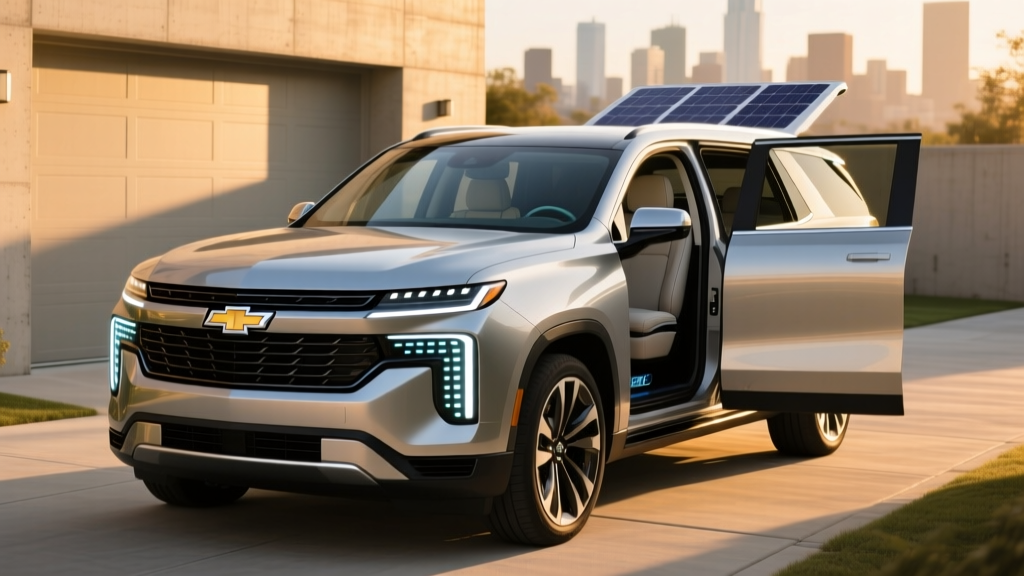
The 2026 Chevrolet Suburban EV is a full-size, three-row electric SUV built on GM's BT1 electric-truck platform (shared with the Silverado EV). As of the 2026 model year, it offers an EPA-estimated range of up to 460 miles on the Max Range variant, a usable battery capacity of approximately 200+ kWh, DC fast-charging at up to 350 kW (10–80% in roughly 30 minutes), and a starting MSRP near $79,900 for the 2LT trim. It qualifies for up to $7,500 in federal tax credits under IRS §30D when battery-sourcing and buyer-income requirements are met, transferable as a point-of-sale rebate. If you need three-row family hauling with serious range and can charge at home, it's one of the only full-size electric SUVs that competes with the gas Suburban on space — but it costs roughly $20,000 more up front and weighs over 9,000 lbs, which affects tire wear and efficiency in cold weather.
What the Chevy Suburban EV Actually Is (and Isn't)
Chevrolet introduced the Suburban EV as a 2026 model, filling a gap in GM's Ultium lineup between the three-row Blazer EV and the Silverado EV pickup. Unlike the gas Suburban, which rides on GM's body-on-frame T1 architecture, the Suburban EV uses the dedicated BT1 electric platform — the same skateboard underpinning the Silverado EV and GMC Sierra EV. That means a flat floor, a front trunk (frunk), and battery packaging beneath the cabin rather than a modified ICE chassis.
What it is not: a compact crossover pretending to be a family hauler. The Suburban EV keeps the nameplate's core promise — three usable rows, massive cargo volume, and 10,000+ lb towing capacity — while swapping the 5.3L V8 for dual electric motors. It's also not a robotaxi: the available Super Cruise is a SAE Level 2 driver-assistance system, meaning you must keep your eyes on the road and hands available to take over at all times.
SAE Level 2 — Not Self-Driving: Chevy's Super Cruise and the newer Ultra Cruise are Level 2 automated systems. They handle steering, acceleration, and braking on compatible roads, but the driver remains fully responsible. This is fundamentally different from Level 4 services like Waymo, which operate without any human driver.
Range, Battery, and Charging: The Numbers That Matter
The headline spec is range, and here the Suburban EV benefits from an enormous battery pack. GM offers two battery configurations for 2026:
| Specification | Standard Range (2LT) | Max Range (High Country) |
|---|---|---|
| Usable Battery Capacity | ~175 kWh (NMC) | ~200+ kWh (NMC) |
| EPA Range (Est.) | ~380 miles | ~460 miles |
| Real-World Highway (70 mph) | ~310–340 miles | ~370–410 miles |
| Cold-Weather Loss (20°F, highway) | ~25–35% reduction | ~25–35% reduction |
| Peak DC Fast Charge | 350 kW | 350 kW |
| 10–80% DCFC Time | ~28 minutes | ~32 minutes |
| Level 2 Home Charge (11.5 kW) | ~17 hours (full) | ~19 hours (full) |
| Miles Added per Hour (L2, 11.5 kW) | ~22 mi/hr | ~24 mi/hr |
EPA vs. Reality: The 460-mile EPA figure on the Max Range variant is impressive on paper, but real-world highway driving at 70+ mph typically yields 370–410 miles. In sub-freezing temperatures, expect a 25–35% reduction — so a Max Range Suburban EV in a Minnesota January might realistically deliver 300–320 highway miles. The Standard Range variant drops to roughly 250–270 miles in the same conditions. Always precondition the battery before DC fast-charging in cold weather to avoid severely reduced charge speeds.
Charging Curve Reality
The 350 kW peak charge rate is only sustained at low states of charge (roughly 10–30% SoC). As with all large NMC packs, the curve tapers significantly above 50% and steeply above 80%. A 10–80% session at a 350 kW-capable Electrify America or EVgo stall takes roughly 28–32 minutes, but charging from 80–100% can add another 25+ minutes. Plan road-trip stops around 10–80% sessions for maximum efficiency.
Cost Breakdown: Suburban EV vs. Gas Suburban
The most common buyer question is whether the electric Suburban saves money versus its gas sibling. The answer depends on your driving volume, electricity rate, and whether you qualify for the federal credit.
| Cost Category | Suburban EV (2LT) | Suburban Gas (LT) |
|---|---|---|
| Base MSRP | $79,900 | $60,100 |
| Federal Tax Credit (§30D) | −$7,500 (if eligible) | $0 |
| Effective Purchase Price | $72,400 | $60,100 |
| Fuel/Energy (75,000 mi, $0.14/kWh home avg, $3.50/gal gas) | $4,725 | $11,625 |
| Maintenance (5 yr) | ~$1,500 | ~$3,800 |
| Insurance (avg, 5 yr) | ~$12,500 | ~$10,800 |
| Estimated Depreciation (5 yr) | ~$28,000 | ~$22,000 |
| Total 5-Year Cost | ~$119,125 | ~$108,325 |
Key takeaway: The Suburban EV saves roughly $9,200 in fuel and maintenance over five years at 15,000 miles/year, but the higher purchase price, insurance premiums, and steeper projected depreciation mean the gas Suburban still wins on total 5-year cost by approximately $10,000–$11,000 unless you drive significantly more miles annually (20,000+), have access to very cheap electricity (under $0.10/kWh), or plan to keep the vehicle 8–10 years where the fuel savings compound further.
Federal Tax Credit Eligibility (§30D)
The 2026 Suburban EV may qualify for up to $7,500 under IRS §30D, but eligibility is not guaranteed. Requirements include:
- MSRP cap: SUVs must be under $80,000. The 2LT trim qualifies; the High Country Max Range likely exceeds the cap.
- Buyer income limits: AGI must not exceed $150,000 (single), $225,000 (head of household), or $300,000 (joint).
- Battery sourcing: Critical minerals and battery components must meet phased-in percentages from US/free-trade-agreement partners. GM has been aggressively re-shoring supply chains, but verify current-year compliance on the fueleconomy.gov credit lookup tool before purchasing.
- Point-of-sale transfer: As of 2024+, the credit can be transferred to the dealer as an upfront price reduction, effectively lowering your out-of-pocket cost at purchase.
Always confirm eligibility with your tax professional and the IRS tool in the year of purchase — rules have shifted annually since 2023.
Real-World Ownership: What First-Time EV Buyers Need to Know
Home Charging Is Non-Negotiable for This Vehicle
A 175–200+ kWh battery is enormous. On a standard 120V Level 1 outlet (~1.4 kW), you'd add roughly 3 miles of range per hour — meaning a full charge from near-empty would take over 5 days. A Level 2 home charger (240V, 48A/11.5 kW) is mandatory for practical daily ownership. Expect a home installation cost of $1,200–$3,500 for a hardwired Level 2 unit (including the ChargePoint Home Flex or Wall Connector), plus a potential $2,000–$5,000 panel upgrade if your home's electrical service is only 100A. Budget for 200A service minimum.
Towing and Payload: The Electric Penalty
GM rates the Suburban EV for up to 10,000 lbs of towing, competitive with the gas model. However, towing with any EV dramatically reduces range — expect a 40–55% reduction when pulling a heavy trailer at highway speeds. A 460-mile Max Range Suburban EV towing a 7,000 lb camper at 65 mph may realistically deliver only 200–250 miles between charges. For frequent heavy towing on long routes, the gas Suburban's refueling convenience remains a legitimate advantage.
Weight, Tires, and Maintenance
The Suburban EV's curb weight exceeds 9,000 lbs — roughly 3,000 lbs more than the gas version. This means faster tire wear (budget for replacement every 25,000–35,000 miles with EV-rated high-load tires at ~$350–$500 per corner), more brake dust from regen-assisted braking, and higher stress on suspension components long-term. However, you eliminate oil changes, transmission fluid, spark plugs, and exhaust-system maintenance.
Common Misconceptions About the Suburban EV
| Myth | Fact |
|---|---|
| "It can't tow as much as the gas Suburban." | GM rates it at 10,000 lbs — comparable to the gas 5.3L V8. Range drops significantly while towing, but capability is similar. |
| "The battery will need replacing in 5 years." | GM's Ultium battery warranty covers 8 years/100,000 miles with a capacity-retention threshold of 70%. NMC degradation data from the Ultium platform shows roughly 5–8% loss over the first 100,000 miles under normal use. |
| "It qualifies for the full $7,500 tax credit for everyone." | Credit eligibility depends on buyer AGI, MSRP cap ($80K for SUVs), and battery-sourcing rules. Higher trims may exceed the MSRP cap. Always verify on fueleconomy.gov. |
| "I can charge it on a regular wall outlet." | Level 1 (120V) adds ~3 miles/hour. With a 175+ kWh pack, that's impractical. A 240V Level 2 home charger is essential. |
| "Super Cruise means it drives itself." | Super Cruise is SAE Level 2 — you must remain alert and ready to take over. It is not autonomous driving. |
Decision Framework: Should You Buy the Suburban EV?
Choose the Chevy Suburban EV If:
- You have (or can install) a 240V Level 2 home charger and your daily driving is under 150 miles round-trip.
- You want a three-row electric SUV with genuine 300+ mile real-world range and don't want to compromise on cargo space.
- You qualify for the §30D federal credit and can take it as a point-of-sale reduction, bringing the effective price closer to $72,000.
- You value instant torque, quiet operation, and the frunk for gear storage.
- You plan to keep the vehicle 7+ years, allowing fuel and maintenance savings to offset the higher purchase price.
Stick With the Gas Suburban (or Wait) If:
- You regularly tow over 5,000 lbs on trips longer than 200 miles — the range penalty and charging logistics are significant.
- You live in an apartment or lack reliable home charging access, and your area has sparse DC fast-charging infrastructure.
- You live in a very cold climate (sustained sub-20°F winters) and need consistent 350+ mile range year-round.
- Your budget is strictly under $65,000 and you don't qualify for the federal credit due to income limits.
- You need maximum third-row and cargo space today — the EV platform's battery packaging slightly reduces under-floor storage versus the gas model.
2026 Chevy Suburban EV vs. Competitors
The full-size electric SUV segment is thin but growing. Here's how the Suburban EV stacks up against the closest alternatives:
| Spec | Chevy Suburban EV | Rivian R1S (Dual-Motor Max) | Tesla Model X (Long Range) |
|---|---|---|---|
| EPA Range | ~460 mi (Max Range) | ~410 mi | ~348 mi |
| Battery (Usable) | ~200+ kWh | ~149 kWh | ~100 kWh |
| Peak DCFC | 350 kW | 220 kW | 250 kW |
| 10–80% Time | ~32 min | ~39 min | ~30 min |
| Third Row | Yes (adult-capable) | Yes (best for kids) | Yes (tight for adults) |
| Towing Capacity | 10,000 lbs | 7,700 lbs | 5,000 lbs |
| Starting MSRP | ~$79,900 | ~$89,900 | ~$81,630 |
| Federal Credit | Up to $7,500 | Up to $7,500 | Up to $7,500 |
The Suburban EV's main advantage is the combination of class-leading range, genuine adult-sized third row, and 10,000-lb towing. The Rivian R1S is more off-road capable but has less range and a smaller third row. The Tesla Model X charges quickly on the Supercharger network but trails on range, towing, and interior space.
Frequently Asked Questions
How long does it take to charge the Chevy Suburban EV at home?
On a 240V Level 2 charger delivering 11.5 kW, expect roughly 17–19 hours for a full 0–100% charge depending on the battery variant. In practice, most owners charge from 20–80% overnight (about 9–11 hours), which is sufficient for daily driving needs. A 48-amp hardwired charger is recommended; a 40-amp plug-in unit (NEMA 14-50) will be slightly slower.
Does the Suburban EV come with NACS or CCS?
GM has adopted the NACS (Tesla-style) connector as its standard for all 2025+ Ultium-based EVs. The 2026 Suburban EV ships with a native NACS charge port, giving it access to Tesla Supercharger stalls (with V4 and newer posts that support non-Tesla vehicles) as well as Electrify America, EVgo, and other networks that have added NACS cables. No adapter is needed for NACS stations.
What is the battery warranty on the Suburban EV?
GM covers the Ultium battery pack for 8 years or 100,000 miles (whichever comes first) against defects and capacity loss below 70% of original capacity. This is consistent with industry norms and federally mandated minimums for emissions-related components, which EV batteries qualify under.
Will the Suburban EV fit in my garage?
The Suburban EV's exterior dimensions are roughly similar to the gas Suburban: approximately 225 inches long, 81 inches wide (without mirrors), and 76 inches tall. If your garage accommodates a current-generation gas Suburban, the EV should fit — but confirm height clearance if you have a low door header, as the EV sits slightly taller due to the battery pack and available air suspension at ride height.
Is the Suburban EV good in snow and cold weather?
It features standard all-wheel drive (dual-motor) with sophisticated traction control, and GM includes a heat pump for cabin heating efficiency. However, expect a 25–35% range reduction in sustained sub-freezing temperatures, particularly on highway trips. Preconditioning the battery while plugged in before departure mitigates some of this loss and improves regenerative braking performance.
How does insurance cost compare to the gas Suburban?
EV insurance premiums typically run 15–25% higher than equivalent gas vehicles due to higher repair costs, specialized parts, and the vehicle's greater replacement value. Budget approximately $2,500/year for the Suburban EV versus ~$2,160/year for the gas LT — though rates vary significantly by state, driving record, and insurer.
Sources: Chevrolet Suburban EV Configurator, fueleconomy.gov (EPA), IRS §30D Clean Vehicle Credits. Specifications listed are based on announced/preliminary 2026 model-year data and are subject to change. Verify final EPA ratings and tax-credit eligibility at time of purchase.