The Short Answer on the Chevy Spark Electric Car
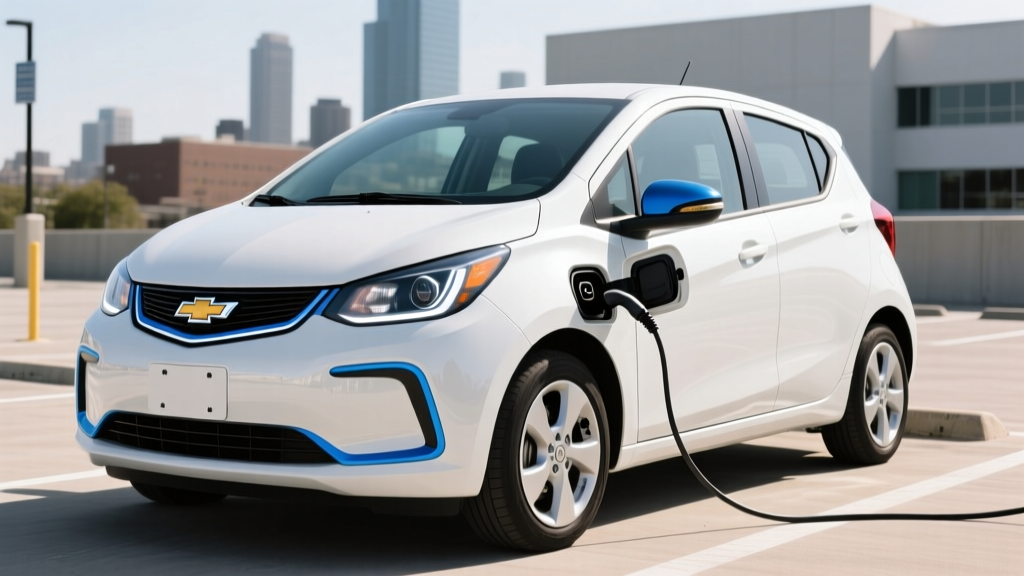
The Chevrolet Spark EV was a compliance electric vehicle sold exclusively in California and Oregon from the 2014 to 2016 model years. It is no longer in production, so you will only find it on the used market. The Spark EV delivers an EPA-rated 82 miles of range from its 19 kWh usable battery (2014) or 90 miles from its revised 19 kWh LG Chem pack (2015–2016). Peak DC fast charging tops out at roughly 50 kW on CCS, reaching 80% in about 30 minutes. Expect to pay between $6,000 and $11,000 for a used example in 2026, depending on mileage and battery state of health. It remains one of the cheapest ways into EV ownership — but only if your daily commute stays under 50 miles round-trip and you have reliable home charging.
Spark EV Specs: What You're Actually Getting
Before we get into ownership economics, here are the hard numbers that define this car. The Spark EV went through one mid-cycle battery revision, and the difference matters on the used market.
| Specification | 2014 Model Year | 2015–2016 Model Year |
|---|---|---|
| EPA Range | 82 miles | 90 miles |
| Battery (usable) | ~19 kWh (A123 Systems LFP) | ~19 kWh (LG Chem NMC) |
| Motor Output | 130 hp / 400 lb-ft torque | 130 hp / 400 lb-ft torque |
| 0–60 mph | ~7.6 seconds | ~7.2 seconds |
| EPA Efficiency | 119 MPGe (28 kWh/100mi) | 119 MPGe (28 kWh/100mi) |
| DC Fast Charge (peak) | ~50 kW (CCS Combo) | ~50 kW (CCS Combo) |
| 10–80% DCFC Time | ~30 minutes | ~30 minutes |
| Level 2 Charge Rate | 3.3 kW onboard | 3.3 kW onboard |
| Level 2 Full Charge | ~6–7 hours | ~6–7 hours |
| Cargo Volume | 9.6 cu ft (rear seats up) | 9.6 cu ft (rear seats up) |
| Original MSRP (base) | ~$27,170 (before incentives) | ~$26,685 (before incentives) |
| 2026 Used Price Range | $6,000–$10,000 | $7,500–$11,000 |
The 2014 model's A123 lithium iron phosphate (LFP) pack is heavier but tends to degrade more gracefully. The 2015–2016 LG Chem NMC pack is lighter and delivers slightly more range, though NMC chemistry is more sensitive to sustained high-state-of-charge storage and extreme heat. Neither pack is liquid-cooled — both rely on passive and fan-based thermal management, which matters for hot-climate buyers.
Real-World Range: The EPA Sticker vs. Your Actual Commute
EPA Sticker: 82 mi (2014) / 90 mi (2015–2016)
Real-World Expectation in 2026: 55–75 miles, depending on battery degradation, climate, and driving style.
These numbers require context. The Spark EV's battery is now 10–12 years old. Lithium-ion packs lose capacity over time and with charge cycles. Based on owner reports and typical degradation curves for passively cooled packs of this era, expect a 2014–2016 Spark EV to retain roughly 75–88% of its original capacity by 2026 — that translates to approximately 60–75 usable miles on a 2015–2016 model in moderate weather.
Cold weather compounds this. At 30°F, range drops an additional 20–30% because the cabin heater draws heavily from a small battery and there is no heat pump. A 70-mile real-world range in summer can easily become 45–50 miles on a cold winter morning. Highway driving at 70+ mph also cuts range significantly — the Spark EV's boxy shape and narrow tires aren't optimized for high-speed efficiency.
Practical rule: If your round-trip commute is 50 miles or less and you can charge at home every night, the Spark EV works. If you regularly need 70+ miles between charges, look at a used Chevrolet Bolt EV (238–259 EPA miles) instead.
Charging: What to Expect at Home and on the Road
| Charging Level | Power | Miles Added per Hour | Notes |
|---|---|---|---|
| Level 1 (120V household) | ~1.2 kW | ~4–5 miles/hr | Full charge in ~17–20 hours; fine for overnight top-ups |
| Level 2 (240V, 16A) | 3.3 kW | ~12–14 miles/hr | Full charge in ~6–7 hours; the Spark's onboard charger caps at 3.3 kW |
| DC Fast Charge (CCS) | Peak ~50 kW | ~100+ miles/hr (to 80%) | 10–80% in ~30 min; tapers sharply above 80%; 50 kW peak is not sustained |
The Spark EV's 3.3 kW onboard charger is a real limitation. Even if you plug into a 7.2 kW or 11.5 kW public Level 2 station, the car will only accept 3.3 kW. That means a full charge always takes 6–7 hours regardless of the station's capability.
For DC fast charging, the Spark EV uses the CCS Combo 1 connector. The ~50 kW peak rate is modest by 2026 standards (modern EVs hit 150–350 kW), but it's adequate for the small battery — you can add roughly 50–60 miles of range in a 25-minute session. The charge curve tapers steeply above 80% state of charge, so plan your fast-charging stops around the 10–80% window for the best time efficiency.
Home charging cost: If your utility charges $0.14/kWh (national average per the U.S. EIA), a full 19 kWh charge costs about $2.66. That's roughly $0.04 per mile — compared to $0.12–$0.15 per mile in a 30 MPG gas car at $3.50/gallon.
Ownership Costs: Spark EV vs. Gas Subcompact vs. Used Bolt EV
Let's put real numbers behind the purchase decision. Below is a 5-year cost projection comparing a used Spark EV against a comparable used gas subcompact (e.g., 2016 Honda Fit) and a used 2017 Chevrolet Bolt EV. Assumptions: 12,000 miles/year, $0.14/kWh electricity, $3.50/gallon gas, home Level 2 charging available.
| Cost Category (5 Years) | Used Spark EV (2015) | Used Gas Subcompact | Used Bolt EV (2017) |
|---|---|---|---|
| Purchase Price | $8,500 | $9,000 | $13,000 |
| Fuel/Energy (60,000 mi) | $2,280 | $7,000 | $2,520 |
| Maintenance | $1,200 | $3,500 | $1,400 |
| Insurance (avg) | $5,500 | $5,000 | $6,000 |
| Home Charger Install | $800–$1,500 | $0 | $800–$1,500 |
| Estimated Battery Replacement Reserve | $0–$4,000* | $0 | $0–$2,000* |
| 5-Year Total (approx.) | $18,280–$22,980 | $24,500 | $23,720–$24,420 |
*Battery replacement reserve: The Spark EV's battery is the highest-risk component on a 10+ year-old EV. A replacement or refurbishment, if needed, can run $3,000–$5,000 from independent shops. The Bolt's larger, liquid-cooled pack has shown better long-term durability. Factor this risk into your budget.
The Spark EV wins on fuel savings — roughly $4,700 less than the gas car over 5 years. But the potential battery replacement cost is the wildcard that can erase those savings. This is why a pre-purchase battery health check is non-negotiable (more on that below).
Tax Credits and Incentives: What Applies in 2026
When new, the Spark EV qualified for a $7,500 federal tax credit. That credit is no longer available for new purchases because the vehicle is discontinued. However, the used EV tax credit (IRS §25E) may apply if you buy from a licensed dealer:
- Credit amount: 30% of the sale price, up to a maximum of $4,000
- Vehicle price cap: Sale price must be $25,000 or less (easily met by the Spark EV)
- Buyer income limits: AGI ≤ $75,000 (single), $112,500 (head of household), $150,000 (joint)
- Vehicle age requirement: Must be at least 2 model years old (all Spark EVs qualify)
- Dealer requirement: Must purchase from a licensed dealer who reports the sale to the IRS
- Point-of-sale transfer: You can elect to transfer the credit to the dealer at purchase, reducing your upfront cost
- Frequency limit: One used-EV credit per taxpayer every 3 years
At an $8,500 purchase price, the 30% credit would be $2,550 — bringing your effective cost down to roughly $5,950. Verify current eligibility rules at IRS.gov's used clean vehicle credit page, as requirements can shift.
Common Misconceptions About the Spark EV
| Myth | Fact |
|---|---|
| "It has 82–90 miles of range." | That was the EPA rating when new. A 10-year-old pack will deliver 55–75 real-world miles depending on degradation, temperature, and driving style. |
| "It charges fast at any Level 2 station." | The onboard charger is capped at 3.3 kW. A 48-amp Level 2 station won't charge it any faster than a 16-amp unit. |
| "The battery will need replacing soon." | Not necessarily — but it's a real risk. LFP packs (2014) tend to age better than NMC (2015–2016). Demand a battery state-of-health reading before purchase. |
| "It qualifies for the $7,500 federal tax credit." | The new-vehicle §30D credit no longer applies. The used-vehicle §25E credit (up to $4,000) may apply if you meet income requirements and buy from a dealer. |
| "It's a great road-trip car." | With 55–75 real-world miles and 50 kW DC charging, highway trips require careful planning and frequent 30-minute stops. It's a city commuter, not a road-tripper. |
| "Any mechanic can fix it." | High-voltage system repairs require EV-certified technicians. Independent EV shops exist, but dealer support for a discontinued model can be slow. Check local service availability before buying. |
Decision Framework: Should You Buy a Used Chevy Spark EV?
Buy the Spark EV If:
- Your daily round-trip commute is under 50 miles
- You have reliable Level 2 home charging (garage or driveway with 240V access)
- You want the lowest possible entry price into EV ownership
- You live in a mild climate (minimal cold-weather range loss)
- You have a second vehicle for longer trips
- You can verify battery state of health at 80%+ before purchase
Look Elsewhere If:
- Your daily driving exceeds 60 miles round-trip
- You rely exclusively on public charging (3.3 kW Level 2 and 50 kW DCFC are slow by 2026 standards)
- You live in a region with harsh winters (passive thermal management + resistive heating = major range loss)
- You cannot install a Level 2 charger at home
- You need cargo space or rear-seat room for adults (9.6 cu ft cargo, tight back seat)
- You want modern ADAS features (the Spark EV has basic stability control and airbags — no adaptive cruise, lane-keep, or automatic emergency braking)
Consider These Alternatives Instead
If the Spark EV's limitations give you pause, these used EVs offer more range and modern features at higher but still accessible price points:
- 2017–2019 Chevrolet Bolt EV: 238 EPA miles, 55 kW DCFC (2017–2019) or 55 kW with improved thermal management (2020+), liquid-cooled 60 kWh pack. Used price: $12,000–$18,000.
- 2018–2020 Nissan LEAF (40 kWh): 151 EPA miles, CHAdeMO DCFC. Note: passive air-cooled battery — similar thermal concerns to the Spark. Used price: $10,000–$16,000.
- 2020–2022 Hyundai Kona Electric: 258 EPA miles, 75 kW DCFC, liquid-cooled 64 kWh pack. Used price: $18,000–$24,000.
Pre-Purchase Checklist: Protecting Your Investment
If you've decided the Spark EV fits your needs, take these steps before handing over cash:
- Get a battery state-of-health (SoH) reading. Use an OBD-II scanner with EV capability (e.g., OBDLink MX+ with the LeafSpy-equivalent app for GM vehicles, or have a dealer pull the data). Look for 80%+ capacity retention. Below 75%, negotiate the price down by at least $2,000 to cover potential refurbishment.
- Check for open recalls. Search the VIN at NHTSA.gov. The Spark EV had recalls related to the charging system and airbag modules — confirm all recall work was completed.
- Inspect the charge port and CCS inlet. Look for corrosion, melted pins, or loose connections. Replacement charge ports for discontinued models can be difficult to source.
- Test DC fast charging. Visit a CCS-equipped DCFC station and confirm the car initiates a session and pulls close to its ~50 kW peak. A car that refuses DCFC or caps at 20 kW likely has battery cell imbalance issues.
- Verify service availability. Call your nearest Chevrolet dealer and ask if their service department has technicians certified for high-voltage work on the Spark EV specifically. If not, identify an independent EV shop within 30 miles.
- Review the vehicle's charging history. Frequent DC fast charging on a passively cooled pack accelerates degradation. Ask the seller about their charging habits — predominantly Level 1/Level 2 home charging is ideal.
Frequently Asked Questions
Is the Chevy Spark EV still being made?
No. Chevrolet discontinued the Spark EV after the 2016 model year. It was replaced in spirit by the Chevrolet Bolt EV (2017–2023), which offered far more range and modern features. The only way to acquire a Spark EV in 2026 is through the used market.
How much does it cost to charge a Spark EV at home?
A full charge from empty to 100% uses approximately 19 kWh. At the national average electricity rate of $0.14/kWh, that's about $2.66 per full charge, or roughly $0.04 per mile driven. Compare that to a 30 MPG gas car at $3.50/gallon, which costs about $0.12 per mile — the Spark EV saves roughly $0.08 per mile on energy.
What happens if the battery dies on a used Spark EV?
Battery replacement is possible but expensive relative to the car's value. Independent EV battery shops can refurbish or replace the pack for $3,000–$5,000. Given that a used Spark EV costs $6,000–$11,000, a battery failure can total the vehicle economically. This is why verifying battery SoH before purchase is critical.
Can I road-trip in a Chevy Spark EV?
Technically yes, but it requires extensive planning. With 55–75 real-world miles and 30-minute DC fast-charge stops every ~60 miles, a 300-mile trip takes 6–7 hours including charging. Most owners use the Spark EV strictly as a city commuter and rely on a second vehicle or rental for longer trips.
Does the Spark EV qualify for any tax credits in 2026?
The original $7,500 new-vehicle credit (§30D) is no longer available. However, the used clean vehicle credit (§25E) may provide up to $4,000 (30% of sale price) if you purchase from a licensed dealer, the sale price is under $25,000, and your adjusted gross income falls within IRS limits. Check current rules at IRS.gov.
What's the difference between the 2014 and 2015–2016 Spark EV batteries?
The 2014 model uses an A123 Systems lithium iron phosphate (LFP) pack, which is heavier but generally degrades more slowly and tolerates high states of charge better. The 2015–2016 models switched to an LG Chem NMC (nickel manganese cobalt) pack that is lighter and provides slightly more range (90 vs. 82 EPA miles) but is more sensitive to heat and sustained full-charge storage. Both are passively cooled.
Is the Spark EV safe?
The Spark EV earned a 4-star overall rating from NHTSA (out of 5). It includes standard stability control, antilock brakes, and 10 airbags. However, it lacks any modern advanced driver-assistance systems — no automatic emergency braking, lane departure warning, or blind-spot monitoring. It is not an IIHS Top Safety Pick. For a city runabout, its safety record is acceptable; for highway-heavy driving, consider a newer vehicle with ADAS.