Quick Answer: Is a Chevy Spark an Electric Car?
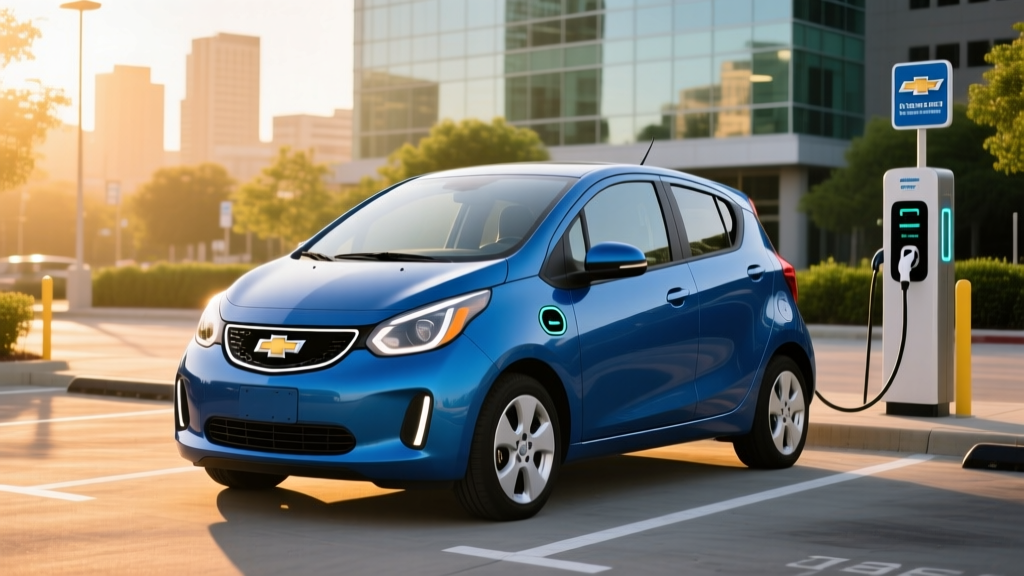
Yes — but only the Spark EV variant (2014–2016) was fully electric. The standard Chevrolet Spark sold from 2013 through 2022 was a gasoline-powered subcompact hatchback. GM produced the Spark EV as a battery-electric compliance car exclusively for the 2014, 2015, and 2016 model years, and only in select states (primarily California and Oregon). It featured a 21 kWh lithium-ion battery, an EPA-estimated 82 miles of range, and a 143-hp electric motor. GM discontinued the Spark EV after 2016 to focus on the Chevrolet Bolt EV. As of 2026, the Spark EV is only available on the used market, and the gasoline Spark was discontinued after the 2022 model year.
The Spark EV: Specs, Range, and What You're Actually Getting
If you're asking "is a Chevy Spark an electric car," you've likely encountered a listing or conversation about the Spark EV and want to know what you're dealing with. Here are the hard numbers for the 2014–2016 Spark EV, sourced from EPA fueleconomy.gov data:
| Spec | Value |
|---|---|
| EPA Range | 82 miles |
| Battery Capacity | 21.3 kWh (usable ~19 kWh) |
| Battery Chemistry | Lithium-ion (NMC) |
| Motor Output | 143 hp / 414 lb-ft torque |
| 0–60 mph | ~7.6 seconds |
| EPA Efficiency | 119 MPGe combined (28 kWh/100 mi) |
| DC Fast Charge (CCS) | Up to 50 kW (2015–2016 models) |
| Level 2 Charge Rate | 3.3 kW onboard charger |
| 10–80% DC Fast Charge | ~20 minutes (at 50 kW) |
| Level 2 Full Charge Time | ~6–7 hours |
| Original MSRP (2016) | ~$25,995 (before incentives) |
| Typical Used Price (2026) | $6,000–$10,000 |
Real-world range caveat: The EPA-rated 82 miles assumes mild conditions. In practice, expect 65–75 miles in cold weather (below 40°F) due to battery resistance and cabin heating draw. Highway driving at 70+ mph will also reduce range to roughly 60–70 miles because of the Spark EV's poor aerodynamics and small battery buffer. This is a city commuter, not a road-trip vehicle.
Spark EV vs. Gas Spark vs. Modern Budget EVs: A Cost Comparison
Understanding whether the Spark EV makes financial sense requires comparing it against both the gasoline Spark and modern affordable EVs available in 2026. Here's how the numbers stack up:
| Factor | Used Spark EV (2014–16) | Used Gas Spark (2016–22) | 2026 Chevy Equinox EV (base) |
|---|---|---|---|
| Purchase Price | $6,000–$10,000 | $8,000–$14,000 | ~$33,000 (after credit) |
| EPA Range / Tank | 82 mi | ~275 mi (9-gal tank) | 319 mi |
| Fuel/Energy Cost per Mile | ~$0.04 (home charging) | ~$0.12 ($3.50/gal, 30 MPG) | ~$0.04 (home charging) |
| Annual Fuel/Energy (12k mi) | ~$480 | ~$1,400 | ~$480 |
| Annual Maintenance | ~$300 | ~$650 | ~$300 |
| Federal Tax Credit | Up to $4,000 (used EV, §25E) | None | Up to $7,500 (§30D) |
| Battery Warranty Remaining | Likely expired (8yr/100k from 2014–16) | N/A | 8 yr / 100,000 mi |
The Spark EV's strongest advantage is its rock-bottom entry price. At $6,000–$10,000 on the used market, it's one of the cheapest ways to get into a fully electric vehicle. The IRS §25E used EV credit may provide up to $4,000 (30% of the sale price, capped at $4,000) if you buy from a licensed dealer, meet income limits ($75,000 single / $150,000 joint), and the vehicle sale price is under $25,000. That could bring your net cost to as low as $4,000–$6,000.
However, the expired battery warranty is a significant risk. GM's original battery warranty was 8 years/100,000 miles, meaning even a 2016 model's coverage ended in 2024. A replacement battery, if available, could cost $5,000–$8,000 — potentially more than the car is worth.
Real-World Ownership: Who Should (and Shouldn't) Buy a Spark EV
The Spark EV isn't a car for everyone. Its limitations are substantial, and buying one in 2026 requires honest self-assessment about your driving patterns and charging situation.
The Spark EV works if:
- You have Level 2 home charging. With a 3.3 kW onboard charger, a full charge from empty takes about 6–7 hours on Level 2. That's fine for overnight replenishment but means you can't top up quickly during the day at public Level 2 stations.
- Your daily commute is under 40 miles round-trip. With real-world range of 65–80 miles in good conditions, a 40-mile commute leaves a comfortable buffer. Anything longer risks range stress, especially in winter or on highways.
- You live in a mild climate. Cold weather (below freezing) can reduce the Spark EV's range by 25–35%, dropping it to 50–60 miles. The battery lacks active thermal management, relying on passive air cooling — a major limitation in both extreme heat and cold.
- This is a second or third household vehicle. As a dedicated city runabout for groceries, school drop-offs, and short commutes, the Spark EV excels. It's not viable as a sole vehicle for most households.
- You want the absolute lowest-cost entry to EV ownership. With used pricing under $10,000 and potential $4,000 tax credit, your net cost can be remarkably low, and your per-mile energy cost is roughly one-third that of gasoline.
The Spark EV does NOT work if:
- You rely exclusively on public charging. The 3.3 kW Level 2 acceptance rate means a public Level 2 charger adds only about 12–14 miles of range per hour. DC fast charging (50 kW on 2015–2016 models) helps, but the Spark EV's CCS port is incompatible with Tesla Superchargers, and 50 kW chargers are increasingly rare as networks deploy 150–350 kW hardware.
- You need more than 80 miles of daily range. There's no workaround — 82 EPA miles is what you get, less in real conditions.
- You frequently drive in extreme temperatures. Without active battery thermal management, degradation accelerates in hot climates, and winter range loss is severe.
- You want modern safety tech or infotainment. The 2014–2016 Spark EV predates automatic emergency braking, lane-keeping assist, Apple CarPlay (added in 2016 models only), and other features standard on modern EVs.
Common Spark EV Misconceptions: Myth vs. Fact
| Myth | Fact |
|---|---|
| "All Chevy Sparks are electric" | False. Only the Spark EV (2014–2016) is electric. The standard Spark (2013–2022) has a gasoline 1.4L engine. Look for the "Spark EV" badge, charge port on the front grille, and no exhaust pipe. |
| "The Spark EV can go 100+ miles" | No. EPA-rated range is 82 miles. Some owners report 90+ in ideal conditions (flat terrain, 55 mph, mild weather), but real-world driving typically yields 65–80 miles. |
| "It charges on Tesla Superchargers" | No. The Spark EV uses a CCS1 connector. Tesla Superchargers (NACS) are not compatible, even with adapters for non-Tesla vehicles, because the Spark EV's 50 kW max charge rate and older communication protocol limit compatibility with newer infrastructure. |
| "The battery will need immediate replacement" | Not necessarily. NMC batteries from this era typically retain 80–90% capacity after 8–10 years if not repeatedly fast-charged or deeply cycled. Check the state of health (SoH) via an OBD-II scanner and app like LeafSpy-compatible tools before buying. |
| "It qualifies for the $7,500 federal tax credit" | No. The §30D new EV credit is only for new vehicles. The Spark EV is only available used. However, the §25E used EV credit may provide up to $4,000 if purchased from a dealer for under $25,000 and you meet income requirements. |
| "It's basically a golf cart" | Wrong. With 143 hp and 414 lb-ft of instant torque, the Spark EV does 0–60 in ~7.6 seconds — quicker than many gasoline compact cars of its era. It's a legitimate highway-capable vehicle, just with limited range. |
Charging the Spark EV: What You Need to Know in 2026
Charging infrastructure has evolved significantly since the Spark EV was new. Here's how the car fits into the 2026 charging landscape:
| Level | Power (kW) | Miles Added per Hour | Full Charge Time | Notes |
|---|---|---|---|---|
| Level 1 (120V) | ~1.2 kW | ~4 mi/hr | ~18–20 hours | Emergency/trickle only |
| Level 2 (240V) | 3.3 kW (car-limited) | ~12 mi/hr | ~6–7 hours | Onboard charger caps at 3.3 kW even on 7.2+ kW stations |
| DC Fast (CCS) | Up to 50 kW | ~150 mi/hr (peak) | 10–80% in ~20 min | Only on 2015–2016 models with SAE Combo option; 2014 model is CHAdeMO |
Important connector note: The 2014 Spark EV came with a CHAdeMO DC fast-charge port (the same standard used by the Nissan Leaf). For 2015 and 2016, GM switched to CCS1. CHAdeMO infrastructure is rapidly disappearing in the US as networks standardize on CCS and NACS, making the 2014 model significantly less practical for DC fast charging. If DC fast charging matters to you, prioritize a 2015 or 2016 model.
Home charging cost: Installing a dedicated 240V Level 2 circuit typically costs $500–$1,500 (electrician labor, wiring, and a basic EVSE unit), assuming your electrical panel has sufficient capacity. Charging the Spark EV's ~19 kWh usable battery at the US average electricity rate of $0.16/kWh costs about $3.04 per full charge — roughly 3.7 cents per mile.
Decision Framework: Should You Buy a Spark EV in 2026?
Choose the Spark EV If:
- ✅ You need a sub-$10,000 EV as a second car for short city commutes
- ✅ You can install Level 2 charging at home and your daily driving is under 40 miles
- ✅ You live in a mild climate (rarely below 30°F or above 100°F)
- ✅ You want to test EV ownership with minimal financial commitment before upgrading
- ✅ You qualify for the §25E used EV credit (income under $75K single / $150K joint, dealer purchase under $25K)
Choose a Modern EV Instead If:
- ❌ You need 200+ miles of range for a single-vehicle household
- ❌ You rely on public charging and need fast, reliable DC charging on road trips
- ❌ You want an active battery warranty and modern safety features (AEB, lane assist)
- ❌ You live in an area with extreme temperatures and need active battery thermal management
- ❌ You want NACS/Tesla Supercharger access — the Spark EV cannot use this network
Better Alternatives to Consider:
- Used Chevy Bolt EV (2017–2023): 238–259 miles range, 60 kW DC fast charging, often $12,000–$18,000 used — dramatically more capable for a modest price increase
- Used Nissan Leaf (2018+): 149–226 miles range depending on battery, widely available, CHAdeMO charging (a drawback as networks shift)
- New 2026 Chevy Equinox EV: 319 miles range, ~$33,000 after federal credit, full modern safety suite and Supercharger-compatible NACS port
Frequently Asked Questions
Is the Chevy Spark still being made?
No. Chevrolet discontinued the gasoline Spark after the 2022 model year, and the electric Spark EV ended after 2016. GM replaced the Spark's role in its lineup with the Chevrolet Bolt EV and, more recently, the Equinox EV. You can only find Sparks (gas or electric) on the used market as of 2026.
How long does a Spark EV battery last?
The Spark EV's NMC lithium-ion battery was designed to retain approximately 80% of its original capacity over 8 years/100,000 miles (the original warranty threshold). Real-world data from owners suggests most Spark EVs retain 80–90% state of health at the 10-year mark, assuming moderate use and avoidance of repeated DC fast charging. However, as these vehicles age past warranty, a battery failure could mean a $5,000–$8,000 replacement cost that exceeds the car's value. Always check SoH before purchasing.
Can I charge a Spark EV at a Tesla Supercharger?
No. The Spark EV uses either CHAdeMO (2014) or CCS1 (2015–2016) connectors. Tesla Superchargers use the NACS connector, and even Tesla's Magic Dock adapter for non-Tesla vehicles requires CCS compatibility and communication protocols that the Spark EV's older hardware may not fully support. Plan to use Electrify America, EVgo, or ChargePoint CCS stations for DC fast charging.
Does the Spark EV qualify for any tax credits in 2026?
It does not qualify for the §30D new-vehicle credit (it's only available used). However, the §25E used clean vehicle credit may apply: up to $4,000 (30% of sale price) if you buy from a licensed dealer, the sale price is under $25,000, your modified adjusted gross income is under $75,000 (single) or $150,000 (joint), and the vehicle hasn't previously been claimed for the used credit after 2022. Verify current eligibility on IRS.gov, as rules can change.
What's the biggest risk of buying a used Spark EV?
The expired battery warranty combined with limited parts availability is the primary risk. If the battery degrades significantly or fails, the replacement cost ($5,000–$8,000) can total the vehicle economically. Additionally, as a low-volume compliance car, body panels, the onboard charger, and EV-specific components can be difficult to source. Buy from a private party or dealer who can provide battery health data, and factor in the risk of a costly repair with no warranty backstop.