Quick Answer: Is the Chevy Spark an Electric Car?
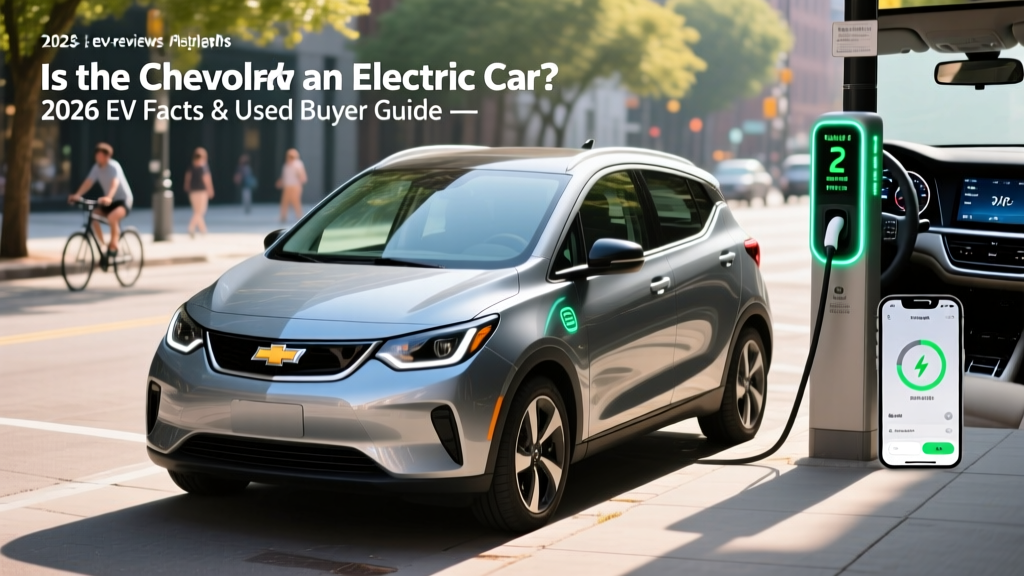
Yes — but only the Chevy Spark EV, produced from 2014 to 2016. The standard gasoline Chevy Spark (sold through 2022) is a conventional internal-combustion subcompact. The Spark EV was a fully electric battery vehicle (BEV) with an EPA-rated range of 82 miles and a 21 kWh battery pack. Chevrolet discontinued the Spark EV after the 2016 model year, so it is only available on the used market in 2026. If you're shopping for a new electric Chevy today, the closest affordable successor is the Chevrolet Equinox EV (EPA range up to 319 miles, starting around $33,600 MSRP).
Spark EV vs. Gas Spark: What Chevrolet Actually Built
Chevrolet sold two very different vehicles under the Spark nameplate. Understanding the distinction matters because used listings often blur the two together.
Gasoline Chevy Spark (2013–2022): A 1.4L four-cylinder subcompact hatchback rated at roughly 33 MPG combined by the EPA. This was one of the cheapest new cars on the U.S. market, with MSRPs starting around $13,000–$14,000. It has zero electric drivetrain components.
Chevy Spark EV (2014–2016): A battery-electric version built primarily to meet California's ZEV mandate. It featured a 141 hp (105 kW) electric motor and an LG Chem lithium-ion battery — 21.3 kWh usable in 2014, bumped to 19 kWh usable (from a 21 kWh gross pack) in the 2015–2016 refresh. The 2015+ model earned an EPA range rating of 82 miles and an efficiency of 119 MPGe combined per fueleconomy.gov.
| Specification | Spark EV (2015–2016) | Gas Spark (2016) |
|---|---|---|
| Powertrain | Battery-electric (BEV) | 1.4L I-4 gasoline |
| Horsepower | 141 hp (105 kW) | 98 hp |
| 0–60 mph | ~7.2 seconds | ~11.5 seconds |
| EPA Range / MPG | 82 miles / 119 MPGe | 33 MPG combined |
| Battery / Tank | ~19 kWh usable (LMO chemistry) | 9.0-gallon fuel tank |
| DC Fast Charge | SAE Combo (CCS), ~50 kW peak | N/A |
| Level 2 Charge (240V) | 3.3 kW onboard, ~7 hours 0–100% | N/A |
| Cargo Volume | 9.6 cu ft | 11.4 cu ft |
| Original MSRP (base) | ~$27,495 (before incentives) | ~$13,170 |
The Spark EV's LMO (lithium manganese oxide) battery chemistry was chosen for thermal stability and power density over energy density — which is why a 19 kWh pack could deliver strong acceleration but limited range. For context, a 2026 Chevrolet Equinox EV carries roughly 85 kWh usable, more than four times the Spark EV's capacity.
Real-World Range and Charging: What 82 EPA Miles Actually Means
The Spark EV's EPA sticker says 82 miles. In practice, expect less depending on conditions:
- City driving, moderate weather: 75–85 miles (regen braking helps in stop-and-go)
- Highway at 70 mph: 60–70 miles (aerodynamic drag crushes small-battery EVs)
- Cold weather (below 35°F): 50–60 miles — the Spark EV lacks a heat pump, relying on resistive cabin heating that draws directly from the traction battery
- With battery degradation (2026 reality): A 10-year-old lithium-ion pack may have lost 15–25% of original capacity. Many used Spark EVs now show 60–70 miles of usable range on a full charge in moderate conditions
Charging speed is another constraint. The Spark EV supports CCS DC fast charging at up to approximately 50 kW, which on paper takes the pack from 10–80% in roughly 25–30 minutes. However, the small battery means that 80% is only about 15 kWh — enough for maybe 55 real-world miles. The onboard Level 2 charger tops out at 3.3 kW, meaning a full home charge takes roughly 6–7 hours. Level 1 (120V) trickle charging adds about 3–4 miles per hour.
Cost Breakdown: Owning a Used Spark EV in 2026
The Spark EV's appeal in 2026 is almost entirely about price. Here's what ownership actually costs compared to a late-model gas subcompact.
| Cost Category | Spark EV (used) | Gas Spark (2018–2020) |
|---|---|---|
| Purchase Price (2026 used market) | $6,000–$9,000 | $9,000–$13,000 |
| Fuel / Electricity | ~$360/yr (home charging at $0.14/kWh) | ~$1,350/yr (33 MPG at $3.70/gal) |
| Maintenance | ~$250/yr (no oil, fewer brakes with regen) | ~$600/yr (oil, filters, plugs, brakes) |
| Insurance | ~$1,100/yr | ~$1,000/yr |
| Battery Replacement Risk | $5,000–$8,000 if needed (no warranty) | N/A |
| Annual Operating Total | ~$1,710 | ~$2,950 |
The Spark EV saves roughly $1,200–$1,400 per year in fuel and maintenance versus its gas counterpart if you charge at home. Over a 4-year ownership period, that's $4,800–$5,600 in savings. However, one battery replacement wipes out that advantage entirely — and a 2014–2016 Spark EV is well beyond Chevrolet's original 8-year/100,000-mile battery warranty.
Federal Tax Credit Reality
The Spark EV does not qualify for the §30D federal clean vehicle credit when purchased used under current IRS rules. The used EV credit (up to $4,000 or 30% of sale price, whichever is less) requires the vehicle to be at least two model years old — which the Spark EV satisfies — but also requires purchase from a licensed dealer, a sale price under $25,000, buyer income caps ($75,000 single / $150,000 joint), and the vehicle must not have been previously transferred after August 16, 2022 under certain conditions. Most Spark EVs trade privately or through independent lots, which may not qualify. Consult a tax professional and verify eligibility on irs.gov before assuming credit availability.
Spark EV vs. Modern Budget EVs: A 2026 Comparison
If you're considering a Spark EV, you're likely budget-conscious. Here's how it stacks up against affordable 2026 options — new and used.
| Vehicle | EPA Range | Battery (kWh usable) | DC Fast Charge (kW peak) | 10–80% Time | Approx. Price |
|---|---|---|---|---|---|
| Chevy Spark EV (2015–16) | 82 mi | ~19 kWh (LMO) | ~50 kW (CCS) | ~28 min | $6K–$9K (used) |
| Nissan Leaf S (2022–23 used) | 149 mi | 40 kWh (NMC) | 50 kW (CHAdeMO) | ~40 min | $14K–$18K (used) |
| Chevy Bolt EV (2022–23 used) | 259 mi | 65 kWh (NMC) | 55 kW (CCS) | ~55 min | $16K–$22K (used) |
| Hyundai Kona Electric (2024 new) | 261 mi | 64.8 kWh (NMC) | 100+ kW (CCS) | ~43 min | $32,975 (new MSRP) |
| Chevy Equinox EV LT (2026) | 319 mi | ~85 kWh (NMC) | ~150 kW (NACS) | ~30 min | $33,600 (new MSRP) |
The Spark EV is the cheapest EV you can buy in 2026 — but it's also the most range-limited. The used Chevrolet Bolt EV offers more than triple the range for roughly double the price, and it qualifies for the up-to-$4,000 used EV credit when purchased through a participating dealer. For most buyers, the Bolt is the smarter budget choice.
Common Misconceptions About the Chevy Spark and EVs
| Myth | Fact |
|---|---|
| "The current Chevy Spark is electric." | The gas Spark ended in 2022. The Spark EV ended in 2016. Chevrolet currently sells no Spark-badged vehicle. |
| "The Spark EV qualifies for the $7,500 federal tax credit." | The new-vehicle §30D credit applies only to new purchases. The Spark EV has been out of production for a decade. A used-EV credit of up to $4,000 may apply under strict conditions. |
| "82 miles of range is enough for anyone." | The average American drives ~37 miles/day (FHWA data), but a single longer trip, cold weather, or highway speeds can cut real range to 50–60 miles. One missed charge means a dead car. |
| "EV batteries always last 200,000 miles." | Modern LFP and NMC packs often exceed 150K–200K miles with minimal degradation. The Spark EV's older LMO chemistry is less proven at high mileage, and a decade of calendar aging degrades any lithium-ion cell regardless of miles driven. |
| "Charging an EV is always cheaper than gas." | Home charging at $0.12–$0.16/kWh is far cheaper. Public DC fast charging at $0.35–$0.50/kWh can approach or exceed gasoline cost-per-mile on a highway trip. |
Who Should (and Shouldn't) Buy a Spark EV in 2026
Decision Framework
Choose the Spark EV if:
- You need the absolute cheapest EV under $10,000 and accept the range trade-off
- Your daily round-trip commute is under 40 miles with predictable routes
- You have reliable Level 2 home charging (a 240V outlet or installed EVSE)
- You live in a mild climate (California, Arizona, Florida) where cold-weather range loss is minimal
- You want a second car strictly for local errands and already own a gas vehicle for longer trips
Skip the Spark EV and look at a used Bolt EV, Leaf, or Kona Electric if:
- You need more than 70 miles of real-world range on any given day
- You drive in cold winters (Minnesota, Michigan, New England)
- You lack home charging and would rely on public infrastructure
- You want modern safety tech — the Spark EV predates automatic emergency braking, lane-keeping assist, and adaptive cruise
- You want any remaining factory battery warranty coverage
First-Time EV Buyer Checklist
If the Spark EV is your introduction to electric vehicles, make sure you can check every box before signing:
- Home charging access: Do you have a garage or dedicated parking spot with a 240V outlet (NEMA 14-50 or 6-20)? A Level 2 home charger costs $500–$1,500 installed depending on panel capacity and run length.
- Battery health check: Request the vehicle's State of Health (SoH) reading. Many OBD-II dongles and apps (Leaf Spy for Nissan, Torque Pro with EV PIDs) can estimate remaining capacity. Walk away if SoH is below 75%.
- Charging connector compatibility: The Spark EV uses CCS1 for DC fast charging. By 2026, most public networks have CCS connectors, but Tesla Superchargers (now NACS) require an adapter that the Spark EV does not natively support.
- Insurance quotes: Get a quote before purchasing. Some insurers surcharge older EVs due to battery replacement cost risk.
- Plan your worst-case trip: Map the longest drive you'll realistically take. If it exceeds 60 miles one-way with no charging option at the destination, the Spark EV isn't viable as your only vehicle.
Frequently Asked Questions
Does Chevrolet still make the Spark EV?
No. The Spark EV was produced only for the 2014, 2015, and 2016 model years. The gasoline Spark continued through 2022 before Chevrolet discontinued the entire Spark nameplate. In 2026, Chevrolet's most affordable new EV is the Equinox EV starting around $33,600 MSRP.
How much does a used Chevy Spark EV cost in 2026?
Expect to pay between $6,000 and $9,000 depending on mileage, condition, and battery health. Low-mileage examples with verified battery SoH above 85% command the top of that range.
Can I fast-charge a Spark EV at a Tesla Supercharger?
No. The Spark EV uses a CCS1 connector. Tesla Superchargers use the NACS (North American Charging Standard) connector. While Tesla has opened some Superchargers to non-Tesla EVs via a built-in adapter or Magic Dock, the Spark EV's older CCS hardware and small battery make it impractical for this setup, and compatibility is not guaranteed.
What happens if the Spark EV battery fails?
Out-of-warranty battery replacement runs $5,000–$8,000 including labor — often exceeding the vehicle's value. Some independent EV shops offer refurbished or salvaged packs for less, but availability is limited for a discontinued, low-volume model. This is the single biggest financial risk of owning a used Spark EV.
Is the Spark EV a good first EV?
Only under narrow conditions: a tight budget, short predictable commutes, mild climate, and guaranteed home charging. For most first-time EV buyers, a used Chevrolet Bolt EV ($16K–$22K) offers dramatically more range, modern safety features, and better long-term practicality for a modest price increase.
How does the Spark EV compare to a hybrid like the Toyota Prius?
A 2026 Toyota Prius achieves roughly 57 MPG combined with no range limitation, no charging requirement, and a starting MSRP around $28,000. The Spark EV costs less upfront on the used market and is cheaper to fuel if you charge at home, but it can't match a Prius for flexibility, range, or resale confidence. If you lack home charging or regularly drive over 80 miles per day, a hybrid is the more practical choice.