The Short Answer: Is the Chevy Spark EV Worth Buying in 2026?
The Chevrolet Spark EV was discontinued after the 2016 model year, so you'll only find it on the used market in 2026. With an EPA-estimated 82 miles of range, a 21.3 kWh battery, and DC fast charging that peaks around 50 kW, it remains one of the most affordable entry points into electric ownership — typically priced between $5,000 and $9,000 used. However, its limited range, aging battery chemistry, and lack of federal tax credit eligibility for used purchases under current §30D rules mean it only makes sense for a very specific buyer: someone with a short, predictable commute, reliable home charging access, and a tight budget. If you need more than 60-70 real-world miles per charge or live in a cold climate, look elsewhere.
Spark EV Specs: The Numbers That Matter
Chevrolet produced the Spark EV for the 2014–2016 model years. Here's exactly what you're getting under the hood — and under the floor.
| Specification | 2014 Model | 2015–2016 Model |
|---|---|---|
| EPA Range | 82 miles | 82 miles |
| Battery Capacity (usable) | 21.3 kWh (NMC) | 19 kWh (NMC) |
| Motor Output | 114 hp / 400 lb-ft torque | 143 hp / 327 lb-ft torque |
| 0–60 mph | ~7.6 seconds | ~7.2 seconds |
| DC Fast Charge (peak) | 50 kW (CCS) | 50 kW (CCS) |
| 10–80% DCFC Time | ~20–30 minutes | ~20–30 minutes |
| Level 2 Charge Rate | 3.3 kW | 3.3 kW |
| Level 2 Full Charge Time | ~7 hours | ~6 hours |
| EPA Efficiency | 119 MPGe (combined) | 119 MPGe (combined) |
| Cargo Volume | 9.6 cu ft | 9.6 cu ft |
| Original MSRP (base) | ~$26,685 (before incentives) | ~$25,120 (before incentives) |
| Typical Used Price (2026) | $5,000 – $9,000 | |
Real-World Range Reality Check
The EPA sticker says 82 miles. In practice, expect 65–75 miles on mixed highway driving at 65–70 mph. In cold weather (below 40°F), that drops to 50–60 miles due to battery chemistry limitations and cabin heating demands. The Spark EV lacks a heat pump — it uses resistive heating, which is a significant energy draw. If your round-trip commute exceeds 55 miles, this car will cause daily stress.
The Battery Question: Degradation on a 10-Year-Old EV
This is the single most important factor for any used Spark EV purchase. The NMC (nickel manganese cobalt) battery packs in these vehicles are now 10–12 years old. Lithium-ion batteries degrade with both time and charge cycles, regardless of mileage.
Based on owner reports and fleet data from similar-era EVs:
- Average capacity retention at 10 years: 75–85% of original capacity, depending on climate and charging habits
- Worst-case scenario: Vehicles repeatedly DC fast-charged in hot climates (Arizona, Texas) may show 65–70% retention
- What that means in miles: A Spark EV with 80% battery health delivers roughly 65 miles of real-world range
Chevrolet originally warranted the battery for 8 years / 100,000 miles with a capacity retention threshold of roughly 60%. By 2026, most Spark EVs have aged out of this warranty entirely. A battery replacement — if one can even be sourced — would likely cost $5,000–$8,000, which often exceeds the vehicle's value. This is a critical economic reality: you're buying the car for cheap, but a battery failure is essentially a total loss.
Before buying: Request a battery health diagnostic from a Chevrolet dealer or use an OBD-II scanner with EV-capable software (like LeafSpy equivalent for GM) to check the State of Health (SoH). Do not buy a used Spark EV without confirming SoH above 75%.
Charging the Spark EV: Home and Public
The Spark EV's charging capabilities reflect its era. Here's what to expect at each level.
| Charging Level | Power (kW) | Miles Added per Hour | Connector |
|---|---|---|---|
| Level 1 (120V household) | ~1.2 kW | ~4–5 miles/hr | J1772 |
| Level 2 (240V home/public) | 3.3 kW | ~13–15 miles/hr | J1772 |
| DC Fast Charge | 50 kW (peak) | ~150–180 mi/hr (at peak) | CCS (Combo) |
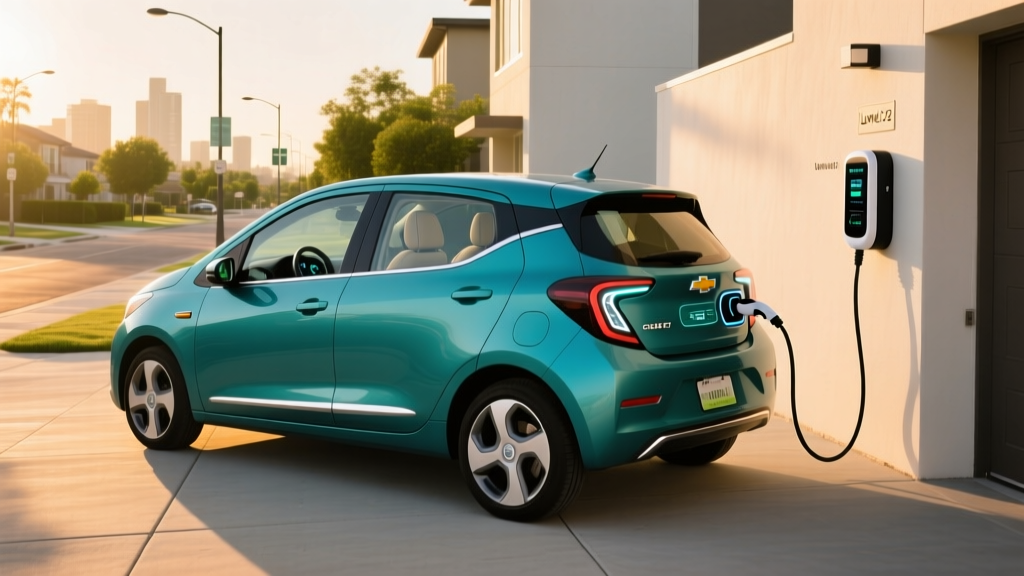
Home charging reality: At 3.3 kW on Level 2, a full charge from empty takes roughly 6–7 hours. If you install a Level 2 home charger (a 240V circuit with a J1772-equipped EVSE — expect $500–$1,500 for equipment plus $500–$2,000 for electrician labor and permits, depending on panel capacity), you'll wake up to a full charge every morning. This is the only practical way to own a Spark EV. Level 1 charging at 120V is painfully slow — a full charge takes 17+ hours.
Public DC fast charging: The 50 kW peak rate was respectable in 2015. In 2026, when many public chargers deliver 150–350 kW to modern EVs, the Spark EV will occupy a stall for 25–30 minutes to go from 10–80%, which is a significant time commitment for only ~55 miles of added range. Additionally, the CCS connector is standard, so compatibility at Electrify America, EVgo, and most non-Tesla networks is fine — but you cannot use Tesla Superchargers without an adapter, and Chevrolet has not issued a NACS adapter for the Spark EV.
kW vs kWh reminder: kW (kilowatts) measures charging power — how fast energy flows into the battery. kWh (kilowatt-hours) measures battery capacity — how much energy the battery stores. The Spark EV charges at up to 50 kW of power into a ~19–21 kWh battery.
Spark EV vs. Gas Car vs. Modern Used EV: Cost Comparison
Let's put real numbers on the ownership equation. We'll compare the Spark EV against a typical gas subcompact (like a 2016 Honda Fit) and a modern used EV (a 2020 Chevrolet Bolt EV, which offers 259 miles of EPA range and is available used for $12,000–$16,000).
| Cost Factor (Annual) | Spark EV (Used ~$7K) | 2016 Honda Fit (~$10K) | 2020 Chevy Bolt (~$14K) |
|---|---|---|---|
| Purchase Price | $5,000–$9,000 | $8,000–$12,000 | $12,000–$16,000 |
| Fuel/Energy (12,000 mi/yr) | $360–$540 (electricity) | $1,300–$1,600 (gasoline) | $420–$600 (electricity) |
| Maintenance | $200–$400 | $600–$900 | $250–$450 |
| Insurance | $900–$1,300 | $800–$1,100 | $1,000–$1,400 |
| Federal Tax Credit | Not eligible (used EV credit capped at $4,000 under §25E, income limits apply) | None | Not eligible (original buyer claimed §30D) |
| 5-Year Total Cost (est.) | $12,000–$18,000 | $18,000–$25,000 | $22,000–$30,000 |
Key takeaways: The Spark EV wins on pure operating cost — electricity at $0.12–$0.18/kWh (national average per the EIA) costs roughly 3–4 cents per mile, versus 11–14 cents per mile for gasoline at $3.20/gallon and 30 MPG. Over 5 years at 12,000 miles annually, you'll save $4,500–$6,000 on fuel alone versus the Fit. Maintenance savings (no oil changes, no transmission fluid, regenerative braking extends pad life) add another $1,500–$2,500.
However, the Spark EV's biggest risk is an out-of-warranty battery replacement that could wipe out those savings entirely. The Bolt EV, while costing more upfront, offers dramatically more range, a newer battery with less degradation, and far more practical daily usability.
Used EV Tax Credit: Can You Claim It on the Spark EV?
Under the IRS §25E used clean vehicle credit, you may be eligible for up to $4,000 (or 30% of the sale price, whichever is less) on a qualifying used EV purchase. However, several rules apply:
- Sale price cap: The vehicle must sell for $25,000 or less — the Spark EV easily qualifies
- Vehicle age: Must be at least 2 model years old — all Spark EVs qualify
- Income limits: Modified AGI cannot exceed $75,000 (single), $112,500 (head of household), or $150,000 (joint)
- Dealer requirement: Must purchase from a licensed dealer (private-party sales don't qualify)
- Battery capacity: Must have at least 7 kWh — the Spark EV qualifies
- One-time use: You can only claim this credit once every 3 years
On a $7,000 Spark EV purchase from a dealer, the 30% calculation yields $2,100 — that's your actual credit, not $4,000. This can be applied as a point-of-sale reduction if the dealer participates. Consult a tax professional to confirm your eligibility, as IRS rules are subject to change.
Common Misconceptions About the Spark EV
| Myth | Fact |
|---|---|
| "It's basically a golf cart." | The Spark EV produces 143 hp and 327 lb-ft of torque (2015+), with a 0–60 time around 7.2 seconds. It's genuinely quick off the line, thanks to instant electric torque. |
| "I can charge it at any public station." | The Spark EV uses CCS for DC fast charging and J1772 for Level 2. It cannot natively use Tesla Superchargers (NACS connector) and there is no official NACS adapter from GM for this model. |
| "82 miles of range is enough for anyone." | 82 miles is the EPA estimate under ideal conditions. Highway driving, cold weather, and battery degradation all reduce this. Real-world usable range is often 50–70 miles. |
| "The battery will last forever." | NMC batteries degrade with time and cycles. A 10-year-old pack will have lost 15–30% of original capacity. There is no warranty remaining on most Spark EVs. |
| "It qualifies for the full $7,500 federal tax credit." | The §30D new vehicle credit is no longer available — the Spark EV is discontinued. The §25E used credit maxes out at 30% of sale price (up to $4,000), which on a $7,000 car is roughly $2,100. |
Decision Framework: Should You Buy a Chevy Spark EV in 2026?
Buy the Spark EV if:
- Your daily round-trip commute is under 50 miles
- You have reliable Level 2 home charging (garage or driveway with 240V access)
- You live in a mild climate (rarely below 40°F in winter)
- You want the cheapest possible EV to test electric ownership
- You have a second gas or hybrid car for longer trips
- You can verify the battery SoH is above 78% before purchase
Skip the Spark EV and consider alternatives if:
- Your commute exceeds 55 miles round-trip
- You live in a cold climate (Upper Midwest, Northeast, Mountain states)
- You lack home charging and would rely on public infrastructure
- You need cargo space — the Spark EV offers only 9.6 cu ft
- You want a vehicle with remaining battery warranty
- You frequently drive highway speeds — efficiency drops sharply above 65 mph
Strong Alternatives in the $8,000–$16,000 Used Range
If the Spark EV doesn't fit your needs, consider these used EVs with better range and newer platforms:
- 2017–2019 Chevrolet Bolt EV: 238–259 EPA miles, 60 kWh battery, ~$10,000–$16,000 used. Far more practical. Note: verify recall remediation for battery fire risk was completed.
- 2018–2020 Nissan Leaf (62 kWh): 212–226 EPA miles, CHAdeMO connector, ~$11,000–$15,000. Watch for passive battery cooling limitations in hot climates.
- 2019–2021 Hyundai Kona Electric: 258 EPA miles, 64 kWh battery, ~$14,000–$18,000 used. Excellent efficiency.
Frequently Asked Questions
Is the Chevy Spark EV still being made?
No. Chevrolet discontinued the Spark EV after the 2016 model year, replacing it with the Chevrolet Bolt EV for 2017. The entire Spark lineup (gas and electric) was discontinued after 2022. You can only purchase a Spark EV on the used market in 2026.
How long does the Spark EV battery last?
The NMC battery pack was designed for roughly 1,000–1,500 full charge cycles before reaching 70–80% capacity. In calendar terms, most 2014–2016 Spark EVs now show 75–85% State of Health. At this age, time-based degradation is the primary factor, not mileage. Expect 50–70 miles of real-world range from a 10-year-old pack.
Can I fast-charge the Spark EV on road trips?
Yes, but with significant caveats. The 50 kW CCS peak charge rate means a 10–80% session takes 20–30 minutes and adds only ~50 miles of range. For a 200-mile road trip, you'd need 3–4 charging stops totaling 1.5–2 hours of charging time. It's doable but not enjoyable. This is fundamentally a city and commuter car.
What does it cost to charge a Spark EV at home?
Charging the ~19–21 kWh battery from empty to full at the national average electricity rate of $0.16/kWh costs approximately $3.00–$3.40. That delivers roughly 65–75 real-world miles, or about 4–5 cents per mile. Compare that to a gas car at 30 MPG and $3.20/gallon — roughly 11 cents per mile.
Is the Spark EV safe?
The Spark EV earned a 4-star overall rating from NHTSA (the National Highway Traffic Safety Administration). It includes standard stability control, antilock brakes, and multiple airbags. However, it lacks modern ADAS features like automatic emergency braking, lane-keeping assist, or blind-spot monitoring that are common even in affordable 2026 models. As a small, lightweight vehicle, it's at a physics disadvantage in collisions with larger vehicles.
What maintenance does the Spark EV need?
Very little compared to a gas car. There's no engine oil, no transmission fluid, no spark plugs, and no exhaust system. You'll need tire rotations, cabin air filter replacement, brake fluid checks (regenerative braking means the friction brakes wear very slowly), and windshield washer fluid. Budget $200–$400 annually for routine maintenance. The 12V auxiliary battery will need replacement every 4–5 years like any vehicle.