Quick Answer: Is a Chevy Spark Electric?
No. The Chevrolet Spark is a gasoline-powered subcompact hatchback and has never been offered as a fully electric vehicle (BEV) in any model year. GM discontinued the Spark after the 2022 model year. If you're looking for a small, affordable Chevy EV in 2026, the closest equivalent is the Chevrolet Equinox EV (starting around $33,600 MSRP, EPA-estimated 319 miles of range) or the Chevrolet Bolt EV/EUV on the used market.
Why the Confusion Around a "Chevy Spark Electric"?
The search for a Chevy Spark EV likely stems from a few factors. First, Chevrolet did produce a limited-run Spark EV from 2013 to 2016 — but only as a compliance car sold exclusively in California and Oregon. Fewer than 10,000 units were made, and it was pulled from sale years before the gas Spark was discontinued. Second, the broader EV market now includes so many small electric crossovers that buyers reasonably assume every popular nameplate has an EV variant.
The 2013–2016 Spark EV had a 21.3 kWh battery (later revised to 19 kWh with Samsung cells), an EPA-estimated 82 miles of range, and a 114-horsepower electric motor. It was a capable city commuter but impractical for most buyers due to its tiny range and limited availability. It does not qualify for the current §30D federal EV tax credit, which applies only to new vehicles meeting 2026 battery-sourcing and income requirements per IRS guidelines.
Chevy's Actual Small EV Lineup in 2026
If you want a compact, affordable Chevrolet EV today, here's what's actually available:
| Model | Powertrain | EPA Range / MPG | Battery (kWh) | Peak DC Charge (kW) | 10–80% Time | Base MSRP |
|---|---|---|---|---|---|---|
| Chevy Spark (2022, final year) | Gas (1.4L I4) | 29 city / 38 hwy MPG | N/A | N/A | N/A | ~$14,000 (discontinued) |
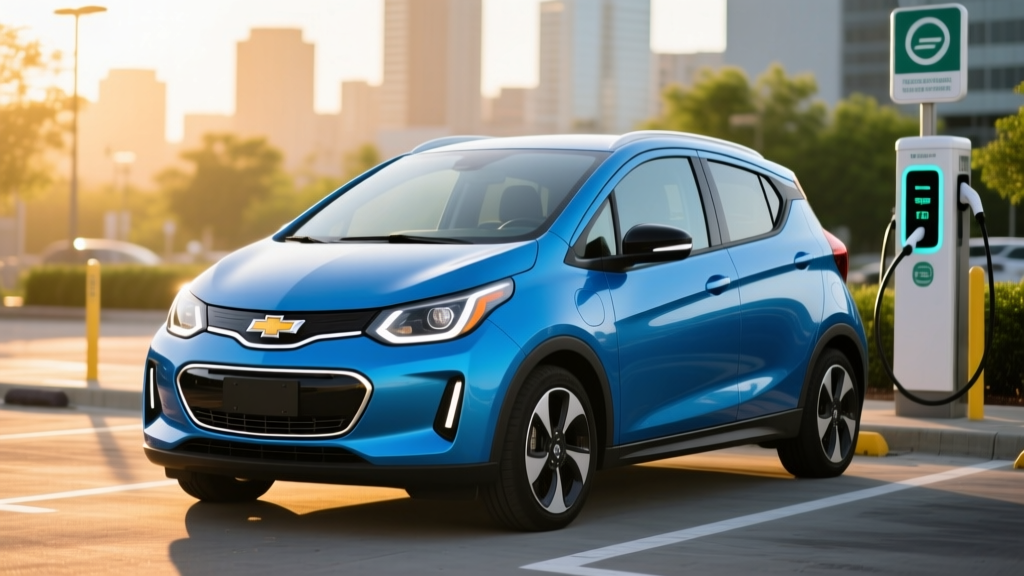
| Chevy Bolt EV (used 2023) | BEV | 259 mi (EPA) | 65 kWh (NMC) | 55 kW | ~50 min | ~$18,000–$24,000 (used) |
| Chevy Equinox EV (2026) | BEV | 319 mi (EPA) | 85 kWh (NMC) | 150 kW | ~30 min | $33,600 |
| Chevy Blazer EV (2026) | BEV | 279–324 mi (EPA) | 102 kWh (NMC) | 190 kW | ~24 min | $44,600 |
The Equinox EV is the spiritual successor to what a "Spark EV" might have been — a compact, relatively affordable electric vehicle — but it's substantially larger and more capable. The Bolt EV, while discontinued new after 2023, remains one of the best-value used EVs on the market and may qualify for the $4,000 used EV credit (IRS §25E) if purchased from a dealer, priced under $25,000, and buyer income falls within limits.
Real Costs: Small EV vs. Gas Subcompact
Let's compare what it actually costs to own a small EV like a used Bolt EV versus what the gas Spark would have cost, over 5 years and 75,000 miles.
| Cost Category | Used 2023 Bolt EV (~$20K) | 2022 Chevy Spark Gas (~$14K new) |
|---|---|---|
| Purchase Price | $20,000 | $14,000 |
| Federal Tax Credit | –$4,000 (§25E used EV, if eligible) | $0 |
| Fuel/Energy (75K mi) | $3,375 (home L2 at $0.15/kWh, 3.5 mi/kWh) | $7,500 (gas at $3.00/gal, 33 MPG avg) |
| Maintenance | ~$1,200 (no oil, fewer brake jobs w/ regen) | ~$3,000 (oil changes, brakes, filters) |
| Insurance (est. avg) | ~$7,500 (EVs typically 15–20% higher) | ~$6,250 |
| 5-Year Total | ~$28,075 | ~$30,750 |
Even with a higher insurance premium, the used Bolt EV costs less over 5 years thanks to fuel and maintenance savings — and that gap widens if gas prices rise or you have access to free or discounted workplace/public charging. Data from fueleconomy.gov confirms the Bolt's efficiency at approximately 120 MPGe combined, translating to roughly 3.5 miles per kWh.
Real-World Ownership: What First-Time EV Buyers Must Know
Before buying any small EV — whether a used Bolt or a new Equinox EV — these practical realities determine whether EV ownership works for you:
Home Charging Access Is the Make-or-Break Factor
Over 80% of EV charging happens at home. If you can install a Level 2 charger (240V, 32–48 amps, delivering 7.7–11.5 kW), you'll wake up to a full battery daily and rarely visit public chargers. A Level 2 home installation typically costs $500–$2,000 for equipment and electrician labor, assuming your panel has capacity. If you rent or lack garage access, you'll depend on public Level 2 and DC fast charging — which is more expensive ($0.30–$0.50/kWh at public stations) and less convenient.
Cold Weather Reduces Range 20–30%
The Bolt EV's EPA-estimated 259 miles can drop to roughly 180–200 miles in sustained sub-freezing temperatures. The Equinox EV's heat pump helps mitigate this, but all EVs lose range in cold weather due to battery chemistry and cabin heating demands. If you live in Minnesota or Maine, plan your routes around 70% of the sticker range in winter.
DC Fast Charging Isn't Always Fast
The Bolt EV's 55 kW peak DC charge rate is a significant limitation — a 10–80% charge takes roughly 50 minutes, compared to 30 minutes in the Equinox EV (150 kW peak) or under 20 minutes in vehicles with 250+ kW capability (like the Hyundai Ioniq 5). The Bolt's charge curve stays relatively flat, which helps, but it's still slow by 2026 standards. If you road-trip frequently, this matters.
Common Misconceptions About Small Cheap EVs
| Myth | Fact |
|---|---|
| "There must be a new electric Chevy Spark for under $20K." | The Spark was discontinued in 2022 and was never an EV in its mainstream run. The cheapest new Chevy EV is the Equinox EV at ~$33,600 MSRP. |
| "EVs always save money from day one." | Upfront cost is typically higher. Savings accrue over 3–5 years via fuel and maintenance, especially with home charging and tax credits. |
| "I don't need home charging; public stations are everywhere." | Public DC fast charging costs 2–3x more per mile than home Level 2. Reliability varies — Electrify America and EVgo uptime averages 85–92% depending on network. Home charging is strongly recommended. |
| "EV batteries need replacing every few years." | Modern NMC and LFP batteries retain 85–90%+ capacity after 100,000 miles. GM's battery warranty covers 8 years/100,000 miles with a 70% capacity retention threshold. |
| "Small EVs are unsafe." | The 2022 Spark earned an IIHS Marginal rating in small overlap front tests. The Bolt EV earned IIHS Top Safety Pick status in certain years. Modern EVs' low center of gravity aids crash performance. |
Tax Credits and Incentives: What You Can Actually Claim
Under current IRS §30D rules for 2026, the new clean vehicle credit offers up to $7,500 — but eligibility depends on several factors:
- MSRP cap: Vans/SUVs/pickups must be under $80,000; sedans/hatchbacks under $55,000.
- Income cap: Modified AGI must not exceed $150,000 (single) or $300,000 (joint).
- Battery sourcing: Critical minerals and battery components must meet phased-in domestic/free-trade sourcing thresholds.
- Point-of-sale transfer: Eligible buyers can transfer the credit to the dealer for an immediate price reduction.
The Equinox EV has qualified for partial or full credit depending on the build month and battery pack origin — confirm with your dealer and a tax professional before relying on the full $7,500. The used Bolt EV may qualify for the §25E credit of up to $4,000 (30% of sale price, capped at $4,000) if the sale price is $25,000 or less.
Decision Framework: Should You Buy a Small EV?
If This Is You… Then Do This
- You want the cheapest possible EV under $15K: Look at a used 2020–2023 Chevy Bolt EV (often $15,000–$22,000). Verify battery State of Health via an OBD2 reader or dealer diagnostic before purchase.
- You want a new compact Chevy EV with 300+ miles of range: The Equinox EV at ~$33,600 is your answer. Opt for the LT trim with the larger battery for the 319-mile EPA rating.
- You drive under 40 miles daily and can charge at home: Any EV on this list works easily. Even the old Spark EV's 82 miles would suffice — if you can find one.
- You road-trip 500+ miles regularly: Skip the Bolt EV (55 kW charging is painful on long trips). Choose the Equinox EV (150 kW) or look at Hyundai Ioniq 5 / Kia EV6 (240+ kW charging).
- You rent and can't install a charger: A plug-in hybrid (PHEV) like the Toyota RAV4 Prime or a regular hybrid may be more practical until you have reliable charging access.
- You live in a cold climate (sub-20°F winters): Prioritize an EV with a heat pump (Equinox EV has one). Expect 20–30% range loss and plan accordingly.
Frequently Asked Questions
Was there ever a Chevy Spark EV?
Yes, but only from 2013 to 2016 as a compliance car sold in California and Oregon. It had 82 miles of EPA range, a 21.3 kWh battery, and was not sold nationwide. It is not comparable to any current EV offering.
What is the cheapest new Chevy EV in 2026?
The Chevrolet Equinox EV starts at approximately $33,600 MSRP for the LT FWD trim with the standard-range battery (319 miles EPA). This is before any applicable federal or state incentives.
Can I still buy a new Chevy Bolt EV?
No. GM discontinued the Bolt EV and EUV after the 2023 model year. GM has announced a next-generation Bolt on the Ultium platform, but as of early 2026, it remains unreleased. Used Bolt EVs remain widely available and are strong value picks.
Does the Equinox EV qualify for the $7,500 federal tax credit?
It may qualify for partial or full credit depending on battery sourcing requirements and your income level. The MSRP is under the $80,000 SUV cap. Always verify current eligibility on the IRS website and with your tax advisor — rules change frequently.
How much does it cost to charge a small EV at home?
At the US average residential rate of ~$0.15/kWh, fully charging a Bolt EV's 65 kWh battery costs roughly $9.75 and provides about 230 real-world miles. That's approximately $0.04 per mile — compared to $0.10–$0.12 per mile for a gas subcompact at $3.00/gallon.
Is a small EV practical as a only car?
For most drivers covering under 200 miles daily with home charging access, yes. For frequent long road trips, towing, or households without reliable charging, a PHEV or a longer-range EV with faster charging (150+ kW) is more practical as a sole vehicle.