Quick Verdict: The Silverado EV Work Truck in 2026
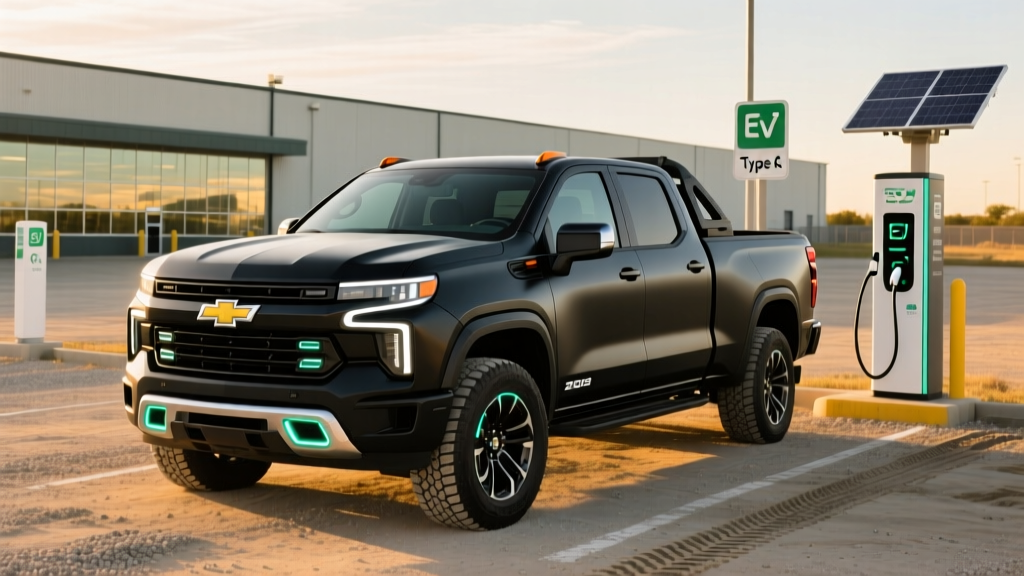
If you run a small fleet, bid on municipal contracts, or just need a heavy-duty daily hauler that never visits a gas station, the 2026 Chevrolet Silverado EV Work Truck (WT) is the most pragmatic electric pickup on the market. It isn't the flashiest — that title goes to the fully loaded RST — but the WT trim delivers the essentials: an EPA-estimated 393 miles of range, a usable payload north of 1,300 pounds, and a starting MSRP that undercuts the Ford F-150 Lightning Pro by several thousand dollars when federal incentives are factored in. Where it stumbles is interior material quality, Super Cruise availability, and a charge curve that tapers noticeably past 80%. For buyers who care about uptime, operating cost, and cargo volume over leather and ambient lighting, this is the electric workhorse to beat.
Range, Efficiency, and the Real-World Reality
Real-World Expectation: Plan for 310–340 miles at sustained 70 mph highway speeds; 250–280 miles in sub-freezing temperatures with cabin heat and a loaded bed.
The Silverado EV 4WT uses GM's largest Ultium battery pack — a 200 kWh (usable) nickel-manganese-cobalt (NMC) lithium-ion module arranged in a double-stacked layout beneath the floor. On the EPA window sticker, the 4WT posts 393 miles of combined range and an efficiency rating of approximately 56 MPGe (about 60 kWh per 100 miles). That figure is impressive on paper, but truck buyers need to interpret it through a workload lens.
In mixed driving — suburban stop-and-go with frequent regenerative braking opportunities — owners report hitting 370+ miles before the low-battery warning. On the highway at 75 mph, aerodynamic drag and the Silverado's 6,500-pound curb weight cut that to roughly 320 miles. Add a 1,000-pound payload or a light trailer and expect another 10–15% reduction. Cold weather (below 32°F) without preconditioning can drop range to 250–270 miles, though the standard heat pump mitigates some of that loss compared to resistive cabin heating.
Efficiency tip: GM's Ultium platform supports aggressive regen braking, and one-pedal driving in city conditions can recover 8–12% of range versus coasting. For fleet managers programming routes, plan for 300 usable miles per charge cycle to maintain a safety buffer.
Charging Speed: DC Fast, Level 2, and the Curve
The Silverado EV 4WT supports up to 200 kW peak DC fast charging via its CCS1 connector (with a NACS adapter available for Tesla Supercharger access beginning in late 2025). At a compatible 350 kW station — like Electrify America or EVgo's newest stalls — the truck can add approximately 100 miles of range in 10 minutes under ideal conditions.
| Charging Level | Power (kW) | Speed / Time | Notes |
|---|---|---|---|
| Level 1 (120V) | 1.4 kW | ~3 mi/hr | Emergency/trickle only |
| Level 2 (240V, 48A) | 11.5 kW | ~25 mi/hr | Standard home / depot |
| Level 2 (240V, 80A) | 19.2 kW | ~42 mi/hr | Optional onboard charger |
| DC Fast Charge | 200 kW peak | 10–80% in ~40 min | Tapers above 80% SoC |
The charge curve is where real-world planning matters. The 200 kW peak is sustained from roughly 10% to 55% state of charge. From 55–80%, power drops to approximately 120–140 kW, and from 80–100% it slows dramatically to protect the NMC cells. A 10–80% session takes about 40 minutes; a 10–100% session takes closer to 70 minutes. Fleet operators should target 80% charge stops for optimal turnaround.
For home or depot charging, the standard 11.5 kW Level 2 onboard charger replenishes the 200 kWh pack in roughly 18 hours from empty. Upgrading to the available 19.2 kW onboard module cuts that to about 11 hours — critical for fleets running two-shift operations. Installation of a 48A Level 2 home charger typically runs $800–$2,500 depending on panel capacity and conduit distance; a hardwired 80A unit may require a panel upgrade ($1,500–$3,000 additional) in older buildings.
Performance, Towing, and Payload
The Silverado EV 4WT uses a dual-motor all-wheel-drive configuration producing 510 horsepower and 615 lb-ft of torque. That's enough for a 0–60 mph time of approximately 5.4 seconds — quick for a 6,500-pound truck, and more importantly, responsive for merging onto highways with a loaded bed.
| Spec | Silverado EV 4WT (2026) |
|---|---|
| Drivetrain | Dual-motor AWD |
| Horsepower | 510 hp |
| Torque | 615 lb-ft |
| 0–60 mph | ~5.4 seconds |
| Max Towing | 10,000 lbs (standard); 12,500 lbs (max trailering pkg) |
| Payload | 1,300–1,400 lbs |
| Bed Length | 5 ft 11 in (standard); Multi-Flex tailgate |
| Battery | 200 kWh usable, NMC (Ultium) |
| EPA Range | 393 miles |
| Efficiency | 56 MPGe / ~60 kWh/100 mi |
| Base MSRP | $57,900 (incl. destination) |
Towing is rated at 10,000 pounds standard, with the available Max Trailering Package bumping that to 12,500 pounds. Be aware: towing at max capacity cuts range roughly in half. A 5,000-pound enclosed trailer at highway speed will yield 180–220 miles before needing a charge. The Silverado EV supports trailer-tire TPMS integration and GM's Super Cruise for hands-free highway driving with a trailer attached — though this feature is optional on the WT trim and standard on higher trims.
The Multi-Flex midgate is a standout utility feature: it folds down to extend the bed into the cabin, creating nearly 9 feet of enclosed cargo length with the tailgate closed. For contractors hauling lumber, pipe, or ladders, this is a genuine differentiator over the F-150 Lightning's fixed cab wall.
Pricing, Trims, and Federal Tax Credit Eligibility
The 2026 Silverado EV lineup for work-oriented buyers centers on two trims:
| Trim | MSRP | Est. After §30D Credit* | Key Additions |
|---|---|---|---|
| 3WT (Standard Range) | $41,900 | ~$34,400 | ~250 mi range, 175 kWh battery, fleet-oriented |
| 4WT (Extended Range) | $57,900 | ~$50,400 | 393 mi range, 200 kWh battery, AWD, 19.2 kW option |
*Federal tax credit estimates assume buyer eligibility under IRS §30D rules. Actual credit varies.
The IRS §30D federal tax credit offers up to $7,500 for qualifying new EVs, but eligibility depends on several factors that shift regularly:
- MSRP Cap: Pickup trucks must have an MSRP at or below $80,000. Both Silverado EV WT trims qualify.
- Buyer Income Cap: Modified adjusted gross income must not exceed $150,000 (single), $225,000 (head of household), or $300,000 (joint).
- Battery Sourcing: A percentage of critical minerals and battery components must be sourced from the U.S. or free-trade-agreement countries. GM has significantly increased North American Ultium sourcing for 2026, but confirm current-year compliance on the IRS qualified vehicles list before purchase.
- Point-of-Sale Transfer: As of 2024, buyers can transfer the credit to the dealer at purchase, reducing the out-of-pocket price immediately rather than waiting for tax filing. This applies to 2026 purchases.
For fleet buyers: the commercial clean vehicle credit (§45W) may apply instead of §30D for vehicles placed in service by a business. Consult a tax professional to determine whether §30D (personal) or §45W (commercial) yields a greater benefit for your situation.
Interior, Tech, and Driver Assistance
The WT trim interior is built for durability, not luxury. Vinyl-trimmed seats, rubberized floor surfaces, and hard plastics dominate — appropriate for job-site use but noticeably spartan compared to the RST or Rivian R1T. The standard 11-inch diagonal infotainment screen runs Google built-in (Google Maps, Google Assistant, Play Store) and supports wireless Apple CarPlay and Android Auto.
Driver assistance comes via Chevy Safety Assist, which includes automatic emergency braking, forward collision alert, lane keep assist, following distance indicator, and automatic high beams. Super Cruise — GM's hands-free Level 2 highway driving system — is optional on the 4WT and includes trailering capability on mapped divided highways. Note: Super Cruise is a Level 2 SAE system, meaning the driver must remain attentive and cannot disengage from the driving task. It is not autonomous driving.
Notable tech features include a standard 4G LTE Wi-Fi hotspot (useful for fleet telematics), ProGrade Trailering System with trailer light test and hitch guidance, and available power outlet integration in the bed (up to 10.2 kW of off-board power via available Pro Power-style outlets — enough to run job-site tools or a small welder).
Ownership Costs, Warranty, and Longevity
GM backs the Silverado EV's Ultium battery and electric drive components with an 8-year / 100,000-mile limited warranty, with a capacity retention guarantee of at least 70% over that period. The bumper-to-bumper warranty covers 3 years / 36,000 miles.
| Cost Factor (5 yr / 75,000 mi) | Silverado EV 4WT | Gas Silverado 1500 WT (5.3L V8) |
|---|---|---|
| Purchase (after credit) | ~$50,400 | ~$42,000 |
| Fuel / Energy | ~$5,200 (electricity) | ~$11,500 (gasoline) |
| Maintenance | ~$1,800 | ~$4,200 |
| Insurance (est.) | ~$8,500 | ~$6,800 |
| Est. Depreciation | ~$18,000 | ~$16,500 |
| Total 5-Year Cost | ~$83,900 | ~$81,000 |
The EV breaks even or pulls ahead around year 5–6 depending on electricity rates, mileage, and whether the federal credit is captured. Fleet buyers running 20,000+ miles annually see the crossover sooner due to higher fuel savings. Insurance premiums for the Silverado EV run 15–25% higher than the gas equivalent — a common EV ownership factor driven by repair cost data and battery replacement considerations.
Pros and Cons
- 393-mile EPA range — class-leading for a work truck
- Multi-Flex midgate extends bed to nearly 9 feet
- Up to 10.2 kW off-board power for job-site tools
- Low operating cost: ~$0.07–$0.12/mi on electricity
- Qualifies for up to $7,500 federal tax credit
- Super Cruise with trailering (optional)
- WT interior is basic; no premium options on base trim
- Charge curve tapers significantly above 80% SoC
- Towing cuts range roughly in half
- Insurance premiums 15–25% higher than gas equivalent
- 200 kWh battery means long Level 2 charge times without 19.2 kW option
- No frunk (front trunk) — space used for HVAC components
Frequently Asked Questions
What is the real-world range of the Chevy Silverado EV Work Truck?
The EPA rates the 4WT at 393 miles combined. In real-world highway driving at 70–75 mph, expect 310–340 miles. In cold weather (below 32°F) with a loaded bed, plan for 250–280 miles. Fleet managers should budget 300 miles as a practical per-charge cycle.
How fast does the Silverado EV charge at home and on the road?
At a DC fast charger rated 200 kW or higher, the Silverado EV charges from 10–80% in approximately 40 minutes. At home on a 48A Level 2 charger (11.5 kW), a full charge takes about 18 hours. The optional 19.2 kW onboard charger cuts that to roughly 11 hours.
Does the Chevy Silverado EV qualify for the $7,500 federal tax credit?
Both WT trims are under the $80,000 MSRP cap for trucks. However, buyer income limits, battery critical-mineral sourcing, and point-of-sale transfer rules all apply under IRS §30D. Check the IRS qualified vehicle list for the current model year before purchasing, and consult a tax professional for your specific situation.
Is the Silverado EV Work Truck worth buying over the Ford F-150 Lightning?
The Silverado EV 4WT offers significantly more range (393 vs. ~320 miles for the Lightning Pro Extended Range) and the unique midgate cargo feature. The F-150 Lightning has a more refined interior, a front trunk (frunk), and broader dealer availability. If range and bed flexibility are priorities, the Silverado wins. If interior comfort and frunk utility matter more, the Lightning is worth a cross-shop.
Can the Silverado EV power job-site tools?
Yes. The available off-board power system provides up to 10.2 kW through bed-mounted outlets — enough to run circular saws, compressors, portable welders, and lighting rigs simultaneously. This effectively replaces a tow-behind generator for many contractors.
What battery chemistry does the Silverado EV use, and how long will it last?
The Silverado EV uses an NMC (nickel-manganese-cobalt) Ultium battery. GM warranties it for 8 years / 100,000 miles with a minimum 70% capacity retention guarantee. Based on current Ultium fleet data, most packs are expected to retain 80–85% capacity at the 100,000-mile mark under normal use patterns.