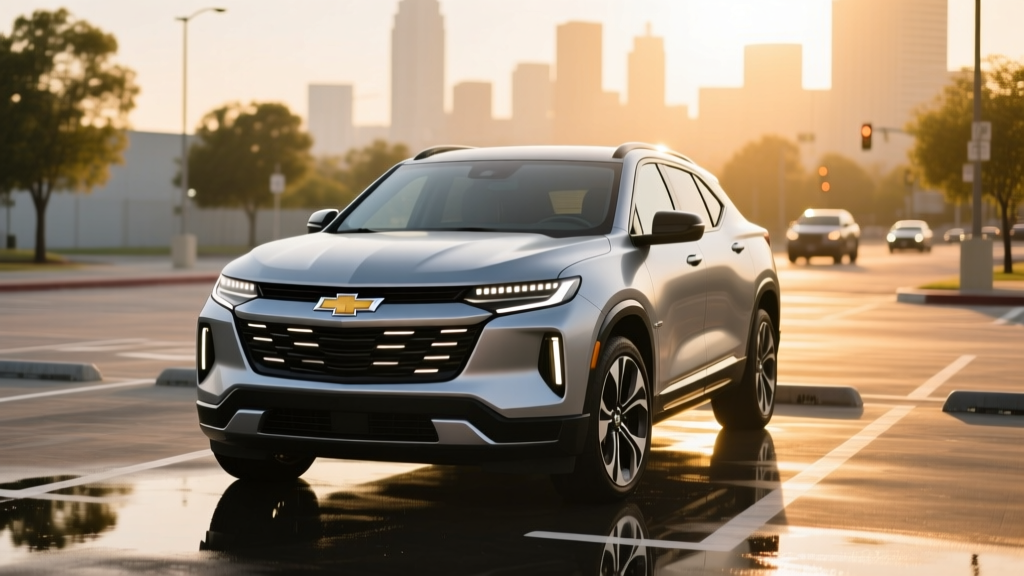
Chevrolet's all-electric pickup finally hit its stride in the second half of 2025. After a cautious launch with the fleet-oriented Work Truck (WT) and the six-figure RST First Edition, GM broadened the Silverado EV lineup with the more accessible LT trim and ramped up production at Factory Zero in Detroit. The result was a noticeable spike in deliveries: Chevy Silverado EV sales in Q3 2025 signaled that the truck had moved from early-adopter curiosity to a legitimate contender in the electric pickup segment.
For buyers shopping in early 2026, that sales momentum matters. Higher production volumes mean shorter dealer wait times, more inventory to choose from, and greater confidence that GM is committed to the platform long-term. But does the Silverado EV actually deliver for real-world truck buyers? We've spent time with the 2026 lineup, cross-referenced EPA data, and run the numbers on charging, ownership costs, and tax-credit eligibility. Here's everything you need to know.
2026 Chevy Silverado EV: Quick Spec Overview
Before we get into the driving and ownership experience, here are the hard numbers for the 2026 Silverado EV lineup. Chevrolet offers the truck across several trims, with two battery sizes and dual-motor AWD standard on most configurations.
| Spec | 4WT (Fleet) | LT (Standard Range) | LT (Extended Range) | RST |
|---|---|---|---|---|
| EPA Range | ~270 mi | ~290 mi | ~360 mi | ~380 mi |
| Battery (usable) | ~100 kWh | ~100 kWh | ~123 kWh | ~123 kWh |
| Horsepower | 510 hp | 625 hp | 625 hp | 754 hp (Max Power) |
| 0-60 mph | ~5.5 sec | ~4.5 sec | ~4.5 sec | ~4.0 sec |
| Drivetrain | AWD (dual-motor) | AWD (dual-motor) | AWD (dual-motor) | AWD (dual-motor) |
| Max Towing | 8,000 lb (10,000 w/ max tow pkg) | 10,000 lb | 10,000 lb | 10,000 lb |
| Base MSRP | ~$55,000 | ~$63,000 | ~$72,000 | ~$87,000 |
Note: Specs reflect 2026 model-year data as published by Chevrolet. EPA range figures may vary slightly by wheel size and option package. Source: fueleconomy.gov and Chevrolet media specifications.
Real-World Range: What the EPA Sticker Doesn't Tell You
The Silverado EV's Ultium-based battery pack is one of the largest in any production light-duty truck. The Extended Range models carry roughly 123 kWh of usable capacity (NMC lithium-ion chemistry), while the Standard Range variants use a smaller ~100 kWh pack. Both use GM's Ultium pouch-cell architecture with nickel-manganese-cobalt chemistry — chosen for energy density over the cycle-life focus of LFP.
EPA combined estimate: ~360-380 miles
Real-world highway (70-75 mph, mild weather): ~280-310 miles
Real-world highway (cold weather, below 32°F): ~230-260 miles
City/commute driving with regen: ~340-370 miles
Electric pickups face an efficiency penalty at highway speeds due to their large frontal area and weight. Expect a 20-30% reduction from EPA combined when sustained highway driving is your primary use case. Cold weather compounds this with cabin heating demand and reduced battery chemistry efficiency.
In our experience, the Extended Range Silverado EV settles into a real-world consumption rate of roughly 50-55 kWh/100 mi on the highway — which translates to about 2.0-2.2 miles per kWh. That's competitive with the Rivian R1T and Ford F-150 Lightning in this segment, though none of these full-size electric trucks match the efficiency of a sedan or crossover. For mixed driving, expect approximately 44-48 kWh/100 mi (roughly 68-76 MPGe combined, depending on trim and wheel configuration).
Charging Speed: DC Fast Charge and Home Level 2
Charging capability is where the Silverado EV's Ultium platform shows its engineering depth. The truck supports up to 350 kW peak DC fast charging on compatible CCS/NACS chargers — but as with every EV, that peak rate is not sustained across the entire charging session.
| Charging Level | Power / Rate | Time or Miles Added |
|---|---|---|
| DC Fast Charge (peak) | Up to 350 kW | ~100 miles in ~10 min (at peak rate) |
| DC Fast Charge (10-80%) | Avg ~200 kW sustained | ~30-35 minutes (Extended Range) |
| Level 2 (home, 48A / 11.5 kW) | 11.5 kW | ~25-28 miles per hour of charging |
| Level 2 (standard 32A / 7.7 kW) | 7.7 kW | ~17-19 miles per hour of charging |
| Level 1 (120V outlet) | ~1.4 kW | ~3-4 miles per hour of charging |
The critical insight for buyers: a 10-80% DC fast charge session on the Extended Range pack takes roughly 30-35 minutes at a 350 kW-capable station. The charge curve tapers significantly above 80% SoC — going from 80% to 100% can add another 25-30 minutes. This is normal for large NMC packs but worth planning for on road trips. GM's battery preconditioning feature (activated when you navigate to a charger via the infotainment system) warms the pack for optimal charge acceptance and is essential for achieving advertised speeds in cooler weather.
At home on a properly installed 48-amp Level 2 circuit (requiring a 60-amp breaker), the Silverado EV replenishes roughly 25-28 miles of range per hour. A full overnight charge from 20% to 100% takes about 10-12 hours on the Extended Range pack. Most owners will rarely need a full charge — daily driving of 40-60 miles is easily replaced overnight.
Performance, Utility, and Daily Driving
The dual-motor AWD powertrain gives the Silverado EV the kind of effortless, instant torque that makes traditional truck engines feel sluggish by comparison. The LT Extended Range's 625 hp delivers a 0-60 mph time in the mid-4-second range — quick for a vehicle with a curb weight over 8,500 pounds. The RST with the available Max Power package (754 hp) drops that to roughly 4.0 seconds flat.
But straight-line speed isn't why most truck buyers will choose the Silverado EV. The utility story matters more:
- Bed: A 5-foot-11-inch bed (shorter than a traditional 6.5-foot truck bed) with the Multi-Flex tailgate. The available MidGate lets you fold down the partition between bed and cab, extending the load floor to over 9 feet with the tailgate closed or 10+ feet with it open.
- Towing: Up to 10,000 pounds on LT and RST trims with the max tow package. Real-world range while towing drops dramatically — expect 100-150 miles depending on trailer weight and terrain. This is a universal EV-truck limitation, not unique to Chevy.
- Payload: Approximately 1,300-1,600 pounds depending on trim and configuration.
- Frunk: The eTrunk (front trunk) offers roughly 10.7 cubic feet of lockable, weatherproof storage — enough for tools, charging cables, or a small cooler.
Interior space is generous. Rear-seat legroom measures approximately 43.4 inches — competitive with crew-cab gas trucks — and the flat floor (no transmission tunnel hump) makes the middle seat usable for adults. Cargo volume behind the rear seats is roughly 38 cubic feet in the crew cab configuration.
Pricing, Trims, and Federal Tax Credit Eligibility
The Silverado EV's pricing has evolved since launch. The 2026 lineup starts with the fleet-targeted 4WT around $55,000 and extends to the fully loaded RST near $87,000 before options. The volume play for retail buyers is the LT trim, which starts around $63,000 for the Standard Range and climbs to roughly $72,000 for the Extended Range.
| Trim | Base MSRP | Federal §30D Credit | Effective Price (if eligible) |
|---|---|---|---|
| 4WT (Fleet) | ~$55,000 | Up to $7,500* | ~$47,500 |
| LT Standard Range | ~$63,000 | Up to $7,500* | ~$55,500 |
| LT Extended Range | ~$72,000 | Up to $7,500* | ~$64,500 |
| RST | ~$87,000 | Up to $7,500* | ~$79,500 |
*Federal tax credit eligibility under IRS §30D is NOT guaranteed. Several requirements must be met, and rules are subject to change. As of 2026, key criteria include:
- MSRP cap: Vans, SUVs, and pickup trucks must have an MSRP at or below $80,000. This means the base RST at ~$87,000 may exceed the cap unless optioned down or reclassified. The LT trims fall comfortably under the limit. Check IRS §30D guidelines for current thresholds.
- Buyer income limits: Modified adjusted gross income must not exceed $300,000 (joint filers), $225,000 (head of household), or $150,000 (single filers).
- Battery sourcing requirements: The credit is split into two halves ($3,750 each) — one for critical minerals sourcing and one for battery component manufacturing. GM has worked to qualify its Ultium cells, but the exact credit amount ($3,750 or $7,500) depends on current-year sourcing rules. Some vehicles may qualify for only half the credit.
- Point-of-sale transfer: Since 2024, buyers can transfer the credit to the dealer at purchase, reducing the purchase price directly rather than waiting for a tax refund. This requires dealer participation and proper IRS documentation.
Always verify eligibility with your tax professional and the dealer before assuming the full $7,500 credit will apply to your purchase.
Tech, Safety, and Driver Assistance
The Silverado EV runs GM's latest infotainment platform on a large 17.7-inch diagonal touchscreen (LT and above), with Google built-in for navigation, voice assistant, and app integration. The driver display is an 11-inch digital cluster. Wireless Apple CarPlay and Android Auto are standard.
On the driver-assistance front, the Silverado EV comes equipped with Chevy's Super Cruise on compatible trims — GM's hands-free highway driving system. Super Cruise operates on over 750,000 miles of mapped divided highways in North America. It uses a combination of LiDAR-mapped data, GPS, cameras, and radar, with a driver-monitoring camera to ensure you're paying attention.
Super Cruise is an SAE Level 2 driver-assistance system. Despite the hands-free capability on mapped highways, the driver must remain alert and ready to take over at any time. This is not a self-driving or Level 4 autonomous system. You are legally and practically responsible for the vehicle at all times.
Additional safety features include Chevy Safety Assist (automatic emergency braking, forward collision alert, lane keep assist, following distance indicator, front pedestrian braking, and IntelliBeam auto high beams). The Silverado EV earned strong marks from NHTSA, though IIHS ratings should be checked for the latest model year at iihs.org.
Silverado EV vs. the Competition
The electric pickup segment is no longer a one-horse race. Here's how the Silverado EV stacks up against its key rivals:
| Attribute | Chevy Silverado EV (LT Ext. Range) | Ford F-150 Lightning (Lariat Ext. Range) | Rivian R1T (Dual-Motor Max) | Tesla Cybertruck (AWD) |
|---|---|---|---|---|
| EPA Range | ~360 mi | ~320 mi | ~350 mi | ~340 mi |
| Peak DC Charge | 350 kW | 150 kW | 220 kW | 250 kW |
| 10-80% DC Time | ~30-35 min | ~41 min | ~30 min | ~28 min |
| Max Towing | 10,000 lb | 10,000 lb | 11,000 lb | 11,000 lb |
| Starting MSRP | ~$72,000 | ~$68,000 | ~$79,000 | ~$80,000 |
| Unique Feature | MidGate pass-through | Pro Power Onboard (V2L) | Gear Tunnel storage | Stainless exoskeleton / 48V arch. |
The Silverado EV's standout advantages are its class-leading EPA range on the Extended Range trims, the fastest peak DC charging capability in the segment at 350 kW, and the versatile MidGate that enables carrying long items through the cab. Its drawbacks include a higher starting price than the F-150 Lightning, a slightly shorter bed than traditional trucks, and a more polarizing interior design compared to the Rivian R1T.
Pros
- Best-in-class EPA range (~380 mi on RST)
- 350 kW peak DC charging — fastest in segment
- MidGate enables 10+ ft load floor
- Super Cruise hands-free highway driving
- Generous rear-seat legroom (~43.4 in)
- Strong towing capacity (10,000 lb)
- Over-the-air updates improve truck over time
Cons
- Higher starting price than F-150 Lightning
- Real-world highway range drops 20-30% from EPA
- Towing range limited to ~100-150 miles
- Shorter bed (5'11") without MidGate deployed
- Curb weight over 8,500 lb affects tire wear
- RST trim may exceed $80K tax-credit MSRP cap
- Insurance premiums higher than gas Silverado
Who Should Buy the Silverado EV?
Decision Framework
Choose the Silverado EV if:
- You need a full-size crew-cab truck with best-in-class electric range for daily commuting and weekend trips
- Home Level 2 charging is available and most of your driving is within 200 miles round-trip
- You value the MidGate for hauling long items (lumber, kayaks, ladders) without a trailer
- You frequently drive mapped Super Cruise highways and want hands-free comfort
Look elsewhere if:
- You regularly tow heavy trailers over long distances — towing range is a real limitation for all electric trucks
- You need a full 6.5- or 8-foot bed for commercial work without using the MidGate
- Your budget is under $55,000 — consider a used F-150 Lightning or wait for further price reductions
- You live in an area with limited DC fast-charging infrastructure and cannot install home Level 2
Battery Warranty and Long-Term Ownership
GM backs the Silverado EV's Ultium battery pack and electric powertrain with an 8-year / 100,000-mile warranty (whichever comes first), with a capacity retention threshold of 70% — meaning GM will repair or replace the battery if it degrades below 70% of original capacity within that period. The bumper-to-bumper limited warranty covers 3 years / 36,000 miles.
NMC chemistry in the Ultium cells is expected to degrade roughly 10-15% over the first 100,000-150,000 miles based on GM's testing and early real-world data from other Ultium-based vehicles. That means an Extended Range truck starting at 360 miles of EPA range might settle to around 305-325 miles after several years of typical use — still highly usable. Best practices for longevity include avoiding frequent 100% charges for daily driving (set your charge limit to 80-90% for routine use) and minimizing DC fast charging to road trips when possible.
Frequently Asked Questions
What is the real-world range of the Chevy Silverado EV?
The EPA rates the Extended Range Silverado EV at approximately 360-380 miles depending on trim. In real-world highway driving at 70-75 mph, expect 280-310 miles in mild weather and 230-260 miles in freezing temperatures. City driving with regenerative braking can approach or slightly exceed the EPA number.
How fast does the Silverado EV charge at home and on the road?
On a 350 kW DC fast charger, the Silverado EV can add about 100 miles in 10 minutes and charge from 10% to 80% in roughly 30-35 minutes. At home on a 48-amp Level 2 charger (11.5 kW), it adds about 25-28 miles of range per hour — a full overnight session easily replenishes a day's driving.
How much does the Silverado EV cost after the federal tax credit?
If you qualify for the full $7,500 §30D credit and purchase an LT Extended Range at ~$72,000 MSRP, the effective price drops to roughly $64,500. However, eligibility depends on your income, the vehicle's MSRP relative to the $80,000 truck cap, and battery-sourcing requirements that vary by model year. Confirm with your tax advisor and dealer.
Is the Silverado EV worth buying over the F-150 Lightning or Rivian R1T?
It depends on your priorities. The Silverado EV leads in EPA range and peak DC charging speed. The F-150 Lightning starts at a lower price and offers the Pro Power Onboard V2L system. The Rivian R1T is more adventure-oriented with its Gear Tunnel and slightly higher tow rating. If maximum range and fast road-trip charging matter most, the Silverado EV Extended Range has the edge.
Does the Chevy Silverado EV qualify for the federal EV tax credit?
The LT trims (under $80,000 MSRP) are positioned to qualify for the §30D credit, subject to buyer income limits and battery-sourcing requirements. The RST at ~$87,000 may exceed the $80,000 MSRP cap for trucks, potentially disqualifying it. Always verify current eligibility on the IRS clean vehicle credit page before purchasing.
Can I tow with the Silverado EV on long trips?
You can tow up to 10,000 pounds, but range drops significantly while towing — typically to 100-150 miles depending on trailer weight, speed, and terrain. Long-distance towing with an electric truck requires careful route planning around DC fast chargers and acceptance of longer, more frequent stops.