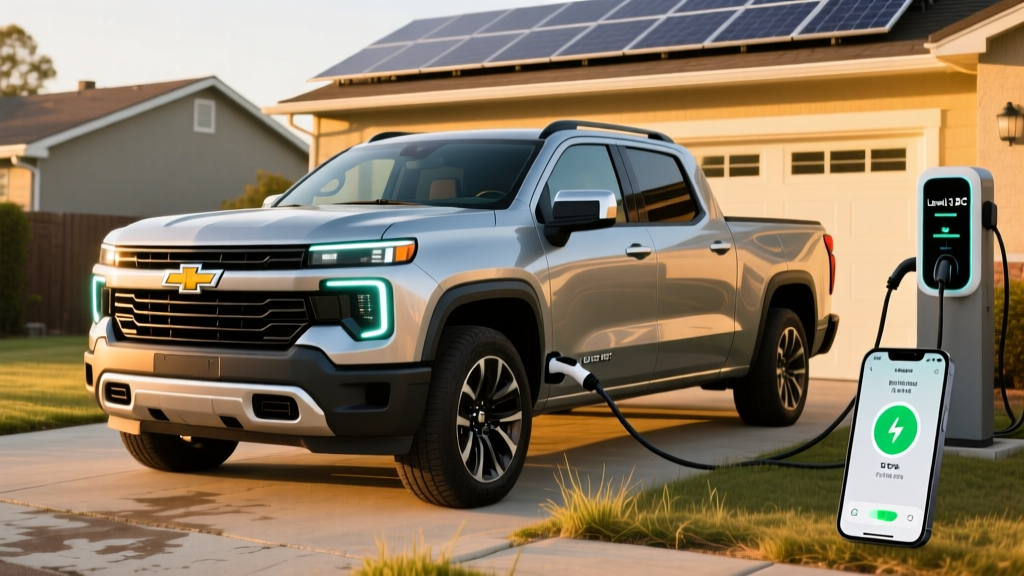
The Chevrolet Silverado EV has been on sale long enough to move past early-adopter hype and into real ownership data. Built on GM's Ultium platform and sharing its bones with the GMC Sierra EV and Cadillac Escalade IQ, the Silverado EV is a purpose-built electric truck — not a converted gas truck — which gives it packaging advantages (like a massive front trunk) but also means it's larger, heavier, and pricier than some buyers expect. This review covers the 2026 model year lineup with exact range, charging, pricing, and ownership numbers you need before signing a deal.
2026 Silverado EV Lineup and Pricing
Chevrolet streamlined the Silverado EV lineup for 2026 after the initial rollout years. The current range focuses on high-volume trims with the larger battery pack, dropping the earlier short-range Work Truck variant.
| Trim | Drivetrain | HP / lb-ft | 0-60 mph | EPA Range | MSRP |
|---|---|---|---|---|---|
| LT (4WT Standard Range) | Dual-Motor AWD | 510 / 615 | ~5.8 sec | ~360 mi | $57,900 |
| RST (4WT Extended) | Dual-Motor AWD | 645 / 785 | ~4.4 sec | 492 mi | $87,300 |
| Trail Boss (4WT Extended) | Dual-Motor AWD | 645 / 785 | ~4.5 sec | ~440 mi | $79,400 |
Destination charge adds ~$1,995. The RST's 492-mile EPA figure is with the Max Range pack. Trail Boss range is lower due to all-terrain tires and off-road tuning.
Range and Efficiency: EPA vs. the Real World
The headline 492-mile EPA figure on the RST Max Range is the highest of any production electric truck and one of the highest of any EV sold in the U.S. But the EPA test cycle favors mixed driving with generous city-regen weighting. Here's what to actually expect.
Real-World Range Reality Check
EPA Combined: 492 miles (RST Max Range)
Highway 70-75 mph, 65°F: Expect ~370-400 miles — large trucks push significant air, and aerodynamic drag dominates above 65 mph.
Highway, 30°F winter: Expect ~300-330 miles. Cold reduces battery chemical efficiency and increases cabin heating load, even with the Silverado EV's standard heat pump.
Towing (5,000-8,000 lb trailer): Range can drop 40-55%, yielding roughly 200-260 miles depending on trailer profile and terrain.
Efficiency: EPA-rated at approximately 61 MPGe combined for the RST Max Range (~55 kWh/100 mi). Real-world highway driving typically lands closer to 50-54 MPGe.
The Silverado EV uses GM's Ultium NMC (nickel manganese cobalt) battery chemistry, which prioritizes energy density over the cycle-life advantages of LFP. The usable battery capacity on the Extended Range pack is approximately 200 kWh gross (~190 kWh usable), one of the largest production packs on the market. The Standard Range LT uses a smaller pack at roughly 120 kWh usable. Source: fueleconomy.gov.
Charging Speed: DC Fast, Level 2, and Home Setup
Charging is where the Ultium platform's 800-volt architecture pays off. The Silverado EV supports peak DC fast-charge rates up to 350 kW at compatible V4-style chargers ( Electrify America 350 kW stalls, EVgo 350 kW, Tesla Supercharger with NACS adapter).
| Level | Power | Connector | Speed | Notes |
|---|---|---|---|---|
| Level 1 (120V) | ~1.4 kW | NACS (native) | ~3-4 mi/hr | Emergency/trickle only |
| Level 2 (240V, 48A) | 11.5 kW | NACS | ~28-32 mi/hr | Home standard; ~14-17 hr full charge on Max Range |
| Level 2 (240V, 80A) | 19.2 kW | NACS | ~48-52 mi/hr | Requires upgraded home circuit (100A breaker) |
| DC Fast (peak) | 350 kW | NACS | 10-80% in ~30 min | Curve tapers sharply above 80% |
| DC Fast (50 kW stall) | 50 kW | NACS / CCS adapter | ~120 mi/hr | Common older EA/ChargePoint stalls |
Charge curve reality: The 350 kW peak only holds between roughly 10-30% SoC. By 50%, you're closer to 200 kW; by 80%, you're down to ~80-100 kW. This is normal for large NMC packs — thermal management protects the cells. A 10-80% session on a 350 kW charger takes approximately 30 minutes; on a 150 kW charger, budget 50-55 minutes.
Home charging note: The 19.2 kW onboard charger is a standout — most competitors cap at 11.5 kW. To use it, you'll need a 100-amp dedicated circuit and a hardwired Level 2 EVSE rated at 80 amps. Most homes with a 200-amp main panel will require a panel upgrade ($2,000-$4,000) or a load-management device. Always consult a licensed electrician for final specs.
Performance, Towing, and Payload
The Silverado EV RST's 645 hp and 785 lb-ft of torque make it one of the quickest full-size trucks on the market. The dual-motor AWD system provides independent front and rear torque delivery, and the available trailering tech includes GM's Super Cruise hands-free driving on compatible highways — a SAE Level 2 system that still requires driver attention, not a self-driving feature.
- Max towing: 12,500 lb (with Max Trailering Package, RST/LT)
- Standard towing: 10,000 lb (most trims without package)
- Payload: Up to 1,800 lb (varies by trim and pack size)
- Bed length: 5 ft 11 in (standard), expandable with the available Multi-Flex Midgate to ~9 ft with tailgate down
- Front trunk (e-trunk): 10.2 cu ft lockable, weatherproof — fits multiple large suitcases or tools
The Midgate is a genuine differentiator. Folding it down extends the load floor through the cabin, letting you carry 2x4s, kayaks, or lumber without a trailer. It's the kind of feature a gas Silverado can't offer because the engine occupies the front.
Interior, Tech, and Driver Assistance
The RST's cabin centers on a 17.7-inch diagonal infotainment touchscreen running Google Built-In (Maps, Assistant, Play Store). A separate 11-inch driver display handles gauges, and a head-up display projects navigation and range data. The LT uses a smaller but still generous 11-inch center screen.
Super Cruise is available on over 750,000 miles of compatible roads in the U.S. and Canada. It uses a driver-monitoring camera on the steering column to confirm eyes-on-road engagement. It handles lane centering and adaptive cruise at highway speeds but does not handle stoplights, stop signs, or urban surface streets without driver input. This is Level 2 automation — you remain the responsible driver at all times.
Notable tech features:
- Four-wheel steering (available) — tightens turning radius and enables CrabWalk-style diagonal movement
- Adaptive air suspension with up to 2 inches of ride-height adjustment
- ProGrade Trailering System with Hitch View and trailer-light test
- Vehicle-to-Load (V2L) — up to 12 kW of off-board power via the bed and cabin outlets
- Over-the-air updates for powertrain calibration, infotainment, and ADAS
Drawbacks to note: The Silverado EV is physically massive — over 233 inches long, wider than a standard garage in some configurations. Visibility rearward is limited by the bed and thick C-pillars (the camera-based rear mirror helps). The base LT interior uses more hard plastics than the RST, and at this price point, some competitors offer more premium cabin materials.
Federal Tax Credit and Ownership Costs
The Silverado EV's §30D federal tax credit eligibility depends on battery-component and critical-mineral sourcing, buyer income, and the vehicle's MSRP — all of which shift periodically under IRS rules. Here's the current framework for 2026:
| Requirement | Threshold | Silverado EV Status |
|---|---|---|
| MSRP Cap (trucks/vans) | ≤ $80,000 | LT & Trail Boss qualify; RST Max Range exceeds cap |
| Buyer AGI (married filing jointly) | ≤ $300,000 | Varies by buyer |
| Buyer AGI (head of household) | ≤ $225,000 | Varies by buyer |
| Battery component sourcing | North America assembly % | Check current-year IRS list — GM's U.S. battery plants generally qualify |
| Critical minerals sourcing | FEOC-free supply chain | Partial credit ($3,750) or full ($7,500) depending on mineral origin |
| Point-of-sale transfer | Optional at dealer | Reduces purchase price at signing if eligible |
Key takeaway: The LT at $57,900 is the credit-friendly trim — it falls under the $80,000 truck MSRP cap and, with qualifying sourcing, can yield up to $7,500 off the purchase price at the dealer. The RST at $87,300 exceeds the MSRP cap and does not qualify for the new-vehicle §30D credit, regardless of buyer income. Always verify current eligibility at irs.gov and with your tax professional before relying on the credit.
Warranty and Long-Term Battery Outlook
GM backs the Silverado EV with:
- Battery & drive unit warranty: 8 years / 100,000 miles (whichever comes first), with a capacity-retention threshold of 60% of original capacity
- Bumper-to-bumper: 3 years / 36,000 miles
- Powertrain (non-battery): 5 years / 60,000 miles
- Corrosion: 6 years / 100,000 miles
The 60% retention threshold is less generous than Hyundai/Kia's 70% or Tesla's 70%. That said, NMC packs in the Ultium family have shown modest degradation in early data — most owners report 90-95% capacity retention after 30,000-50,000 miles. The larger concern is replacement cost out of warranty: a 200 kWh pack replacement is estimated at $25,000-$35,000 (parts and labor), though module-level repairs may reduce that for partial failures.
How It Stacks Up: Silverado EV vs. Competitors
| Spec | Chevy Silverado EV RST | Ford F-150 Lightning | Rivian R1T (Dual Max) | Tesla Cybertruck (AWD) |
|---|---|---|---|---|
| EPA Range (max) | 492 mi | 320 mi | 420 mi | 340 mi |
| Battery (usable) | ~190 kWh | ~131 kWh | ~141 kWh | ~123 kWh |
| Peak DC charge | 350 kW | 150 kW | 220 kW | 250 kW |
| 10-80% time | ~30 min | ~41 min | ~30 min | ~30 min |
| 0-60 mph | 4.4 sec | ~3.8 sec | ~3.5 sec | 4.1 sec |
| Max towing | 12,500 lb | 10,000 lb | 11,000 lb | 11,000 lb |
| Starting MSRP | $57,900 | ~$57,000 | ~$87,000 | ~$81,000 |
| §30D credit eligible | LT only | Select trims | Some trims | No (MSRP cap) |
The Silverado EV wins on range and peak charging speed. The F-150 Lightning is lighter, more maneuverable, and starts at a similar price with broader credit eligibility. The Rivian R1T is more refined off-road and quicker, but costs significantly more. The Cybertruck undercuts on price at higher trims but sacrifices range and has limited service-center access.
Pros
- Class-leading 492-mile EPA range (Max Range pack)
- 350 kW peak DC charging on 800V architecture
- 19.2 kW onboard Level 2 charger — fastest in class for home charging
- Multi-Flex Midgate extends load floor without a trailer
- 10.2 cu ft e-trunk is the largest among electric trucks
- Super Cruise coverage on 750k+ miles of highway
- 12 kW V2L for job-site or camping power
Cons
- RST Max Range ($87,300) exceeds the §30D MSRP cap — no federal credit
- Massive footprint — over 233 inches long, tight in urban garages
- Real-world highway range drops 20-25% vs. EPA; towing cuts range ~50%
- 60% battery warranty retention threshold lags competitors
- LT base interior feels plasticky for the price
- Dealer markups and long wait times on popular trims persist
Who Should Buy the Silverado EV?
Buy the Silverado EV if:
- You need maximum range for long highway commutes or regional travel without frequent charging stops
- You tow occasionally but mostly drive solo or light-load (towing daily = range disappointment)
- You can charge at home with a Level 2 and want the 19.2 kW onboard charger for overnight top-ups
- You value the Midgate and e-trunk for gear, tools, or long items
- You want Super Cruise for hands-free highway driving on mapped routes
Look elsewhere if:
- You need a daily heavy-tow rig — range with a trailer makes this impractical for long hauls
- You park in a tight urban garage — the Silverado EV is physically enormous
- You want the federal tax credit and are set on the RST — the MSRP cap disqualifies it
- You prioritize off-road capability — the Rivian R1T or the Trail Boss trim are more focused choices
Frequently Asked Questions
What is the real-world range of the Chevy Silverado EV?
The EPA rates the RST Max Range at 492 miles combined. In real-world highway driving at 70-75 mph in moderate temperatures, expect 370-400 miles. In cold weather (below 35°F), plan for 300-330 miles. Towing a mid-size trailer can cut range to 200-260 miles.
How fast does the Silverado EV charge?
On a 350 kW DC fast charger, 10-80% takes roughly 30 minutes, though the charge curve tapers significantly above 80%. At home on a 240V/48A Level 2, you'll add about 30 miles per hour. On a 240V/80A Level 2 (using the 19.2 kW onboard charger), you add roughly 50 miles per hour.
How much does the Silverado EV cost after tax credits?
The LT starts at $57,900 and may qualify for up to $7,500 in §30D federal credits if you meet income limits and the battery sourcing qualifies — bringing the effective price to ~$50,400. The RST at $87,300 exceeds the $80,000 truck MSRP cap and does not qualify for the new-vehicle credit. Always confirm eligibility at irs.gov.
Does the Silverado EV qualify for the federal EV tax credit?
The LT trim qualifies for the §30D credit (subject to buyer AGI limits, battery sourcing rules, and point-of-sale transfer). The RST and most Trail Boss configurations exceed the $80,000 MSRP cap for trucks and do not qualify. Check the current-year eligible vehicle list at fueleconomy.gov.
Is the Silverado EV worth buying vs. the F-150 Lightning or Rivian R1T?
If range is your top priority and you drive long highway routes, the Silverado EV's 492-mile EPA rating is unmatched. If you want a lighter, more agile truck with broader tax-credit access, the F-150 Lightning is compelling. For off-road refinement and quicker performance at a higher price, the R1T stands out.
What are the biggest pros and cons?
Pros: best-in-class range, 350 kW charging, 19.2 kW home charging, Midgate utility, large e-trunk, Super Cruise. Cons: RST doesn't qualify for federal credit, enormous footprint, real-world highway/towing range falls well below EPA, LT interior quality lags price, 60% warranty retention threshold.