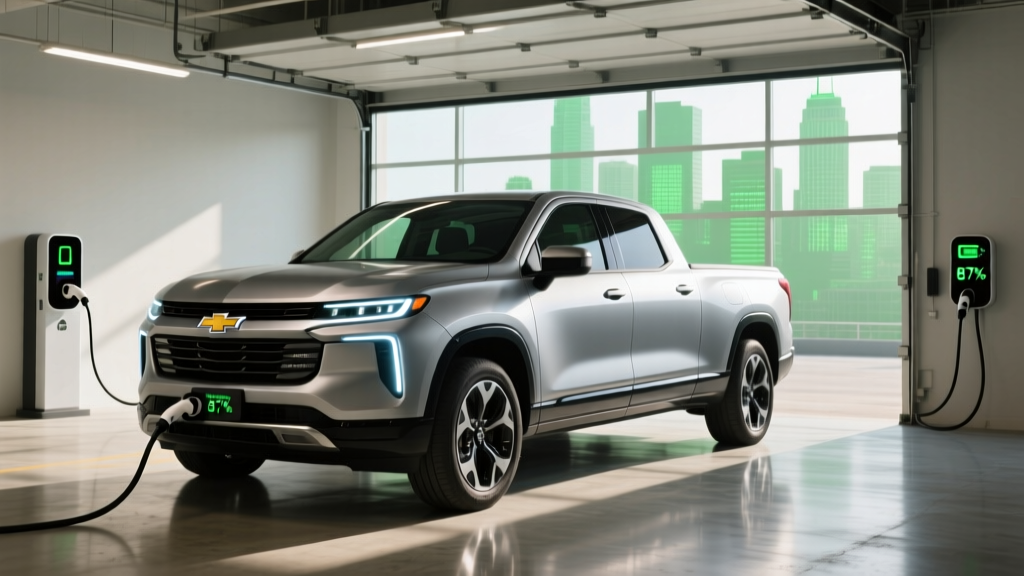
The Chevrolet Silverado EV has been one of the most closely watched entries in the electric pickup segment, and for good reason: it pairs GM's Ultium battery platform with full-size truck capability. But with multiple trims rolling out on staggered timelines, pinning down the exact Chevy Silverado EV production date for the configuration you want requires a closer look. This guide breaks down the production timeline, real-world range expectations, charging performance, pricing, and whether the Silverado EV earns a spot in your driveway versus a Ford F-150 Lightning or Rivian R1T.
Silverado EV Production Timeline: What's Available Now and What's Next
GM launched the Silverado EV with the limited-edition RST First Edition (Model Year 2024), followed by the fleet-oriented WT (Work Truck) variant. Production for retail customers began at Factory ZERO in Detroit-Hamtramck in early 2024, with broader trim availability expanding through the 2025 and 2026 model years.
As of the 2026 model year, the Silverado EV lineup includes:
- WT (Work Truck) — fleet and commercial-focused, available in both Standard and Extended Range batteries
- LT — the mainstream retail trim, positioned as the volume seller with premium features
- RST — the performance and luxury flagship, offered with the Max Range battery
- Trail Boss — off-road-oriented trim with lifted suspension and all-terrain tires
If you're researching the Chevy Silverado EV production date for a specific trim, the WT and RST are in full production. The LT began retail deliveries in mid-2025, and the Trail Boss followed shortly after. GM continues to ramp output at Factory ZERO alongside the GMC Sierra EV, which shares the Ultium platform.
Range, Battery, and Real-World Efficiency
The Silverado EV offers multiple battery configurations depending on trim. The largest pack — GM's Ultium 24-module battery — delivers an EPA-estimated 440 miles of range on the RST Max Range variant, one of the highest figures of any production EV. The Standard Range battery, available on WT and LT trims, carries an EPA estimate of approximately 260 miles.
EPA (RST Max Range): 440 miles
Real-world highway (70 mph, 75°F): ~360–385 miles
Cold weather (30°F, highway): ~310–340 miles
EPA (Standard Range WT/LT): 260 miles
Real-world highway: ~210–225 miles
The 440-mile EPA figure is measured on a mixed city/highway cycle. Sustained highway driving at 75+ mph reduces efficiency due to aerodynamic drag — the Silverado EV's large frontal area works against it at speed. Cold weather compounds this: expect 20–30% range reduction in freezing temperatures, especially without preconditioning. The available heat pump on higher trims mitigates some of this loss.
The Ultium platform uses NMC (nickel manganese cobalt) lithium-ion chemistry across the Silverado EV lineup, prioritizing energy density to achieve these range figures. The usable battery capacity is approximately 200 kWh for the Max Range pack and 120 kWh for the Standard Range, though GM has not published exact usable vs. gross figures.
| Spec | WT (Standard Range) | LT (Extended Range) | RST (Max Range) |
|---|---|---|---|
| EPA Range | ~260 mi | ~360 mi | 440 mi |
| Battery (usable est.) | ~120 kWh | ~170 kWh | ~200 kWh |
| Chemistry | NMC (Ultium) | NMC (Ultium) | NMC (Ultium) |
| Drivetrain | AWD (dual-motor) | AWD (dual-motor) | AWD (dual-motor) |
| Horsepower | 510 hp | 645 hp | 754 hp (Wide Open Watts) |
| 0–60 mph | ~5.5 sec | ~4.5 sec | ~4.2 sec |
| Max Tow Capacity | 10,000 lb | 10,000 lb | 10,000 lb (12,000 lb w/ max tow pkg) |
| MPGe (combined) | ~55 MPGe | ~58 MPGe | ~61 MPGe |
| Efficiency | ~61 kWh/100 mi | ~58 kWh/100 mi | ~55 kWh/100 mi |
Charging Speed: DC Fast Charging and Home Level 2
Charging is where the Silverado EV's 800-volt Ultium architecture pays dividends. The Max Range variants support a peak DC fast-charge rate of 350 kW at compatible V3-class chargers, while Standard Range models peak around 200 kW.
| Charging Level | Power | Speed / Time | Notes |
|---|---|---|---|
| Level 1 (120V) | ~1.4 kW | ~3–4 mi/hr | Emergency/trickle only |
| Level 2 (240V, 48A) | 11.5 kW | ~24–30 mi/hr | Standard home charging; full charge overnight |
| Level 2 (240V, 80A) | 19.2 kW | ~40–48 mi/hr | Available with optional onboard charger upgrade |
| DC Fast (Max Range) | Peak 350 kW | 10–80% in ~20 min | Requires 350 kW station; tapers above 80% |
| DC Fast (Std Range) | Peak 200 kW | 10–80% in ~28 min | Sustained rate lower than peak |
Charging curve reality check: The 350 kW peak is not sustained across the entire session. Expect the Silverado EV to hold above 250 kW from roughly 10–50% State of Charge, then taper progressively through the 50–80% range. A typical 10–80% session at a 350 kW-capable Electrify America or EVgo station takes approximately 20 minutes for the Max Range pack. At a 150 kW charger — still the most common DC fast-charger class in the US — plan for 35–45 minutes for the same 10–80% window.
At home, a 48-amp Level 2 wall connector on a 240V/60A circuit adds roughly 25–30 miles of range per hour, enough to fully replenish even the Max Range battery in about 8–9 hours. The optional 19.2 kW onboard charger (80A) cuts that to around 5–6 hours but requires a 100A dedicated circuit — a significant electrical upgrade that can add $1,500–$3,000 to your installation cost, per Chevrolet's charging guidance.
Performance, Towing, and Utility
The Silverado EV is no sluggish workhorse. In its top RST configuration with Wide Open Watts mode engaged, the dual-motor AWD system delivers 754 horsepower and a 0–60 mph time of approximately 4.2 seconds — territory that rivals performance SUVs, let alone full-size pickups. The WT trim, while detuned to 510 hp, still hits 60 mph in about 5.5 seconds.
Towing capacity maxes out at 10,000 pounds across most trims, with a 12,000-pound max tow package available on the RST. However, towing at capacity will slash range dramatically — expect a 40–60% reduction depending on trailer aerodynamics and terrain. A 440-mile truck becomes a 200-mile truck when pulling a loaded car hauler.
The Silverado EV features a Multi-Flex Midgate that folds the rear cabin wall into the bed, extending the effective bed length from 5'11" to over 10 feet with the tailgate down. The front trunk (e-trunk or "frunk") offers 10.2 cubic feet of lockable, weather-sealed storage — enough for several carry-on bags or a full set of power tools.
Cargo and passenger dimensions:
- Bed length (Midgate closed): 5'11" (71.2 in)
- Bed length (Midgate open): 10'1" (121.2 in)
- Frunk volume: 10.2 cu ft
- Rear legroom: ~43.4 in
- Front legroom: ~44.2 in
- GVWR: ~9,500 lb (varies by trim)
Pricing, Trims, and Federal Tax Credit Eligibility
The Silverado EV's pricing spans a wide range depending on battery size and trim. Here's where each configuration lands before incentives:
| Trim | Base MSRP | §30D MSRP Cap | Max Credit | Est. After Credit |
|---|---|---|---|---|
| WT Standard Range | ~$55,000 | $80,000 (trucks) | Up to $7,500 | ~$47,500 |
| LT Extended Range | ~$68,000 | $80,000 (trucks) | Up to $7,500 | ~$60,500 |
| RST Max Range | ~$87,000 | $80,000 (trucks) | $0 (exceeds cap) | ~$87,000 |
| Trail Boss | ~$72,000 | $80,000 (trucks) | Up to $7,500 | ~$64,500 |
Critical tax credit caveats: Under current IRS §30D rules, the Silverado EV qualifies as a light truck, subject to an $80,000 MSRP cap. This means the RST Max Range at ~$87,000 does not qualify for the federal credit. The WT, LT, and Trail Boss trims fall under the cap and may qualify for up to $7,500, but eligibility also depends on:
- Buyer income caps: AGI must not exceed $300,000 (joint), $225,000 (head of household), or $150,000 (single)
- Battery sourcing: A portion of the credit ($3,750) requires critical minerals sourced from the US or FTA partners; the other $3,750 requires battery components manufactured in North America. These percentages tighten annually under the Inflation Reduction Act
- Point-of-sale transfer: As of 2024, buyers can transfer the credit to the dealer at purchase, reducing the upfront price rather than waiting for a tax refund
- Final assembly: Must occur in North America (Factory ZERO qualifies)
Always verify current-year eligibility at IRS.gov §30D and check the specific VIN on fueleconomy.gov before purchasing, as battery sourcing compliance can shift between model years.
Technology, Driver Assistance, and Interior
The Silverado EV's cabin is dominated by a massive 17.7-inch diagonal infotainment touchscreen running GM's latest Ultifi software platform, paired with an 11-inch driver instrument cluster. Wireless Apple CarPlay and Android Auto are standard, along with a Wi-Fi hotspot and over-the-air update capability.
On the driver-assistance front, the Silverado EV offers Super Cruise — GM's Level 2 hands-free driving system — on over 400,000 miles of compatible highways in North America. Super Cruise uses LiDAR-mapped road data and a driver-facing camera to ensure you remain attentive. It is not self-driving (that would require SAE Level 4); you must remain alert and ready to take over at all times.
Super Cruise is an SAE Level 2 driver-assistance system. It controls steering, acceleration, and braking on compatible roads, but the driver must remain engaged and supervising. This is fundamentally different from Level 4 robotaxi services like Waymo, which operate without any human driver in geofenced areas.
Additional tech highlights include:
- ProGrade Trailering System with trailer light test, tire pressure monitoring, and blind-spot monitoring extended to trailer length
- Four-wheel steering (CrabWalk mode) on RST for diagonal movement in tight spaces
- Vehicle-to-load (V2L) capability via the PowerBase system, offering up to 10.2 kW of offboard power through bed and frunk outlets — enough to run power tools, a campsite, or essential home circuits during an outage
- Adaptive air suspension on RST with entry/exit lowering and off-road height settings
Notable drawbacks: The Silverado EV's sheer size (233+ inches long, over 6,500 lb curb weight) makes it unwieldy in tight urban environments and parking garages. The 17.7-inch screen, while impressive, relies heavily on touch controls with few physical buttons, which can frustrate users who prefer tactile knobs for climate and volume. Some early-build models have reported software glitches with the Ultifi platform, though OTA updates have addressed many of these.
- Class-leading 440-mile EPA range (Max Range)
- 350 kW peak DC charging on 800V architecture
- 10.2 kW V2L offboard power (PowerBase)
- Multi-Flex Midgate for extended bed utility
- Super Cruise hands-free highway driving
- Strong towing capacity (up to 12,000 lb with package)
- RST Max Range exceeds $80K MSRP cap — no federal tax credit
- Real-world highway and cold-weather range drops 15–30%
- Heavy curb weight impacts tire wear and efficiency
- Touch-heavy interior with minimal physical controls
- Large footprint challenging for urban parking
- Towing drastically reduces range (40–60% loss)
Who the Silverado EV Is For
The Silverado EV makes the most sense for buyers who need full-size truck utility — bed space, towing, offboard power — but want to eliminate fuel costs and reduce daily operating expenses. It's particularly compelling for:
- Fleet and commercial users (WT trim) who can leverage the §30D credit, depot charging, and low per-mile electricity costs
- Homeowners with solar or time-of-use rates who can charge cheaply overnight and use V2L for backup power
- Long-distance commuters who benefit from the Max Range battery and Super Cruise on highway routes
- Outdoor enthusiasts who value the Midgate for hauling kayaks, lumber, or camping gear and the V2L for campsite power
It's less ideal for urban dwellers without home charging access, buyers on a tight budget (even the WT starts around $55K), or anyone expecting the RST to qualify for the federal credit at its current MSRP.
Silverado EV vs. Ford F-150 Lightning vs. Rivian R1T
The electric truck market is competitive. Here's how the Silverado EV stacks up against its primary rivals:
| Spec | Chevy Silverado EV (RST) | Ford F-150 Lightning (Platinum) | Rivian R1T (Dual Max) |
|---|---|---|---|
| EPA Range | 440 mi | 320 mi | 410 mi |
| Peak DC Charging | 350 kW | 150 kW | 200 kW |
| 0–60 mph | 4.2 sec | 4.5 sec | 3.5 sec |
| Max Tow | 12,000 lb | 10,000 lb | 11,000 lb |
| Base MSRP (top trim) | ~$87,000 | ~$82,000 | ~$89,000 |
| V2L / Offboard Power | 10.2 kW | 9.6 kW (Pro Power) | 3.6 kW (bed outlets) |
| Hands-Free ADAS | Super Cruise | BlueCruise | Highway Assist |
The Silverado EV wins on range and charging speed. The F-150 Lightning wins on pricing and broader trim availability. The R1T wins on performance and compact footprint but sacrifices bed length and is built in lower volumes.
Frequently Asked Questions
What is the real-world range of the Chevy Silverado EV?
The EPA rates the Max Range RST at 440 miles, but real-world highway driving at 70–75 mph typically yields 360–385 miles. In cold weather (below freezing), expect 310–340 miles. The Standard Range WT delivers about 210–225 real-world highway miles from its 260-mile EPA rating.
How fast does the Silverado EV charge at home and on the road?
At a 350 kW DC fast charger, the Max Range battery goes from 10–80% in approximately 20 minutes. At a more common 150 kW station, plan for 35–45 minutes. Home Level 2 charging at 11.5 kW (48A) adds roughly 25–30 miles per hour, fully replenishing the Max Range pack overnight in 8–9 hours.
Does the Chevy Silverado EV qualify for the federal EV tax credit?
The WT, LT, and Trail Boss trims (under the $80,000 MSRP cap for trucks) may qualify for up to $7,500 under IRS §30D, subject to buyer income limits, battery sourcing requirements, and point-of-sale transfer rules. The RST Max Range at ~$87,000 exceeds the MSRP cap and does not qualify. Verify current eligibility at IRS.gov.
Is the Silverado EV worth buying over the F-150 Lightning or R1T?
Choose the Silverado EV if range and DC charging speed are your top priorities and you need the Midgate for long cargo. Choose the F-150 Lightning for lower entry pricing and broader dealer availability. Choose the R1T for performance, a more car-like footprint, and adventure-oriented features like the gear tunnel.
What is the biggest drawback of the Silverado EV?
The RST's $87,000+ price tag puts it above the §30D MSRP cap, eliminating the $7,500 federal credit for the most desirable trim. Additionally, the truck's heavy curb weight (6,500+ lb) and large footprint make it less practical for tight urban environments, and real-world range falls notably short of the 440-mile EPA sticker at highway speeds.
What is the Silverado EV's battery warranty?
GM covers the Ultium battery pack for 8 years or 100,000 miles (whichever comes first), with a capacity retention threshold of 70%. The bumper-to-bumper warranty is 3 years/36,000 miles, and the powertrain warranty is 5 years/60,000 miles.