Quick Answer: Is the Chevy S10 Electric Worth Waiting For?
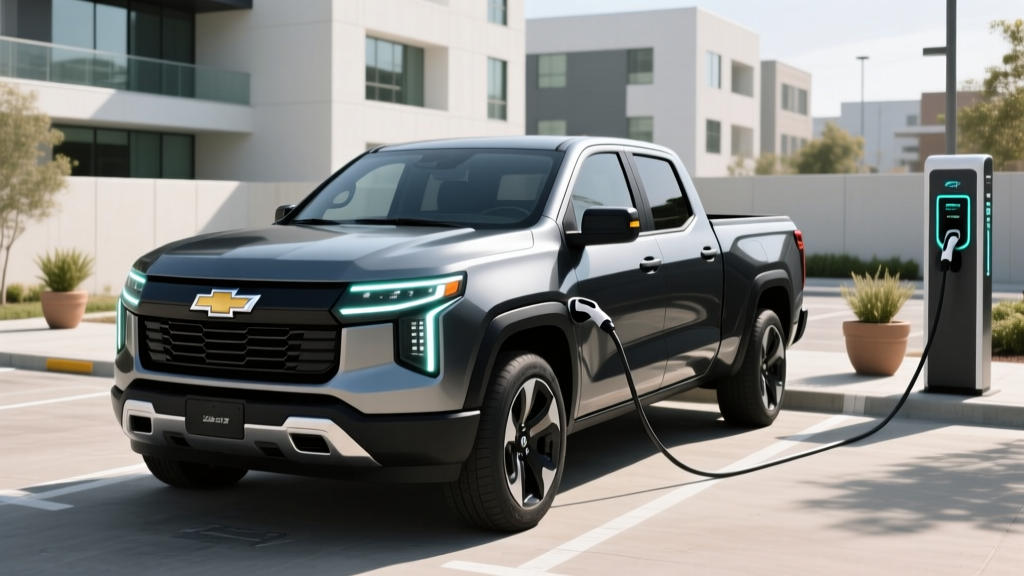
The Chevrolet S10 Electric is an announced compact electric pickup expected to slot below the Silverado EV in Chevy's truck lineup. As of early 2026, GM has confirmed the S10 Electric nameplate for select Latin American markets, while a North American compact EV truck (potentially wearing the S10 badge or a new name) remains in development with preliminary specs pointing to a ~250-mile EPA range, a ~65–75 kWh battery pack, and a starting MSRP in the $35,000–$42,000 range. If you need a truck today, the Ford Maverick Hybrid (42 MPG combined) or the Rivian R1T are available now. If you can wait for a sub-$40K electric compact pickup, the S10 Electric is one to watch — but final North American specs, pricing, and §30D tax-credit eligibility remain unconfirmed.
What Is the Chevy S10 Electric?
The Chevrolet S10 was a staple compact pickup from 1982 to 2004 in the U.S. GM revived the S10 nameplate in Brazil and Latin America as a midsize truck, and in late 2023, Chevrolet launched the S10 Electric concept for those markets. For North American buyers searching for an "S10 Electric," the real question is whether GM will bring a compact electric pickup stateside to compete with the Ford Maverick, Hyundai Santa Cruz, and the rumored next-gen Toyota compact truck.
Based on GM's Ultium platform architecture and statements from GM Newsroom, the company has signaled intent to expand its EV truck portfolio below the Silverado EV's ~$55,000 starting price. A compact Ultium-based pickup could share components with the Chevrolet Equinox EV (which starts around $33,000) and leverage the same battery modules.
Projected Specs: Range, Battery, and Charging
Since final North American specs haven't been published, here's what we can estimate based on the Equinox EV platform and the Latin American S10 Electric prototype data. Treat these as preliminary projections, not confirmed figures.
| Spec | Projected (N.A. Compact EV Truck) | Reference: Equinox EV 3RS |
|---|---|---|
| Battery Capacity (usable) | ~65–75 kWh (NMC, Ultium) | 85 kWh |
| EPA Range (est.) | ~230–260 mi | 319 mi |
| Peak DC Fast Charge | ~150 kW | 150 kW |
| 10–80% DC Charge Time | ~30–35 min (est.) | ~34 min |
| Level 2 AC Charging | 11.5 kW (~34 mi/hr) | 11.5 kW |
| Horsepower | ~200–250 hp (FWD/AWD) | 288 hp (AWD) |
| 0–60 mph (est.) | ~7.0–8.5 sec | 7.4 sec (AWD) |
| Towing Capacity (est.) | ~3,500–5,000 lbs | 1,500 lbs |
| Bed Length | ~4.5–5 ft (compact) | N/A |
Real-World Range Expectations
If the S10 Electric achieves an EPA rating of ~250 miles, plan for ~190–220 miles in real-world highway driving at 70+ mph, and potentially ~150–180 miles in sub-30°F winter conditions without a heat pump. Towing even a light 2,500-lb trailer could cut range by 40–50%. These are typical EV truck reductions — the Rivian R1T and F-150 Lightning show similar patterns. Always budget your trips around 75% of the EPA sticker for safety margin.
S10 Electric vs. Gas Compact Trucks: Cost & Efficiency Data
The most direct comparison for a potential S10 Electric buyer is the Ford Maverick, available as both a conventional hybrid (HEV) and a 2.0L EcoBoost gas model. Here's how the numbers stack up over a typical 5-year, 75,000-mile ownership cycle.
| Metric | S10 Electric (Projected) | Ford Maverick Hybrid | Ford Maverick 2.0T Gas |
|---|---|---|---|
| Base MSRP (2026) | ~$37,000 (est.) | $28,490 | $29,490 |
| EPA Efficiency | ~100 MPGe (est.) | 42 MPG combined | 26 MPG combined |
| Energy/Fuel Cost (75K mi) | ~$2,625* | ~$5,357** | ~$8,654** |
| Maintenance (5 yr est.) | ~$1,800 | ~$3,500 | ~$3,800 |
| Federal Tax Credit (§30D) | Up to $7,500 (if eligible) | $0 | $0 |
| 5-Year Total Cost*** | ~$36,425 | ~$37,347 | ~$41,944 |
* Assumes $0.14/kWh national avg, 3.5 mi/kWh efficiency. ** Assumes $3.50/gal regular unleaded. *** Includes purchase price (minus tax credit where applicable), energy/fuel, and maintenance. Excludes insurance, depreciation, and state incentives. Actual results vary by region, driving habits, and electricity rates.
The takeaway: even with a higher sticker price, the S10 Electric's lower per-mile energy cost and near-zero drivetrain maintenance (no oil changes, no transmission fluid, no spark plugs) can close the gap within 4–5 years — especially if you qualify for the full $7,500 §30D federal tax credit and charge primarily at home on residential electricity rates.
Real Ownership Costs: Charging, Insurance, and the Home-Charging Factor
The single biggest variable in EV truck ownership isn't the sticker price — it's whether you can charge at home. Here's the honest breakdown.
| Cost Category | Home Charging (Level 2) | Public DC Fast Charging | Gas Equivalent (Maverick 2.0T) |
|---|---|---|---|
| Cost per mile | ~$0.035–$0.05 | ~$0.10–$0.15 | ~$0.115 |
| Annual cost (15K mi) | ~$525–$750 | ~$1,500–$2,250 | ~$1,730 |
| Time per "fill-up" | Overnight (6–8 hr) | 30–45 min | 5–10 min |
Home Level 2 installation typically costs $800–$2,500 for a 240V/48A hardwired charger (like the ChargePoint Home Flex or Emporia Level 2), assuming your electrical panel has capacity. If you need a panel upgrade from 100A to 200A, add $1,500–$3,000. This upfront investment pays for itself within 1–2 years compared to exclusive public charging.
Insurance is typically 15–25% higher for EVs than comparable gas trucks, according to industry data. Budget an extra $200–$400/year. Some insurers (Progressive, State Farm) have begun offering EV-specific discounts — always comparison-shop.
Federal Tax Credit: Will the S10 Electric Qualify?
Under current IRS §30D rules for 2026, the federal clean vehicle credit offers up to $7,500, split into two halves:
- $3,750 — Battery components: Must be manufactured/assembled in North America (percentage threshold increases annually).
- $3,750 — Critical minerals: Must be sourced from the U.S. or FTA-partner countries (threshold increases annually).
- MSRP cap: Trucks/vans/SUVs must be under $80,000 MSRP — the S10 Electric should clear this easily.
- Buyer income cap: AGI must not exceed $150K (single), $225K (head of household), or $300K (joint).
- Point-of-sale transfer: You can apply the credit as an instant dealer discount rather than waiting for tax filing.
Because GM manufactures Ultium battery cells in Ohio and Tennessee (via the Ultium Cells LLC joint venture), a domestically built S10 Electric has a strong chance of qualifying for at least half the credit ($3,750), potentially the full $7,500 depending on critical-mineral sourcing at the time of production. Confirm eligibility on the IRS qualified vehicles list before purchasing — rules and qualifying models update frequently.
Common Misconceptions About Electric Pickups
| Myth | Fact |
|---|---|
| "Electric trucks can't tow." | They can tow — but range drops 40–50% when towing. A 250-mi truck becomes a ~140-mi truck with a 4,000-lb trailer. Plan accordingly. |
| "The battery will need replacing in 5 years." | GM's Ultium batteries carry an 8-year/100,000-mile warranty (typically guaranteeing ≥70% capacity retention). Real-world degradation data from GM EVs shows ~10–12% loss over 150K miles. |
| "Charging takes too long for road trips." | At 150 kW peak, a 10–80% charge takes ~30–35 minutes — roughly one meal stop every 2–3 hours of driving. The charge curve tapers significantly above 80%, so most drivers unplug at 80%. |
| "EVs are worse for the environment because of battery mining." | Lifecycle analyses from Argonne National Lab show EVs produce fewer total emissions over their lifetime than gas vehicles in every U.S. grid region, even accounting for battery manufacturing. The grid is also getting cleaner every year. |
| "I need a special electrical service at home." | Most homes with a 200A panel can support a 48A Level 2 charger. A licensed electrician can confirm your capacity. Even a standard 120V outlet (Level 1) adds ~3–5 miles of range per hour — enough for some daily commutes. |
Decision Framework: Should You Wait for the S10 Electric or Buy Now?
Choose the S10 Electric (wait) if:
- You want an all-electric compact truck under $40K and can wait until late 2026–2027 for availability.
- You have home charging access (garage or driveway with 240V outlet or panel capacity).
- Your daily driving is under 150 miles round-trip, and you tow occasionally (not daily).
- You want to minimize per-mile fuel costs and are eligible for the §30D tax credit.
- You prefer the GM ecosystem (Super Cruise availability, Ultium platform service network).
Buy now instead if:
- Ford Maverick Hybrid: You need a truck now, want 42 MPG combined, and don't need EV charging infrastructure. Starting at ~$28,490, it's the efficiency king of compact trucks available today.
- Rivian R1T: You want a full-size electric truck with 352 miles of range (Dual-Motor Max Pack), 11,000-lb towing, and proven off-road capability — but expect to pay $75,000+.
- Chevrolet Silverado EV: You want a GM Ultium electric truck today with 400+ miles of range (4WT trim) and 8,000-lb towing, starting around $55,000.
- Hyundai Santa Cruz: You want a compact unibody truck for light-duty urban use, starting under $28,000 (gas only, no hybrid option for 2026).
What First-Time EV Truck Buyers Should Know
If the S10 Electric will be your first EV, here are the practical realities that spec sheets don't emphasize:
1. The charge curve matters more than peak kW. A truck that peaks at 150 kW but tapers sharply above 60% SoC may actually charge slower overall than one with a lower peak but a flatter curve. Watch for 10–80% times, not peak numbers.
2. Cold weather is real range loss. If you live above the 37th parallel (roughly: anywhere it snows regularly), expect 20–35% range reduction in winter. A 250-mile truck becomes ~170 miles on a 15°F day. Preconditioning (warming the battery while plugged in) mitigates this somewhat.
3. Payload and range are inversely related. A full bed of gravel or lumber adds weight that directly reduces range. Plan heavy-haul days around shorter routes or mid-trip charging.
4. Public charging for trucks is still limited. Many DC fast-charging stations have tight pull-through lanes not designed for truck beds and trailers. NREL and networks like Electrify America are expanding truck-friendly stations, but coverage remains uneven in rural areas.
5. Regenerative braking changes how you drive. One-pedal driving (max regen) can recover significant energy in stop-and-go traffic and on downhill grades, partially offsetting range loss. Most GM Ultium vehicles offer adjustable regen levels.
Frequently Asked Questions
When will the Chevy S10 Electric be available in the U.S.?
GM has not confirmed a U.S. launch date. The S10 Electric is currently announced for Latin American markets. A North American compact EV truck based on Ultium is widely expected for the 2027 model year, but the badge name (S10, Colorado EV, or something new) has not been officially announced. Watch GM Newsroom for updates.
Will the S10 Electric have a frunk (front trunk)?
Most Ultium-based EVs (Silverado EV, Blazer EV, Equinox EV) include a front trunk. A compact S10 Electric would likely offer a modest frunk (~3–5 cu ft) suitable for charging cables, a small toolkit, or groceries — though final cargo specs depend on the powertrain layout.
Can I use a Tesla Supercharger with the S10 Electric?
GM vehicles built for 2025+ are equipped with the NACS (North American Charging Standard) port, granting native access to Tesla's Supercharger network (15,000+ stalls). If the S10 Electric follows this plan, you'll plug directly into a Supercharger without an adapter — a significant advantage for road trips.
How does EV truck maintenance compare to gas trucks?
EV trucks eliminate oil changes, transmission fluid, spark plugs, exhaust system repairs, and most brake wear (thanks to regenerative braking). You'll still need tire rotations, cabin air filter replacements, brake fluid checks, and windshield washer fluid. Expect annual maintenance costs of $300–$500 vs. $700–$1,000+ for a gas truck.
What battery warranty does GM offer?
GM's Ultium battery packs carry an 8-year/100,000-mile limited warranty covering defects and excessive capacity loss (typically below 70% state of health). The Chevrolet powertrain warranty also covers the electric drive unit for the same period.
Is an electric truck practical if I only have street parking?
Without home charging, EV ownership becomes significantly more expensive and time-consuming. You'd rely entirely on public DC fast charging ($0.10–$0.15/mile) or workplace charging. If your workplace or apartment complex offers Level 2 charging, it's workable — but crunch the numbers carefully before committing.