If you've landed here searching for the 2011 Chevy Malibu bolt pattern, you likely need to fit new wheels, replace a damaged rim, or — increasingly — you're scoping out a classic mid-size sedan for an electric-vehicle conversion project. The Malibu's been a staple of American roads for decades, and the 2011 model year (part of the seventh-generation Epsilon platform) remains a popular candidate for DIY EV swaps thanks to its spacious engine bay, straightforward chassis, and abundant aftermarket parts.
Below, we give you the exact wheel bolt pattern, hub bore, and lug specs for the 2011 Malibu — then go further than any standard wheel guide by explaining what these numbers mean for anyone considering an electrified powertrain conversion or simply maintaining this aging sedan with EV-inspired aftermarket upgrades.
2011 Chevy Malibu Bolt Pattern: The Exact Spec
The 2011 Chevrolet Malibu uses a 5-lug, 120 mm bolt circle — written as 5×120 mm (or 5×4.72 inches in imperial). This is the same bolt pattern shared with many General Motors vehicles of the era, as well as several BMW models and older Honda/Acura platforms.
| Specification | Value |
|---|---|
| Bolt Pattern | 5×120 mm (5×4.72 in) |
| Center Bore | 70.3 mm |
| Lug Thread Size | M12 × 1.5 |
| Lug Type | Lug nut (conical/acorn seat) |
| Stock Wheel Size | 16×6.5 in (base) / 17×7.5 in (LTZ) |
| Stock Tire Size | P215/60R16 (base) / P225/50R17 (LTZ) |
| Offset Range (stock) | +40 to +45 mm |
These figures apply across all 2011 Malibu trims — LS, LT, and LTZ — regardless of whether the car left the factory with the 2.4L four-cylinder or the 3.6L V6. The wheel hub assembly is identical across the lineup.
Why the Bolt Pattern Matters for EV Conversions
The 5×120 bolt pattern is more than a trivia answer — it's a critical constraint if you're planning to convert a 2011 Malibu to electric power. Here's why:
Weight Increase and Wheel Load Ratings
A typical EV conversion adds 300–600 lbs of battery mass compared to the original powertrain. The stock Malibu's curb weight sits around 3,400 lbs; a converted version with a 40–60 kWh battery pack could push 3,800–4,000 lbs. That extra weight stresses wheels, bearings, and suspension components. You'll want aftermarket 5×120 wheels rated for at least 1,500 lbs per corner (6,000 lbs total axle capacity) rather than lightweight show wheels rated for lighter vehicles.
Regenerative Braking and Torque Considerations
Electric motors deliver instant torque — often 200+ lb-ft in a conversion-grade motor like a NetGain Hyper9 or a salvaged Tesla drive unit. Combined with regenerative braking forces that differ from the Malibu's original friction-brake calibration, your wheels endure different load cycles than GM engineers designed for in 2011. Stick with cast or forged aluminum wheels from reputable manufacturers (Enkei, Konig, or BBS) in the 5×120 pattern rather than cheap replicas.
Hub-Centric vs. Lug-Centric Fitment
The 2011 Malibu's 70.3 mm center bore means most aftermarket 5×120 wheels will need hub-centric rings (typically 70.3 mm to the wheel's bore size) to prevent vibration at highway speeds. This is non-negotiable in an EV conversion, where NVH (noise, vibration, harshness) is more noticeable without an engine masking it.
2011 Malibu as an EV Conversion Platform: What to Expect
While the 2011 Malibu was never sold as an electric vehicle, it has become a niche favorite in the EV conversion community. Here's a realistic look at what a conversion entails — including the performance and range you can actually expect.
| Parameter | Budget Build (Lead-Acid) | Mid-Range (LFP Pack) | High-End (NMC/Tesla Modules) |
|---|---|---|---|
| Battery Capacity | 15–20 kWh | 40–50 kWh | 60–75 kWh |
| Battery Chemistry | Lead-acid / AGM | LFP (Lithium Iron Phosphate) | NMC (Nickel Manganese Cobalt) |
| Estimated Range | 35–50 miles | 100–130 miles | 150–200 miles |
| Motor Power | 50–80 kW | 100–150 kW | 150–200 kW |
| 0–60 mph (est.) | 12–15 sec | 7–9 sec | 5–7 sec |
| Conversion Cost | $8,000–$15,000 | $20,000–$35,000 | $40,000–$65,000+ |
| Charging | Level 1 only (1.4 kW) | Level 2 (3.3–6.6 kW) | Level 2 + DCFC (up to 50 kW) |
These numbers are representative of builds documented on forums like DIY Electric Car and OpenInverter. Actual results depend on motor selection, battery management system (BMS) quality, vehicle weight, and driving habits.
LFP vs. NMC: Which Battery Chemistry for a Malibu Swap?
For a conversion project, your chemistry choice shapes everything:
- LFP (Lithium Iron Phosphate): Heavier per kWh but far more thermally stable, longer cycle life (3,000–5,000 cycles), and tolerant of daily 100% charges. Ideal for a commuter Malibu you'll drive 30–60 miles daily. Lower energy density means you'll sacrifice some trunk space to battery modules.
- NMC (Nickel Manganese Cobalt): Higher energy density lets you pack more kWh into the same physical space — critical when fitting batteries into a Malibu's engine bay and rear-seat area. However, NMC degrades faster if routinely charged to 100% and requires more sophisticated thermal management. Best for builds targeting maximum range.
Charging a Converted Malibu: Realistic Expectations
Unlike factory EVs with standardized charging ports and battery management, a converted 2011 Malibu's charging capabilities depend entirely on your build choices. Here's what most converters install:
| Level | Power | Typical Equipment | 10–80% Time (40 kWh pack) |
|---|---|---|---|
| Level 1 (120V) | 1.4 kW | OEM-style EVSE, J1772 inlet | ~24 hours |
| Level 2 (240V) | 3.3–7.2 kW | ChargePoint Home, Emporia, or Elcon charger | 4.5–9 hours |
| DC Fast Charge | 20–50 kW | CHAdeMO or CCS adapter with compatible BMS | 45–90 minutes |
Most converters skip DC fast charging due to the complexity of integrating BMS communication with public chargers. A solid Level 2 setup at home (typically 6.6 kW) is the practical sweet spot, adding roughly 20–25 miles of range per hour of charging for a mid-range LFP build.
Wheel and Tire Upgrades That Complement an EV Swap
Once your 2011 Malibu is electric, your wheel and tire choices directly impact range, efficiency, and ride quality. Here's what experienced converters recommend:
Low Rolling Resistance Tires
Switching from stock all-season tires to a low-rolling-resistance (LRR) option like the Michelin Energy Saver A/S or Continental EcoContact can recover 3–7% of range — meaningful when your total range is 100–130 miles. The stock P215/60R16 size is widely available in LRR options.
Lightweight 5×120 Wheels
Reducing unsprung weight improves both efficiency and regenerative braking effectiveness. Forged aluminum 5×120 wheels from manufacturers like Enkei (RPF1 in 5×120, 17×8, ~15 lbs) can shed 5–8 lbs per corner versus stock cast aluminum. That 20–32 lb total reduction in unsprung mass is felt immediately in steering response and energy consumption.
Alignment and Bearing Considerations
The added weight of batteries (often concentrated in the engine bay or under the rear seat) changes suspension geometry. After any EV conversion, get a full four-wheel alignment. Front camber may shift negative under the extra mass, causing inner-tire wear. Consider upgraded wheel bearings — the stock Timken units are rated for the original curb weight, not a 500-lb-heavier EV.
Federal Tax Credits and Conversion Legality
A common question: does a home EV conversion qualify for the IRS §30D federal clean vehicle tax credit? The short answer is no. The §30D credit applies only to new qualified plug-in electric vehicles purchased from a manufacturer, meeting specific MSRP caps ($55,000 for sedans, $80,000 for SUVs/trucks), buyer income limits ($150,000 single / $300,000 joint MAGI), and battery component/critical mineral sourcing requirements. A converted 2011 Malibu meets none of these criteria.
However, some states offer incentives for EV conversions or for registering a converted vehicle as a zero-emission vehicle. California's Clean Transportation Program has occasionally funded conversion projects, and states like Oregon and Colorado have offered rebates for registered EVs regardless of origin. Check your state's energy office or DMV for current programs.
From a registration standpoint, most states require a converted vehicle to pass a safety inspection and be re-titled as an electric vehicle. The process varies widely — California's BAR (Bureau of Automotive Repair) EV conversion registration is well-documented, while some states lack a clear pathway. Factor registration complexity into your project timeline.
Is a 2011 Malibu EV Conversion Worth It?
Pros
- Spacious engine bay fits large motor/controller assemblies
- 5×120 bolt pattern shares wheels with BMW, giving wide aftermarket options
- Low acquisition cost ($2,000–$4,500 for a clean example)
- Comfortable ride and generous interior (105 cu ft passenger volume)
- Simple electronics (pre-CAN-bus complexity of newer vehicles)
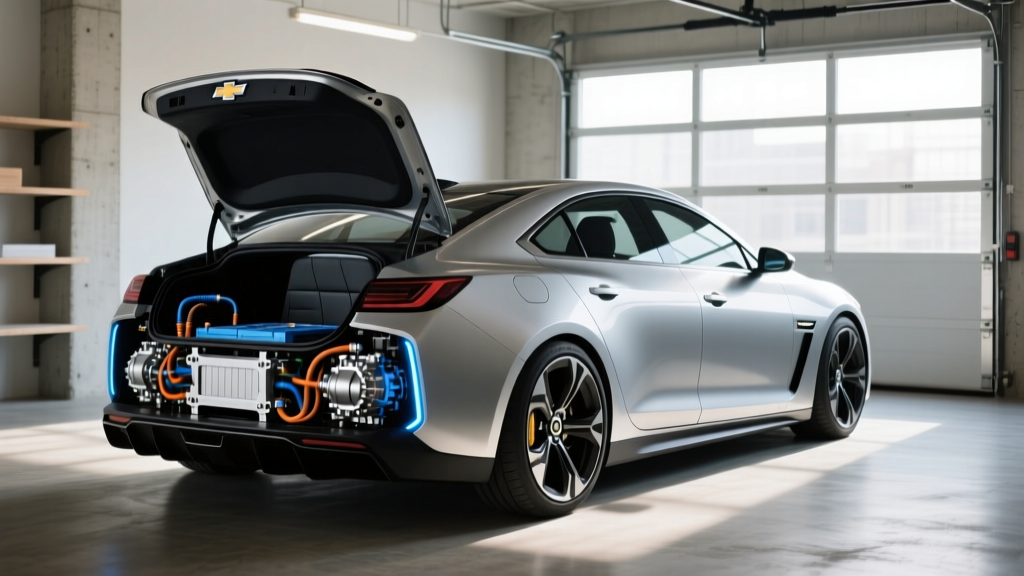
- 14.2 cu ft trunk allows rear-mounted battery placement
Cons
- No federal tax credit eligibility
- Heavy steel chassis limits efficiency (~280–320 Wh/mile)
- Suspension and brakes need upgrades for added battery weight
- Registration process is state-dependent and sometimes unclear
- No DC fast-charge capability in most DIY builds
- Insurance can be difficult to obtain for converted vehicles
Who Should Consider This Project?
A 2011 Malibu EV conversion makes sense for: hobbyist builders who enjoy the process as much as the result, fleet operators wanting to electrify a paid-off commuter vehicle, and anyone who wants a unique daily-driver EV without paying $35,000+ for a new one. It does not make financial sense if you simply need affordable electric transportation — a used Chevrolet Bolt EV (2017–2023) with 238–259 miles of EPA range sells for $12,000–$18,000 and qualifies for the used EV tax credit (up to $4,000 under IRC §25E, subject to income and price caps).
Frequently Asked Questions
What is the bolt pattern on a 2011 Chevy Malibu?
The 2011 Chevrolet Malibu uses a 5×120 mm (5×4.72 inch) bolt pattern with a 70.3 mm center bore and M12×1.5 lug nuts. This applies to all trims: LS, LT, and LTZ.
Can I use BMW wheels on a 2011 Malibu?
Many BMW wheels share the 5×120 bolt pattern, but BMW uses a 72.6 mm center bore versus the Malibu's 70.3 mm. You'll need hub-centric rings (72.6 to 70.3 mm) and must verify offset compatibility (BMW offsets are often lower, +30 to +40 mm, which may cause the wheel to sit further out).
How much does a 2011 Malibu EV conversion cost?
A basic lead-acid conversion starts around $8,000–$15,000. A practical mid-range build with an LFP battery pack (40–50 kWh, ~120 miles range) typically costs $20,000–$35,000 including motor, controller, BMS, charger, and labor. High-end builds using Tesla drive units and NMC modules can exceed $60,000.
What is the real-world range of a converted 2011 Malibu?
With a 40 kWh LFP pack, expect 100–130 miles in mild weather at mixed speeds. Highway-only driving at 70+ mph reduces this to roughly 80–100 miles. Winter conditions (below 30°F) with cabin heat can drop range to 75–95 miles. These figures assume a vehicle weight of approximately 3,800–4,000 lbs post-conversion.
Does a home EV conversion qualify for any tax credits?
No. The federal §30D new clean vehicle credit and §25E used vehicle credit both require factory-produced qualifying vehicles. Some states offer incentives for registered EV conversions — check with your state energy office or DMV. Equipment costs (motor, batteries, charger) may be partially deductible if the vehicle is used for business purposes; consult a tax professional.
What's the best battery chemistry for a Malibu EV swap?
LFP (lithium iron phosphate) is generally recommended for DIY conversions due to its superior thermal stability, tolerance of full charges, and longer cycle life. NMC offers higher energy density for maximum range but demands more sophisticated battery management and thermal systems. For a first-time converter, LFP is the safer, more forgiving choice.