2010 Chevy Malibu Bolt Pattern: The Essential Wheel Specs
If you're researching the chevy malibu 2010 bolt pattern, you're likely either replacing wheels on a seventh-generation Malibu, considering an EV conversion project, or cross-referencing fitment for aftermarket rims. The 2010 Chevrolet Malibu uses a 5x120mm bolt pattern (also expressed as 5x4.72 inches), which is shared with several GM platforms and some European vehicles.
| Specification | Value |
|---|---|
| Bolt Pattern | 5x120mm (5x4.72") |
| Center Bore | 66.9mm |
| Thread Size | M12 x 1.5 |
| Stock Wheel Diameter | 16"–18" (trim-dependent) |
| Stock Wheel Width | 6.5"–8.0" |
| Offset Range | +40mm to +45mm |
| Lug Nut Torque Spec | 100 lb-ft (135 Nm) |
The 5x120mm pattern is relatively uncommon in the domestic market but appears on the Pontiac G6, Saturn Aura (both Epsilon-platform siblings), and notably on many BMW models (3-series, 5-series, X3, X5 across multiple generations). This cross-compatibility opens interesting possibilities for wheel sourcing — whether you're maintaining a stock Malibu or building something more ambitious.
Why Bolt Pattern Matters for EV Conversions
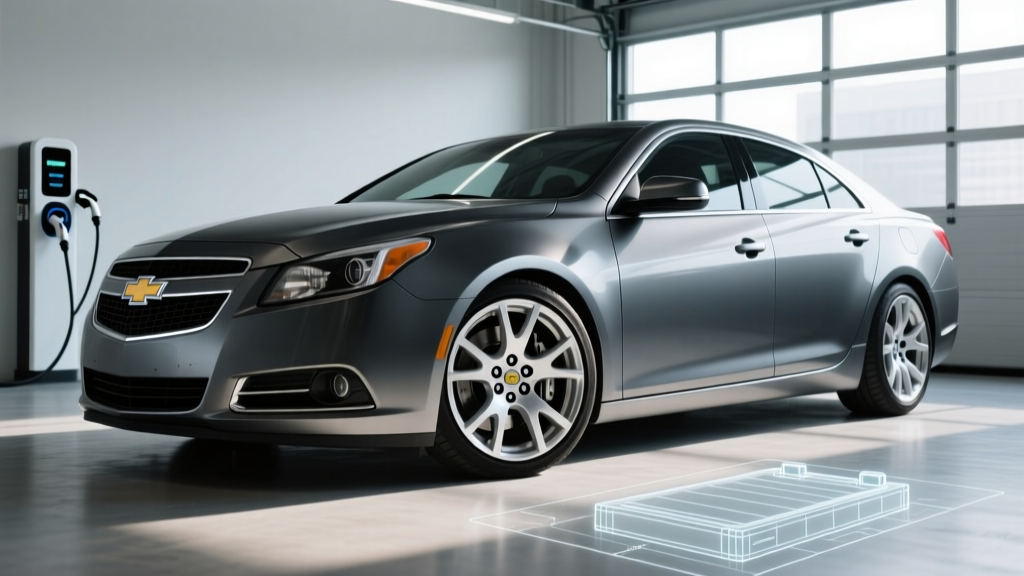
The 2010 Malibu sits on GM's Epsilon platform, which has become a popular donor chassis for EV conversion projects. Here's why the bolt pattern and wheel specs matter when you're swapping in an electric powertrain:
- Weight distribution changes: Removing the 2.4L I4 or 3.6L V6 and adding battery packs shifts axle loads significantly. You may need wheels with higher load ratings than stock.
- Regenerative braking forces: EV drivetrains impose different torque loads on wheel studs during regen deceleration, particularly with high-torque motors.
- Hub-centric fitment: The 66.9mm center bore must be matched precisely. Using wheels with a larger bore requires hub-centric rings; smaller bore wheels simply won't mount.
- Offset and clearance: EV conversions often require custom half-shafts or inboard motor placement, which can affect wheel offset requirements for proper suspension geometry.
EV Conversion Reality Check: 2010 Malibu Platform
Before committing to a 2010 Malibu EV swap, understand what you're working with. This is a midsize sedan originally rated at 22/30 MPG (city/highway) with the 2.4L four-cylinder, per fueleconomy.gov. Converting it to electric propulsion involves significant engineering.
Typical Conversion Specs (Aftermarket)
Professional EV conversion shops and DIY builders working with Epsilon-platform vehicles typically achieve these specifications:
| Metric | Typical Range |
|---|---|
| Battery Capacity | 40–60 kWh (NMC chemistry common) |
| Motor Output | 100–200 kW (134–268 hp) |
| 0-60 mph | 6.5–9.0 seconds (varies by motor/battery) |
| DC Fast Charge | Rarely supported; most are Level 2 only |
| Level 2 Charge Rate | 3.3–7.2 kW (15–30 miles/hr) |
| 10-80% Charge Time | 4–8 hours (Level 2, no DCFC) |
| Estimated Cost | $15,000–$35,000 (parts + labor) |
Charging Infrastructure for Conversions
Most DIY and small-shop EV conversions use CCS1 or J1772 Level 2 charging only, as adding DC fast-charge capability requires expensive high-voltage contactors, advanced BMS systems, and liquid-cooled charge ports. Expect to charge exclusively at home or at public Level 2 stations (grocery stores, workplaces, shopping centers).
For context on Level 2 home charging installation costs and requirements, consult a licensed electrician — panel upgrades to 200A service may be necessary depending on your existing electrical infrastructure.
Bolt Pattern Cross-Reference: What Wheels Fit?
The 5x120mm bolt pattern opens up wheel options from several manufacturers. However, fitment involves more than just bolt pattern — you must match center bore, offset, and load rating.
| Make/Model | Years | Notes |
|---|---|---|
| Chevrolet Malibu (Epsilon) | 2004–2012 | 66.9mm bore, +40–45mm offset |
| Pontiac G6 | 2005–2010 | Same platform, direct fit |
| Saturn Aura | 2007–2009 | Same platform, direct fit |
| BMW 3 Series (E90/F30) | 2006–2018 | 72.6mm bore (requires hub-centric rings for Malibu) |
| BMW 5 Series (F10/G30) | 2011–2023 | 72.6mm bore, higher load rating options |
| BMW X3/X5 | Various | Higher load ratings suitable for EV conversions |
Critical note: BMW wheels have a 72.6mm center bore, which is larger than the Malibu's 66.9mm hub. You must use hub-centric rings (72.6mm to 66.9mm) to prevent vibration. Never mount wheels using lug-centric fitment alone — this can cause dangerous wheel runout at highway speeds.
Production EV Alternatives: What You Could Buy Instead
If your goal is electric propulsion in a midsize sedan, consider whether a conversion justifies its cost and complexity versus purchasing a production EV. Here's how the economics compare in 2026:
| Vehicle | EPA Range | Battery | 0-60 mph | Base MSRP | Federal Credit Eligibility |
|---|---|---|---|---|---|
| Tesla Model 3 RWD | 272 mi | 60 kWh (LFP) | 5.8 sec | $38,990 | Varies by sourcing rules |
| Hyundai Ioniq 6 SE | 361 mi | 77.4 kWh (NMC) | 6.9 sec | $37,500 | Varies by sourcing rules |
| Chevrolet Bolt EUV | 247 mi | 65 kWh (NMC) | 7.0 sec | $28,900 | Varies by sourcing rules |
| 2010 Malibu EV Conversion | 100–160 mi | 40–60 kWh | 6.5–9.0 sec | $20,000–$40,000 total | Not eligible (§30D requires new vehicle) |
Federal Tax Credit Reality
Under IRS §30D Clean Vehicle Credit, only new vehicles purchased from licensed dealers qualify for up to $7,500 in federal tax credits (subject to MSRP caps, buyer income limits, and battery sourcing requirements as of 2026). EV conversions of used donor vehicles do not qualify.
This means a $35,000 conversion project receives no federal incentive, while a new Chevrolet Bolt EUV at $28,900 MSRP may qualify for partial or full credit depending on current-year critical mineral and battery component sourcing rules. Always consult a tax professional and verify current IRS guidance before making purchase decisions based on credit eligibility.
Pros and Cons: Converting a 2010 Malibu to EV
Pros
- Unique, one-of-a-kind vehicle with conversation value
- Lower operating cost per mile vs. gasoline (electricity ~$0.12–0.18/kWh vs. $3.50/gal gas)
- Learning opportunity for EV powertrain engineering
- Reuse of existing chassis reduces manufacturing footprint
- 5x120mm wheel pattern allows BMW wheel sourcing for upgraded aesthetics
Cons
- No federal tax credit eligibility (adds $7,500 effective cost vs. new EV)
- Limited range (100–160 mi) vs. production EVs (250–360 mi)
- No DC fast charging — overnight Level 2 only
- No warranty on conversion components (typical shop warranty: 1 year/12,000 mi)
- Insurance complications — many carriers won't cover conversions at full value
- Resale value highly uncertain; niche market
- 15,000–25,000 miles on 8-year battery warranty (vs. 8yr/100k mi on production EVs)
Who Should Consider This Project?
A 2010 Malibu EV conversion makes sense for a narrow audience:
- Engineering hobbyists who value the learning process over practical outcomes
- Short-distance commuters with reliable home charging and sub-60-mile daily drives
- Classic car enthusiasts who want an electric cruiser for weekend drives (though a Malibu is debatable as a "classic")
For everyone else — particularly those needing daily reliability, road-trip capability, fast charging, warranty protection, or tax credit benefits — a production EV like the Bolt EUV, Model 3, or Ioniq 6 delivers superior range, charging speed, safety features, and total cost of ownership.
Frequently Asked Questions
What is the exact bolt pattern for a 2010 Chevy Malibu?
The 2010 Chevrolet Malibu uses a 5x120mm bolt pattern (5 lug nuts arranged on a 120mm diameter circle). This is equivalent to 5x4.72 inches. The center bore is 66.9mm, and lug nuts are M12 x 1.5 thread.
Can I put BMW wheels on a 2010 Malibu?
Yes, but with caveats. BMW wheels share the 5x120mm bolt pattern but have a 72.6mm center bore (vs. the Malibu's 66.9mm hub). You must install hub-centric rings (72.6mm to 66.9mm) to prevent vibration. Verify offset (+40 to +45mm recommended) and load rating for your application.
How much does a 2010 Malibu EV conversion cost?
Professional conversions typically cost $20,000–$35,000 including parts and labor. DIY builds can reduce this to $12,000–$18,000 if you source used battery modules and fabricate mounts yourself. This does not include the donor vehicle cost ($2,000–$5,000 for a 2010 Malibu in running condition).
Does an EV conversion qualify for the federal tax credit?
No. The IRS §30D Clean Vehicle Credit applies only to new vehicles purchased from licensed dealers meeting MSRP caps ($55,000 for sedans), buyer income limits, and battery sourcing requirements. Conversions of used vehicles are not eligible.
What's the real-world range of a 2010 Malibu EV conversion?
Expect 100–160 miles depending on battery capacity (40–60 kWh typical), driving style, and weather. Highway driving at 70+ mph reduces range by 15–25%. Cold weather below 32°F can cut range by 30% or more due to lack of advanced thermal management systems.
How fast does a converted Malibu charge?
Most conversions support Level 2 charging only (240V AC) at 3.3–7.2 kW, adding 15–30 miles of range per hour. A full 10-80% charge takes 4–8 hours depending on battery size and charger power. DC fast charging is rarely supported in conversions due to cost and complexity.
Is it worth converting a 2010 Malibu to electric vs. buying a production EV?
For most buyers, no. A new Chevrolet Bolt EUV starts at $28,900, offers 247 miles EPA range, DC fast charging, full warranty coverage, and potential federal tax credit eligibility. Conversions cost similar amounts but deliver less range, no fast charging, no warranty, and no tax incentives. Conversions make sense only for hobbyists who value the build process over practical outcomes.
For authoritative wheel fitment data, consult Tire Rack's vehicle-specific fitment guide or your vehicle's owner manual. For EV conversion component sourcing and safety standards, reference resources from the National Highway Traffic Safety Administration regarding aftermarket vehicle modifications.