The Short Answer: Chevy's First Electric Car for Most Buyers
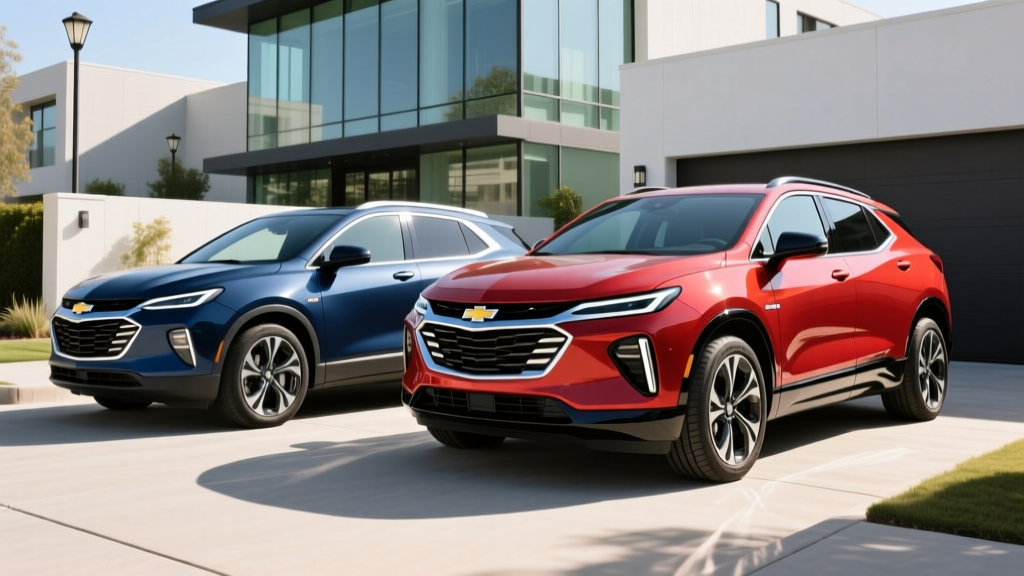
If you're researching a Chevy first electric car, the two models that matter in 2026 are the Chevrolet Equinox EV (starting around $33,600) and the Chevrolet Blazer EV (starting around $44,600). The Equinox EV is Chevy's volume play — an affordable compact crossover with up to 319 miles of EPA range on the RS FWD trim. The Blazer EV is the sportier, larger mid-size option with up to 324 miles EPA. Both ride on GM's Ultium platform, use an 85 kWh usable NMC battery, and support DC fast charging up to 175 kW. For most first-time EV buyers, the Equinox EV 2RS FWD offers the best balance of price, range, and daily usability — especially if you qualify for the federal §30D tax credit of up to $7,500.
Which Chevy EV Is Right for a First-Time Buyer?
GM retired the Bolt EV after the 2023 model year, leaving a gap that the Ultium-based Equinox EV now fills. If you're coming from a gas-powered Equinox, Malibu, or even a competitor's compact SUV, the Equinox EV is the most natural transition point. It's priced to compete with the Hyundai Ioniq 5, Kia EV6, and Tesla Model Y while undercutting most of them on base MSRP.
The Blazer EV targets buyers who want more interior space, available AWD with higher output, and a slightly more premium feel — think of it as the electric equivalent of stepping from a CR-V to a Passport.
| Spec | Equinox EV 2RS FWD | 2026 Equinox Gas (1.5T AWD) |
|---|---|---|
| Base MSRP | $33,600 | $31,900 |
| EPA Range / MPG | 319 mi / 105 MPGe combined | 28 MPG combined |
| Horsepower | 213 hp | 175 hp |
| 0–60 mph | ~8.0 sec | ~8.5 sec |
| Annual Fuel/Energy Cost* | ~$540 (electricity) | ~$1,650 (gasoline) |
| Maintenance (5-yr est.) | ~$1,800 | ~$3,500 |
| Federal Tax Credit | Up to $7,500 (§30D) | None |
*Based on national average electricity rate of $0.17/kWh and gas at $3.40/gal, 12,000 miles/year. Source: fueleconomy.gov.
Range, Battery, and Charging: The Numbers That Matter
Both the Equinox EV and Blazer EV use GM's Ultium battery architecture with an 85 kWh usable NMC (nickel manganese cobalt) pack. Here's what that translates to in real driving:
| Metric | Equinox EV (RS FWD) | Blazer EV (2LT RWD) |
|---|---|---|
| Usable Battery | 85 kWh (NMC) | 85 kWh (NMC) |
| EPA Range | 319 miles | 324 miles |
| Real-World Highway (75 mph) | ~265–280 miles | ~270–285 miles |
| Cold Weather (20°F, mixed) | ~220–250 miles | ~225–255 miles |
| Peak DC Fast Charge | 175 kW | 190 kW |
| 10–80% DCFC Time | ~30 minutes | ~28 minutes |
| Level 2 (240V, 48A) | 11.5 kW (~37 mi/hr) | 11.5 kW (~37 mi/hr) |
| Connector | NACS (native Tesla Supercharger access) | NACS (native Tesla Supercharger access) |
Real-World Range Reality Check
The EPA sticker says 319 miles for the Equinox EV RS FWD, and that's achievable in mild weather around town at moderate speeds. But plan your road trips around 265–280 miles of usable highway range in fair conditions, and 220–250 miles in freezing temperatures. NMC batteries lose roughly 20–30% range in sub-30°F weather due to increased internal resistance and cabin heating demands. The Equinox EV does include a heat pump on most trims, which helps — but physics still wins in deep cold.
Charging curve note: The 175 kW peak on the Equinox EV is not sustained for the entire session. You'll see peak rates between roughly 10–40% State of Charge, after which the rate tapers progressively. By 70% SoC, you're typically pulling 80–100 kW. This is normal lithium-ion behavior to protect the cells, but it means a 10–80% session takes about 30 minutes at a capable DC fast charger — not the 15 minutes some marketing materials imply.
Both models come with the NACS connector natively in 2026, meaning direct access to Tesla's Supercharger network (now over 25,000 stalls in North America) without an adapter. This is a significant advantage for road-trip reliability over CCS-only vehicles.
What Does a Chevy First Electric Car Actually Cost to Own?
The sticker price is only the starting point. Here's a realistic five-year total cost of ownership (TCO) breakdown comparing the Equinox EV to its gas counterpart, assuming 12,000 miles per year and national average utility/fuel rates:
| Cost Category | Equinox EV 2RS FWD | Gas Equinox 1.5T AWD |
|---|---|---|
| Purchase Price (MSRP) | $33,600 | $31,900 |
| Federal Tax Credit (§30D) | –$7,500 (if eligible) | $0 |
| Effective Purchase | $26,100 | $31,900 |
| Home Charger Install (Level 2) | $1,200–$2,500 | $0 |
| Energy/Fuel (5 years) | $2,700 | $8,250 |
| Maintenance (5 years) | $1,800 | $3,500 |
| Insurance (5 years, avg.) | $7,500 | $6,200 |
| Estimated Depreciation | $11,000 | $13,500 |
| 5-Year Total (approx.) | $28,300–$29,600 | $63,350 |
Note: Tax credit eligibility depends on income caps ($150K single / $300K joint), MSRP caps ($80K for SUVs), and battery sourcing requirements. Verify current rules at IRS.gov §30D. Point-of-sale transfer is available, meaning the dealer applies the credit at purchase — you don't have to wait until tax filing.
Insurance caveat: EV insurance premiums typically run 15–25% higher than equivalent gas vehicles due to higher repair costs and specialized parts. Shop quotes before buying — Geico, Progressive, and State Farm all vary significantly on EV models.
Home Charging: The Make-or-Break for First-Time EV Owners
Here's the honest truth that EV marketing glosses over: home charging access determines whether you'll love or resent your first electric car. If you can install a Level 2 (240V) charger at home, you'll wake up every morning with a "full tank" and rarely visit a public charger. If you can't, daily life gets more complicated.
| Component | Typical Cost Range |
|---|---|
| Level 2 Charger Unit (40A–48A) | $350–$700 |
| Electrician Labor | $500–$1,500 |
| Electrical Permit | $50–$200 |
| Panel Upgrade (if needed, 200A) | $1,500–$3,500 |
| Total (no panel upgrade) | $900–$2,400 |
| Total (with panel upgrade) | $2,400–$5,900 |
At 11.5 kW on Level 2, the Equinox EV adds roughly 37 miles of range per hour of charging. A full 0–100% charge takes about 8 hours — easily handled overnight. On a standard 120V outlet (Level 1), you'll get only about 3–4 miles per hour, which works for low-mileage drivers but won't replenish a depleted battery quickly.
Apartment/renter reality: If you live in a multi-unit building without charging access, check whether your property has or plans EV charging infrastructure. Some states now require landlords to permit charger installations. Public charging is viable but at $0.30–$0.50/kWh on DC fast networks like Electrify America or EVgo, your "fuel" cost nearly triples compared to home rates.
Federal Tax Credit: Do You Actually Qualify?
The §30D federal EV tax credit can reduce your effective purchase price by up to $7,500, but eligibility is not automatic. Here's the current checklist:
- Income caps: Adjusted gross income must not exceed $150,000 (single filer), $225,000 (head of household), or $300,000 (joint filers)
- MSRP cap: Vehicle MSRP must not exceed $80,000 for SUVs (both Equinox EV and Blazer EV qualify easily)
- Battery sourcing: A percentage of critical minerals and battery components must be sourced from the US or free-trade-agreement countries — this requirement tightens annually and can disqualify otherwise eligible vehicles mid-year
- Point-of-sale transfer: You can transfer the credit to the dealer at purchase, reducing your out-of-pocket cost immediately rather than waiting for a tax refund
- New vehicle only: Used EVs fall under a separate §25E credit (up to $4,000, with lower income caps)
Critical minerals sourcing rules change frequently. Always verify the specific VIN's eligibility on fueleconomy.gov before signing a purchase agreement.
Common EV Myths vs. Reality
| Myth | Fact |
|---|---|
| "The battery will need replacing in 5 years and cost $20,000." | GM warranties the Ultium battery for 8 years / 100,000 miles (60% minimum capacity retention). Real-world NMC degradation data from similar GM platforms shows ~10–12% loss over 100K miles. Full replacement is rare and costs $8,000–$14,000, not $20K+. |
| "Charging takes hours — I'll be stuck at stations." | At a 175 kW DC fast charger, 10–80% takes ~30 minutes. With home Level 2 charging, you never wait — the car charges while you sleep. |
| "EVs are worse in cold weather and will leave me stranded." | Range drops 20–30% in freezing temps, yes. But preconditioning (warming the battery while plugged in) recovers much of that loss, and 220+ cold-weather miles still covers most daily needs. |
| "Electricity isn't really cleaner — it comes from coal plants." | Even on the US average grid mix, an EV produces roughly 60–70% fewer lifecycle emissions than a comparable gas car per EPA analysis. In regions with high renewables, the gap widens further. |
| "I need AWD for snow, and EVs can't do that." | Both the Equinox EV and Blazer EV offer AWD variants. Electric AWD delivers instant torque to both axles with no mechanical lag — it's excellent in winter conditions. |
Decision Framework: Should You Buy a Chevy EV, a Hybrid, or Wait?
Choose the Equinox EV if:
- You have (or can install) home Level 2 charging
- Your daily round-trip commute is under 100 miles
- You take 1–3 road trips per year under 400 miles each
- You qualify for the §30D tax credit (income and sourcing requirements)
- You want the lowest possible per-mile energy cost (~$0.045/mile at home)
Choose the Blazer EV if:
- You need more cargo room (up to 54 cu ft with rear seats folded)
- You want available AWD with up to 288 hp
- You prefer a larger, more commanding driving position
- Your budget allows the ~$44,600+ starting price
Choose a PHEV (like the Chevy CR-V Hybrid or Toyota RAV4 Prime) if:
- You cannot install home charging and public infrastructure near you is sparse
- You regularly drive 300+ miles in a single day through charging deserts
- You live in extreme cold (below 0°F routinely) where range loss compounds
- You want to reduce emissions without any range compromise
Wait if:
- Your current car is paid off and running fine — EV pricing and charging infrastructure improve every year
- You're banking on solid-state batteries (not expected in affordable models before 2029–2030)
Warranty, Reliability, and Long-Term Ownership
GM backs the Equinox EV and Blazer EV with:
- Battery & Drive Unit: 8 years / 100,000 miles (minimum 60% capacity retention)
- Bumper-to-Bumper: 3 years / 36,000 miles
- Powertrain (non-battery): 5 years / 60,000 miles
- Corrosion: 6 years / 100,000 miles
As 2026 models, long-term reliability data is still accumulating. However, the Ultium platform has been in production since 2022 (Hummer EV, Cadillac Lyriq), and early degradation reports have been in line with industry norms — roughly 1–2% loss per year under normal use. GM's thermal management system actively conditions the battery, which is key to longevity.
Frequently Asked Questions
Is the Chevy Bolt still available as Chevy's cheapest electric car?
No. The Chevrolet Bolt EV and Bolt EUV were discontinued after the 2023 model year. The Equinox EV (starting ~$33,600) is now Chevy's most affordable electric vehicle. While the Bolt was priced lower (~$26,500), the Equinox EV offers significantly more range, faster DC charging, and NACS Supercharger access.
Can I charge a Chevy EV at a Tesla Supercharger?
Yes. The 2026 Equinox EV and Blazer EV both come with the native NACS (North American Charging Standard) connector, which is the Tesla Supercharger connector. You can pull up to any Supercharger stall and plug in directly — no adapter required. GM's in-dash navigation also routes through available Superchargers on longer trips.
How much does it cost to charge the Equinox EV at home?
At the US national average electricity rate of ~$0.17/kWh, a full 85 kWh charge costs about $14.45 and gives you 319 EPA miles. That works out to roughly $0.045 per mile — compared to about $0.12–$0.14 per mile for a 28 MPG gas vehicle at $3.40/gallon. Over 12,000 miles per year, home charging saves roughly $1,100 annually versus gas.
What happens if the battery degrades below 60% within the warranty period?
If your Ultium battery's State of Health drops below 60% of original capacity within 8 years or 100,000 miles, GM will repair or replace the battery at no cost to restore it above that threshold. In practice, most EV batteries retain 85–90% capacity at 100K miles based on current fleet data.
Do I need to upgrade my electrical panel to charge at home?
It depends on your home's existing electrical service. A 200-amp panel with available breaker slots can usually accommodate a 48-amp (60-amp breaker) Level 2 circuit without an upgrade. Homes with older 100-amp service or heavily loaded panels may need a $1,500–$3,500 panel upgrade. A licensed electrician can assess this during a site visit — many offer free estimates.
How does the Equinox EV compare to the Tesla Model Y?
The Model Y Long Range AWD starts around $44,990 with ~320 miles EPA range, faster DC charging (up to 250 kW), and access to the most mature software ecosystem. The Equinox EV undercuts it by over $11,000 on base price, offers similar range, and now shares Supercharger access. The trade-off: the Model Y charges faster and has a more polished infotainment system, while the Equinox EV wins on value and traditional dealer service support. See fueleconomy.gov for side-by-side efficiency data.