Quick Answer: Is There an Electric Chevy Van in 2026?
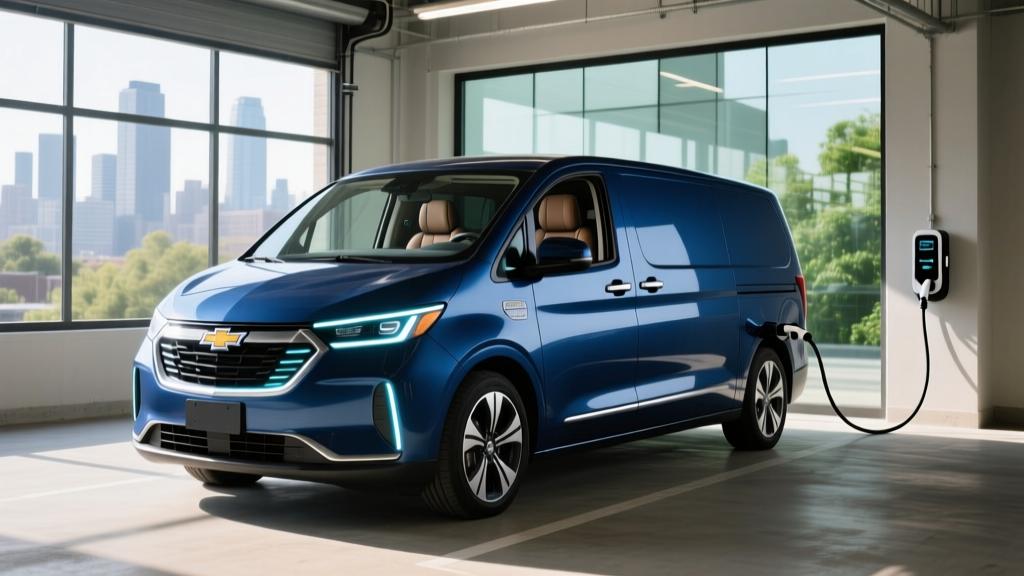
Chevrolet does not sell a consumer electric Chevy van as of the 2026 model year. The gas-powered Chevy Express remains in production for fleet buyers, but GM's electric van strategy lives under the BrightDrop Zevo brand (a GM commercial-vehicle subsidiary) and the Silverado EV work-truck lineup. If you're searching for an "electric Chevy van" for personal use, your closest options are the BrightDrop Zevo 400/600 (commercial-only), the Silverado EV Work Truck (pickup, not van), or competitors like the Ford E-Transit and Mercedes-Benz eSprinter. This guide breaks down exactly what's available, what it costs, and whether an electric commercial van makes financial sense versus its gas counterpart.
The Real Story Behind the Electric Chevy Van Search
When shoppers search for an "electric Chevy van," they're typically looking for one of three things: a battery-electric replacement for the Chevy Express cargo/passenger van, a Chevrolet-badged electric commercial vehicle, or a family-sized electric van for personal use. The honest answer is that GM has bifurcated its strategy. The Chevy Express continues as a body-on-frame, gas-V8 workhorse with no announced electric successor under the Chevrolet brand. Meanwhile, GM spun off its commercial electric delivery van efforts into BrightDrop, which produces purpose-built electric vans for fleet operators like FedEx and Walmart.
For private buyers hoping to purchase an electric Chevy van for personal hauling, road trips, or camper conversions, there is currently no direct offering. The BrightDrop Zevo is sold exclusively to commercial fleets, and the Chevy Express has never received an electric powertrain option. This leaves buyers cross-shopping against the Ford E-Transit (available to both fleet and retail buyers), the Rivian EDV (Amazon-exclusive), and the Mercedes-Benz eSprinter.
BrightDrop Zevo: GM's Actual Electric Van
BrightDrop, headquartered in Detroit and fully owned by General Motors, produces two electric delivery vans that represent the closest thing to an "electric Chevy van" in existence.
| Spec | Zevo 400 | Zevo 600 |
|---|---|---|
| Cargo Volume | 412 cu ft | 615 cu ft |
| EPA-Est. Range | ~250 miles | ~250 miles |
| Battery Capacity | ~120 kWh (NMC) | ~165 kWh (NMC) |
| Peak DC Fast Charge | 120 kW | 120 kW |
| 10–80% Charge Time | ~55 min | ~75 min |
| Level 2 Charging | 11.5 kW | 11.5 kW |
| Horsepower | ~300 hp | ~300 hp |
| Payload Capacity | ~2,500 lbs | ~2,200 lbs |
| Availability | Fleet only | Fleet only |
The Zevo vans are built on GM's BT1 platform and feature Ultium-derived battery modules. However, they are not sold through Chevrolet dealerships and are not available to individual retail buyers. Fleet operators report real-world range of approximately 180–210 miles in mixed urban delivery routes with frequent stops and climate control use — roughly 20% below the EPA estimate, which is typical for heavy commercial use with high payload weights.
Chevy Express vs. Electric Alternatives: Cost Comparison
For fleet managers and small business owners weighing the gas Chevy Express against electric alternatives, the economics depend heavily on daily mileage, fuel costs, and charging infrastructure access.
| Cost Factor | 2026 Chevy Express 2500 (Gas) | 2026 Ford E-Transit (Electric) |
|---|---|---|
| Base MSRP | ~$43,000 | ~$52,500 |
| Federal Tax Credit (§30D) | $0 | Up to $7,500 (commercial credit §45W) |
| Fuel/Energy (5 years) | $28,500 (15 mpg, $3.80/gal) | $7,200 ($0.16/kWh avg) |
| Maintenance (5 years) | $6,800 | $2,500 |
| Estimated Insurance (5 yr) | $14,000 | $16,500 |
| 5-Year Total Cost | ~$92,300 | ~$71,200 |
The electric van saves roughly $21,000 over five years in this high-mileage scenario. However, this assumes consistent access to Level 2 depot charging overnight. Businesses without dedicated parking and charging infrastructure will face higher public-charging costs that can erase a significant portion of the fuel savings. At $0.40/kWh on public DC fast chargers, the E-Transit's 5-year energy cost jumps to approximately $18,000 — still a savings over gas, but substantially less dramatic.
Real-World Ownership Considerations
Before committing to an electric commercial van, buyers need to honestly assess several practical factors that spec sheets don't capture.
Charging Infrastructure Requirements
A fleet of electric vans requires depot-level charging. Each Level 2 station (11.5 kW) delivers roughly 35–40 miles of range per hour of charging. For a van driven 120 miles daily, that means approximately 3–4 hours on a Level 2 charger to replenish a day's use — easily handled overnight. However, installing 10 Level 2 chargers at a commercial facility may require a panel upgrade to 400A or even 800A service, transformer upgrades from the local utility, and trenching for conduit. Commercial EV charging installation typically runs $3,000–$8,000 per Level 2 port, plus $10,000–$50,000+ for electrical service upgrades depending on existing infrastructure.
Cold-Weather Range Loss
Electric vans operating in northern climates experience 20–35% range reduction in sustained sub-freezing temperatures. A Zevo 600 rated at 250 miles EPA may deliver only 160–190 miles in January in Chicago or Minneapolis. This is not a defect — it's physics. Battery chemistry (NMC in this case) slows ion transfer in cold conditions, and cabin/cargo heating draws significant energy. Fleets in cold climates should plan routes assuming worst-case winter range, not EPA stickers.
Driving Pattern Fit
Electric vans excel in stop-and-go urban delivery routes where regenerative braking recaptures energy and idle time doesn't waste fuel. They struggle in long-haul, highway-speed applications where aerodynamic drag and sustained high-speed consumption drain the battery faster. If your routes regularly exceed 200 miles in a single shift without a midday charging opportunity, an electric van is not yet a practical fit.
Federal Tax Credits and Incentives for Electric Vans
Commercial electric vehicles fall under a different tax credit structure than consumer EVs. The IRS §45W Commercial Clean Vehicle Credit provides up to $7,500 for vehicles under 14,000 lbs GVWR and up to $40,000 for heavier vehicles. Key eligibility requirements:
- Vehicle must be purchased for business or commercial use (not personal)
- Must meet the same battery component and critical mineral sourcing requirements as §30D
- Vehicle must be deployed in the United States
- No MSRP cap (unlike the consumer §30D credit)
- No buyer income cap (unlike the consumer §30D credit)
- Credit is non-refundable — your business must have sufficient tax liability to claim it
The BrightDrop Zevo, Ford E-Transit, and other qualifying commercial electric vans are generally eligible for the full $7,500 credit, but battery sourcing requirements continue to tighten annually. Always verify current-year eligibility on irs.gov or consult a tax professional before basing a purchase decision on credit assumptions.
Common Misconceptions About Electric Commercial Vans
| Myth | Fact |
|---|---|
| "Electric vans can't tow or haul heavy loads." | The Ford E-Transit offers 3,300 lbs payload and 3,500 lbs towing. Electric motors deliver peak torque at 0 rpm, making them strong haulers — but heavy loads reduce range by 15–25%. |
| "You'll save money on every route." | Savings depend on daily mileage, electricity rates, and whether you charge at depot ($0.12–0.18/kWh) or public stations ($0.35–0.55/kWh). Low-mileage routes may not justify the higher purchase price. |
| "Electric vans need no maintenance." | They eliminate oil changes, spark plugs, and transmission service, but still require tire rotation, brake fluid, cabin filters, suspension work, and eventual battery cooling system service. |
| "The battery will need replacing in 5 years." | Modern NMC and LFP commercial van batteries are warrantied for 8 years/100,000 miles at 70%+ capacity retention. Real-world fleet data shows 10–15% degradation at 100,000 miles under normal use. |
| "Chevy makes an electric Express van." | As of 2026, the Chevy Express remains gas-only. GM's electric van is the BrightDrop Zevo, sold only to commercial fleets through a separate channel. |
Decision Framework: Should You Go Electric?
Choose an Electric Commercial Van If:
- Your daily routes are under 150 miles and return to a home base each night
- You operate primarily in urban or suburban stop-and-go conditions
- You have access to depot charging or can invest in Level 2 infrastructure
- You drive 25,000+ miles annually (fuel savings offset the higher purchase price)
- Your business has sufficient tax liability to absorb the §45W credit
- Local air quality regulations or corporate sustainability goals favor zero-tailpipe-emission vehicles
Stick With the Gas Chevy Express (or a Gas Competitor) If:
- Your routes regularly exceed 200 miles per shift with no midday charging access
- You operate in extreme cold climates where 30%+ range loss creates operational risk
- Your business lacks dedicated parking with electrical infrastructure
- You need a passenger-configured van (electric commercial vans are cargo-only in most configurations)
- Your annual mileage is under 15,000 — the fuel savings won't offset the price premium within a reasonable payback period
What First-Time EV Van Buyers Should Know
If you're transitioning a fleet from gas to electric for the first time, plan for a 6–12 month infrastructure lead time. Utility companies often require 3–6 months to upgrade commercial electrical service, and permitting for multi-port charging installations can add weeks. Start with a pilot of 1–2 electric vans on your most predictable, lowest-mileage routes to validate range assumptions and driver acceptance before committing to a full fleet transition.
Also understand the difference between kW (kilowatts — the rate of charging, like the flow rate of a gas pump) and kWh (kilowatt-hours — the energy stored in the battery, like the size of a gas tank). A 120 kW charger can theoretically add 120 kWh of energy in one hour, but the battery's charge curve means peak speed is only sustained between roughly 10–40% state of charge. Above 80%, charging slows dramatically to protect battery longevity — a session from 80–100% can take as long as 10–80%. Fleet operators should plan charging protocols around 10–80% cycles for maximum efficiency.
Frequently Asked Questions
Does Chevrolet make an electric van for consumers?
No. As of 2026, Chevrolet does not offer a consumer electric van. The Chevy Express is gas-only, and GM's electric van (the BrightDrop Zevo) is sold exclusively to commercial fleets. Consumers seeking an electric van should look at the Ford E-Transit (available retail), the Mercedes-Benz eSprinter, or wait for potential future announcements from GM.
How much does a BrightDrop Zevo cost?
BrightDrop does not publish retail MSRP because the Zevo is sold through fleet agreements, not individual transactions. Industry estimates place the Zevo 600 at approximately $80,000–$95,000 before incentives, depending on configuration and fleet volume. This is roughly double the base price of a gas Chevy Express 2500 cargo van.
Can I convert a Chevy Express to electric?
Aftermarket EV conversion companies exist, but a full electric conversion of a Chevy Express typically costs $40,000–$70,000 on top of the donor vehicle price, yields 100–150 miles of range, and voids all factory warranties. It's generally not cost-effective compared to purchasing a purpose-built electric van, and it will not qualify for federal tax credits since the converted vehicle wasn't originally manufactured as a qualifying clean vehicle.
What's the real-world range of electric commercial vans?
Expect 70–85% of the EPA-stickered range in real-world commercial use. The Ford E-Transit's 126-mile EPA range delivers roughly 95–110 miles in mixed delivery routes. The BrightDrop Zevo 600's ~250-mile EPA estimate translates to roughly 180–210 miles with payload. Highway driving at 70 mph, extreme heat, and extreme cold all reduce range further. Always spec your routes against worst-case winter range, not best-case summer range.
How long do electric van batteries last?
Commercial electric van batteries are typically warrantied for 8 years or 100,000 miles with a capacity retention threshold of 70%. Fleet data from early Ford E-Transit and BrightDrop deployments suggests 10–15% total degradation at 100,000 miles under normal operating conditions. Battery replacement costs for vans in this class range from $15,000 to $30,000 if needed outside warranty, though most fleet operators plan vehicle replacement cycles before battery end-of-life.