Is the Chevy Silverado EV the Right Work Truck for Your Fleet or Jobsite?
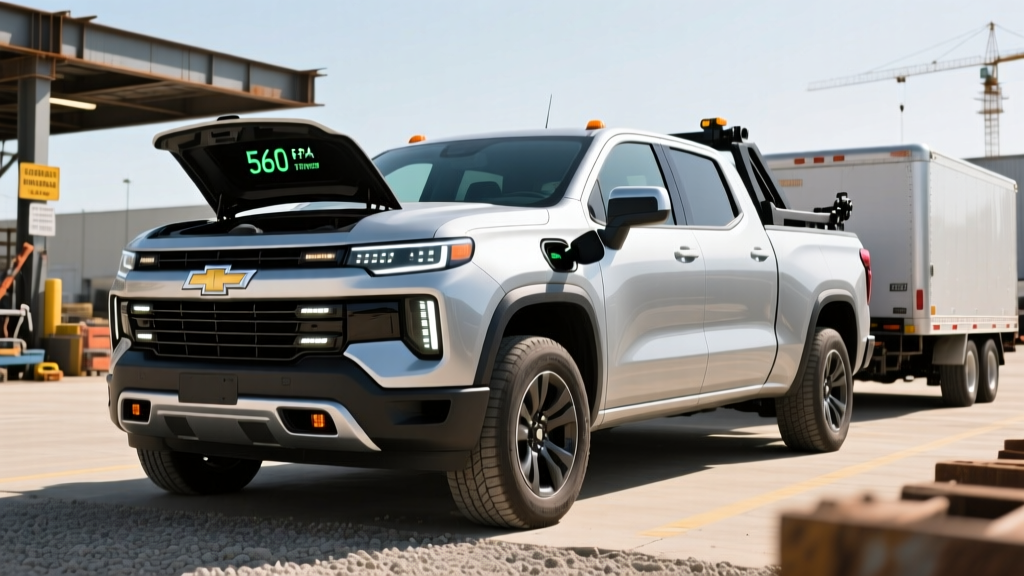
The short answer: The 2025–2026 Chevrolet Silverado EV is a capable electric work truck for regional routes, fleet duty, and owner-operators with predictable daily mileage under ~300 miles. With up to 492 miles of EPA-estimated range (Work Truck 4WT Max Range trim), available 800A ProGrade power, and DC fast charging up to 350 kW, it can replace a gas Silverado 1500 for many commercial users — but only if you have reliable depot or home Level 2 charging and don't regularly tow heavy loads long-distance in cold weather. Base pricing starts around $39,695 (before destination), though higher-capability trims push past $70,000. Federal tax credits (§30D) and commercial clean vehicle credits (§45W) can significantly reduce net cost, but eligibility depends on income, MSRP caps, and battery-sourcing rules that shift frequently.
Truck buyers don't buy on vibes — they buy on payload, towing, uptime, and cost per mile. The Silverado EV enters a competitive space alongside the Ford F-150 Lightning and Rivian R1T (more lifestyle-oriented), and it has to justify its existence on pure utility math. This guide breaks down the real-world numbers: what range you'll actually see under load, what charging infrastructure you need, and whether the total cost of ownership pencils out versus a conventional 5.3L V8 Silverado.
Silverado EV Specs: Range, Battery, Towing, and Payload at a Glance
Chevrolet offers the Silverado EV across several trims, from the fleet-oriented Work Truck (WT) to the fully loaded RST. The key differentiators for commercial buyers are battery size, range, and tow rating. Here's what the current lineup looks like:
| Spec | 4WT Standard Range | 4WT Extended Range | 4WT Max Range | RST (Top Trim) |
|---|---|---|---|---|
| Base MSRP (approx.) | $39,695 | $49,900 | $69,900 | $87,300 |
| Battery Capacity (usable, est.) | ~100 kWh (NMC) | ~150 kWh (NMC) | ~200+ kWh (NMC) | ~200+ kWh (NMC) |
| EPA-Estimated Range | ~237 mi | ~326 mi | ~492 mi | ~440 mi |
| Max Towing Capacity | 8,000 lbs | 10,000 lbs | 10,000 lbs | 10,000 lbs (12,500 w/ max tow pkg) |
| Max Payload | ~1,800 lbs | ~1,600 lbs | ~1,400 lbs | ~1,300 lbs |
| Peak DC Fast Charge Rate | Up to 200 kW | Up to 350 kW | Up to 350 kW | Up to 350 kW |
| 10–80% DC Fast Charge (est.) | ~30 min | ~20 min | ~40 min | ~40 min |
| Horsepower | 510 hp | 645 hp | 645 hp | 754 hp |
| 0–60 mph (est.) | ~5.5 sec | ~4.5 sec | ~4.5 sec | ~4.0 sec |
| Battery/Powertrain Warranty | 8 yr / 100,000 mi | 8 yr / 100,000 mi | 8 yr / 100,000 mi | 8 yr / 100,000 mi |
Real-world range reality check: The 492-mile EPA figure on the Max Range WT is impressive on paper — the highest of any production electric pickup as of early 2026. But EPA testing uses moderate temperatures, mixed driving, and no payload. Expect roughly 350–400 miles in real-world highway driving at 70 mph unloaded, and significantly less — potentially 200–250 miles — when towing 8,000+ lbs in cold weather. Towing is the range killer for all EVs, and the Silverado is no exception. According to fueleconomy.gov, efficiency drops dramatically under load.
EPA vs. Real World: The 4WT Max Range achieves 492 miles EPA. Real-world expectations: ~370–420 mi unloaded highway (70°F), ~280–320 mi loaded highway (bed + passengers), ~200–250 mi towing 8,000 lbs, and 15–30% further reduction in sub-freezing temperatures. Plan your routes on the lower number.
Charging Infrastructure: What You Actually Need to Run a Chevy EV Work Truck
An electric work truck is only as useful as its charging plan. The Silverado EV uses the NACS (North American Charging Standard) connector natively, which means direct access to Tesla Supercharger stations (now open to non-Tesla EVs via the NACS standard) — a significant network advantage over CCS-equipped competitors.
| Charging Level | Power (kW) | Miles of Range Added per Hour | Best Use Case |
|---|---|---|---|
| Level 1 (120V household) | ~1.4 kW | ~3–4 mi/hr | Emergency / trickle only — not viable for work use |
| Level 2 (240V home/depot) | 11.5–19.2 kW | ~25–52 mi/hr | Overnight depot charging; full charge in 8–18 hours depending on battery size |
| DC Fast Charge (public) | Up to 350 kW peak | ~500–800+ mi/hr (peak) | Mid-route top-ups; 10–80% in 20–40 min depending on pack size |
kW vs. kWh — the critical distinction: kW (kilowatts) measures power — how fast energy flows into the truck. kWh (kilowatt-hours) measures energy capacity — how much the battery holds. A 350 kW charger fills a 200 kWh battery quickly, but only at peak rate for a portion of the session. The charge curve tapers significantly above 80% State of Charge (SoC) to protect battery health. That 10–80% time of ~20 minutes for the Extended Range does not mean 80–100% takes another 5 minutes — it can take 15–20 additional minutes.
Depot charging for fleets: If you're running multiple Silverado EVs, you'll need commercial Level 2 chargers (19.2 kW preferred) installed at your depot. Budget $3,000–$7,000 per charger for equipment plus $2,000–$10,000+ for electrical work per stall, depending on whether your facility needs a panel upgrade or new conduit runs. For a 5-truck fleet, plan $25,000–$80,000 in infrastructure before the first truck arrives.
Home charging for owner-operators: A 240V / 48A Level 2 home charger (like the ChargePoint Home Flex or similar NACS-compatible unit) delivers roughly 11.5 kW, adding ~30 miles of range per hour. A full overnight charge (10 hours) restores ~300 miles — enough for most work patterns. Installation costs range from $500–$2,500 if your panel has capacity, or $3,000–$5,000+ if you need a 200A service upgrade.
Cost Breakdown: Silverado EV vs. Gas Silverado 1500 for Work Use
The sticker price tells only part of the story. Commercial truck buyers need total cost of ownership (TCO) over 5 years and 75,000 miles — the typical first-ownership cycle for a work truck.
| Cost Category | Silverado EV 4WT (Extended Range) | Gas Silverado 1500 WT (5.3L V8) |
|---|---|---|
| Purchase Price (MSRP) | $49,900 | $39,800 |
| Federal Tax Credit (§30D / §45W)* | −$7,500 (if eligible) | $0 |
| Effective Purchase Price | $42,400 | $39,800 |
| Fuel / Electricity (75,000 mi) | $5,600–$8,400 (at $0.13–$0.18/kWh avg) | $11,250–$13,500 (at $3.50–$4.20/gal, 18 MPG avg) |
| Maintenance (5 yr) | $1,500–$2,500 (tires, cabin filter, fluid top-offs) | $4,000–$6,000 (oil changes, trans fluid, brakes, filters) |
| Insurance (5 yr avg) | $9,000–$12,000 | $7,000–$9,500 |
| Estimated 5-Yr Depreciation | $18,000–$24,000 | $15,000–$20,000 |
| Total 5-Yr Cost (approx.) | $76,500–$89,300 | $77,050–$88,800 |
*Tax credit eligibility depends on current IRS §30D rules (for personal use) or §45W (for commercial/fleet use). Requirements include MSRP caps, buyer income limits, battery component and critical mineral sourcing thresholds, and point-of-sale transfer options. Consult a tax professional — rules change frequently.
The takeaway: TCO is roughly comparable over 5 years, with the EV pulling ahead in fuel and maintenance savings but giving back ground on depreciation and insurance. The EV becomes decisively cheaper if you drive more than 15,000 miles/year, charge primarily on low-cost depot/home electricity (under $0.12/kWh), or qualify for the full federal credit. For fleet buyers using §45W commercial credits, the math can tip strongly in the EV's favor.
Common Misconceptions About Electric Work Trucks
There's a lot of noise in the EV truck conversation. Let's separate fact from fiction with data.
| Myth | Fact |
|---|---|
| "Electric trucks can't tow." | The Silverado EV tows up to 12,500 lbs (RST with max tow). However, towing cuts range by 40–60%. Plan for ~200–250 miles per charge under heavy tow — sufficient for local hauling, not cross-country. |
| "Batteries won't last." | GM warranties the Silverado EV battery for 8 years/100,000 miles with a capacity retention threshold (typically 70%+). NMC chemistry degrades predictably; fleet data from Bolt EVs shows ~10–15% degradation at 100k miles. Replacement cost is $15,000–$25,000 if out of warranty. |
| "Charging takes too long for work." | Overnight Level 2 depot charging restores a full battery in 8–14 hours. For mid-day top-ups, 350 kW DC charging adds ~150+ miles in 15 minutes. If your route is under 250 miles/day, you may never need a public charger. |
| "The power grid can't handle it." | Most commercial depot installations work with existing utility infrastructure, though larger fleets (10+ trucks) may need utility coordination and transformer upgrades. Plan 6–12 months ahead for site assessment. |
| "EV trucks are unreliable in cold weather." | Range drops 15–30% in sub-freezing temperatures due to battery chemistry and cabin heating demands. The Silverado EV includes a heat pump for improved cold-weather efficiency, but northern-climate fleets should spec the Extended or Max Range battery to maintain usable winter range. |
Who Should (and Shouldn't) Buy the Silverado EV for Work
Decision Framework: Is the Chevy EV Work Truck Right for You?
Choose the Silverado EV if:
- Your daily route is predictable and under 250–300 miles (even under load)
- You have access to Level 2 charging at a depot, job site, or home (overnight charging is non-negotiable)
- You operate in a region with moderate-to-warm climate, or you've specced the Extended/Max Range battery for cold-weather buffer
- Your work involves frequent idling, PTO use, or stop-and-go driving — EVs are far more efficient in these conditions than gas trucks
- You qualify for federal or state commercial EV incentives that close the purchase-price gap
- You value the onboard power capability (up to 800A ProGrade output) for running tools and equipment at job sites without a separate generator
Stick with a gas or hybrid Silverado if:
- You regularly tow 8,000+ lbs over distances exceeding 200 miles in a single day
- You lack access to any form of Level 2 charging (relying solely on public DC fast chargers is expensive and unreliable for daily work use)
- You operate in extreme cold (below 0°F) with high daily mileage demands
- Your routes take you through charging deserts (rural stretches of the Mountain West, parts of the Great Plains)
- You need maximum payload — the EV's heavier battery reduces payload by 200–500 lbs vs. gas equivalents
- Upfront budget is tight and you don't qualify for tax credits
First-Time EV Truck Buyer Essentials
If this is your first electric work vehicle, here's what the brochures don't emphasize:
1. Preconditioning matters for fast charging. The Silverado EV's battery management system can precondition (warm or cool) the battery before a DC fast-charge session. If you navigate to a charger using the built-in route planner, the truck will precondition automatically. Skip this step and your 350 kW peak rate may drop to 150–200 kW in cold weather, adding 10–15 minutes to your stop.
2. The charge curve is not linear. You'll see "350 kW peak" in marketing, but that rate only holds between roughly 10–40% SoC. From 40–80%, it tapers to 150–200 kW. From 80–100%, it drops further to protect the cells. This is why 10–80% times are the industry standard — the last 20% is painfully slow and generally not worth waiting for on a workday.
3. Regenerative braking changes how you drive. The Silverado EV offers adjustable regen, including one-pedal driving mode. In stop-and-go work environments (delivery routes, construction sites), this recovers significant energy and reduces brake wear. Expect brake pads to last 100,000+ miles.
4. Your electrical panel is a real constraint. Before ordering, have a licensed electrician evaluate your home or depot panel. A single 48A Level 2 charger needs a dedicated 60A circuit. If your panel is near capacity, a 200A service upgrade ($2,000–$5,000) or smart panel with load management may be required.
5. Insurance is higher — for now. EV truck insurance premiums run 15–30% higher than gas equivalents due to higher repair costs and parts pricing. Get quotes before purchasing. As the EV truck fleet grows and repair networks expand, this gap is expected to narrow.
Tax Credits and Incentives: What You Can Actually Claim
Federal incentives for electric work trucks come through two pathways, depending on how the truck is titled:
- §30D Clean Vehicle Credit (personal use): Up to $7,500, subject to buyer income caps ($150K single / $300K joint), MSRP caps ($80,000 for trucks/vans/SUVs), and battery sourcing requirements. Available as a point-of-sale transfer at the dealer. Per IRS guidance, eligibility shifts as sourcing rules tighten annually.
- §45W Commercial Clean Vehicle Credit (fleet/business use): Up to $7,500 for vehicles under 14,000 lbs GVWR, or up to $40,000 for heavier vehicles. No income cap, but the vehicle must be used for business and not eligible for §30D. This is the pathway most fleet buyers use.
Many states and utilities offer additional incentives — Colorado, California, New York, and others have stackable rebates for commercial EVs. Check your state energy office and local utility for current programs. These vary by jurisdiction and change frequently, so always verify with official sources.
Frequently Asked Questions
Can the Silverado EV power tools at a job site?
Yes. The available ProGrade Power system provides up to 800 amps of onboard power through multiple 120V and 240V outlets in the bed and cabin. This is enough to run compressors, chop saws, and welding equipment without a standalone generator — a genuine advantage for contractors who currently haul a generator in the bed.
How does the Silverado EV compare to the Ford F-150 Lightning for work?
Both trucks compete directly. The F-150 Lightning offers a lower starting price (~$34,995 base Pro) and a more established production track record, but tops out at ~320 miles EPA range. The Silverado EV's Max Range variant offers significantly more range (492 mi EPA) and higher available horsepower, but at a higher price point. The Lightning uses CCS (with adapter access to NACS); the Silverado EV is NACS-native. For fleet buyers prioritizing maximum range and NACS charging access, the Chevy has an edge. For budget-conscious buyers with shorter routes, the Ford remains compelling.
What happens if the battery fails out of warranty?
Out-of-warranty battery replacement for the Silverado EV is estimated at $15,000–$25,000 depending on pack size and labor. However, GM's 8-year/100,000-mile warranty covers defects and excessive degradation (below ~70% capacity). Real-world data from GM's Ultium platform is still accumulating, but early fleet data from other Ultium vehicles suggests manageable degradation curves with proper charging habits (avoiding frequent 100% charges and deep discharges).
Is the Silverado EV good in snow and ice?
The dual-motor AWD system provides excellent traction, and the truck's weight (7,000–9,000 lbs depending on trim) helps with stability. However, cold weather reduces range by 15–30% due to battery chemistry limitations and heating demands. The heat pump helps, but northern-climate buyers should spec at minimum the Extended Range battery to maintain a usable winter buffer. Preconditioning the battery and cabin while plugged in (using grid power, not battery) is essential for cold-weather efficiency.
Can I charge the Silverado EV at Tesla Superchargers?
Yes. The Silverado EV uses the NACS connector natively, meaning it can plug directly into Tesla Supercharger stalls that have been opened to non-Tesla vehicles. As of 2026, a growing number of Supercharger stations support NACS-equipped non-Tesla EVs through Tesla's open network program. You'll use the Tesla app or the Silverado's built-in navigation to initiate and pay for sessions. According to NHTSA and industry data, the Supercharger network remains the most reliable public DC fast-charging option in the US.