Quick Answer: Are Chevy EV Offers Worth It in 2026?
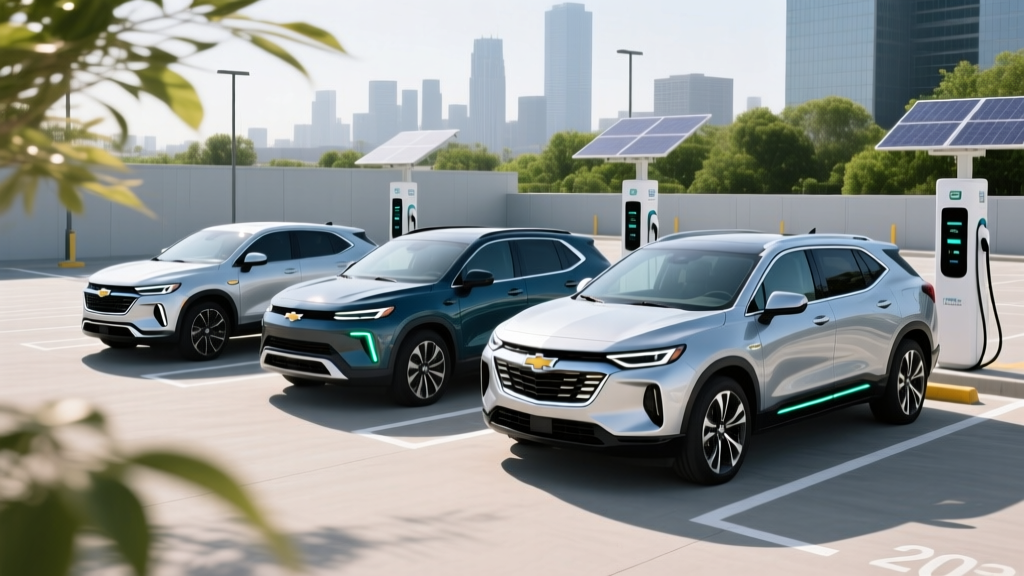
Chevrolet's current EV lineup — the Equinox EV, Blazer EV, and Silverado EV — targets three distinct buyer profiles with MSRPs ranging from roughly $33,000 to $90,000+. The best offers right now hinge on two factors: (1) whether the specific trim qualifies for the §30D federal tax credit (up to $7,500), which can be applied at the point of sale, and (2) local dealer inventory discounts on outgoing 2025 models now that 2026 units are arriving. The Equinox EV 3LT with the larger battery delivers an EPA-estimated 319 miles of range starting around $36,000 before incentives — making it one of the most affordable long-range EVs on the market. The Blazer EV offers sportier performance and faster charging, while the Silverado EV serves truck buyers needing towing and payload. For buyers with access to Level 2 home charging and moderate climates, the total cost of ownership over five years can undercut comparable gas vehicles by $4,000–$9,000 depending on local electricity rates and driving habits.
The 2026 Chevy EV Lineup: Specs at a Glance
Chevrolet has consolidated its EV strategy around the Ultium platform, and the three core models now cover compact crossover, midsize SUV, and full-size truck segments. Here are the headline numbers buyers need before stepping into a dealership:
| Spec | Equinox EV (3LT AWD) | Blazer EV (RS AWD) | Silverado EV (4WT) |
|---|---|---|---|
| EPA Range | 319 mi (est. ~270 mi highway) | 324 mi (est. ~275 mi highway) | 380 mi (est. ~310 mi highway) |
| Battery (usable kWh) | ~85 kWh (NMC) | ~102 kWh (NMC) | ~200 kWh (NMC) |
| Peak DC Fast Charge | 150 kW | 190 kW | 350 kW |
| 10–80% DC Charge Time | ~32 min | ~26 min | ~20 min |
| Level 2 (240V) Rate | 11.5 kW | 11.5 kW | 19.2 kW |
| Horsepower | 288 hp | 557 hp (SS: TBD) | 510 hp |
| 0–60 mph | ~7.0 sec | ~4.0 sec | ~4.5 sec |
| Starting MSRP | ~$36,000 | ~$50,000 | ~$55,000 (WT); ~$90,000+ (RST) |
| Battery Warranty | 8 yr / 100,000 mi | 8 yr / 100,000 mi | 8 yr / 100,000 mi |
A critical note on range: EPA estimates assume a mix of city and highway driving at moderate temperatures. In real-world highway cruising at 70+ mph, expect a 12–18% reduction. In sub-freezing winter conditions, range can drop 20–30% due to battery thermal demands and cabin heating — even with the heat pump equipped on higher trims. Plan your road-trip charging around usable range, not the sticker number.
§30D Federal Tax Credit: Which Chevy EVs Qualify?
The federal EV tax credit under IRS §30D remains the single biggest financial lever for EV buyers, but eligibility is far from automatic. As of 2026, the credit is structured around three gating requirements:
- MSRP Cap: Vans, SUVs, and trucks must be at or below $80,000. Sedans and smaller vehicles: $55,000.
- Buyer Income Cap: Modified AGI must not exceed $150,000 (single), $225,000 (head of household), or $300,000 (joint).
- Battery Sourcing: Critical minerals and battery components must meet phased-in percentages from U.S. or FTA-partner countries. Full $7,500 requires meeting both thresholds; partial $3,750 if only one is met.
- Point-of-Sale Transfer: Buyers can elect to transfer the credit to the dealer at purchase, reducing the out-of-pocket price immediately rather than waiting for a tax refund.
For the Equinox EV, most trims fall well under the $55,000 MSRP cap, making it a strong candidate for the full credit — assuming your income qualifies and the specific battery pack meets sourcing rules for the model year. The Blazer EV and Silverado EV WT trims also generally qualify, but higher Silverado trims (RST, Trail Boss) can push past the $80,000 truck cap. Always verify with your dealer and cross-check against the fueleconomy.gov credit tracker before signing paperwork. Tax rules change, and a tax professional should confirm your personal eligibility.
Real Cost of Ownership: Chevy EV vs. Gas Equivalent
Sticker price is only the entry point. The real financial story emerges over five years of ownership, where fuel, maintenance, and depreciation diverge sharply between EV and gas vehicles. Here's a realistic comparison using the Equinox EV 3LT against the gas-powered Equinox Premier as a baseline:
| Cost Category (5 Years / 75,000 mi) | Equinox EV 3LT | Gas Equinox Premier (AWD) |
|---|---|---|
| Purchase Price (MSRP) | $36,000 | $36,500 |
| Federal Tax Credit | −$7,500 (if eligible) | $0 |
| Effective Purchase | $28,500 | $36,500 |
| Fuel / Electricity (75k mi) | $2,625 (home L2 @ $0.14/kWh) | $8,440 (@ $3.50/gal, 26 MPG combined) |
| Maintenance | $900 (tire rotations, cabin filter, fluid top-offs) | $3,200 (oil changes, brakes, filters, belts) |
| Insurance (avg) | $9,500 | $7,800 |
| Estimated Depreciation | $12,000 | $14,500 |
| Total 5-Year Cost | ~$53,525 | ~$70,440 |
The EV comes out ahead by roughly $16,900 over five years in this scenario — but this assumes full tax-credit eligibility, consistent home charging at residential rates, and no battery replacement. If you rely entirely on public DC fast charging at $0.40–$0.55/kWh, your fuel cost jumps to $5,500–$7,500 over five years, narrowing the gap substantially. Insurance also tends to run 15–25% higher on EVs due to repair costs and parts pricing, so get quotes before committing.
Real-World Range Reality Check
The Equinox EV's EPA rating of 319 miles is achieved under ideal mixed-driving conditions. On a 75°F day with city-heavy driving, you may see 300+ miles. On a 20°F January morning with the heater blasting and a 75-mph interstate commute, expect closer to 220–250 miles of usable range. Always size your battery for your worst-case day, not your best-case day.
Charging at Home vs. Public Networks: What Chevy EV Buyers Must Plan For
Chevy EVs on the Ultium platform use the NACS (North American Charging Standard) connector natively on 2025+ models, giving them direct access to the Tesla Supercharger network — currently the most reliable and extensive DC fast-charging infrastructure in the U.S. This is a significant advantage over CCS-only vehicles that still rely on Electrify America, EVgo, or ChargePoint for highway travel.
| Charging Level | Power (kW) | Miles Added per Hour | Typical Use Case |
|---|---|---|---|
| Level 1 (120V household) | 1.2–1.4 kW | 3–5 mi/hr | Overnight top-off; not viable as primary |
| Level 2 (240V, 48A) | 11.5 kW | 30–40 mi/hr | Daily home charging; full charge in 8–10 hrs |
| DC Fast Charge (150 kW) | 150 kW peak | ~200 mi in 20 min | Road trips; taper above 80% SoC |
Home charging installation is the make-or-break factor for EV satisfaction. If your electrical panel has capacity for a 60A circuit (requiring a 48A continuous charger), expect to pay $800–$2,000 for a quality Level 2 EVSE plus electrician labor, assuming no panel upgrade. If you need a 200A panel upgrade — common in older homes — add $1,500–$3,500. Chevy occasionally bundles home charger credits or installation discounts through their dealer network; ask about current promotions.
Without home charging, EV ownership becomes significantly more expensive and inconvenient. Public DC fast charging costs 3–5× more per kWh than residential electricity, and relying on it daily adds 30–60 minutes per week to your routine. If you live in an apartment or lack garage access, consider whether a PHEV (like the upcoming Chevy Equinox PHEV variants) might bridge the gap more practically.
Common Misconceptions About Chevy EVs — Fact-Checked
| Myth | Fact |
|---|---|
| "The battery will need replacing in 5 years and cost $20,000." | GM warranties the Ultium battery for 8 years/100,000 miles against defects and excessive degradation (below 70% capacity retention). Real-world data from early Bolt EVs shows ~10–15% degradation over 100,000 miles. Full replacement is rare and covered under warranty if premature. |
| "EVs are worse in cold weather and unreliable." | Range drops 20–30% in freezing temps — a real limitation. But preconditioning the battery while plugged in mitigates charging-speed loss, and EVs start reliably in extreme cold (no cranking a frozen engine). Plan for reduced range, not unreliability. |
| "Chevy EVs can't use Tesla Superchargers." | 2025+ Chevy EVs come with native NACS ports and have full Supercharger access. Older Bolt EVs/Bolt EUVs with CCS can use a GM-approved adapter for Supercharger access. |
| "The tax credit is gone or I definitely won't qualify." | §30D is still active in 2026. Eligibility depends on your income, the vehicle's MSRP, and battery sourcing rules that change annually. Many Chevy EV trims qualify. Verify at purchase time — don't assume. |
| "EVs cost more to insure and always will." | EV insurance runs 15–25% higher on average today, but the gap is narrowing as repair networks expand and collision data matures. Shop multiple carriers — some now offer EV-specific policies at competitive rates. |
Decision Framework: Which Chevy EV (If Any) Is Right for You?
Choose the Equinox EV if:
- Your daily commute is under 60 miles round-trip and you have Level 2 home charging.
- You want the lowest entry price with 300+ miles of EPA range.
- You qualify for the full $7,500 tax credit, bringing effective cost below $30,000.
- You take 2–4 road trips per year and can plan around Supercharger stops.
Choose the Blazer EV if:
- You want stronger acceleration (557 hp RS AWD) and faster DC charging (190 kW peak).
- You need more cargo space and a roomier rear seat than the Equinox provides.
- Your budget comfortably absorbs a $50,000+ MSRP after incentives.
- You value a sportier driving experience over maximum efficiency.
Choose the Silverado EV if:
- You need a truck for work — towing (up to 10,000 lbs on WT), payload, and bed utility.
- You want 350 kW DC fast charging to minimize downtime on job-site road trips.
- You're buying for a fleet or can leverage commercial EV credits (§45W) instead of §30D.
- You accept that the RST and high-trim models push past the $80,000 MSRP cap for consumer credits.
Consider a PHEV or gas vehicle instead if:
- You have no access to home or workplace Level 2 charging.
- You regularly drive 400+ miles in a single day through areas with sparse charging (rural routes, charging deserts).
- Your budget is strictly under $30,000 and you cannot access used-EV credits or state incentives.
- You live in an extreme-cold climate (consistent sub-0°F) and lack a garage for preconditioning.
Frequently Asked Questions
Does the Chevy Equinox EV qualify for the full $7,500 federal tax credit?
Most Equinox EV trims fall under the $55,000 MSRP cap and are strong candidates for the full credit, provided the buyer meets income thresholds and the battery sourcing requirements are satisfied for that model year. Always confirm with your dealer at the point of sale and verify current eligibility on fueleconomy.gov. Tax professionals should confirm personal eligibility, as rules can shift.
How long does it take to charge a Chevy Blazer EV at home?
On a Level 2 (240V, 48A) home charger delivering 11.5 kW, the Blazer EV's ~102 kWh battery charges from empty to full in approximately 9–10 hours. Most owners charge from 20–80% overnight, which takes about 5–6 hours and adds roughly 200 miles of range — more than enough for daily driving.
Can I tow with the Silverado EV without destroying my range?
Towing at max capacity (10,000 lbs) will cut range roughly in half — expect 180–200 miles from the 380-mile EPA rating when pulling a heavy trailer at highway speeds. This is consistent with gas trucks losing MPG under load. The Silverado EV's 350 kW DC fast charging helps recover range quickly on road trips, adding ~150 miles in 15 minutes at a compatible station.
Are Chevy EVs reliable compared to gas vehicles?
Early Ultium-platform data is still accumulating, but EVs have fewer moving parts than internal-combustion vehicles — no oil changes, no transmission fluid, no timing belts. The primary long-term cost concern is battery degradation, which GM warranties for 8 years/100,000 miles. NHTSA safety ratings and IIHS crash-test results should be checked for each specific model year before purchase.
What happens if I can only charge on a standard 120V outlet?
Level 1 charging at 120V delivers roughly 1.2–1.4 kW, adding 3–5 miles of range per hour. Over a 12-hour overnight session, you gain about 40–50 miles. This is viable only if your daily driving is under 40 miles and you can leave the car plugged in consistently. For anything beyond minimal commuting, a 240V Level 2 installation is strongly recommended.