Quick Answer: Which Chevy EV Should You Buy?
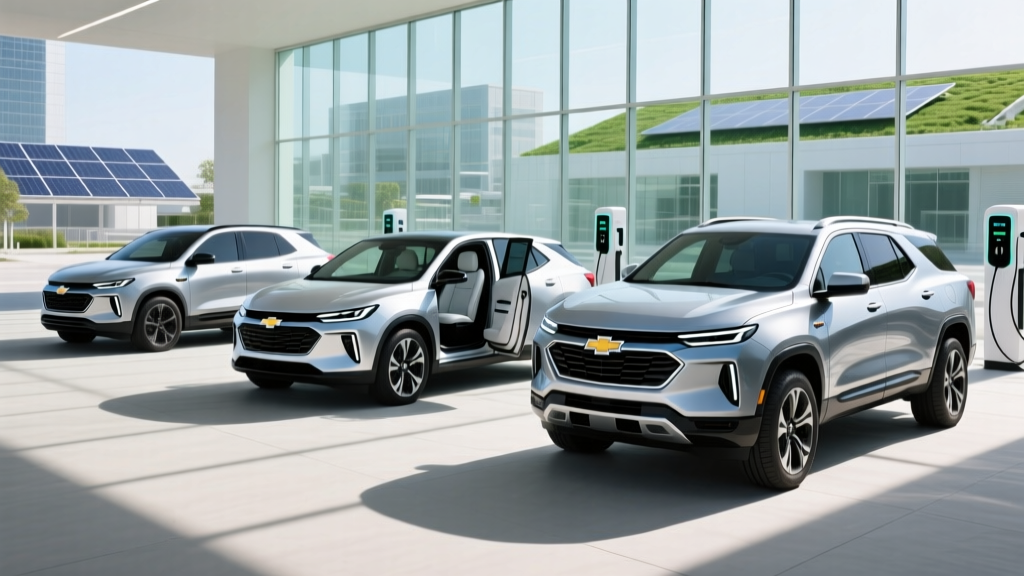
Chevrolet's 2026 EV lineup centers on three Ultium-platform models: the Equinox EV (up to 319 miles EPA, starting ~$33,600), the Blazer EV (up to 324 miles EPA, starting ~$44,600), and the Silverado EV (up to 440 miles EPA, starting ~$39,900 for Work Truck). The Equinox EV is the best value pick for daily commuting and qualifies for partial or full federal tax credits depending on battery sourcing. The Blazer EV targets buyers wanting more space and performance. The Silverado EV serves fleet and towing needs. All use GM's Ultium battery architecture with NMC chemistry and support DC fast charging up to 190 kW (Equinox/Blazer) or 350 kW (Silverado).
The 2026 Chevy EV Lineup at a Glance
Chevrolet has consolidated its electric strategy around the Ultium platform after discontinuing the Bolt EV and Bolt EUV. For 2026, buyers choosing from Chevy EV cars have three distinct models spanning compact crossover, midsize crossover, and full-size truck segments. Here's how they stack up on the numbers that matter most.
| Spec | 2026 Equinox EV | 2026 Blazer EV | 2026 Silverado EV |
|---|---|---|---|
| EPA Range (max) | 319 mi | 324 mi | 440 mi (Max Range) |
| Battery (usable) | 85 kWh (NMC) | 102 kWh (NMC) | 200+ kWh (NMC, Max Range) |
| Peak DC Fast Charge | 190 kW | 190 kW | 350 kW |
| 10–80% DC Time | ~24 min | ~24 min | ~20 min (350 kW charger) |
| Level 2 Rate | 11.5 kW | 11.5 kW | 19.2 kW (available) |
| 0–60 mph | ~7.4 sec (FWD) | ~4.0 sec (SS AWD) | ~4.5 sec (4WT) |
| Horsepower | 213 hp (FWD) | 557 hp (SS) | 664 hp (4WT) |
| Starting MSRP | ~$33,600 | ~$44,600 | ~$39,900 (WT) |
| Battery Warranty | 8 yr / 100,000 mi | 8 yr / 100,000 mi | 8 yr / 100,000 mi |
| Towing (max) | Not rated | ~1,500 lb | 10,000 lb (WT) |
Sources: EPA fueleconomy.gov, Chevrolet.com Electric.
Real-World Range: What the EPA Sticker Doesn't Tell You
EPA vs Reality: The Equinox EV 3RS with the largest pack rates at 319 miles EPA. In real-world highway driving at 70+ mph, expect roughly 260–280 miles. In cold weather (below 30°F), that can drop to 220–240 miles due to cabin heating demand and reduced battery efficiency. The Blazer EV and Silverado EV show similar 15–25% reductions under these conditions.
This isn't a Chevy-specific issue — it's physics. NMC lithium-ion cells lose efficiency at low temperatures, and highway speeds demand exponentially more energy than city driving because of aerodynamic drag. The Equinox EV's relatively upright crossover shape hurts it on the highway compared to sleeker sedans. The Silverado EV's massive 200+ kWh Max Range pack compensates with sheer capacity, which is why it still delivers strong real-world mileage even with a truck's aerodynamic penalty.
If your typical commute is under 50 miles round-trip and you charge at home nightly, even the base Equinox EV with its smaller battery (approximately 236 miles EPA on LT2 trim) provides ample buffer. Range becomes a real concern only on road trips exceeding 200 miles between reliable DC fast chargers.
Charging Speeds and Home Setup Costs
All three Chevy EV cars support Level 2 AC charging at home and DC fast charging on the road, but the rates differ meaningfully. Here's what each charging level actually delivers:
| Level | Power (kW) | Miles Added Per Hour | Typical Use |
|---|---|---|---|
| Level 1 (120V) | ~1.4 kW | ~4–5 mi/hr | Overnight top-up, emergencies |
| Level 2 (240V, 48A) | 11.5 kW | ~34–40 mi/hr | Home daily charging |
| Level 2 (240V, 80A) | 19.2 kW | ~55–65 mi/hr | Silverado EV available upgrade |
| DC Fast (peak) | 190–350 kW | ~600–1,200+ mi/hr | Road trips, 10–80% in 20–24 min |
Key distinction: kW (kilowatts) measures power — the rate of energy delivery. kWh (kilowatt-hours) measures energy capacity — the size of the battery. A 190 kW charger fills an 85 kWh battery quickly, but only up to the battery's acceptance rate, which tapers significantly above 80% state of charge.
Home Charging Installation: Real Costs
| Item | Estimated Cost |
|---|---|
| Level 2 Charger (ChargePoint, Emporia, etc.) | $400–$700 |
| Electrician labor (240V/50A circuit) | $800–$2,000 |
| Permit and inspection | $100–$300 |
| Panel upgrade (if needed, 200A service) | $1,500–$3,500 |
| Total (no panel upgrade) | $1,300–$3,000 |
| Total (with panel upgrade) | $2,800–$6,500 |
Most homes with 200-amp electrical panels can accommodate a 48-amp Level 2 circuit without an upgrade. Older homes with 100-amp service often need a panel upgrade. Always get a licensed electrician's assessment before purchasing equipment. GM also offers the Ultium Home charging solutions through authorized dealers.
Chevy EV vs Gas: 5-Year Ownership Cost Comparison
The purchase price of Chevy EV cars is only part of the equation. Let's compare a 2026 Equinox EV 3RS (~$43,400 MSRP) against a comparably equipped 2026 Equinox gas model (~$33,000 MSRP) over five years and 75,000 miles.
| Cost Category | Equinox EV 3RS | Equinox Gas (AWD) |
|---|---|---|
| Purchase Price (MSRP) | $43,400 | $33,000 |
| Federal Tax Credit (§30D, est.) | –$3,750 to –$7,500* | $0 |
| Effective Purchase | ~$35,900–$39,650 | $33,000 |
| Fuel/Energy (5 yr, 75k mi) | ~$3,400 (home charging)** | ~$8,600 (gas at $3.40/gal, 28 MPG) |
| Maintenance (5 yr) | ~$1,200 | ~$3,500 |
| Insurance (5 yr avg) | ~$9,500 | ~$7,800 |
| Estimated Depreciation | ~$18,000 | ~$14,000 |
| 5-Year Total Cost | ~$68,000–$71,750 | ~$66,900 |
* Tax credit amount depends on battery component and critical mineral sourcing compliance under current IRS §30D rules. Income caps apply ($150K single / $300K joint). MSRP must be under $80K for SUVs/trucks. Point-of-sale transfer available.
** Home charging at national average $0.16/kWh and 3.0 mi/kWh efficiency. Public DC fast charging costs roughly 2–3× more.
The EV and gas Equinox land remarkably close on total cost over five years. The EV's fuel and maintenance savings offset its higher purchase price and insurance premiums — especially if you qualify for the full tax credit. The break-even point shifts further in the EV's favor if gas prices rise or if you have access to cheap solar or time-of-use electricity rates at home.
Federal Tax Credit Eligibility for Chevy EVs
Not every Chevy EV buyer qualifies for the full $7,500 federal tax credit under IRS §30D. Eligibility depends on several factors that change as battery supply chains evolve:
- Income caps: Modified AGI must not exceed $150,000 (single), $225,000 (head of household), or $300,000 (married filing jointly)
- MSRP caps: Vehicle MSRP must be under $80,000 for SUVs and trucks (all current Chevy EVs qualify)
- Battery sourcing: The credit splits into two $3,750 halves — one for battery components manufactured/assembled in North America, one for critical minerals sourced from the US or FTA partners
- Point-of-sale transfer: You can transfer the credit to the dealer at purchase, reducing your out-of-pocket cost immediately rather than waiting for tax filing
- FEOC restriction: Vehicles with battery components from a "foreign entity of concern" (e.g., certain Chinese suppliers) may lose eligibility
As of 2026, the Equinox EV and Blazer EV have been qualifying for partial to full credits depending on the specific build month and battery pack configuration. Always verify current eligibility on the IRS website or with your tax professional before relying on the credit in your budget.
Common Misconceptions About Chevy EV Cars
| Myth | Fact |
|---|---|
| "The battery will need replacing in a few years" | GM warranties the Ultium battery for 8 years/100,000 miles against dropping below 60% capacity. Real-world data from earlier Ultium vehicles shows ~5–8% degradation over 100K miles — far above the warranty threshold. |
| "Charging takes too long for road trips" | At a 190 kW DC fast charger, the Equinox EV adds ~200 miles in 20 minutes. Plan stops around meal and restroom breaks, and the downtime becomes minimal. |
| "EVs don't work in cold climates" | Cold weather reduces range by 15–30%, but the Equinox EV's heat pump (standard on most trims) recovers significant efficiency. Preconditioning the battery while plugged in mitigates most of the charging-speed penalty. |
| "I need to charge every day" | With 236–319 miles of range, most drivers need to charge only 2–3 times per week on a Level 2 home charger, or nightly if using a Level 1 (120V) outlet. |
| "The Bolt is still available" | The Bolt EV and Bolt EUV were discontinued after the 2023 model year. A next-generation Bolt on the Ultium platform has been announced for 2027 but is not yet on sale. |
Decision Framework: Which Chevy EV Is Right for You?
Choose the Equinox EV if:
- Your daily driving is under 80 miles round-trip
- You want the lowest entry price in the Chevy EV lineup
- You prioritize tax credit eligibility and low running costs over performance
- You don't need towing capacity
Choose the Blazer EV if:
- You want more interior space, a sportier driving position, and available AWD
- Performance matters (SS trim delivers 557 hp and ~4.0-second 0–60)
- You regularly carry 4–5 passengers with cargo
- Budget allows $44,600+ before incentives
Choose the Silverado EV if:
- You need a full-size truck bed and up to 10,000 lb towing (WT trim)
- You want maximum range (440 mi EPA on Max Range)
- You use your vehicle for work/fleet applications
- You need 19.2 kW Level 2 charging for high-utilization days
Choose a PHEV or gas vehicle instead if:
- You have no access to home or workplace charging
- You regularly drive 300+ miles in rural areas with sparse DC fast charging
- Your budget is strictly under $30,000 and you cannot wait for the next-gen Bolt
What First-Time Chevy EV Buyers Should Know
Charging access is the real deciding factor. If you can install a Level 2 charger at home (or already have a 240V outlet in your garage), owning a Chevy EV is straightforward — you wake up with a full "tank" every morning. If you rely exclusively on public charging, research the DC fast charging infrastructure along your common routes. Electrify America, EVgo, and Tesla Superchargers (now open to GM vehicles via NACS adapter) cover most interstates, but rural gaps persist.
The NACS adapter matters. GM adopted the North American Charging Standard (NACS) for its EVs. The 2026 models ship with a NACS charge port, giving native access to Tesla Supercharger stations — currently the most reliable public fast-charging network in the US. For older CCS-equipped chargers, an adapter may be needed.
Precondition your battery. When navigating to a DC fast charger, the Equinox, Blazer, and Silverado EVs will automatically precondition the battery — warming it to optimal temperature for faster charging. This can shave 5–10 minutes off your 10–80% time, especially in cold weather. Always enter the charging stop in the vehicle's navigation system rather than just driving there with a third-party app.
Insurance costs more. Expect EV insurance premiums to run 15–25% higher than equivalent gas models due to higher repair costs and parts pricing. Get quotes before purchasing to avoid surprises.
Frequently Asked Questions
Does the Chevy Equinox EV qualify for the $7,500 federal tax credit?
It depends on the build date and battery sourcing compliance. Under current IRS §30D rules, the Equinox EV has qualified for between $3,750 and $7,500 depending on critical mineral and battery component requirements. Verify your specific vehicle's eligibility through the dealer or IRS.gov before purchase. Income and MSRP caps also apply.
How long does it take to charge a Chevy EV at home?
On a Level 2 (240V, 48A) home charger delivering 11.5 kW, the Equinox EV's 85 kWh battery charges from empty to full in roughly 8–9 hours — ideal for overnight charging. The Blazer EV's larger 102 kWh pack takes about 10 hours. A standard 120V outlet (Level 1) adds only ~4–5 miles per hour, requiring 24+ hours for a full charge.
Can I tow with a Chevy EV?
The Silverado EV Work Truck is rated for up to 10,000 pounds. The Blazer EV can tow approximately 1,500 pounds. The Equinox EV is not rated for towing. Note that towing significantly reduces range — expect a 40–60% reduction at maximum trailer weight.
What happens if the Ultium battery fails out of warranty?
Out-of-warranty Ultium battery replacement costs are estimated between $12,000 and $20,000+ depending on the pack size. However, real-world degradation data suggests most packs retain 90%+ capacity at 100,000 miles. Complete failure is rare; individual module replacement may be possible at lower cost.
Is the Chevy Bolt EV still available in 2026?
No. The Bolt EV and Bolt EUV were discontinued after the 2023 model year. GM has announced a next-generation Bolt built on the Ultium platform expected for the 2027 model year, but it is not currently on sale.