Chevy's 2026 EV Lineup at a Glance
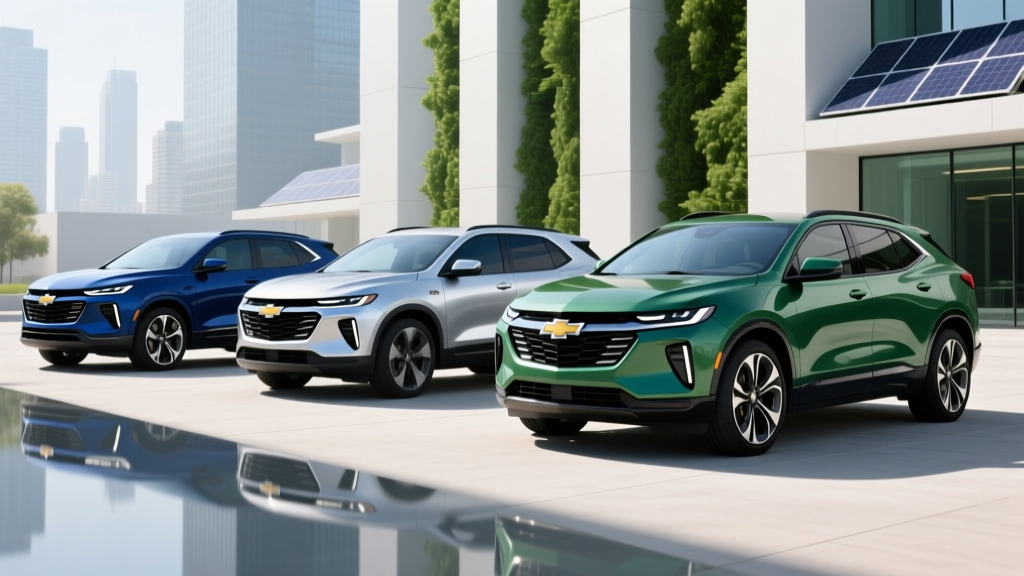
Chevrolet currently sells three battery-electric vehicles in the U.S.: the Equinox EV (compact SUV, ~319 mi EPA, from ~$33,600), the Blazer EV (midsize SUV, ~324 mi EPA, from ~$44,600), and the Silverado EV (full-size truck, ~440 mi EPA, from ~$55,900). All use GM's Ultium platform with NMC or LFP battery options, CCS/NACS charging, and qualify for varying levels of the §30D federal tax credit depending on trim, MSRP caps, income limits, and battery sourcing. If you have Level 2 home charging and drive under 300 miles daily, any of these can replace a gas vehicle outright — but the Equinox EV offers the strongest value for most buyers.
The 2026 Chevy EV Lineup: Specs and Pricing
Chevrolet's EV strategy in 2026 centers on the Ultium platform — a modular skateboard architecture supporting multiple body styles. Here's how the three current models stack up on paper and in practice.
| Spec | Equinox EV | Blazer EV | Silverado EV |
|---|---|---|---|
| Body Style | Compact SUV | Midsize SUV | Full-Size Pickup |
| EPA Range (max) | 319 mi (RS FWD) | 324 mi (RS AWD) | 440 mi (RST) |
| Battery (usable) | ~85 kWh (NMC) | ~102 kWh (NMC) | ~200 kWh (NMC) |
| Peak DC Fast Charge | 150 kW | 190 kW | 350 kW |
| 10–80% DC Time | ~28 min | ~24 min | ~20 min |
| Level 2 Charge Rate | 11.5 kW | 11.5 kW | 19.2 kW |
| 0–60 mph | ~7.9 sec (FWD) | ~4.8 sec (SS AWD) | ~4.5 sec (RST) |
| Horsepower | 213 hp (FWD) | 615 hp (SS) | 754 hp (RST) |
| Starting MSRP | $33,600 | $44,600 | $55,900 |
| Battery Warranty | 8 yr / 100,000 mi | 8 yr / 100,000 mi | 8 yr / 100,000 mi |
| Connector | NACS (native) | NACS (native) | NACS (native) |
Sources: fueleconomy.gov, Chevrolet press specifications.
Real-World Range: What EPA Numbers Don't Tell You
Expect Less Than the Sticker — Especially in Winter and on the Highway
The Equinox EV's 319-mile EPA figure assumes a mixed city/highway cycle at moderate temperatures. In real-world testing:
- Highway (70–75 mph, 75°F): ~260–280 miles before reaching 10% SoC
- Cold weather (20°F, highway): ~210–230 miles — a 25–30% reduction
- City with regen: Often exceeds EPA — up to 330+ miles
The Silverado EV's 440-mile EPA figure is remarkable for a truck, but its massive ~200 kWh battery means heavy loads and towing can cut range by 40–50%. Towing a 6,000-lb trailer at highway speeds? Expect ~220–260 miles.
Preconditioning the battery (using the navigation-routed preconditioning feature) before DC fast charging is essential for hitting peak charge rates. Without it, a cold battery may only accept 40–60 kW, turning a 20-minute stop into a 45-minute wait.
Charging Speeds and Infrastructure
All 2026 Chevy EVs now ship with the NACS (North American Charging Standard) connector natively, granting access to Tesla Supercharger stations without an adapter — a major advantage over older CCS-only vehicles.
| Level | Power | Equinox EV | Blazer EV | Silverado EV |
|---|---|---|---|---|
| Level 1 (120V) | ~1.4 kW | ~4 mi/hr | ~4 mi/hr | ~4 mi/hr |
| Level 2 (240V, 48A) | 11.5 kW | ~34 mi/hr | ~34 mi/hr | — |
| Level 2 (240V, 80A) | 19.2 kW | — | — | ~55 mi/hr |
| DC Fast (peak) | 150–350 kW | 150 kW | 190 kW | 350 kW |
Understanding kW vs kWh: kW (kilowatts) measures the rate of energy flow — think of it like gallons-per-minute at a gas pump. kWh (kilowatt-hours) measures total energy stored — like the size of the fuel tank. A 150 kW charger delivering power for one hour would add 150 kWh, but charge curves taper significantly above 80% SoC, so actual session energy is lower.
The Silverado EV's 350 kW peak rate is best-in-class for trucks, but sustaining that rate requires a compatible charger (e.g., Electrify America 350 kW stations or Tesla V4 Superchargers). Most public DC chargers deliver 50–150 kW, where the Equinox and Blazer perform more similarly.
Federal Tax Credit: What You Actually Qualify For
Under IRS §30D rules for 2026, the federal EV tax credit offers up to $7,500 — but eligibility depends on several factors that change yearly and vary by buyer.
§30D Federal Tax Credit Requirements (2026)
- MSRP cap: SUVs and trucks must be under $80,000; sedans under $55,000
- Buyer income cap: AGI ≤ $300,000 (joint), $225,000 (head of household), $150,000 (single)
- Battery sourcing: Battery components must be manufactured or assembled in North America (phasing thresholds increase annually)
- Critical minerals: A percentage of critical minerals must be sourced from the U.S. or FTA-partner countries
- Point-of-sale transfer: You can transfer the credit to the dealer at purchase, reducing your out-of-pocket cost immediately — even if you owe less than $7,500 in taxes
Source: IRS §30D Clean Vehicle Credit. Consult a tax professional for your specific situation.
As of early 2026, the Equinox EV and Blazer EV have qualified for the full or partial credit depending on battery sourcing compliance — but GM periodically updates cell sourcing, and the amount can shift mid-year. Always verify current eligibility on fueleconomy.gov before purchasing.
Cost of Ownership: Chevy EV vs. Gas Equivalent
Let's compare the Equinox EV RS FWD (~$38,000 after typical options) against the gas Equinox RS AWD (~$34,000 MSRP) over 5 years and 75,000 miles.
| Cost Category | Equinox EV (RS FWD) | Gas Equinox (RS AWD) |
|---|---|---|
| Purchase Price (after credit) | $30,500 (est. $7,500 credit) | $34,000 |
| Fuel/Energy | $3,200 (home charging, $0.14/kWh avg) | $8,100 (25 MPG, $3.60/gal avg) |
| Maintenance | $1,200 (no oil, fewer brake pads) | $3,800 |
| Insurance (avg) | $7,500 (EV premium ~15% higher) | $6,500 |
| Depreciation (est.) | $14,000 | $16,000 |
| Total 5-Year Cost | $56,400 | $68,400 |
The EV saves roughly $12,000 over 5 years, primarily through fuel and maintenance savings — but this assumes reliable home charging access. If you rely exclusively on public DC fast charging at $0.35–$0.50/kWh, your energy costs rise to ~$7,500, narrowing the gap to ~$8,000.
Insurance premiums for Chevy EVs tend to run 10–20% higher than gas equivalents due to repair complexity and battery replacement costs. Get quotes before buying.
Home Charging: What First-Time Buyers Must Know
Home Level 2 charging is where EV ownership lives or dies. Here's what a 240V / 48A home installation typically involves:
| Component | Cost Range |
|---|---|
| Level 2 charger (hardwired, 48A) | $400–$700 |
| Electrician labor (4–8 hours) | $600–$2,000 |
| Permit & inspection | $100–$400 |
| Electrical panel upgrade (if needed, 200A) | $1,500–$4,000 |
| Total (no panel upgrade) | $1,100–$3,100 |
| Total (with panel upgrade) | $2,600–$7,100 |
The Equinox EV's 11.5 kW onboard charger adds ~34 miles of range per hour of Level 2 charging — enough to fully replenish overnight. The Silverado EV's 19.2 kW onboard charger (available on higher trims) charges faster but requires an 80A circuit, which many homes don't support without panel upgrades.
If you live in an apartment or lack garage access, public charging infrastructure varies dramatically by region. Use PlugShare or the Tesla Supercharger map to verify coverage before committing.
Common Misconceptions About Chevy EVs
| Myth | Fact |
|---|---|
| "The battery will need replacing in 5 years." | GM warranties the Ultium battery for 8 years/100,000 miles with a capacity-retention threshold of ≥60%. Real-world degradation data from Bolt owners shows ~8–12% loss over 100,000 miles. |
| "EVs don't work in cold weather." | Range drops 20–30% in sub-freezing temps, but preconditioning and heat-pump-equipped models (Equinox/Blazer include heat pumps) mitigate this. Daily commuters with home charging are rarely affected. |
| "You can't take road trips." | The Equinox EV's 150 kW DC charging + NACS Supercharger access means 200-mile segments with 15–20 minute stops. It's slower than gas but entirely feasible. |
| "The tax credit is guaranteed $7,500." | Credit depends on your income, the vehicle's MSRP, battery sourcing, and current-year rules. It can be $0, $3,750, or $7,500 depending on compliance. Always verify. |
| "EVs cost more to insure." | Generally true — 10–20% higher premiums on average — but this varies by carrier and state. Shop quotes specifically for EV coverage. |
Decision Framework: Which Chevy EV Is Right for You?
Choose Based on Your Actual Needs
- Choose the Equinox EV if: You want the best value, commute under 60 miles daily, have home Level 2 charging, and prioritize low running costs. At ~$26,100 after the full tax credit, it undercuts most gas compact SUVs on total cost of ownership.
- Choose the Blazer EV if: You need more cargo space, want AWD with strong performance (the SS trim hits 0–60 in 4.8 seconds), or prefer a larger cabin. The trade-off is a higher price and slightly lower efficiency.
- Choose the Silverado EV if: You need a truck — towing, hauling, or fleet use. The 440-mile range is exceptional, but the $55,900+ price and massive battery mean higher insurance, longer home-charge times, and diminishing returns if you don't use truck capabilities regularly.
- Consider a PHEV (like the upcoming Chevy Equinox PHEV) if: You lack reliable home charging, regularly drive 400+ miles between stops, or live in a region with sparse DC charging infrastructure.
Frequently Asked Questions
Can Chevy EVs use Tesla Superchargers?
Yes. All 2026 Chevy EVs ship with the NACS connector natively, meaning they plug directly into Tesla Supercharger stalls without an adapter. This gives access to over 25,000 Supercharger locations across North America — the most reliable DC fast-charging network available.
How long does it take to charge a Chevy Equinox EV at home?
On a Level 2 (240V, 48A) charger delivering 11.5 kW, the Equinox EV's ~85 kWh battery charges from 10–100% in approximately 7.5 hours — easily overnight. On a standard 120V outlet (Level 1), expect ~4 miles of range per hour, or roughly 50 hours for a full charge.
Is the Chevy Silverado EV good for towing?
The Silverado EV RST has a max towing capacity of 10,000 lbs. However, towing significantly reduces range — expect a 40–50% reduction at highway speeds with a heavy trailer. The 440-mile EPA range becomes roughly 220–260 miles while towing 6,000+ lbs.
What happens if the battery fails out of warranty?
Ultium battery replacement costs are estimated at $12,000–$20,000+ depending on the pack size. However, GM's 8-year/100,000-mile warranty (with ≥60% capacity retention) provides substantial coverage. Real-world data from earlier GM EVs (Bolt) suggests batteries typically retain 85–92% capacity at 100,000 miles.
Do I need a 200-amp electrical panel for a Chevy EV?
Not always. A 48A Level 2 charger typically requires a 60A breaker, which most 100A+ panels can support. However, the Silverado EV's optional 80A charger needs a 100A breaker, which may require a panel upgrade. Always have a licensed electrician assess your panel before purchasing equipment.
Pricing and tax-credit eligibility reflect 2026 model-year data as of publication. Verify current figures with your dealer and the IRS before purchasing.