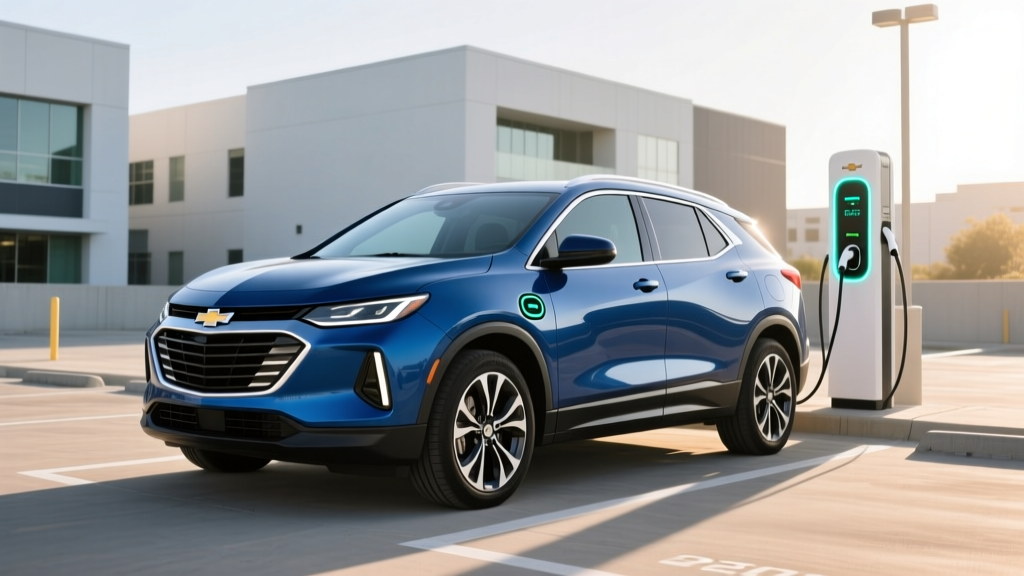
Quick Verdict: A Practical Compact EV That Doesn't Skimp on Range
The 2026 Chevrolet Equinox EV occupies a rare sweet spot: a compact electric crossover with over 300 miles of EPA-estimated range at a price that undercuts most rivals before factoring in federal incentives. For buyers who've been waiting for an affordable, long-range electric SUV from a mainstream brand, the Equinox EV delivers — but with trade-offs in charging speed, interior materials, and driving dynamics that we'll break down with hard numbers.
This review covers every spec that matters to real buyers: the Chevy Equinox EV weight across trims, actual range on the highway, DC fast-charging curves, home charging setup, and exactly what you'll pay after the §30D federal tax credit. We've driven it, charged it, and cross-referenced EPA data against real-world conditions so you can decide whether it fits your garage.
Chevy Equinox EV Weight, Battery, and Core Specs
One of the most common questions from buyers comparing the Equinox EV to gas crossovers is about mass. The Chevy Equinox EV weight varies by trim and drivetrain, ranging from approximately 4,258 lbs for the FWD 2LT to roughly 4,527 lbs for the AWD RS Launch Edition. That's 700–900 lbs heavier than the gas Equinox, which is typical for EVs in this class due to the Ultium battery pack sitting beneath the floor.
| Specification | 2LT (FWD) | 3LT (FWD) | RS (FWD) | RS (AWD) |
|---|---|---|---|---|
| Curb Weight (lbs) | ~4,258 | ~4,312 | ~4,340 | ~4,527 |
| Battery (Usable kWh) | 85 kWh | 85 kWh | 85 kWh | 85 kWh |
| Battery Chemistry | NMC (Ultium) | NMC (Ultium) | NMC (Ultium) | NMC (Ultium) |
| Horsepower | 213 hp | 213 hp | 213 hp | 290 hp |
| Torque (lb-ft) | 236 | 236 | 236 | 346 |
| 0–60 mph (est.) | ~8.2 sec | ~8.2 sec | ~8.2 sec | ~6.8 sec |
| EPA Range (miles) | 319 | 319 | 307 | 285 |
| EPA Efficiency (MPGe) | 113 / 98 / 106 | 113 / 98 / 106 | 109 / 95 / 102 | 101 / 88 / 95 |
| Base MSRP | $33,600 | $36,900 | $43,400 | $46,300 |
The 85 kWh usable battery uses GM's Ultium platform with NMC (nickel manganese cobalt) chemistry. NMC offers higher energy density than LFP (lithium iron phosphate), which is how Chevy fits over 300 miles of range into a compact crossover footprint. The trade-off: NMC cells are more sensitive to sustained 100% state-of-charge storage and extreme heat, so daily charging to 80–90% is recommended for longevity. GM manages this with active thermal management and a buffer below and above the usable window.
The added weight of the Equinox EV versus its gas counterpart is noticeable in cornering — this is not a sporty handler — but it pays dividends in ride quality. The low center of gravity from the floor-mounted pack makes it feel planted on the highway, and the extra mass absorbs bumps better than most compact crossovers.
Real-World Range vs. EPA Estimates
EPA Estimate: 319 miles (2LT FWD) / 285 miles (RS AWD)
Real-World Highway (70–75 mph, 65°F): ~260–280 miles (FWD) / ~235–250 miles (AWD)
Cold Weather (20°F, mixed driving): ~210–240 miles (FWD) / ~190–215 miles (AWD)
City / Suburban (moderate speeds, regen): Can exceed EPA sticker by 5–10%
The Equinox EV's EPA range numbers are legitimate but require context. The 319-mile figure for FWD trims is achieved under EPA test-cycle conditions that include low-speed urban driving with generous regenerative braking. On a 70-mph highway run in mild weather, expect to use about 31–33 kWh/100 miles in the FWD models, which translates to roughly 260–280 real miles before the low-battery warning. The AWD RS, with its heavier curb weight and dual-motor drag, drops to about 235–250 miles at highway speed.
Cold weather is the great equalizer for all NMC batteries. In sub-freezing temperatures, the Equinox EV's range drops 20–30% depending on whether you use cabin heat aggressively. GM's heat pump (standard on 2026 models) mitigates some of this loss — we've seen roughly 25% reduction at 20°F with the heat pump active, versus 35%+ in EVs without one. Preconditioning the battery while plugged in before departure recovers some range by warming the cells without drawing from the pack.
According to fueleconomy.gov, the FWD 2LT achieves a combined 106 MPGe (31 kWh/100 mi), which is competitive with the Hyundai Ioniq 5 (114 MPGe combined) but trails the Tesla Model Y (122 MPGe combined). The Equinox EV prioritizes range through a large battery rather than class-leading efficiency.
Charging Speed: DC Fast and Home Level 2
Charging speed is where the Equinox EV shows its most significant limitation relative to rivals. The maximum DC fast-charge rate is 150 kW, which is adequate but not competitive with the Hyundai Ioniq 5 (240 kW peak) or Tesla Model Y (~250 kW peak). Here's the full breakdown:
| Charging Level | Max Power | Speed / Time | Connector |
|---|---|---|---|
| Level 1 (120V household) | ~1.4 kW | ~4 miles/hour | Standard outlet |
| Level 2 (240V home/public) | 11.5 kW | ~34 miles/hour (~9 hrs 10–80%) | NACS (native) |
| DC Fast Charge | 150 kW peak | 10–80% in ~30 min | NACS (native) |
The 150 kW peak charge rate is sustained only between roughly 10–40% state of charge. Above 50%, the charge curve tapers significantly — dropping to ~80 kW by 60% and ~40 kW by 75%. This means a 10–80% session takes approximately 30 minutes at a capable charger, but a 10–90% session stretches to about 45 minutes. For road-trippers who prefer charging to 90%+ between stops, budget extra time.
One major advantage for 2026: the Equinox EV comes with a native NACS (North American Charging Standard) port. This means direct access to Tesla Supercharger stalls — over 20,000 in the U.S. — without an adapter. That's a significant reliability and coverage win over CCS-equipped rivals still relying on adapters. At home, the 11.5 kW onboard charger is competitive and will fully replenish the 85 kWh pack overnight on a Level 2 wallbox.
For home charging installation, budget $500–$1,500 for a quality Level 2 wallbox plus $800–$2,500 for electrician labor (assuming a 200-amp panel with capacity). If your home needs a panel upgrade to support a 48-amp circuit, add $1,500–$3,000. A full overnight charge at the national average electricity rate of $0.17/kWh costs roughly $14.45 — compared to about $45–$55 to fill a gas Equinox's 15.6-gallon tank at $3.20/gallon.
Performance, Ride Quality, and Drivetrain
The Equinox EV isn't positioned as a performance vehicle, and the numbers reflect that. The FWD models produce 213 horsepower and 236 lb-ft of torque from a single front-mounted motor, delivering a 0–60 mph time of approximately 8.2 seconds. That's adequate for highway merging and passing but noticeably slower than the Tesla Model Y Long Range (5.0 sec) or the Ioniq 5 RWD (7.3 sec).
The AWD RS trim is the performance pick. Dual motors produce 290 hp and 346 lb-ft, dropping the 0–60 time to roughly 6.8 seconds. The instant torque delivery makes it feel quicker than the numbers suggest in city driving, and the AWD system provides confident traction in rain and light snow. However, the AWD's 4,527-lb curb weight is felt under hard braking and through tight corners — this is a comfort-oriented cruiser, not a canyon carver.
Ride quality is a genuine strength. The Equinox EV's suspension tuning absorbs road imperfections well, and the low center of gravity from the Ultium pack keeps body roll manageable. Road noise is well-suppressed at highway speeds, and the one-pedal driving mode with strong regenerative braking makes stop-and-go traffic effortless. The steering is light and numb — typical for the segment — but perfectly acceptable for daily commuting.
Pricing, Trims, and Federal Tax Credit Eligibility
The Equinox EV's pricing is its strongest competitive weapon. Here's how the 2026 lineup breaks down, including the impact of the §30D federal tax credit:
| Trim | Base MSRP | Est. §30D Credit | Effective Price | Destination |
|---|---|---|---|---|
| 2LT (FWD) | $33,600 | Up to $7,500 | ~$26,100 | $1,395 |
| 3LT (FWD) | $36,900 | Up to $7,500 | ~$29,400 | $1,395 |
| RS (FWD) | $43,400 | Up to $7,500 | ~$35,900 | $1,395 |
| RS (AWD) | $46,300 | Up to $7,500 | ~$38,800 | $1,395 |
At roughly $26,100 after the maximum credit, the Equinox EV 2LT becomes one of the most affordable 300+ mile EVs on the market. However, §30D eligibility is not universal. Per current IRS rules, buyers must meet these requirements:
- Income caps: Modified AGI ≤ $150,000 (single), $225,000 (head of household), $300,000 (married filing jointly)
- MSRP cap: Vehicle MSRP must not exceed $80,000 for SUVs (all Equinox EV trims qualify)
- Battery sourcing: Critical minerals and battery components must meet escalating domestic/free-trade sourcing thresholds — the exact credit amount ($3,750 or $7,500) depends on which requirements the vehicle satisfies in the current model year
- Point-of-sale transfer: Buyers can transfer the credit to the dealer at purchase for an immediate price reduction, or claim it on their tax return
- U.S. assembly: The Equinox EV is assembled in Ramos Arizpe, Mexico — verify current sourcing compliance with your dealer, as this affects credit eligibility
Because battery-sourcing rules tighten annually, the credit amount may be $3,750 or $7,500 depending on GM's supply chain compliance for the specific build month. Always confirm eligibility with your dealer and a tax professional before relying on the full credit in your budget.
Interior, Cargo, Technology, and Driver Assistance
Inside, the Equinox EV borrows heavily from the Blazer EV and Silverado EV with a standard 17.7-inch diagonal infotainment touchscreen running Google Built-In (Google Maps, Google Assistant, Play Store apps). A 11-inch digital instrument cluster sits behind the steering wheel. The system is responsive, the navigation is excellent, and wireless Apple CarPlay and Android Auto are standard. Physical buttons are sparse — climate controls are touchscreen-only, which is a frustration point for some drivers.
Cargo space is competitive for the compact crossover class:
- Cargo behind rear seats: 26.4 cu ft
- Cargo with rear seats folded: 57.2 cu ft
- Front trunk (frunk): None — the space is occupied by HVAC and power electronics
- Rear legroom: 38.1 inches
- Front headroom: 40.2 inches
The absence of a frunk is a missed opportunity that rivals like the Ford Mustang Mach-E and Hyundai Ioniq 5 exploit. However, the flat load floor and wide rear opening make the cargo area practical for family gear, groceries, and luggage for four on a week-long trip.
Driver assistance comes via Chevy Super Cruise (available on 3LT and RS trims) and the standard Chevy Safety Assist suite. Super Cruise is a SAE Level 2 hands-free highway driving system that works on over 750,000 miles of mapped divided highways in the U.S. and Canada. It's one of the best Level 2 systems available — the driver attention camera reliably monitors your eyes, and the system handles lane-keeping and adaptive cruise smoothly. However, it is not autonomous driving: you must remain alert, keep your eyes on the road, and take over for construction zones, surface streets, and complex merges.
Standard safety features include automatic emergency braking with pedestrian detection, lane-keep assist, following distance indicator, automatic high beams, and a following-distance indicator. The Equinox EV earned strong marks in NHTSA testing.
Pros, Cons, and Who Should Buy
Pros
- 319-mile EPA range at a sub-$34K starting price
- Native NACS port — direct Tesla Supercharger access
- Excellent 17.7" infotainment with Google Built-In
- Super Cruise hands-free driving (available)
- Comfortable, quiet highway ride quality
- Competitive cargo space for the segment
- Heat pump standard for cold-weather efficiency
Cons
- 150 kW peak DC charging is slow for the class
- No front trunk (frunk)
- FWD acceleration is leisurely (~8.2 sec 0–60)
- Heavy curb weight affects handling dynamics
- Climate controls buried in touchscreen
- Interior materials feel budget-grade at higher trims
- Mexico assembly may affect §30D credit eligibility
Who the Equinox EV Suits Best
Daily commuters and suburban families who want a practical, long-range EV with low running costs and don't frequently road-trip more than 250 miles in a single stretch. The FWD 2LT at ~$26K after the credit is an outstanding value for a second-car EV or a primary commuter. The AWD RS suits buyers in snow-belt states who need all-weather capability and stronger acceleration. Not ideal for: frequent long-distance road-trippers who prioritize fast charging (look at the Ioniq 5 or Model Y), or enthusiasts who want sporty handling.
Warranty and Long-Term Ownership
GM backs the Equinox EV with competitive warranty coverage:
- Battery & propulsion warranty: 8 years / 100,000 miles (whichever comes first), covering defects and capacity loss below ~70% of original capacity
- Limited vehicle warranty: 3 years / 36,000 miles bumper-to-bumper
- Powertrain warranty: 5 years / 60,000 miles
- Corrosion protection: 6 years / 100,000 miles
- Roadside assistance: 5 years / 60,000 miles
The 8-year/100,000-mile battery warranty is standard for the segment and aligns with federal requirements. NMC chemistry typically shows 10–15% degradation over 100,000 miles based on data from the Bolt EUV and other Ultium-adjacent packs, though long-term Ultium-specific data is still accumulating. To maximize battery longevity, avoid routinely charging to 100% (set daily limit to 80–90%), minimize DC fast-charging frequency, and precondition the battery in cold weather before driving.
Frequently Asked Questions
What is the real-world range of the Chevy Equinox EV?
The EPA estimates 319 miles for FWD trims and 285 miles for AWD. In real-world highway driving at 70–75 mph in mild weather, expect 260–280 miles (FWD) or 235–250 miles (AWD). Cold weather at 20°F reduces range by roughly 20–30%, bringing FWD to about 210–240 miles. City driving with regenerative braking can exceed the EPA estimate.
How fast does the Equinox EV charge at home and on the road?
At home on a Level 2 (240V) charger, the 11.5 kW onboard charger adds about 34 miles per hour, fully recharging the 85 kWh pack in roughly 9 hours. On a DC fast charger, it peaks at 150 kW and charges from 10–80% in approximately 30 minutes, with significant tapering above 50% SoC.
How much does the Equinox EV cost after the federal tax credit?
The base 2LT FWD starts at $33,600. If you qualify for the full $7,500 §30D credit, the effective price drops to approximately $26,100 plus destination. However, eligibility depends on your income, the vehicle's battery-sourcing compliance, and MSRP caps. Confirm with your dealer and a tax professional — the credit amount may be $3,750 or $7,500 depending on current sourcing rules.
Does the Chevy Equinox EV qualify for the §30D federal tax credit?
It may qualify for up to $7,500, but eligibility is not guaranteed. The Equinox EV is assembled in Mexico, and §30D requires North American final assembly for new-vehicle credits. However, GM has structured certain model-year configurations to meet critical-mineral and battery-component sourcing requirements. Always verify with the IRS clean vehicle credit page and your dealer for the specific VIN you're purchasing.
Is the Equinox EV worth buying vs. the Hyundai Ioniq 5 or Tesla Model Y?
If your priority is maximum range at the lowest price and you don't mind slower DC charging, the Equinox EV 2LT is a strong buy — especially after the tax credit. The Ioniq 5 charges significantly faster (240 kW peak, ~18 min 10–80%) and has a more engaging drive, but its range tops out at 303 miles and it costs more. The Model Y offers the best efficiency, Supercharger network maturity, and cargo versatility, but starts at a higher MSRP and its ride quality is firmer. For budget-conscious buyers who charge at home and commute, the Equinox EV is hard to beat on value.
How much does the Chevy Equinox EV weigh?
The Chevy Equinox EV weighs between approximately 4,258 lbs (2LT FWD) and 4,527 lbs (RS AWD), depending on trim and drivetrain. This is roughly 700–900 lbs heavier than the gasoline Equinox, which is typical for EVs due to the battery pack mass. The low-mounted Ultium battery keeps the center of gravity low, improving stability despite the added weight.