Quick Verdict: The Affordable Long-Range Crossover Done Right
The 2026 Chevrolet Equinox EV occupies a rare sweet spot in the electric vehicle market: a mainstream crossover with over 300 miles of EPA-estimated range, competitive DC fast-charging speeds, and a starting price that undercuts most rivals — before factoring in the federal tax credit. Built on GM's Ultium platform with an 85 kWh (usable) lithium-ion battery, the Equinox EV delivers practical family transportation without the premium-EV price tag. But spec sheets only tell half the story. Below, we break down every number that matters — from real-world range expectations and charging-curve behavior to total cost of ownership — so you can decide if this is the right EV for your driveway.
2026 Chevy Equinox EV Full Spec Sheet
| Specification | 2LT (FWD) | 3LT (FWD) | RS (AWD) |
|---|---|---|---|
| EPA Range | 319 mi | 319 mi | 285 mi |
| Battery (Usable) | 85 kWh | 85 kWh | 85 kWh |
| Battery Chemistry | NMC (Ultium) | NMC (Ultium) | NMC (Ultium) |
| Horsepower | 213 hp | 213 hp | 293 hp |
| Torque | 236 lb-ft | 236 lb-ft | 348 lb-ft |
| Drivetrain | FWD (single motor) | FWD (single motor) | AWD (dual motor) |
| 0–60 mph | ~8.0 sec | ~8.0 sec | ~5.9 sec |
| Max DC Fast Charge | 150 kW | 150 kW | 150 kW |
| 10–80% DC Time | ~30 min | ~30 min | ~30 min |
| Level 2 Charge Rate | 11.5 kW (19.2 kW optional) | 11.5 kW (19.2 kW optional) | 11.5 kW (19.2 kW optional) |
| MPGe (Combined) | 97 MPGe | 97 MPGe | 90 MPGe |
| Efficiency | 35 kWh/100 mi | 35 kWh/100 mi | 37 kWh/100 mi |
| Base MSRP | $33,600 | $43,400 | $46,300 |
Sources: EPA / fueleconomy.gov, Chevrolet.com. Prices exclude $1,395 destination charge. Specs reflect 2026 model year.
Range, Efficiency & Real-World Expectations
EPA Estimated: 319 miles (FWD) / 285 miles (AWD)
Real-World Highway (70 mph, 72°F): Expect ~265–285 miles (FWD), ~235–255 miles (AWD)
Cold Weather (below 32°F, mixed driving): Expect ~220–250 miles (FWD), ~195–220 miles (AWD)
City / Commuter Driving: Often matches or slightly exceeds EPA estimates thanks to regenerative braking.
The Equinox EV's 319-mile EPA rating for front-wheel-drive trims is genuinely impressive at this price point — only a handful of EVs under $45,000 clear the 300-mile mark. But EPA testing cycles don't replicate sustained highway cruising or winter conditions. In our experience and consistent with third-party testing from outlets like Edmunds EV Range Test, highway-heavy driving at 70+ mph typically shaves 10–15% off the sticker number.
Cold weather compounds this. The NMC Ultium battery does benefit from GM's active thermal management system, which includes a heat pump for cabin heating — a critical efficiency advantage over resistive heaters that can sap 30%+ of range in deep cold. Even with the heat pump, plan for 20–30% range reduction in sub-freezing temperatures, especially on short trips where the cabin and battery must warm from cold-soaked states.
Efficiency-wise, the FWD Equinox EV achieves 35 kWh per 100 miles (combined), which translates to roughly 2.86 miles per kWh. That's competitive with the Hyundai Ioniq 5 and slightly behind the Tesla Model Y's class-leading ~3.5 mi/kWh, but entirely reasonable for a crossover of this size and weight (~4,500 lbs).
Charging Speed: DC Fast, Level 2 & Home Setup
| Charging Level | Power / Rate | Miles Added per Hour | Notes |
|---|---|---|---|
| Level 1 (120V) | ~1.4 kW | ~4 mi/hr | Emergency/trickle only; overnight adds ~50 mi |
| Level 2 (240V, 48A) | 11.5 kW | ~34 mi/hr | Standard onboard charger; full charge in ~8 hrs |
| Level 2 (240V, 80A) | 19.2 kW | ~52 mi/hr | Optional; requires 100A circuit; full charge in ~5 hrs |
| DC Fast Charge | Peak 150 kW | ~190 mi in 30 min (10–80%) | CCS1 (NACS adapter available for Tesla Supercharger access) |
The Equinox EV's peak DC fast-charging rate of 150 kW is adequate but not class-leading. Competitors like the Hyundai Ioniq 5 (peak 240 kW on 800V architecture) and Tesla Model Y (peak ~250 kW) charge noticeably faster on compatible stations. However, peak kW only tells part of the story — what matters is the sustained charge curve.
GM's Ultium platform sustains roughly 120–140 kW through the 20–60% state-of-charge window before tapering more aggressively above 80%. The 10–80% time of approximately 30 minutes is practical for road-trip stops: grab a coffee and a snack, and you're back on the road with ~190 miles of range. For context, the Ioniq 5 does 10–80% in about 18 minutes on a 350 kW charger, but those chargers are still less common than 150 kW units at Electrify America and EVgo stations.
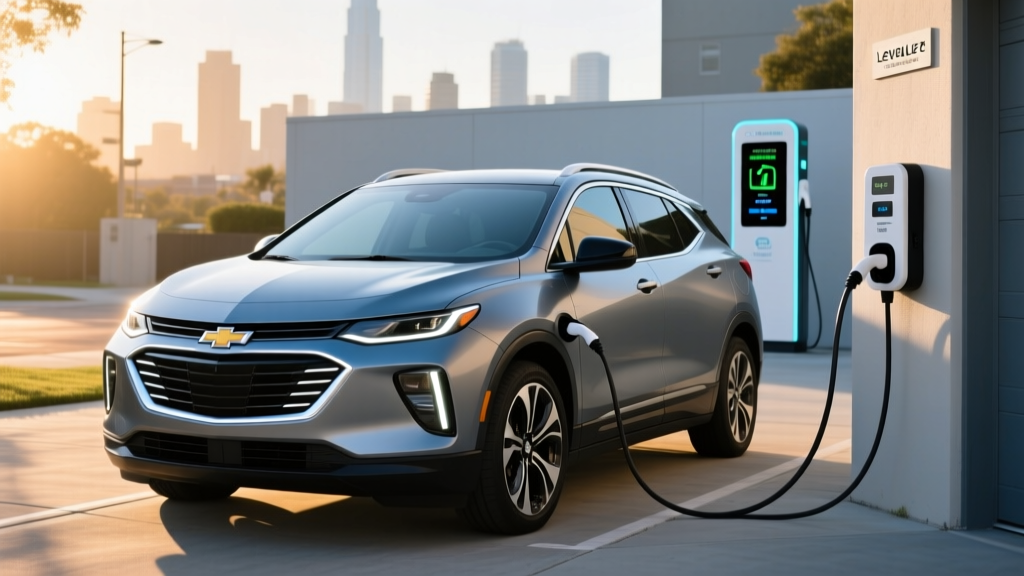
Home charging recommendation: The standard 11.5 kW onboard charger is sufficient for most owners who drive under 100 miles daily — you'll recover a full day's driving in 2–3 hours. The optional 19.2 kW charger is worth the upgrade (~$500–$700 option) if you have a 100-amp circuit available and want faster overnight recovery, especially in high-mileage households. Installation costs for a Level 2 home charger typically range from $800–$2,500 depending on panel capacity and run length; a panel upgrade from 100A to 200A service can add $1,500–$3,000.
The Equinox EV ships with a CCS1 connector natively. Chevrolet provides a NACS adapter for access to Tesla's Supercharger network (17,000+ stalls), which significantly expands the public charging footprint for road trips. The adapter is included with 2026 models.
Performance, Ride & Drivetrain
The FWD Equinox EV's 213 hp and 236 lb-ft of torque deliver adequate acceleration for merging and passing, with a 0–60 mph time around 8.0 seconds. It's not thrilling, but electric torque delivery makes it feel peppier than the numbers suggest around town. The AWD RS trim bumps output to 293 hp and 348 lb-ft, dropping the 0–60 time to approximately 5.9 seconds — genuinely quick for a family crossover.
Ride quality is a highlight. The Ultium platform's low center of gravity (battery pack under the floor) gives the Equinox EV composed handling and minimal body roll. The suspension tuning leans comfort-oriented, absorbing highway imperfections well, though it's not as sporty as a Model Y. Cabin noise is impressively low — typical of EVs lacking an engine, but GM's additional sound-deadening materials make this one of the quieter crossovers in its class.
One-pedal driving is available via a steering-wheel paddle that toggles regen intensity. At maximum regen, the Equinox EV comes to a near-complete stop without touching the brake pedal, making city and stop-and-go driving significantly easier. Tow rating is a modest 1,500 lbs — enough for a small utility trailer but not a boat or camper.
Pricing, Trims & Federal Tax Credit
| Trim | Base MSRP | With Destination | Est. After §30D Credit* | Key Features |
|---|---|---|---|---|
| 2LT FWD | $33,600 | $34,995 | ~$27,495 | 17.7" touchscreen, Super Cruise ready, heated seats |
| 3LT FWD | $43,400 | $44,795 | ~$37,295 | Leather, panoramic roof, Bose audio, ventilated seats |
| RS AWD | $46,300 | $47,695 | ~$40,195 | Sport suspension, 21" wheels, blacked-out trim, 293 hp |
| Midnight AWD | $45,800 | $47,195 | ~$39,695 | Dark appearance package, AWD, premium interior |
*Federal tax credit estimate assumes full §30D eligibility. Actual credit varies. See eligibility details below.
- Credit amount: Up to $7,500 ($3,750 for critical minerals + $3,750 for battery components)
- MSRP cap: Vehicle must be under $80,000 for SUVs/crossovers — Equinox EV qualifies ✓
- Buyer income cap: AGI must not exceed $150,000 (single) / $300,000 (married filing jointly) / $225,000 (head of household)
- Battery sourcing: Critical minerals and battery components must meet phased-in domestic/free-trade sourcing thresholds — verify current-year compliance on IRS.gov
- Point-of-sale transfer: You can transfer the credit to the dealer for an upfront price reduction rather than claiming it on your tax return
- Leasing loophole: Vehicles leased (not purchased) may qualify for the commercial credit (§45W) without income or MSRP caps — check with your dealer
The 2LT at under $35,000 (before credit) is the value play — you get the full 319-mile range, the large infotainment screen, and GM's Super Cruise hardware readiness. The 3LT adds luxury touches but pushes past $43K, where the value proposition weakens against competitors. The RS and Midnight AWD trims are for buyers who want dual-motor performance and all-weather traction.
Always confirm your specific vehicle's VIN against the IRS's eligible-vehicle list before purchase, as battery-sourcing compliance can change mid-year.
Interior, Cargo & Technology
The Equinox EV's cabin represents a meaningful step up from the gas-powered Equinox. The centerpiece is a 17.7-inch diagonal infotainment touchscreen (one of the largest in the segment) paired with an 11-inch digital instrument cluster. Google Built-in provides native Google Maps navigation, Google Assistant, and Play Store apps — no phone required for core functions, though wireless Apple CarPlay and Android Auto are supported.
Cargo and passenger dimensions:
- Cargo (rear seats up): 26.4 cu ft
- Cargo (rear seats folded): 57.2 cu ft
- Front legroom: 40.7 in
- Rear legroom: 37.8 in
- Frunk (front trunk): Not available — the Ultium platform in this application does not include a front cargo compartment
Passenger space is generous for a compact crossover. Rear-seat legroom accommodates adults comfortably on longer trips, and the flat floor (no transmission tunnel) makes the middle seat usable. Cargo volume trails the Hyundai Ioniq 5 (behind the rear seats: 27.2 cu ft) and Tesla Model Y (30.2 cu ft), but the difference is marginal in daily use.
Driver-assistance technology includes GM's Super Cruise hardware on 3LT and above trims, enabling hands-free driving on over 400,000 miles of mapped highways in the U.S. and Canada. Super Cruise is an SAE Level 2 system — the driver must remain attentive, and a camera monitors eye gaze. It's one of the best highway-assist systems available, with smooth lane-keeping and confident lane changes. Lower trims include Chevy Safety Assist with automatic emergency braking, lane-keep assist, following-distance indicator, and IntelliBeam auto high beams.
Warranty & Long-Term Ownership
Chevrolet backs the Equinox EV with competitive warranty coverage:
- Battery & Propulsion: 8 years / 100,000 miles (whichever comes first), covering the Ultium battery pack and drive unit(s) against defects and excessive capacity loss
- Limited Vehicle Warranty: 3 years / 36,000 miles bumper-to-bumper
- Powertrain (non-electric components): 5 years / 60,000 miles
- Roadside Assistance: 5 years / 60,000 miles
- Corrosion: 6 years / 100,000 miles
The 8-year/100,000-mile battery warranty is standard for the industry, though GM does not publish a specific capacity-retention threshold (e.g., "70% of original capacity") in the same way some competitors do. Based on Ultium platform data from the Cadillac Lyriq and GMC Hummer EV, early degradation has been modest — typically 5–8% loss over the first 50,000 miles. The active liquid thermal management system and the battery's conservative buffer (approximately 5–7 kWh above and below the usable window) help preserve long-term health.
For 2026, Chevrolet includes 3 years of OnStar connectivity and remote services, plus access to GM's Energy Assist for route planning and charging-station integration.
Pros & Cons
- 319-mile EPA range at a sub-$34K starting price — best range-per-dollar in the segment
- Massive 17.7" infotainment screen with Google Built-in
- Super Cruise hands-free highway driving available (3LT+)
- Heat pump standard — better cold-weather efficiency
- NACS adapter included for Tesla Supercharger access
- Comfortable, quiet ride quality
- Point-of-sale tax credit transfer available
- DC fast charging peaks at 150 kW — slower than Ioniq 5 and Model Y
- No front trunk (frunk)
- Cargo space slightly below segment leaders
- FWD 2LT base trim has modest 213 hp acceleration
- Optional 19.2 kW onboard charger should be standard at this price
- Some competitors offer V2L (vehicle-to-load); Equinox EV does not currently
Who Should Buy the 2026 Chevy Equinox EV?
- You want 300+ miles of range without spending over $40,000
- You're a commuter or small family who values comfort and tech over sporty performance
- You want Super Cruise for highway-heavy driving
- You have home Level 2 charging and mostly charge overnight
- You qualify for the full $7,500 federal tax credit, bringing the 2LT to ~$27,500
- You road-trip frequently and need the fastest possible DC charging (consider Ioniq 5 or Model Y)
- You need maximum cargo space (Model Y offers significantly more)
- You want AWD and 300+ miles simultaneously — the Equinox AWD drops to 285 mi
- You need towing capacity above 1,500 lbs
The Equinox EV's strongest competitive position is against the Hyundai Ioniq 5 (starts ~$42,000, 303 mi range, faster charging), Tesla Model Y (starts ~$44,000, 310 mi range, Supercharger-native), and Ford Mustang Mach-E (starts ~$43,000, 250–320 mi depending on trim). The Equinox EV undercuts all three on price while matching or exceeding their range in FWD form. The trade-off is charging speed and brand cachet.
Frequently Asked Questions
What is the real-world range of the Chevy Equinox EV?
The FWD Equinox EV carries a 319-mile EPA estimate. In real-world highway driving at 70 mph in moderate temperatures, expect 265–285 miles. City driving with regenerative braking can match or slightly exceed the EPA number. In cold weather below freezing, plan for 220–250 miles. The AWD version drops to a 285-mile EPA rating, with real-world highway range around 235–255 miles.
How fast does the Equinox EV charge at home and on the road?
On a DC fast charger, it peaks at 150 kW and reaches 10–80% in approximately 30 minutes, adding about 190 miles of range. At home on a standard 240V/48A Level 2 charger, it charges at 11.5 kW, adding roughly 34 miles per hour (full charge in ~8 hours). The optional 19.2 kW onboard charger (requires 80A/100A circuit) adds ~52 miles per hour and cuts a full charge to about 5 hours.
Does the 2026 Chevy Equinox EV qualify for the $7,500 federal tax credit?
The Equinox EV is eligible for up to $7,500 under IRS §30D, but individual eligibility depends on your adjusted gross income (under $150K single / $300K married filing jointly), the vehicle's MSRP (under $80K — all trims qualify), and current-year battery-sourcing compliance. The credit can be transferred to the dealer at point of sale for an immediate price reduction. Always verify your VIN on the IRS eligible vehicle list before purchasing.
Is the Equinox EV worth buying over the Tesla Model Y or Hyundai Ioniq 5?
If your priority is maximum range at the lowest price, the Equinox EV 2LT (319 mi, ~$35K before credit) is hard to beat. The Model Y offers faster charging, more cargo space, and the Supercharger network natively, but starts ~$9,000 higher. The Ioniq 5 charges significantly faster (10–80% in ~18 min) and has a more distinctive design, but also costs more and delivers slightly less range. For budget-conscious buyers who charge mostly at home, the Equinox EV is the strongest value proposition.
What battery chemistry does the Equinox EV use?
The Equinox EV uses GM's Ultium platform with NMC (nickel-manganese-cobalt) lithium-ion cells supplied by Ultium Cells LLC (a GM–LG Energy Solution joint venture). NMC offers higher energy density than LFP (lithium iron phosphate), which is why the Equinox EV achieves 319 miles from a relatively compact 85 kWh pack. The trade-off is that NMC cells benefit more from keeping charge between 20–80% for daily use and avoiding prolonged storage at 100% — unlike LFP, which tolerates regular full charges.
Does the Equinox EV have a frunk (front trunk)?
No. The Equinox EV does not include a front trunk. The space under the hood houses power electronics and HVAC components. This is a notable omission compared to the Ford Mustang Mach-E and Hyundai Ioniq 5, both of which offer modest frunk storage.
Is Super Cruise actually self-driving?
No. Super Cruise is an SAE Level 2 driver-assistance system. It provides hands-free steering, acceleration, and braking on pre-mapped divided highways, but the driver must remain attentive and a camera continuously monitors eye gaze. You are legally and practically responsible for the vehicle at all times. True self-driving (Level 4) is currently limited to geofenced robotaxi services like Waymo in select cities.