Quick Verdict: The Affordable Long-Range Crossover
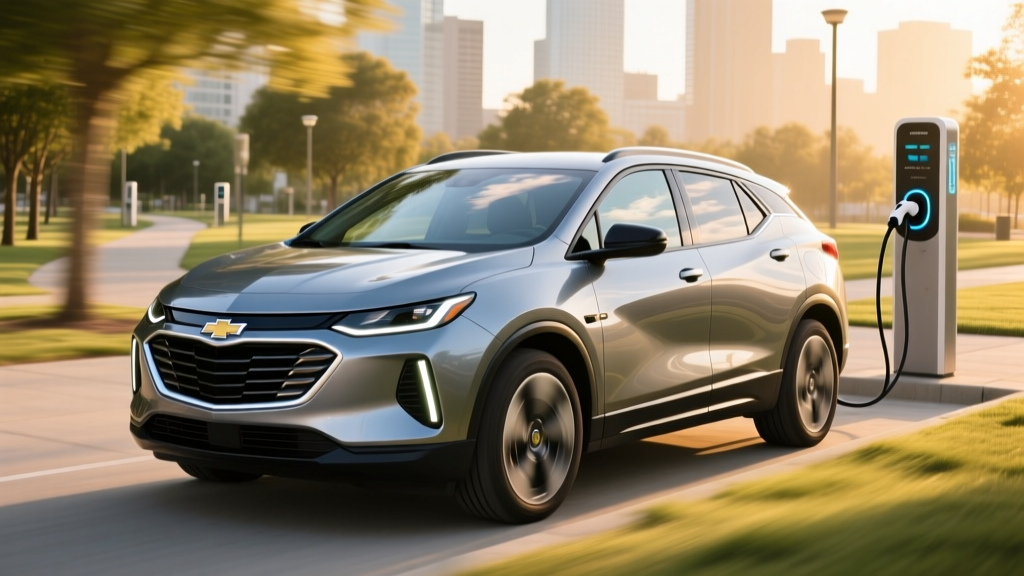
The 2026 Chevrolet Equinox EV occupies a rare position in the electric vehicle market: a mainstream compact crossover with over 300 miles of EPA-estimated range starting under $35,000 before incentives. Built on GM's Ultium platform, it delivers practicality, competitive charging speeds, and a spacious cabin that rivals gas-powered compact SUVs — while undercutting most electric competitors on price. But how do the official Chevy Equinox EV specifications translate to real-world driving, charging, and ownership? We break down every number that matters.
| Specification | 3LT (FWD) | RS / Launch Edition (FWD) | RS (AWD) |
|---|---|---|---|
| EPA Range | 319 mi | 315 mi | 285 mi |
| Battery (Usable) | ~85 kWh (NMC) | ~85 kWh (NMC) | ~85 kWh (NMC) |
| Horsepower | 213 hp | 213 hp | 288 hp |
| Torque | 236 lb-ft | 236 lb-ft | 355 lb-ft |
| 0-60 mph | ~8.2 sec | ~8.2 sec | ~5.9 sec |
| Max DC Fast Charge | 150 kW | 150 kW | 150 kW |
| 10-80% DC Charge | ~30 min | ~30 min | ~30 min |
| Level 2 Home Charge | 11.5 kW (~34 mi/hr) | 11.5 kW (~34 mi/hr) | 11.5 kW (~34 mi/hr) |
| MPGe (Combined) | 109 MPGe | 108 MPGe | 95 MPGe |
| Base MSRP | $33,600 | $36,300 | $41,900 |
Range and Efficiency: EPA Numbers vs. Real-World Driving
The headline figure for the 2026 Equinox EV is its 319-mile EPA-estimated range on the 3LT front-wheel-drive trim. That places it among the longest-range EVs in its price bracket, trailing only the Tesla Model Y Long Range (~320 mi EPA) and Hyundai Ioniq 5 (~318 mi EPA with the larger battery) in the compact electric crossover segment.
EPA Sticker: 319 miles (3LT FWD) / 285 miles (RS AWD)
Highway (70-75 mph, moderate temps): Expect ~265-280 miles FWD; ~235-250 miles AWD
City/Suburban mixed driving: ~300-315 miles FWD (regen braking recovers energy in stop-and-go)
Cold weather (below 32°F): Budget for 20-30% reduction — approximately 220-255 miles FWD without preconditioning. The Equinox EV lacks a standard heat pump on all trims; resistive cabin heating draws directly from the traction battery in winter.
Key factor: The 85 kWh (usable) Ultium battery uses NMC (nickel manganese cobalt) chemistry, which offers high energy density but is more sensitive to extreme cold than LFP packs found in some competitors.
Efficiency varies meaningfully by drivetrain. The FWD models achieve approximately 109 MPGe combined (roughly 31 kWh/100 mi), while the dual-motor AWD RS drops to 95 MPGe (~35 kWh/100 mi). For context, the Hyundai Ioniq 5 RWD posts 114 MPGe combined, and the Tesla Model Y Long Range AWD achieves 122 MPGe — both slightly more efficient due to lower curb weight and, in Tesla's case, a heat pump standard.
According to fueleconomy.gov, the Equinox EV 3LT consumes approximately 31 kWh per 100 miles in mixed driving. At the national average residential electricity rate of ~$0.17/kWh (EIA, 2025), that works out to roughly $0.053 per mile for home charging — a fraction of the ~$0.14/mile a comparable 28 MPG gas crossover would burn at $3.90/gallon.
Charging Speed: DC Fast Charging and Home Level 2
Charging is where buyers scrutinize EVs most carefully, and the Equinox EV's Ultium architecture delivers competitive but not class-leading performance.
| Charging Level | Power / Rate | Speed (Miles Added) | Notes |
|---|---|---|---|
| Level 1 (120V household) | ~1.4 kW | ~4 mi/hr | Emergency/top-up only; full charge in ~60+ hours |
| Level 2 (240V home) | 11.5 kW (48A) | ~34 mi/hr | Full charge in ~9 hours; requires 60A circuit |
| DC Fast Charge (CCS/NACS) | 150 kW peak | ~70 mi in 10 min | 10-80% in ~30 min; tapers significantly above 80% |
The 150 kW peak DC fast-charge rate is the critical number for road trips. In practice, the Equinox EV sustains close to peak rate between roughly 10% and 40% state of charge, then progressively tapers. A 10-80% session takes approximately 30 minutes at a capable 150+ kW station (such as Electrify America or Tesla Superchargers with the Magic Dock adapter). Expect 80-90% to add another 15-20 minutes due to the charge curve taper — a characteristic of NMC chemistry protecting cell longevity.
For the 2026 model year, GM equips the Equinox EV with the NACS (North American Charging Standard) connector, granting native access to Tesla's Supercharger network — over 17,000 stalls in North America. This is a significant advantage over CCS-only vehicles, which rely on Electrify America, EVgo, and ChargePoint networks with more variable uptime.
At home, the 11.5 kW onboard charger means a 48-amp Level 2 wall connector on a dedicated 60-amp circuit will add roughly 34 miles of range per hour, or replenish a depleted battery overnight in about 9 hours. Home installation for a Level 2 charger typically runs $500-$2,000 depending on panel capacity and conduit distance — factor this into your purchase budget.
Performance and Drivetrain: FWD Efficiency or AWD Punch
The Equinox EV offers two distinct powertrain configurations built around the same 85 kWh Ultium battery pack:
- Front-Wheel Drive (3LT, RS): A single front-mounted motor producing 213 horsepower and 236 lb-ft of torque. The 0-60 mph time sits around 8.2 seconds — adequate for merging and passing but not sporty. This is the efficiency-first choice, maximizing range at 319 miles EPA.
- All-Wheel Drive (RS): Dual motors combine for 288 horsepower and 355 lb-ft of torque. The 0-60 time drops to approximately 5.9 seconds, making it genuinely quick off the line. The trade-off: range falls to 285 miles EPA, and efficiency drops to 95 MPGe.
Ride quality is tuned toward comfort rather than sportiness. The Equinox EV's curb weight (~4,700 lbs for AWD) is managed by GM's suspension tuning, though you'll feel the mass during aggressive cornering. Regenerative braking offers multiple levels via steering-wheel paddles, including a one-pedal driving mode that can bring the vehicle to a complete stop without touching the brake pedal.
Towing capacity is rated at 1,500 pounds across all trims when properly equipped — sufficient for a small utility trailer or a pair of dirt bikes, but not a camper. This matches the Hyundai Ioniq 5 but trails the Ford Mustang Mach-E (which is not rated for towing) and the Tesla Model Y (3,500 lbs).
Interior Space, Cargo, and Technology
The Equinox EV's cabin is where GM's compact-crossover expertise shows. Passenger space is generous for the segment:
- Front headroom: 40.0 inches
- Front legroom: 43.2 inches
- Rear headroom: 38.4 inches
- Rear legroom: 37.8 inches
- Cargo (behind rear seats): 26.4 cubic feet
- Cargo (rear seats folded): 57.2 cubic feet
- Front trunk (frunk): Not available — the Ultium platform's front subframe houses power electronics, eliminating frunk space
The rear seat accommodates two adults comfortably on longer trips, with decent thigh support and USB-C ports for device charging. However, the absence of a frunk is a notable miss — competitors like the Hyundai Ioniq 5 (0.85 cu ft) and Ford Mustang Mach-E (4.7 cu ft) offer at least some front storage for charging cables or small items.
Infotainment and tech highlights:
- 17.7-inch diagonal touchscreen (among the largest in the segment)
- 11.0-inch digital driver instrument cluster
- Google Built-In (Google Maps, Google Assistant, Play Store apps)
- Wireless Apple CarPlay and Android Auto
- Wireless phone charging pad
- Available head-up display (RS trim)
- Over-the-air (OTA) software updates
Driver assistance (Chevy Safety Assist / Super Cruise availability):
All trims include Chevy Safety Assist: automatic emergency braking, forward collision alert, lane keep assist with lane departure warning, following distance indicator, and IntelliBeam automatic high beams. The available Super Cruise system (standard on RS, optional on 3LT) provides hands-free driving on over 400,000 miles of compatible highways in the US and Canada. However, it is critical to understand that Super Cruise is an SAE Level 2 driver-assistance system — the driver must remain attentive, and the system monitors engagement via a driver-facing camera. It is not autonomous driving.
Pricing, Trims, and Federal Tax Credit Eligibility
The 2026 Equinox EV lineup is structured to offer an accessible entry point with meaningful upgrades at higher trims:
| Trim | Base MSRP | Max §30D Credit | Effective Price (if eligible) |
|---|---|---|---|
| 3LT (FWD) | $33,600 | Up to $7,500 | ~$26,100 |
| RS (FWD) | $36,300 | Up to $7,500 | ~$28,800 |
| RS (AWD) | $41,900 | Up to $7,500 | ~$34,400 |
| Midnight / Launch Edition (AWD) | $43,400 | Up to $7,500 | ~$35,900 |
Prices exclude $1,395 destination charge. Tax credit eligibility is subject to IRS §30D rules — see checklist below.
Does the Equinox EV qualify for the federal EV tax credit? As of 2026, the Equinox EV is expected to qualify for up to $7,500 under IRS §30D, but eligibility depends on multiple factors that change with battery sourcing and IRS guidance. Here is the current framework per irs.gov:
- MSRP cap: Vehicle must be under $80,000 for SUVs/crossovers — the Equinox EV clears this easily.
- Buyer income cap: Modified AGI must not exceed $150,000 (single), $225,000 (head of household), or $300,000 (joint).
- Battery sourcing: The $7,500 credit splits into two $3,750 halves — one for critical minerals sourcing and one for battery component manufacturing. GM sources Ultium cells from the Ultium Cells joint venture (with LG Energy Solution) in Ohio and Tennessee, but critical mineral requirements tighten annually. Confirm current-year eligibility on the IRS qualified vehicles list before purchasing.
- Point-of-sale transfer: Eligible buyers can transfer the credit to the dealer at purchase, reducing the upfront price rather than waiting for a tax refund. This is available for 2026 purchases.
- Consult a tax professional to confirm your specific eligibility — income phase-outs, prior credit usage, and tax liability all affect the final benefit.
Battery, Warranty, and Long-Term Ownership
The Equinox EV's ~85 kWh usable Ultium battery uses NMC (nickel manganese cobalt) pouch cells manufactured by the Ultium Cells JV. NMC chemistry provides excellent energy density (enabling the 319-mile range in a compact crossover footprint) but requires more careful thermal management and is less tolerant of routine 100% charging than LFP alternatives.
Battery care recommendations for NMC:
- Daily charging target: 80% (set via the vehicle's charge limit setting)
- Reserve 100% charges for road trips
- Precondition the battery before DC fast charging (the navigation system does this automatically when a charger is set as your destination)
- Avoid prolonged storage at very low (<10%) or very high (>90%) state of charge
Warranty coverage:
- Battery: 8 years / 100,000 miles (whichever comes first), covering defects and capacity loss below a specified threshold (typically ~70% of original capacity, though GM's exact retention guarantee should be confirmed in your purchase documentation)
- Powertrain (electric motors, power electronics): 8 years / 100,000 miles
- Bumper-to-bumper: 3 years / 36,000 miles
- Corrosion: 6 years / 100,000 miles
GM's battery warranty aligns with the industry standard set by the Hyundai Ioniq 5 (10yr/100k mi) and is matched by most competitors. Real-world degradation data for the Ultium platform is still emerging — early Bolt EV and Bolt EUV data suggest GM's thermal management keeps degradation modest, typically 5-10% over the first 100,000 miles for NMC packs under normal use.
Competitive Comparison: Equinox EV vs. the Segment
| Specification | Chevy Equinox EV 3LT | Hyundai Ioniq 5 SEL (RWD, Std Range+) | Tesla Model Y Long Range | Kia EV6 Light (RWD) |
|---|---|---|---|---|
| EPA Range | 319 mi | 318 mi | 320 mi | 310 mi |
| Battery (Usable) | ~85 kWh | 77.4 kWh | ~75 kWh | 77.4 kWh |
| Max DC Charge | 150 kW | 238 kW (800V) | 250 kW | 238 kW (800V) |
| 10-80% Time | ~30 min | ~18 min | ~25 min | ~18 min |
| 0-60 mph | 8.2 sec | 7.4 sec | 4.8 sec | 7.2 sec |
| Base MSRP | $33,600 | $42,600 | $44,990 | $42,900 |
| Cargo (rear seats up) | 26.4 cu ft | 27.2 cu ft | 30.2 cu ft | 24.4 cu ft |
| Heat Pump | Not standard | Standard | Standard | Standard |
| NACS Native | Yes | No (CCS1) | Yes | No (CCS1) |
- Lowest starting price in the 300+ mile EV crossover segment
- Native NACS connector — full Supercharger access without adapters
- Spacious rear seat (37.8" legroom) and generous cargo area
- Available Super Cruise hands-free highway driving
- Massive 17.7" touchscreen with Google Built-In
- FWD option maximizes range for commuters who don't need AWD
- DC fast charging peaks at 150 kW — slower than Ioniq 5/EV6 (238 kW) and Model Y (250 kW)
- No front trunk (frunk) for cable storage
- No standard heat pump — cold-weather range loss is more pronounced
- FWD performance is leisurely (8.2 sec 0-60)
- Some interior materials feel budget-grade vs. Hyundai/Kia
- 1,500-lb towing limit is low for the segment
Who Should Buy the 2026 Chevy Equinox EV?
Choose the Equinox EV if:
- You want 300+ miles of range at the lowest possible price point
- You prioritize Supercharger network access (NACS native)
- Your driving is primarily commuting and suburban errands, not frequent long road trips where 150 kW charging adds time
- You value rear-seat space for car seats or adult passengers
- You live in a moderate climate where heat-pump absence is less impactful
Look at competitors if:
- You take frequent road trips and want the fastest possible DC charging (Hyundai Ioniq 5 / Kia EV6 at 238 kW)
- You need maximum cargo space and towing (Tesla Model Y: 30.2 cu ft, 3,500 lbs)
- You live in a cold climate and want a standard heat pump for better winter range retention
- You want sportier acceleration in the base FWD configuration
Frequently Asked Questions
What is the real-world range of the 2026 Chevy Equinox EV?
The EPA rates the 3LT FWD at 319 miles and the RS AWD at 285 miles. In real-world highway driving at 70-75 mph, expect roughly 265-280 miles from the FWD and 235-250 miles from the AWD. In freezing temperatures without preconditioning, budget for 20-30% less — approximately 220-255 miles FWD. City driving with regenerative braking recovers energy and can approach or slightly exceed the EPA number.
How fast does the Equinox EV charge at home and on the road?
At home on a 240V Level 2 charger (11.5 kW), the Equinox EV adds about 34 miles of range per hour, fully recharging in roughly 9 hours. On DC fast chargers, it peaks at 150 kW, reaching 10-80% in approximately 30 minutes. This is slower than the Hyundai Ioniq 5's 800V architecture (~18 minutes) but comparable to many mainstream EVs. The native NACS connector means seamless access to Tesla Superchargers.
Does the 2026 Equinox EV qualify for the $7,500 federal tax credit?
The Equinox EV is expected to qualify for up to $7,500 under IRS §30D, but eligibility depends on your income (AGI caps: $150K single / $300K joint), the vehicle's MSRP (under $80K — easily met), and current-year battery sourcing rules for critical minerals and component manufacturing. GM's US-built Ultium Cells batteries position it well, but requirements tighten annually. Always verify on the IRS qualified vehicles list and consult a tax professional before purchase. The credit can be transferred to the dealer at point of sale for an immediate price reduction.
Is the Equinox EV worth buying vs. the Tesla Model Y or Hyundai Ioniq 5?
It depends on your priorities. The Equinox EV wins on entry price — at $33,600, it undercuts the Model Y ($44,990) and Ioniq 5 ($42,600) by roughly $9,000-$11,000 before incentives. It also offers native NACS/Supercharger access, which the Ioniq 5 lacks. However, the Model Y offers more cargo space, faster charging (250 kW), better performance, and a standard heat pump. The Ioniq 5 charges far faster (238 kW via 800V architecture) and includes a heat pump standard. If price-per-mile-of-range is your top metric, the Equinox EV is hard to beat. If charging speed and cold-weather efficiency matter more, test-drive the Ioniq 5 and Model Y.
What are the biggest drawbacks of the Equinox EV?
The three most common complaints center on charging speed (150 kW peak trails the 200+ kW competition), the absence of a frunk, and no standard heat pump — which increases cold-weather range loss. The FWD model's 8.2-second 0-60 time is adequate but unexciting, and some interior plastics reflect the vehicle's budget-friendly positioning. Additionally, the 1,500-lb towing limit is restrictive compared to the Model Y's 3,500 lbs.
What battery chemistry does the Equinox EV use, and how long will it last?
The Equinox EV uses an NMC (nickel manganese cobalt) lithium-ion battery with approximately 85 kWh usable capacity, manufactured by the Ultium Cells JV in the United States. NMC offers high energy density (enabling 319 miles in a compact package) but benefits from daily charging limits of ~80% to maximize longevity. GM warranties the battery for 8 years / 100,000 miles. Based on historical GM NMC pack data, expect approximately 5-10% capacity loss over 100,000 miles under normal use — meaning roughly 290-300 miles of range at that mileage for the 3LT FWD.
Sources: fueleconomy.gov, IRS §30D Clean Vehicle Credits, Chevrolet official specifications. All pricing and specifications reflect 2026 model year data available at time of publication. Tax credit eligibility is subject to change — verify current rules before purchase.