The Equinox EV Is Rewriting the Affordable Long-Range Playbook
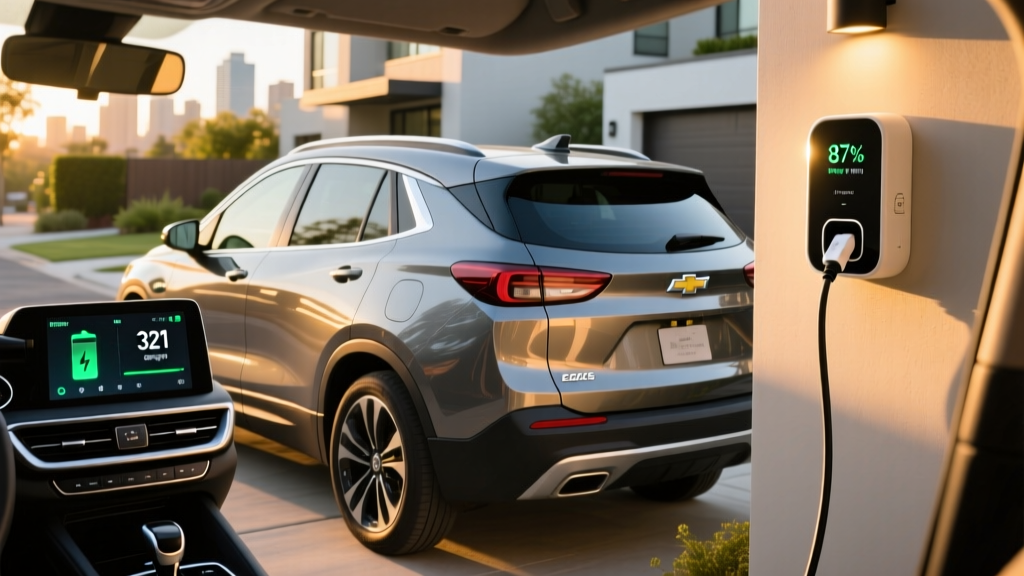
Chevrolet's entry into the mainstream electric crossover segment has done more than fill a gap in the Bowtie lineup — it has redrawn the boundaries of what budget-conscious buyers can expect from a battery-electric vehicle. The 2025–2026 Chevy Equinox EV undercuts rivals on price while delivering over 300 miles of EPA-estimated range, a practical cabin, and access to the Tesla Supercharger network via the NACS standard. It's no surprise that Chevy Equinox EV sales have accelerated since the launch of the more affordable LT trims and the sporty RS.
But sticker specs don't tell the whole story. After spending time with the Equinox EV across highway, city, and cold-weather driving, and analyzing its charging behavior on DC fast chargers, here is the data-driven breakdown buyers need before signing a purchase agreement.
Core Specs at a Glance
| Specification | 2026 Equinox EV LT (FWD) | 2026 Equinox EV RS (AWD) |
|---|---|---|
| EPA Range | 319 miles | 285 miles |
| Battery (usable) | 85 kWh | 85 kWh |
| Chemistry | NMC (Nickel Manganese Cobalt) | NMC |
| Drivetrain | Front-Wheel Drive (single motor) | All-Wheel Drive (dual motor) |
| Horsepower | 213 hp | 288 hp |
| 0–60 mph | ~8.0 sec | ~6.2 sec |
| Peak DC Fast Charge | 150 kW | 150 kW |
| 10–80% DC Time | ~34 minutes | ~34 minutes |
| Level 2 Home Charge Rate | 11.5 kW (~34 mi/hr) | 11.5 kW (~34 mi/hr) |
| EPA Efficiency | 115 MPGe (29 kWh/100 mi) | 97 MPGe (35 kWh/100 mi) |
| Cargo (rear seats up) | 26.4 cu ft | 26.4 cu ft |
| Cargo (rear seats folded) | 57.2 cu ft | 57.2 cu ft |
| Rear Legroom | 37.8 in | 37.8 in |
| Base MSRP (before dest.) | $33,600 | $43,400 |
| Battery/Powertrain Warranty | 8 yr / 100,000 mi | 8 yr / 100,000 mi |
Real-World Range: What the EPA Sticker Doesn't Tell You
The Equinox EV's 85 kWh usable battery (GM's Ultium platform) is a large pack for this price segment. That capacity gives it a buffer against cold-weather and highway losses that smaller-battery competitors can't match. However, NMC chemistry is more sensitive to extreme cold than LFP, so preconditioning the battery before DC fast charging is essential in winter — the Equinox EV supports navigation-based preconditioning when a charger is set as your destination.
For daily commuting under 80 miles round-trip, even the AWD model will rarely need mid-week charging. Road trippers should plan stops every 220–250 miles to stay above a 10% state of charge comfort threshold.
Charging Speed and Infrastructure
| Charging Level | Power / Rate | Time or Miles Added |
|---|---|---|
| Level 1 (120V household) | ~1.4 kW | ~4 miles per hour |
| Level 2 (240V home, 48A) | 11.5 kW | ~34 miles per hour; full charge in ~9 hours |
| DC Fast Charge (peak) | 150 kW | 10–80% in ~34 min; ~70 miles in 10 min |
The Equinox EV's 150 kW peak DC fast-charge rate is adequate but not class-leading. Competitors on 800-volt architectures (Hyundai Ioniq 5, Kia EV6) can peak above 230 kW and complete a 10–80% session in 18–20 minutes. The Equinox EV's charge curve is relatively flat from 10–50% SoC, then tapers noticeably above 70%. In practice, a 10–80% session takes about 34 minutes at a 150 kW or higher station — add a few minutes at lower-powered chargers.
A major selling point is the NACS charge port, standard on 2025–2026 models. This means direct access to Tesla Supercharger V3 and V4 stalls (now numbering over 25,000 in North America) without an adapter. For Equinox EV buyers who previously worried about Electrify America or EVgo reliability, the Supercharger network is a significant infrastructure advantage.
At home on a 48-amp Level 2 charger (requiring a 60-amp dedicated circuit), the Equinox EV recovers roughly 34 miles of range per hour. A near-empty to full charge takes about 9 hours — easily completed overnight. Buyers should budget $800–$2,000 for professional Level 2 installation, depending on panel capacity and wiring distance. A licensed electrician should assess whether your panel can handle the additional 60-amp load or if a panel upgrade ($1,500–$3,000) is needed.
Performance and Driving Dynamics
The FWD single-motor LT produces 213 horsepower — sufficient for confident highway merging and city driving, with a 0–60 mph time around 8.0 seconds. The dual-motor AWD RS bumps output to 288 hp and drops the sprint to roughly 6.2 seconds, giving it a sportier character that matches its visual upgrades.
Ride quality is composed, with GM tuning the suspension to absorb road imperfections without floatiness. The low center of gravity from the floor-mounted Ultium battery pack keeps body roll in check during cornering. Regenerative braking offers multiple levels, including a one-pedal driving mode that can bring the vehicle to a complete stop without touching the brake pedal.
One limitation: the Equinox EV is not rated for towing. If you need to pull a trailer, look to the Chevy Blazer EV or a competitor like the Ford Mustang Mach-E (which offers a 1,500-lb tow rating with the California Route 1 package).
Pricing, Trims, and Federal Tax Credit
| Trim | MSRP (incl. dest.) | Est. Price After §30D Credit |
|---|---|---|
| LT FWD (2LT) | $34,995 | ~$27,495* |
| LT AWD (2LT) | $38,295 | ~$30,795* |
| RS FWD (2RS) | $42,795 | ~$35,295* |
| RS AWD (2RS) | $45,895 | ~$38,395* |
| RS Launch Edition AWD | $44,795 | ~$37,295* |
*Price after potential $7,500 federal tax credit (IRS §30D). Eligibility depends on buyer income caps ($150K single / $300K joint MAGI), vehicle MSRP caps ($80,000 for SUVs — all Equinox EV trims qualify), and battery critical-mineral and component sourcing requirements that change annually. As of 2026, point-of-sale transfer is available, meaning the credit can be applied directly at the dealership to reduce your out-of-pocket cost. Always verify current-year eligibility on IRS.gov or with a tax professional.
The LT FWD at roughly $27,500 after the credit is the headline number driving Chevy Equinox EV sales. At that price, it undercuts the Hyundai Ioniq 5 SE ($42,475 MSRP) and Tesla Model Y Long Range (~$47,000) by a wide margin while offering comparable or better range. Even buyers who don't qualify for the full credit — due to income limits or partial credit eligibility — are getting a long-range EV at a price point that was unthinkable three years ago.
Additional state and utility incentives may stack on top. Check fueleconomy.gov and your local utility for rebates on home charger installation and off-peak charging rates.
Tech, Interior, and Driver Assistance
The Equinox EV's cabin is dominated by a 17.7-inch diagonal infotainment touchscreen — one of the largest standard displays in any vehicle under $50,000. It runs GM's latest Ultifi software platform with Google Built-In (Google Maps, Google Assistant, Play Store apps). An 11-inch digital driver cluster sits behind the steering wheel.
Standard driver-assistance features include:
- Super Cruise availability on higher trims — GM's hands-free Level 2 highway driving system covering over 750,000 miles of compatible roads in North America
- Automatic Emergency Braking with pedestrian detection
- Lane Keep Assist with Lane Departure Warning
- Adaptive Cruise Control
- HD Surround Vision (360° camera)
- Rear Cross Traffic Alert
Interior material quality is mixed. The RS gets premium touches like evotex seating and a flat-bottom steering wheel, but hard plastics appear on lower door panels and the center console — a reminder of the Equinox EV's budget positioning. Rear seat space is generous at 37.8 inches of legroom, suitable for adults on longer trips.
Pros, Cons, and Who Should Buy
Pros
- Class-leading 319-mile EPA range at a sub-$35K starting price
- Standard NACS port — direct Tesla Supercharger access
- Spacious cabin with 37.8" rear legroom and 57.2 cu ft max cargo
- Massive 17.7" infotainment screen with Google Built-In
- Super Cruise hands-free driving available
- 8-year/100,000-mile battery and powertrain warranty
- Point-of-sale tax credit can reduce drive-off price significantly
Cons
- 150 kW peak DC charge rate trails 800V rivals (Ioniq 5, EV6)
- No towing capacity
- NMC battery less cold-resilient than LFP alternatives
- Some interior hard plastics reflect budget positioning
- AWD trims sacrifice ~34 miles of range vs. FWD
- No front trunk (frunk)
Best For
Daily commuters and budget-focused families who want maximum range per dollar, primarily drive in moderate climates, and can charge at home overnight. The FWD LT at ~$27,500 after the federal credit is arguably the best value in the entire EV market for 2026. Road trippers will appreciate the Supercharger access, though they should plan for slightly longer charging stops than Ioniq 5 or EV6 owners.
Consider Alternatives If
You need towing, live in extreme cold climates where LFP or heat-pump-equipped rivals perform better, or prioritize the fastest possible DC charging for frequent long-distance travel.
Competitive Landscape: Is the Equinox EV Worth It?
Choose the Equinox EV if: You want 300+ miles of range for under $35K (after credit), value Supercharger network access, and need a practical family crossover with generous rear-seat and cargo space.
Choose the Hyundai Ioniq 5 if: You prioritize ultra-fast 800V charging (10–80% in ~18 min), prefer a more distinctive design, and are willing to pay $8,000–$10,000 more for the privilege.
Choose the Tesla Model Y if: You want the deepest Supercharger integration, best-in-class software and OTA updates, and don't mind a higher starting price and minimalist interior.
Choose the Ford Mustang Mach-E if: You want a sportier driving experience, available towing, and don't need 300+ miles of range.
Chevy Equinox EV sales numbers reflect a market hungry for affordable, long-range electric crossovers. By delivering 319 miles of range at a price point that — after incentives — rivals well-equipped compact gas crossovers, Chevrolet has positioned the Equinox EV as the gateway drug to electric mobility for mainstream America. It won't win charging-speed contests or design awards, but it wins the math test. And for most buyers, that's the one that matters.
Frequently Asked Questions
What is the real-world range of the Chevy Equinox EV?
The FWD model's 319-mile EPA rating translates to roughly 290–310 miles in mixed driving, 250–270 miles at sustained highway speeds, and 210–240 miles in freezing weather. The AWD model (285 EPA) typically delivers 220–250 miles in real-world highway use.
How fast does the Equinox EV charge?
On a DC fast charger, it peaks at 150 kW and completes a 10–80% charge in approximately 34 minutes. At home on a 240V Level 2 charger (11.5 kW), it adds about 34 miles of range per hour and fully charges in roughly 9 hours. A standard 120V outlet adds about 4 miles per hour.
Does the Chevy Equinox EV qualify for the federal EV tax credit?
Yes, all Equinox EV trims fall under the $80,000 MSRP cap for SUVs. Eligibility for the full $7,500 credit depends on buyer income limits ($150K single / $300K joint), and battery critical-mineral and component sourcing rules that update annually. The credit can be transferred at point of sale to reduce your purchase price directly. Verify current rules at IRS.gov.
What battery does the Equinox EV use, and how long will it last?
The Equinox EV uses an 85 kWh (usable) NMC (nickel manganese cobalt) Ultium battery pack. GM warranties it for 8 years or 100,000 miles against defects and excessive capacity loss (typically defined as dropping below 60–70% of original capacity). NMC batteries generally retain 85–90% capacity after 100,000 miles based on industry degradation data.
Can the Equinox EV use Tesla Superchargers?
Yes. The 2025–2026 Equinox EV comes with a native NACS (North American Charging Standard) port, providing direct access to Tesla Supercharger V3 and V4 stations without an adapter.
Is the Equinox EV good in cold weather?
It's adequate but not class-leading. Expect 25–35% range loss in sub-freezing temperatures due to NMC chemistry sensitivity and cabin heating demands. The Equinox EV offers battery preconditioning when navigating to a charger, which helps mitigate cold-weather charging slowdowns. If you live in extreme cold climates, consider a garage-parked charging setup and plan for reduced range.
How much cargo space does the Equinox EV have?
26.4 cubic feet behind the rear seats and 57.2 cubic feet with the rear seats folded flat. There is no front trunk (frunk). Rear legroom measures 37.8 inches.