Quick Verdict: Is the Equinox EV Reliable Enough for Daily Life?
The Chevrolet Equinox EV entered the market as GM's bid to make long-range electric transportation genuinely affordable, and after more than a year of customer deliveries, early reliability signals are largely encouraging. Built on GM's Ultium platform — the same architecture underpinning the Blazer EV, Silverado EV, and Cadillac Lyriq — the Equinox EV benefits from a modular battery and motor strategy that has now seen meaningful volume. Early owner surveys and forum data suggest the powertrain itself is holding up well, though software glitches and minor build-quality inconsistencies remain the primary complaint categories, consistent with most first-to-second-year EV launches.
For buyers researching Chevy Equinox EV reliability, the honest answer is this: the Ultium battery and drive units appear robust, the 8-year/100,000-mile warranty provides substantial backstop, and most issues reported cluster around infotainment and assembly rather than fundamental mechanical failure. That said, if you're cross-shopping against a Tesla Model Y or Hyundai Ioniq 5 — platforms with longer production runs — the Equinox EV has less long-term track record to lean on.
Range, Battery Chemistry, and Real-World Efficiency
| Attribute | Value |
|---|---|
| EPA Range (FWD, 3LT/RS) | 319 miles |
| EPA Range (AWD, RS Launch) | 285 miles |
| Battery Capacity (usable) | ~85 kWh |
| Battery Chemistry | NMC (nickel manganese cobalt) |
| Efficiency (FWD) | ~3.0 mi/kWh (~33 kWh/100 mi) |
| MPGe (FWD combined) | ~100 MPGe |
| Drivetrain Options | FWD (single motor) / AWD (dual motor) |
| Horsepower (FWD / AWD) | ~213 hp / ~288 hp |
| 0–60 mph (FWD / AWD) | ~8.1 sec / ~6.5 sec |
| Max DC Fast Charge | 150 kW (peak) |
| 10–80% DC Fast Charge | ~30 minutes |
| Level 2 Home Charge Rate | 11.5 kW (~34 mi/hr) |
| Battery Warranty | 8 years / 100,000 miles |
| Bumper-to-Bumper | 3 years / 36,000 miles |
Real-World Range vs. EPA Sticker
EPA estimate: 319 miles (FWD, 85 kWh pack, 19-inch wheels)
Expect in practice: 260–290 miles in mixed highway driving at 70–75 mph; 200–230 miles in sustained sub-30°F cold weather. City and suburban driving with regen braking can meet or exceed the EPA number. The AWD RS variant drops to an EPA 285 miles, and expect ~230–250 miles highway in that trim.
The Equinox EV's NMC chemistry delivers strong energy density but is more temperature-sensitive than LFP. Cold-weather preconditioning (available via the app or scheduled departure) is essential if you want fast DC charging in winter — without it, charge rates can throttle severely below 50°F.
According to fueleconomy.gov, the FWD Equinox EV achieves roughly 100 MPGe combined, translating to about 33 kWh per 100 miles. That's respectable for a compact crossover — slightly behind the Hyundai Ioniq 5's efficiency but ahead of the Ford Mustang Mach-E Extended Range AWD.
Charging Speed: DC Fast, Level 2, and the Curve Reality
| Level | Power | Miles Added per Hour | Typical Use Case |
|---|---|---|---|
| Level 1 (120V) | ~1.4 kW | ~4 mi/hr | Overnight trickle, emergencies |
| Level 2 (240V, 48A) | 11.5 kW | ~34 mi/hr | Home daily charging, full charge in ~8.5 hrs |
| DC Fast (150 kW peak) | Up to 150 kW | ~175 mi in 20 min (10–50%) | Road trips, public stations |
The Equinox EV's 150 kW peak DC fast-charge capability is the platform's most debated spec. In a market where the Hyundai Ioniq 5 and Kia EV6 peak at 240+ kW on 800V architectures, 150 kW on GM's 400V Ultium system feels conservative. Here's what that means practically:
From 10% to roughly 50% state of charge, the Equinox EV sustains close to its peak rate, adding about 175 miles in 20 minutes at a capable charger. But above 60% SoC, the charge curve tapers noticeably — a characteristic of NMC chemistry managed conservatively to protect long-term battery health. A full 10–80% session takes approximately 30 minutes under ideal conditions (warm battery, V3 Supercharger or Electrify America 150+ kW stall). In cold weather without preconditioning, expect 40–50 minutes for that same session.
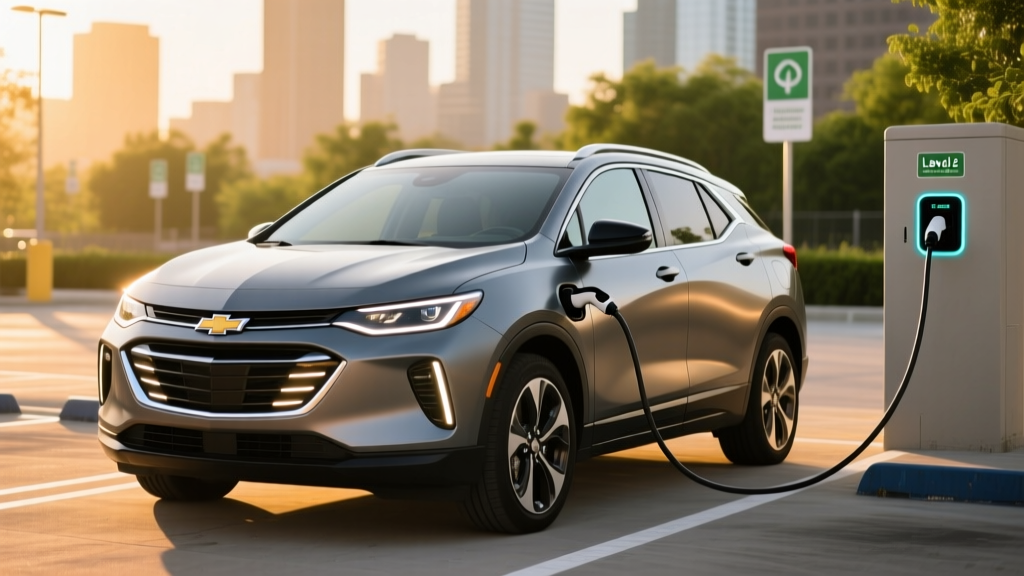
For home charging, the 11.5 kW onboard charger is a strong point. A properly installed Level 2 home station (240V/48A circuit) replenishes the full 85 kWh pack in roughly 8.5 hours — easily overnight. Most owners will never need public charging for daily driving.
Reliability Signals: What Owners and Data Tell Us
The question driving searches for Chevy Equinox EV reliability deserves a layered answer. GM's Ultium platform had a rough 2023 launch — the Blazer EV suffered well-publicized software defects that prompted a temporary sales halt. Those issues were primarily in the infotainment and vehicle-control software layers, not the battery or motors. By the time the Equinox EV reached customers in volume during 2024–2025, GM had issued multiple OTA (over-the-air) updates addressing the worst of those bugs.
What's Holding Up Well
- Ultium battery packs: No widespread reports of premature degradation or cell failures. The 85 kWh NMC pack uses a modular design with individually serviceable modules, reducing total-replacement risk.
- Drive motors: GM's permanent-magnet front and induction rear motors carry over proven engineering from prior EV programs. No systemic failure patterns reported.
- Thermal management: Active liquid cooling/heating keeps the pack within optimal temperature windows, reducing degradation risk from extreme climates.
- Structural rigidity: The Ultium battery serves as a structural element, contributing to a stiff platform that resists squeaks and rattles over time.
Reported Issues to Watch
- Infotainment glitches: The 17.7-inch diagonal touchscreen running Google Built-In has drawn complaints about lag, occasional reboots, and app connectivity drops. OTA updates have improved this but haven't eliminated it entirely.
- Panel gaps and trim alignment: Some early-build units showed inconsistent body panel gaps and interior trim fitment — a legacy of the Ramos Arizpe plant ramping production. Later builds show improvement.
- 12V battery drain: A small but notable number of owners report 12V accessory battery issues, which can prevent the vehicle from starting even though the main traction battery is full. GM has issued service bulletins addressing parasitic draw scenarios.
- ADAS sensitivity: Chevy's Super Cruise (available on higher trims) and standard Chevy Safety Assist features occasionally trigger phantom braking alerts, a common complaint across the industry with camera-and-radar-based ADAS systems.
The battery warranty — 8 years or 100,000 miles, whichever comes first, covering capacity retention below 60% of original — is standard for the segment. GM's bumper-to-bumper coverage at 3 years/36,000 miles is less generous than Hyundai/Kia's 5-year/60,000-mile warranty, a factor worth considering for buyers who plan to own past the warranty window.
Pricing, Trims, and Federal Tax Credit Eligibility
| Trim | MSRP | Est. After §30D Credit* | Drivetrain |
|---|---|---|---|
| 2LT FWD | ~$33,600 | ~$26,100 | FWD, 319 mi range |
| 3LT FWD | ~$35,600 | ~$28,100 | FWD, 319 mi range |
| RS FWD | ~$39,600 | ~$32,100 | FWD, 315 mi range |
| RS Launch AWD | ~$43,400 | ~$35,900 | AWD, 285 mi range |
*Federal §30D tax credit eligibility requires meeting all IRS criteria. Amounts shown assume full $7,500 credit qualification. Actual eligibility varies.
The Equinox EV's pricing strategy is its strongest competitive weapon. Starting near $33,600 for the 2LT FWD — before any incentives — undercuts most long-range EVs in the compact crossover segment. With the full federal tax credit applied, the effective price dips below $27,000, making it one of the most affordable 300+ mile EVs available.
Federal §30D Tax Credit Requirements (Current IRS Rules)
To qualify for the up-to-$7,500 credit on a new Equinox EV, you must meet all of the following, per IRS guidelines:
- Income caps: Modified AGI ≤ $150,000 (single), $225,000 (head of household), $300,000 (married filing jointly)
- MSRP cap: Vehicle MSRP must not exceed $80,000 for SUVs/trucks/vans (all Equinox EV trims qualify)
- Battery sourcing: Required percentages of critical minerals and battery components must be sourced from the US or free-trade-agreement partners — GM has worked to meet these thresholds, but verify current-year compliance on the IRS qualified vehicle list
- Point-of-sale transfer: You may elect to transfer the credit to the dealer at purchase, reducing your out-of-pocket cost immediately (dealer must be IRS-registered)
- Tax liability: If claiming on your tax return (not point-of-sale), the credit cannot exceed your total federal tax liability for the year
Credit rules and qualified vehicle lists update periodically. Always confirm eligibility on the official IRS clean vehicle credit page before purchasing.
Interior, Cargo, and Technology
The Equinox EV cabin is where GM's value positioning shows both strengths and compromises. The standard 17.7-inch infotainment screen and 11-inch driver display are visually impressive and run Google Built-In with native Google Maps, Assistant, and Play Store access. Wireless Apple CarPlay and Android Auto are included.
| Measurement | Equinox EV | Tesla Model Y | Hyundai Ioniq 5 |
|---|---|---|---|
| Front Legroom | 43.1 in | 41.8 in | 41.7 in |
| Rear Legroom | 37.2 in | 41.6 in | 39.4 in |
| Cargo (rear seats up) | 26.4 cu ft | 30.2 cu ft | 27.2 cu ft |
| Cargo (rear seats folded) | 57.2 cu ft | 72.1 cu ft | 59.3 cu ft |
Cargo space is adequate but not class-leading. The 26.4 cubic feet behind the rear seats works for weekly groceries and luggage for a weekend trip, but the Model Y's 30.2 cubic feet and available front trunk (frunk) give it a practical edge for families. The Equinox EV does not offer a frunk — the space under the hood houses conventional HVAC and power electronics.
Driver Assistance and Available Super Cruise
Every Equinox EV comes standard with Chevy Safety Assist: automatic emergency braking, forward collision alert, lane keep assist, following distance indicator, and IntelliBeam automatic high beams. These are SAE Level 1 driver-assist features — the driver must remain fully engaged.
Higher trims (3LT, RS) offer Super Cruise on compatible mapped highways — GM's hands-off-wheel, eyes-on-road Level 2 system. Super Cruise now covers over 750,000 miles of divided highways in the US and Canada. It's one of the most capable Level 2 systems available, but it is emphatically not self-driving: driver attention monitoring via infrared camera is continuous, and the system will disengage if you look away for more than a few seconds.
Pros and Cons
Pros
- 319-mile EPA range at a sub-$34,000 starting price — best value-to-range ratio in the segment
- Strong home Level 2 charging at 11.5 kW (full overnight charge)
- Comfortable, quiet ride quality with composed highway manners
- Standard Google Built-In infotainment with wireless CarPlay/Android Auto
- Available Super Cruise for hands-free highway driving
- 8-year/100,000-mile battery warranty with modular serviceability
- Qualifies for full $7,500 federal tax credit (verify current sourcing compliance)
Cons
- 150 kW peak DC fast charge is slower than 800V competitors (Ioniq 5, EV6 at 240+ kW)
- Cargo space trails Model Y and Ioniq 5; no front trunk (frunk)
- Infotainment software still prone to occasional lag and reboots
- Rear legroom is tighter than key competitors at 37.2 inches
- AWD availability limited to higher-priced RS trim
- Shorter track record than Tesla or Hyundai/Kia EV platforms
- Build quality inconsistency in early production units
Who Should Buy the Equinox EV — and Who Shouldn't
Choose the Equinox EV if:
- You want 300+ miles of range without spending over $35,000 (before credit)
- You charge primarily at home and rarely need ultra-fast public DC charging
- You value a comfortable, quiet ride over sporty handling
- You want available hands-free highway driving via Super Cruise without Tesla's ecosystem lock-in
- You qualify for the full federal tax credit and want to maximize effective savings
Look elsewhere if:
- You take frequent road trips and need the fastest possible DC charging (consider Ioniq 5 or EV6)
- You need maximum cargo space or a frunk for gear (consider Model Y)
- You want a longer-established EV platform with more long-term reliability data
- You need AWD at the lowest price point (consider the Hyundai Kona Electric or Subaru Solterra)
For commuters, suburban families, and budget-conscious EV adopters, the Equinox EV represents one of the most compelling value propositions in the 2025–2026 market. The reliability picture is cautiously positive — the Ultium hardware appears sound, and most issues are software-correctable. Just go in with realistic expectations about charging speed and cargo space relative to the competition.
Frequently Asked Questions
What is the real-world range of the Chevy Equinox EV?
The EPA rates the FWD Equinox EV at 319 miles. In real-world highway driving at 70–75 mph, expect 260–290 miles. In cold weather (below 30°F), range can drop to 200–230 miles. City driving with regenerative braking often matches or slightly exceeds the EPA estimate. The AWD RS variant is rated at 285 miles EPA, with real-world highway driving yielding 230–250 miles.
How fast does the Equinox EV charge at home and on the road?
At home on a Level 2 (240V/48A) charger, the Equinox EV charges at 11.5 kW, adding about 34 miles of range per hour — a full charge in roughly 8.5 hours. On DC fast chargers, it peaks at 150 kW, reaching 10–80% in approximately 30 minutes under ideal conditions. Cold weather and high state of charge will extend this time. A standard 120V Level 1 outlet adds only about 4 miles per hour — suitable for emergencies or very low daily mileage.
How much does the Equinox EV cost after the federal tax credit?
The base 2LT FWD starts at approximately $33,600 MSRP. If you qualify for the full $7,500 federal §30D tax credit, the effective price drops to around $26,100. Higher trims (RS AWD at ~$43,400) come down to roughly $35,900 after credit. Eligibility depends on your income, the vehicle's battery sourcing compliance, and MSRP caps. The credit can be transferred to the dealer at point of sale for an immediate price reduction. Always verify current eligibility on the IRS qualified vehicle list.
Is the Equinox EV worth buying over the Tesla Model Y or Hyundai Ioniq 5?
It depends on priorities. The Equinox EV wins on entry price and effective cost after tax credit. The Model Y offers more cargo space, a frunk, faster Supercharger network access, and a longer reliability track record — but at a higher base price. The Ioniq 5 charges significantly faster (240+ kW peak) and offers a more spacious rear seat, but its base range is lower and pricing is higher. If budget and range-per-dollar matter most, the Equinox EV is hard to beat. If charging speed and cargo versatility are top priorities, look at the Ioniq 5 or Model Y.
Does the Equinox EV qualify for the full $7,500 federal EV tax credit?
As of current IRS rules, the Equinox EV appears on the qualified clean vehicle list for the full $7,500 credit, provided the buyer meets income caps ($150K single / $300K joint) and the vehicle's battery sourcing meets critical mineral and component thresholds. GM has worked to align its supply chain with these requirements. However, the qualified vehicle list updates periodically — always confirm on irs.gov before finalizing a purchase.
What is the battery warranty and expected lifespan?
GM covers the Equinox EV battery for 8 years or 100,000 miles, whichever comes first. The warranty guarantees the battery will retain at least 60% of its original capacity during that period. The Ultium pack uses modular construction, meaning individual modules can be replaced rather than the entire pack — potentially reducing out-of-warranty repair costs. Full pack replacement (if ever needed out of warranty) is estimated at $12,000–$18,000 based on current Ultium pricing, though this is expected to decline as the platform matures.
Is Super Cruise actually self-driving?
No. Super Cruise is an SAE Level 2 driver-assistance system. It allows hands-off-wheel operation on compatible divided highways, but you must keep your eyes on the road at all times. An infrared driver-monitoring camera tracks your gaze, and the system will alert you — then disengage — if you look away. You remain legally responsible for the vehicle. True self-driving (Level 4) is currently only available via robotaxi services like Waymo in limited metro areas.