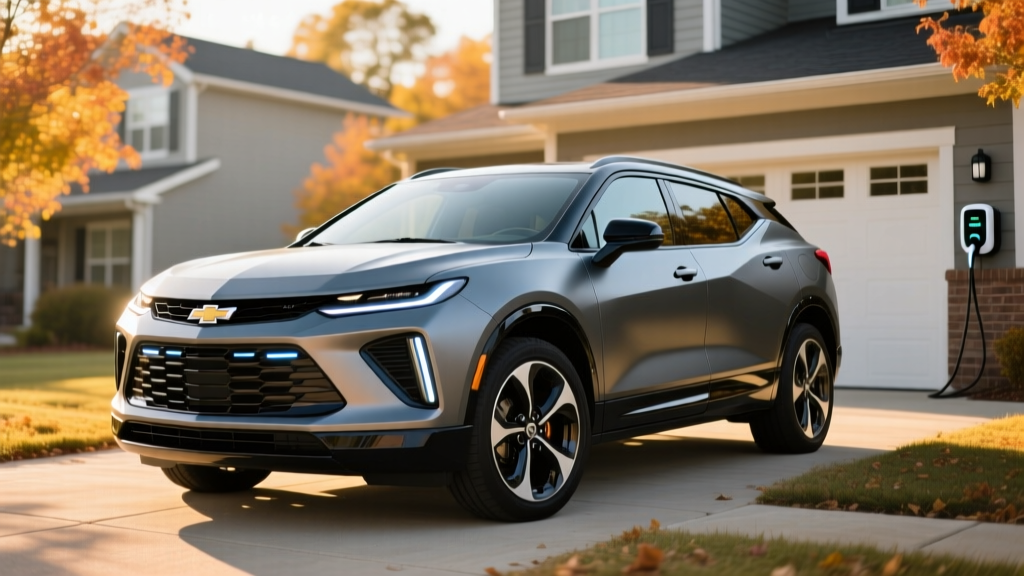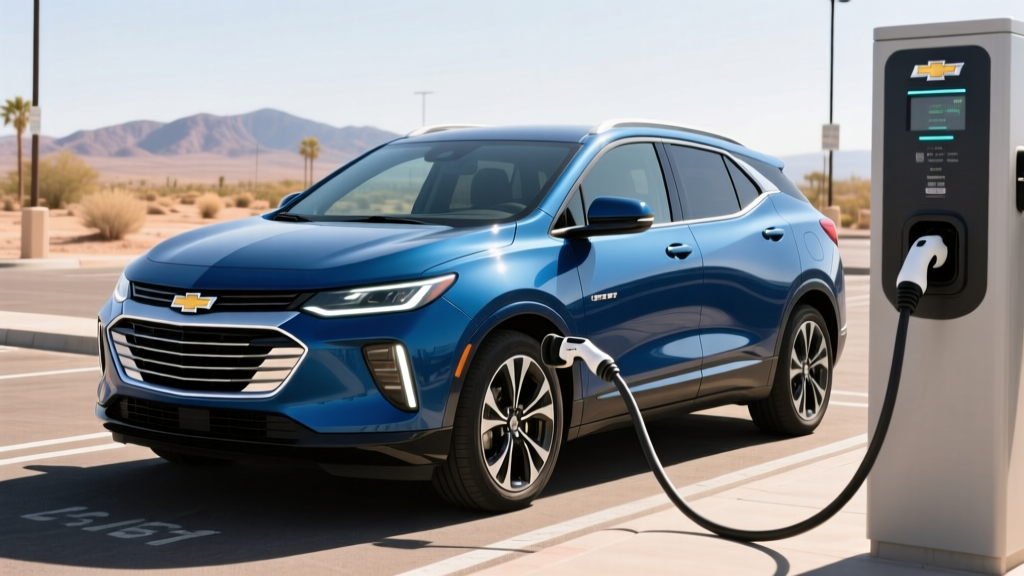
If you're searching for a chevy equinox ev for sale in henderson, you're not alone. The Equinox EV has become one of the most talked-about mainstream electric crossovers, and for good reason: it pairs a usable 300+ mile EPA range with a starting price that undercuts most rivals. But spec sheets only tell half the story. This review breaks down the real-world range you can expect in Southern Nevada's desert heat, how fast the Ultium battery actually charges, whether the Equinox EV qualifies for the full $7,500 federal tax credit under current IRS §30D rules, and which trim makes the most sense for Henderson-area drivers.
2026 Chevy Equinox EV: Quick Verdict
The 2026 Equinox EV is Chevrolet's volume play in the compact electric crossover segment. Built on GM's Ultium platform, it offers a front-wheel-drive (FWD) and an all-wheel-drive (AWD) RS variant, with EPA range stretching from 285 to 319 miles depending on configuration. It's not the fastest-charging EV in its class, but its 150 kW peak DC rate and standard NACS (Tesla Supercharger-compatible) port make road trips practical. With a starting MSRP of $33,600 before destination, it undercuts the Hyundai Ioniq 5, Ford Mustang Mach-E, and Tesla Model Y on price — and potentially drops below $26,000 after the federal tax credit for eligible buyers.
| Spec | LT FWD | RS AWD |
|---|---|---|
| EPA Range | 319 miles | 285 miles |
| Battery (usable) | 85 kWh (NMC) | 85 kWh (NMC) |
| Horsepower | 213 hp | 288 hp |
| 0-60 mph | ~8.0 sec | ~6.4 sec |
| Peak DC Charge Rate | 150 kW | 150 kW |
| 10-80% DC Time | ~38 min | ~38 min |
| Level 2 Home Charge | 11.5 kW (~34 mi/hr) | 11.5 kW (~34 mi/hr) |
| MPGe (combined) | 114 MPGe | 98 MPGe |
| Base MSRP | $33,600 | $43,400 |
| Battery Warranty | 8 yr / 100,000 mi | 8 yr / 100,000 mi |
Real-World Range: What Henderson Drivers Will Actually See
The EPA stickers the FWD Equinox EV LT at 319 miles and the AWD RS at 285 miles. Those numbers assume a mix of city and highway driving at moderate temperatures. In practice, real-world range diverges based on speed, climate control, and terrain.
- EPA sticker (FWD LT): 319 miles
- Sustained highway (70-75 mph): ~260-280 miles — EVs lose efficiency at higher speeds due to aero drag, and the Equinox EV's boxy crossover profile is no exception.
- Summer in Henderson (105°F+, heavy A/C): ~270-295 miles — battery thermal management helps, but cabin cooling draws significant energy. The Ultium pack's active liquid cooling system mitigates extreme heat degradation, but expect a 7-15% reduction from EPA in triple-digit heat.
- Cold-weather (below 40°F — rare in Henderson but relevant for Mt. Charleston trips): ~220-250 miles — the Equinox EV uses a resistive heater on some trims rather than a heat pump, which can increase cabin energy draw substantially in cold conditions.
- City/regenerative driving: You may exceed the EPA number — stop-and-go traffic lets regen recapture energy efficiently.
For Henderson commuters doing I-515 or US-95 runs, plan on roughly 270 miles of usable range in summer highway conditions. That's plenty for a Henderson-to-Las Vegas round trip (roughly 50 miles total) with margin to spare, and it handles a Henderson-to-Primm run (about 70 miles round trip) without a second thought.
Charging Speed and Infrastructure: NACS Access Is the Big Win
The 2026 Equinox EV comes equipped with a NACS (North American Charging Standard) port, meaning it can use Tesla Superchargers natively — no adapter required. This is a significant practical advantage over CCS-only vehicles, as the Supercharger network remains the most reliable public DC fast-charging infrastructure in the US.
| Charging Level | Power | Speed | Use Case |
|---|---|---|---|
| Level 1 (120V household) | ~1.4 kW | ~4 miles/hour | Overnight top-ups, emergencies |
| Level 2 (240V home charger) | 11.5 kW | ~34 miles/hour | Daily home charging — full charge in ~8 hours |
| DC Fast Charge | 150 kW peak | 10-80% in ~38 min | Road trips, quick top-ups |
The charging curve reality: The Equinox EV peaks at 150 kW, but like all EVs, it doesn't sustain that rate. Expect peak speeds between 10-40% state of charge, with the rate tapering to roughly 80-100 kW through 60%, and dropping further above 80%. That 38-minute 10-80% figure reflects this taper. If you're in a hurry, charging from 20-60% takes roughly 18-20 minutes — enough for a fast food stop at a Supercharger along I-15.
For Henderson homeowners, a Level 2 home charger (like a ChargePoint Home Flex or Tesla Wall Connector) on a 240V/48A circuit will replenish the 85 kWh pack overnight. Installation in the Henderson area typically runs $800-$2,500 depending on whether your electrical panel needs an upgrade — most homes built after 2000 with a 200A panel can accommodate a Level 2 charger without a panel swap. According to Chevrolet's charging guide, the onboard charger accepts up to 11.5 kW on Level 2.
Performance and Drivetrain: Adequate, Not Thrilling
The FWD LT produces 213 horsepower and 236 lb-ft of torque from a single front-mounted motor. The 0-60 mph time of approximately 8.0 seconds is competent for merging and passing but won't win any drag races. The RS AWD variant adds a rear motor for a combined 288 hp and 355 lb-ft, dropping the 0-60 to roughly 6.4 seconds — noticeably quicker and more confidence-inspiring in wet conditions.
Ride quality is compliant and tuned for comfort rather than sportiness. The low center of gravity from the floor-mounted Ultium battery pack keeps body roll reasonable, and the steering is light and easy for parking. Regenerative braking offers a one-pedal driving mode with adjustable regen levels via steering-wheel paddles.
One limitation: the Equinox EV is not rated for towing. If you need to tow a small trailer or utility hauler, you'll need to look at the Chevy Blazer EV or a competitor like the Ford Mustang Mach-E (rated up to 1,500 lbs with the GT trim).
Interior Space, Tech, and Daily Livability
The Equinox EV rides on GM's dedicated EV platform, which pushes the wheels to the corners and frees up cabin space compared to the gas Equinox. Interior volume is generous for the segment.
- Front legroom: 42.5 inches
- Rear legroom: 38.1 inches
- Cargo behind rear seats: 26.4 cu ft
- Cargo with rear seats folded: 57.2 cu ft
- Frunk (front trunk): No — the Equinox EV does not include a frunk, which is a missed opportunity given the Ultium platform's packaging flexibility.
The infotainment centerpiece is a 17.7-inch diagonal touchscreen running Google Built-In, which includes Google Maps, Google Assistant, and access to the Google Play Store for apps. A 11-inch driver display sits behind the steering wheel. Wireless Apple CarPlay and Android Auto are standard. The system is responsive and well-organized, though some users report that the heavy reliance on touchscreen controls (climate settings are embedded in the screen, not physical buttons) can be distracting while driving.
Driver assistance: The Equinox EV comes with Chevy's Super Cruise hands-free driving system available on higher trims. Super Cruise is an SAE Level 2 system — meaning it handles steering, acceleration, and braking on compatible divided highways, but the driver must remain attentive and is monitored by a camera-based attention system. It works on over 750,000 miles of mapped roads in North America. This is not autonomous driving; you cannot nap, read, or look away from the road.
Pricing, Trims, and Federal Tax Credit Eligibility
The 2026 Equinox EV lineup is structured across several trims. Here's the pricing breakdown before destination charges (approximately $1,395):
- LT FWD: $33,600
- LT AWD: $36,900
- RS FWD: $40,400
- RS AWD: $43,400
Popular options include the Active Safety Plus package ($1,200 — adds enhanced automatic emergency braking, blind-zone steering assist), the Comfort package (heated seats/steering wheel, ~$800), and a panoramic glass roof ($1,495 on RS trims). A well-equipped RS AWD can push past $47,000 before incentives.
| Trim | MSRP | Potential §30D Credit | Effective Price |
|---|---|---|---|
| LT FWD | $33,600 | Up to $7,500 | As low as ~$26,100* |
| LT AWD | $36,900 | Up to $7,500 | As low as ~$29,400* |
| RS AWD | $43,400 | Up to $7,500 | As low as ~$35,900* |
*Assumes full $7,500 credit eligibility. Actual credit depends on battery sourcing, buyer income, and MSRP caps per IRS §30D rules. See IRS Clean Vehicle Credit page for current requirements.
Does the Equinox EV Qualify for the $7,500 Federal Tax Credit?
As of 2026, the Equinox EV qualifies for at least a portion of the §30D Clean Vehicle Credit, but the exact amount depends on several factors that change periodically:
- MSRP cap: SUVs must be under $80,000 MSRP — the Equinox EV clears this easily at all trims.
- Buyer income cap: Modified adjusted gross income must not exceed $150,000 (single), $225,000 (head of household), or $300,000 (joint). Check your AGI against IRS guidelines.
- Battery component and critical mineral sourcing: The credit is split into two $3,750 halves — one for battery components manufactured/assembled in North America, and one for critical minerals sourced from the US or free-trade-agreement partners. GM has been working to localize Ultium battery sourcing at its Lansing and Spring Hill plants. Many Equinox EV trims qualify for the full $7,500, but the exact split can shift as sourcing rules tighten. Confirm with your dealer and a tax professional before relying on the full amount.
- Point-of-sale transfer: Eligible buyers can transfer the credit to the dealer at purchase, reducing the purchase price upfront rather than waiting to claim it on their tax return. This is available for the Equinox EV.
Pros, Cons, and How It Compares
- 319-mile EPA range on FWD LT is among the best in the segment
- Native NACS port — direct Tesla Supercharger access without an adapter
- Starting MSRP under $34K makes it one of the most affordable 300+ mile EVs
- Spacious cabin with 38+ inches of rear legroom
- Super Cruise hands-free driving available (on mapped highways)
- Google Built-In infotainment with large 17.7-inch display
- 8-year/100,000-mile battery warranty
- 150 kW peak DC charge rate trails rivals (Ioniq 5 peaks at 240 kW, Model Y at ~250 kW)
- No frunk — wasted front-packaging opportunity
- No heat pump on all trims — cold-weather range hit is more pronounced
- FWD base model's 8-second 0-60 is leisurely
- No towing capacity
- Touchscreen-heavy climate controls lack physical buttons
Equinox EV vs. Key Competitors
| Attribute | Equinox EV LT FWD | Hyundai Ioniq 5 SE | Tesla Model Y LR |
|---|---|---|---|
| EPA Range | 319 mi | 303 mi | 320 mi |
| Battery | 85 kWh NMC | 77.4 kWh NMC | ~78 kWh NMC |
| Peak DC Charge | 150 kW | 240 kW | ~250 kW |
| 10-80% Time | ~38 min | ~18 min | ~22 min |
| Base MSRP | $33,600 | $42,450 | $44,990 |
| Cargo (rear up) | 26.4 cu ft | 27.2 cu ft | 30.2 cu ft |
| Frunk | No | Yes (0.85 cu ft) | Yes (4.1 cu ft) |
The Equinox EV's main advantage is price: it undercuts the Ioniq 5 by nearly $9,000 and the Model Y by over $11,000 before credits. The trade-off is slower DC charging and less cargo space. If you primarily charge at home and rarely road-trip more than 250 miles in a day, the Equinox EV's slower charge rate matters less. If you frequently drive Henderson to Los Angeles or Henderson to Phoenix, the Ioniq 5's 18-minute 10-80% time is a meaningful convenience advantage.
Who Should Buy the Equinox EV in Henderson?
- You want a 300+ mile EV under $35,000 (before credits) and mostly drive locally or regionally
- You charge at home overnight and public DC charging is a secondary need
- You want native Supercharger access without carrying an adapter
- You value a comfortable ride and spacious rear seat over sporty acceleration
- You want Super Cruise for I-15 highway commutes
- You road-trip frequently and need 20-minute DC fast charges (consider Ioniq 5 or Model Y)
- You need towing capability (consider Blazer EV or Rivian R2)
- You want a frunk for gear storage
- You want AWD performance with a sub-5-second 0-60 (the RS AWD is quick but not sports-car quick)
Ownership Costs and Warranty
Chevrolet backs the Equinox EV's battery and drive unit with an 8-year/100,000-mile warranty, with a capacity retention threshold of 70% — meaning GM will repair or replace the battery if it degrades below 70% of original capacity within that period. The limited vehicle warranty is 3 years/36,000 miles bumper-to-bumper and 5 years/60,000 miles powertrain.
Efficiency figures from fueleconomy.gov rate the FWD LT at 114 MPGe combined (roughly 29 kWh/100 miles), which translates to approximately $0.04-$0.05 per mile when charging at home on Nevada's average residential electricity rate of ~$0.13/kWh. That compares to roughly $0.14-$0.16 per mile for a 25 MPG gas crossover at $3.50/gallon — a meaningful savings over 5 years of ownership.
Insurance costs for the Equinox EV tend to run 10-20% higher than the gas Equinox, consistent with industry-wide EV insurance premiums. Get quotes from your provider before purchasing to budget accurately.
Frequently Asked Questions
What is the real-world range of the 2026 Chevy Equinox EV?
The EPA rates the FWD LT at 319 miles and the AWD RS at 285 miles. In real-world Henderson summer highway driving at 70-75 mph with A/C running, expect roughly 260-295 miles depending on conditions. City driving with regenerative braking can match or slightly exceed the EPA figure.
How fast does the Equinox EV charge at home and on the road?
On a Level 2 home charger (240V, 11.5 kW), the Equinox EV adds about 34 miles of range per hour, fully recharging the 85 kWh battery in roughly 8 hours. On DC fast charging, it peaks at 150 kW and charges from 10-80% in approximately 38 minutes. It uses a NACS connector, so it can charge at Tesla Superchargers natively.
How much does the Equinox EV cost after the federal tax credit?
The base LT FWD starts at $33,600 and can drop to approximately $26,100 if you qualify for the full $7,500 §30D credit. Eligibility depends on your income (under $150K single/$300K joint), the vehicle's battery sourcing compliance, and MSRP caps. The credit can be transferred to the dealer at point of sale for an immediate price reduction. Confirm your eligibility with a tax professional.
Is the Equinox EV worth buying over the Tesla Model Y or Hyundai Ioniq 5?
It depends on priorities. The Equinox EV wins on price — thousands less than both rivals before credits. The Ioniq 5 wins on charging speed (18 min vs. 38 min, 10-80%). The Model Y wins on cargo space, Supercharger network maturity, and software ecosystem. For budget-conscious buyers who charge mostly at home, the Equinox EV is a strong value play.
Does the Equinox EV have a heat pump?
The 2026 Equinox EV uses a resistive heating system on most trims rather than a heat pump. This means cold-weather cabin heating draws more energy from the battery, reducing range more significantly than EVs equipped with heat pumps (like the Ioniq 5 or Model Y). For Henderson's mild winters, this is a minor concern, but it matters for cold-climate buyers or high-altitude trips.
Can I tow with the Equinox EV?
No. The 2026 Equinox EV is not rated for towing. If towing is a requirement, consider the Chevy Blazer EV (up to 1,500 lbs) or the Ford Mustang Mach-E GT (1,500 lbs).