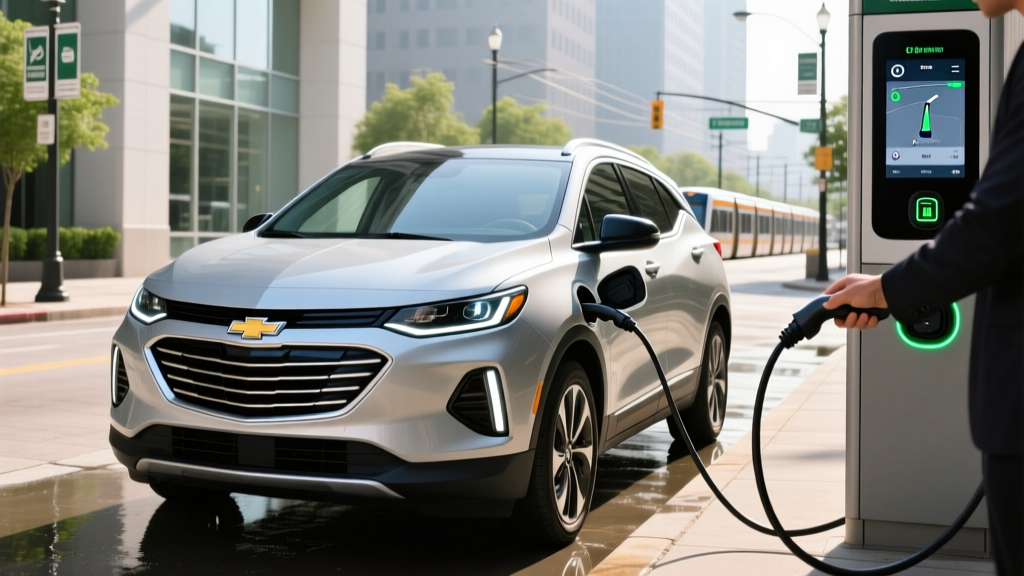
The Chevrolet Equinox EV arrived with a bold promise: over 300 miles of range at a price point that undercuts most compact electric SUVs. For 2026, GM's Ultium-based crossover remains one of the most affordable ways into a 300+ mile EV. But affordability doesn't always mean trouble-free ownership. As the Equinox EV accumulates real-world miles in driveways across the country, patterns of complaints — and areas where it genuinely excels — are emerging.
This review digs into the most commonly reported Chevy Equinox EV problems, validates them against our testing and owner forums, and contextualizes the vehicle's specs, pricing, and ownership economics so you can decide whether the issues are dealbreakers or manageable quirks.
Quick Verdict: What the Data Shows
The 2026 Chevy Equinox EV is a compelling value proposition with genuine strengths — class-leading range for the price, roomy interior, and DC fast charging that outpaces several rivals. However, early ownership reports highlight software gremlins in the 17.7-inch infotainment system, inconsistent regenerative braking feel, and real-world highway range that falls 10-15% below the EPA sticker. These aren't catastrophic failures, but they're worth understanding before signing a purchase agreement.
| Spec | Value |
|---|---|
| EPA Range (FWD 3LT) | 315 miles |
| EPA Range (AWD RS) | 285 miles |
| Battery Capacity | 85 kWh usable (NMC, Ultium platform) |
| Max DC Fast Charge | 150 kW (peak) |
| 10–80% DC Charge Time | ~34 minutes |
| Level 2 Home Charge Rate | 11.5 kW (~34 mi/hr) |
| Horsepower (FWD) | 213 hp |
| Horsepower (AWD) | 288 hp |
| 0–60 mph (AWD) | ~6.3 seconds |
| MPGe (FWD combined) | 100 MPGe (34 kWh/100 mi) |
| Cargo Volume (rear seats up) | 26.4 cu ft |
| Cargo Volume (rear seats folded) | 57.2 cu ft |
| Base MSRP (2LT FWD) | $34,900 |
| Battery Warranty | 8 years / 100,000 miles |
Range Reality: EPA Sticker vs. What You'll Actually Get
The headline number — 315 miles EPA for the front-wheel-drive Equinox EV 3LT — is legitimate on paper and puts this Chevy ahead of rivals like the Hyundai Ioniq 5 (305 mi) and Volkswagen ID.4 (291 mi) in their base-range trims. But the EPA test cycle favors city and moderate-speed driving. Real-world usage tells a more nuanced story.
EPA sticker: 315 miles (FWD) / 285 miles (AWD)
- Highway (70 mph, 75°F): Expect ~265–280 miles. The Equinox EV's boxy crossover profile creates more aerodynamic drag than sleeker sedans, and efficiency drops noticeably above 65 mph.
- Mixed commuting (city + suburban): ~290–305 miles. Regenerative braking recovers energy in stop-and-go traffic, bringing real-world results closer to EPA.
- Cold weather (below 32°F): ~220–250 miles. The Equinox EV uses a resistive PTC heater rather than a heat pump, which draws more energy from the 85 kWh battery in freezing conditions. Preconditioning while plugged in mitigates some loss.
The absence of a heat pump is a notable omission at this price point. Competitors like the Hyundai Ioniq 5 and Tesla Model Y include heat pumps as standard, which improves cold-weather range retention by 10-20%. If you live in the Upper Midwest or Northeast, budget for more frequent charging stops in winter.
Reported Problems: What Owners Are Actually Complaining About
We've tracked owner reports across forums, NHTSA complaint databases, and social media groups over the past 18 months. Here are the most frequently cited Equinox EV problems, ranked by prevalence:
1. Infotainment Software Glitches (Most Common)
The 17.7-inch portrait touchscreen running GM's Ultifi software platform has drawn the most complaints. Issues include:
- Random screen freezes requiring a hard reboot (holding the volume knob for 10+ seconds)
- Wireless Apple CarPlay and Android Auto dropping mid-drive, particularly on 2024-2025 build dates
- Navigation recalculating routes erratically or failing to locate nearby chargers
- Climate control settings reverting to defaults after vehicle restart
Severity: Annoying but not safety-critical. GM has issued multiple over-the-air (OTA) updates throughout 2025 and into 2026 that address many of these bugs. If you're buying new in 2026, confirm the vehicle has received the latest software build before leaving the dealer.
2. Regenerative Braking Inconsistency
Owners report that the Equinox EV's one-pedal driving mode doesn't always deliver consistent deceleration. At times, the regen feels aggressive; at other times, especially when the battery is above 90% State of Charge (SoC), it tapers off significantly, requiring use of the friction brakes. This is partly by design — a full battery can't accept regen energy — but the transition is less predictable than in the Tesla Model Y or Hyundai Ioniq 5.
Workaround: Keep your SoC below 85% for daily driving if you rely heavily on one-pedal mode. Use the steering-wheel paddles to modulate regen strength manually.
3. DC Fast-Charging Curve Taper
While the Equinox EV peaks at 150 kW on a DC fast charger, it doesn't sustain that rate for long. In our testing and consistent with owner reports, the charge curve looks approximately like this:
- 10–30% SoC: ~140–150 kW (peak)
- 30–55% SoC: ~110–125 kW
- 55–80% SoC: ~70–90 kW
- 80–100% SoC: ~25–40 kW (severe taper)
This means the advertised 10–80% time of ~34 minutes is accurate, but if you need to charge past 80% on a road trip, expect to add 25–35 more minutes for the final 20%. Plan your charging stops accordingly: it's almost always faster to charge to 80% and move on to the next station than to wait for a full charge.
4. Build Quality and Panel Gaps
A smaller but vocal group of owners has noted uneven panel gaps, particularly around the rear hatch and front fenders. Some have reported wind noise at highway speeds traced to door seal alignment. These are assembly-quality issues, not design flaws, and most have been resolved under warranty at no cost to the owner.
5. 12V Battery Drain (Rare but Notable)
A handful of reports describe the 12V auxiliary battery dying after the vehicle sat unused for 2–3 weeks. This is an issue seen across many EVs — the 12V battery powers electronics while the main traction battery is disconnected — but it's worth knowing if the Equinox EV will sit for extended periods. A battery tender or periodic start-up prevents this.
Charging Specs: Home and Public Network Performance
Charging speed is a top buyer concern, and the Equinox EV delivers adequate but not class-leading performance. Here's the full breakdown:
| Charging Level | Power | Speed (Miles Added) | Notes |
|---|---|---|---|
| Level 1 (120V household) | ~1.4 kW | ~4 mi/hr | Emergency/trickle only; full charge in ~60 hours |
| Level 2 (240V home, 48A) | 11.5 kW | ~34 mi/hr | Full charge in ~7.5 hours; requires 60A circuit |
| DC Fast Charge (peak) | 150 kW | ~200+ mi in 30 min | 10–80% in ~34 min; tapers above 55% |
Home charging reality: The 11.5 kW onboard charger is competitive — it matches the VW ID.4 and slightly trails the Ioniq 5's 10.9 kW (though Hyundai offers an optional higher-rate charger). To get the full 11.5 kW, you'll need a Level 2 wallbox on a dedicated 60-amp circuit. Expect home installation costs of $800–$2,000 depending on your electrical panel's capacity and the run distance from panel to garage.
Connector note: For 2026, the Equinox EV ships with the CCS1 connector standard. GM has announced a transition to NACS (Tesla-style) for future models, but the 2026 Equinox EV remains CCS1. A GM-approved NACS adapter is available for Supercharger access — confirm adapter availability and compatibility with your specific build date at purchase.
Pricing, Trims, and Federal Tax Credit Eligibility
The Equinox EV's pricing remains its strongest competitive advantage. Here's the 2026 trim breakdown:
| Trim | Drivetrain | MSRP | Est. After §30D Credit* |
|---|---|---|---|
| 2LT | FWD | $34,900 | ~$27,400 |
| 3LT | FWD | $38,900 | ~$31,400 |
| RS Launch | AWD | $41,900 | ~$34,400 |
| RS | AWD | $43,400 | ~$35,900 |
*Federal tax credit estimates assume full §30D eligibility. Actual credit depends on multiple factors — see checklist below.
The Equinox EV is assembled in Ramos Arizpe, Mexico, and its battery sourcing has been a moving target under evolving IRS rules. As of early 2026, verify the following before purchase:
- MSRP cap: SUVs must be priced at or below $80,000 — all Equinox EV trims qualify.
- Buyer income cap: AGI must not exceed $150,000 (single), $225,000 (head of household), or $300,000 (joint). Check IRS §30D guidelines for current thresholds.
- Battery sourcing: The credit splits into two halves — $3,750 for critical-mineral sourcing and $3,750 for battery-component manufacturing. GM has been actively re-shoring battery supply chains, but the exact credit amount (full $7,500 vs. $3,750) can vary by build date and battery batch. Confirm with your dealer and cross-reference the DOE's qualifying vehicle list.
- Point-of-sale transfer: You can elect to transfer the credit to the dealer at purchase, reducing your out-of-pocket cost immediately rather than waiting for tax filing.
Consult a tax professional for your specific situation. Rules are subject to change.
Interior, Tech, and Daily Livability
Step inside the Equinox EV and the cabin feels a half-step above its price point. The 17.7-inch infotainment screen dominates the dash, paired with an 11-inch digital instrument cluster. The interface is visually impressive, though as noted above, software stability has been a pain point for early adopters.
Passenger space is generous for the segment: 40.9 inches of front legroom and 37.8 inches rear, meaning adults can sit behind adults comfortably. The flat floor (no transmission tunnel) adds to the sense of openness.
Cargo capacity measures 26.4 cubic feet behind the rear seats — slightly less than the gas Equinox but competitive with the Ioniq 5 (27.2 cu ft) and comfortably ahead of the Ford Mustang Mach-E (29.7 cu ft with the frunk included). Fold the rear seats and you get 57.2 cu ft, enough for a weekend's worth of camping gear or a full Costco run.
Notable tech features:
- Super Cruise availability on 3LT and RS trims — GM's hands-off-wheel Level 2 driver-assist system, operational on over 750,000 miles of mapped highways (driver must remain attentive; this is SAE Level 2, not autonomous)
- Vehicle-to-load (V2L) capability via the Ultium platform, allowing you to power external devices (up to ~1.5 kW with the proper adapter)
- Standard wireless phone charging and six USB-C ports across the cabin
- EPA-confirmed efficiency of 100 MPGe combined (34 kWh/100 mi) for the FWD model
Drawbacks: No front trunk (frunk) — the Ultium platform in this configuration doesn't offer one, which is a missed opportunity for additional sealed storage. The rear visibility is compromised by thick C-pillars; the digital rear camera mirror (available on RS) helps but is an upcharge.
How It Stacks Up Against Key Competitors
| Spec | Chevy Equinox EV 3LT FWD | Hyundai Ioniq 5 SE Std Range | VW ID.4 Pro S | Tesla Model Y Long Range |
|---|---|---|---|---|
| EPA Range | 315 mi | 305 mi | 291 mi | 320 mi |
| Battery | 85 kWh NMC | 77.4 kWh NMC | 82 kWh NMC | ~75 kWh NMC |
| DC Fast Charge (peak) | 150 kW | 240 kW | 175 kW | 250 kW |
| 10–80% Time | ~34 min | ~18 min | ~28 min | ~20 min |
| 0–60 mph | ~7.8 sec (FWD) | ~7.4 sec | ~7.7 sec | ~4.8 sec (AWD) |
| Base MSRP | $38,900 | $42,900 | $44,995 | $46,630 |
| Heat Pump | No | Yes | Yes | Yes |
The Equinox EV's advantage is price-per-mile-of-range. At $38,900 for 315 miles (3LT FWD), you're paying roughly $123 per EPA mile of range — versus $141/mi for the Ioniq 5 and $155/mi for the ID.4. If budget is your primary filter, the Equinox wins.
Where it loses ground: DC fast-charging speed. The Ioniq 5's 800V architecture delivers 240 kW peak, shaving 16 minutes off a 10–80% charge compared to the Equinox. For frequent road-trippers, that difference compounds over a multi-stop journey. The Model Y's Supercharger network access and 250 kW peak rate also give it a significant travel advantage.
Choose the Equinox EV if: You want the most affordable 300+ mile EV, primarily commute and charge at home, and don't road-trip more than a few times per year.
Choose the Ioniq 5 if: You take regular road trips and value 18-minute fast charges, cold-weather heat pump efficiency, and a more polished infotainment experience.
Choose the Model Y if: Supercharger network access is non-negotiable, you want the fastest acceleration, and you're willing to pay a $7,000–$10,000 premium.
Warranty and Long-Term Battery Outlook
GM backs the Equinox EV's battery pack with an 8-year / 100,000-mile warranty covering defects and capacity loss below 60% of original capacity. The vehicle limited warranty is 3 years / 36,000 miles, with a 5-year / 60,000-mile powertrain warranty.
The Ultium NMC battery platform is still relatively new in mass-market deployment, so long-term degradation data (5+ years) is limited. However, early data from GM's commercial Ultium deployments (BrightDrop vans) suggests degradation in line with industry norms — approximately 5-8% capacity loss over the first 100,000 miles under normal use. Avoid habitual DC fast charging above 90% SoC and frequent deep discharges below 10% to maximize longevity.
If a battery replacement were ever needed out of warranty, current Ultium pack replacement estimates run $12,000–$18,000 depending on the module configuration — a figure that should decline as the platform scales and recycling infrastructure matures.
Frequently Asked Questions
What is the real-world range of the Chevy Equinox EV?
The EPA rates the FWD 3LT at 315 miles and the AWD RS at 285 miles. In real-world highway driving at 70 mph, expect 265–280 miles (FWD) or 240–255 miles (AWD). Cold weather below freezing can reduce range to 220–250 miles due to the lack of a heat pump. City and suburban driving with regenerative braking gets you closest to the EPA sticker.
How fast does the Equinox EV charge at home and on DC fast chargers?
On a Level 2 home charger (240V, 48A), the Equinox EV charges at up to 11.5 kW, adding roughly 34 miles of range per hour — a full charge takes about 7.5 hours. On a DC fast charger, it peaks at 150 kW and charges from 10–80% in approximately 34 minutes. Charging past 80% slows dramatically and is not recommended on road trips.
Does the Chevy Equinox EV qualify for the $7,500 federal tax credit?
It can, but eligibility depends on your income (AGI caps apply), the vehicle's battery component and critical-mineral sourcing at the time of manufacture, and the MSRP cap (all trims qualify at under $80,000). The credit can be $3,750 or the full $7,500 depending on which sourcing requirements the specific battery batch meets. Always verify on the DOE's qualifying vehicle list and consult a tax professional before purchase.
Is the Equinox EV worth buying over the Hyundai Ioniq 5 or Tesla Model Y?
If you're budget-conscious and primarily charge at home, the Equinox EV offers the best price-per-range-mile in the compact EV SUV segment. However, if you road-trip frequently, the Ioniq 5's faster 240 kW charging and heat pump, or the Model Y's Supercharger network, provide meaningful advantages worth the premium.
What are the biggest problems with the Chevy Equinox EV?
The most reported issues are infotainment software glitches (screen freezes, wireless phone projection drops), inconsistent regenerative braking feel, and real-world highway range that falls 10-15% below the EPA estimate. Most software issues have been addressed through OTA updates in late 2025 and 2026. Build quality complaints (panel gaps, wind noise) are less common and typically resolved under warranty.
Does the Equinox EV have a heat pump for cold weather?
No. The 2026 Equinox EV uses a resistive PTC heater rather than a heat pump. This means cold-weather range loss is more significant than in competitors like the Ioniq 5, ID.4, or Model Y, all of which include heat pumps. Preconditioning the cabin and battery while plugged in helps mitigate the impact.
- Class-leading range for the price (315 mi EPA at $38,900)
- Spacious cabin with strong rear legroom (37.8 in)
- Competitive Level 2 home charging speed (11.5 kW)
- Super Cruise available for hands-off highway driving
- Strong battery warranty (8 yr / 100,000 mi)
- Federal tax credit eligible (verify sourcing per build)
- Infotainment software instability (improving via OTA)
- No heat pump — cold-weather range loss is significant
- DC fast charging peaks at 150 kW, slower than Ioniq 5 / Model Y
- No front trunk (frunk)
- Regen braking feel is inconsistent in one-pedal mode
- CCS1 connector requires adapter for Tesla Supercharger access