Quick Verdict: Who the Equinox EV Is For
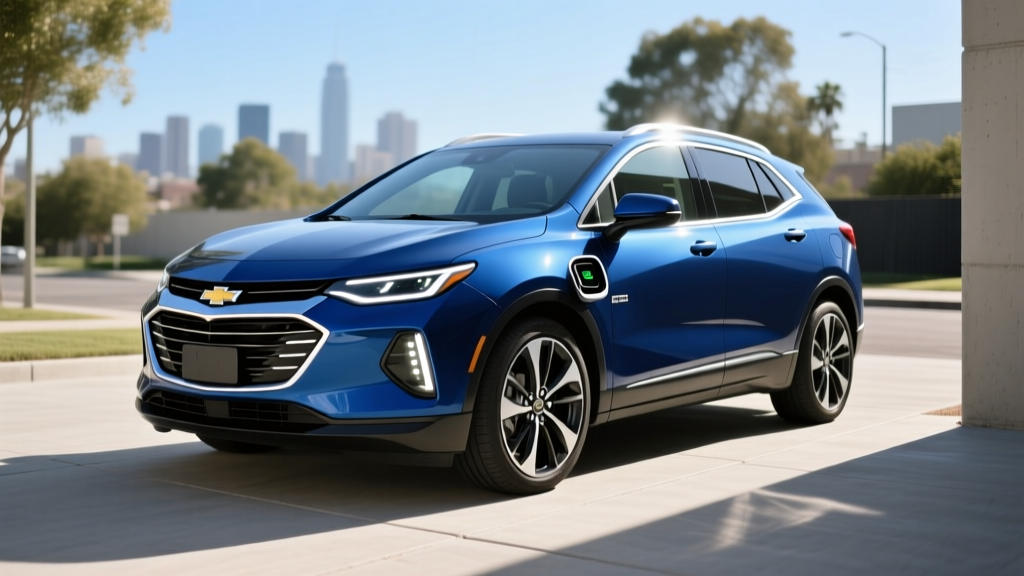
The 2026 Chevrolet Equinox EV occupies a rare spot in the market: a mainstream compact electric crossover priced below $40,000 before incentives, yet offering over 300 miles of EPA-estimated range on higher trims. It targets buyers who want the practicality of a RAV4-sized EV without paying premium-badge prices. If you commute 30-60 miles daily, can install a Level 2 home charger, and qualify for the federal tax credit, the Equinox EV's effective cost drops into territory that undercuts many gas-powered competitors on a total-cost-of-ownership basis. Where it falls short is DC fast-charging speed — 170 kW peak is adequate but trails Hyundai/Kia's 800V architecture — and highway efficiency, which compresses real-world range noticeably on long road trips.
2026 Chevy Equinox EV Pricing by Trim
Chevrolet streamlined the Equinox EV lineup for 2026 into three primary trims, each available with front-wheel drive (FWD) or all-wheel drive (eAWD). Pricing below reflects base MSRP including destination charge; options and packages can add $2,000-$5,000 depending on configuration.
| Trim | Drivetrain | Base MSRP | Est. After §30D Credit |
|---|---|---|---|
| LT 2 | FWD | $34,900 | $27,400* |
| LT 2 | eAWD | $37,800 | $30,300* |
| RS | FWD | $39,600 | $32,100* |
| RS | eAWD | $42,500 | $35,000* |
| Premier | FWD | $41,900 | $34,400* |
| Premier | eAWD | $44,800 | $37,300* |
*After $7,500 federal tax credit, assuming buyer meets all §30D eligibility requirements (see Tax Credit section below). Point-of-sale transfer available at participating dealers.
The LT 2 FWD is the value champion: sub-$35K MSRP with a 315-mile EPA range estimate makes it one of the longest-range EVs under $40,000. The RS adds sport-tuned suspension, blacked-out trim, and a panoramic sunroof. The Premier swaps sporty aesthetics for luxury touches like ventilated front seats, a head-up display, and upgraded interior materials. All trims share the same 85 kWh battery pack and powertrain options — you're paying for features and styling, not more range or power.
Range and Efficiency: EPA Sticker vs. Real World
Real-World Expectation: Plan for 250-280 miles on mixed highway driving at 70-75 mph in moderate temperatures. In winter conditions (below 32°F), expect a 15-25% reduction, bringing effective range to approximately 210-240 miles on FWD trims. City driving with regenerative braking can match or slightly exceed EPA estimates.
The Equinox EV's 85 kWh usable battery (GM's Ultium platform, NMC lithium-ion chemistry) delivers strong range numbers, but efficiency tells a more nuanced story. The FWD models achieve an EPA-estimated 3.3-3.4 kWh/mile (roughly 97-100 MPGe combined). That's competitive with the Hyundai Ioniq 5 and Volkswagen ID.4, but trails the Tesla Model Y's ~3.0 kWh/mile efficiency. On the highway, the Equinox EV's boxy crossover profile and 4,300+ lb curb weight work against it — sustained 75 mph cruising pushes consumption closer to 3.6-3.8 kWh/mile, which is where the real-world gap opens up.
For context, a 300-mile road trip at highway speeds in 40°F weather with the cabin heater running will likely require one DC fast-charge stop. In summer city commuting, owners report easily exceeding 300 miles between charges thanks to regenerative braking and lower HVAC loads. According to fueleconomy.gov, the Equinox EV 3LT FWD achieves 97 MPGe combined (34 kWh/100 mi).
Charging Speed: Home and DC Fast Charging
| Charging Level | Power (kW) | Connector | Speed / Time |
|---|---|---|---|
| Level 1 (120V) | 1.4 kW | NACS (J3400) | ~4 miles/hour |
| Level 2 (240V, 48A) | 11.5 kW | NACS (J3400) | ~34 miles/hour; 0-100% in ~9.5 hrs |
| DC Fast Charge | 170 kW peak | NACS (J3400) | 10-80% in ~32 minutes |
Chevrolet equipped the 2026 Equinox EV with the North American Charging Standard (NACS) port natively — no adapter needed for Tesla Superchargers. The onboard charger accepts up to 11.5 kW on Level 2, which is solid: a full overnight charge from 20% to 100% takes roughly 7 hours on a 48-amp home station.
The DC fast-charging story is more mixed. At 170 kW peak, the Equinox EV charges respectably but not class-leading. The Hyundai Ioniq 5 and Kia EV6, with their 800V architecture, can peak at 240+ kW and hit 10-80% in around 18 minutes. The Equinox EV's charge curve holds near peak power through about 50% state of charge, then tapers progressively — from roughly 170 kW down to 60-70 kW by 80%. This means the 10-80% session takes about 32 minutes at a 350 kW-capable station. For road trips, that's a reasonable bathroom-and-snack stop, but frequent long-distance travelers should note the ~14-minute gap versus the fastest-charging competitors.
Home charging setup cost: Expect $800-$2,000 for a quality 48-amp Level 2 wall connector installation (assuming your electrical panel has capacity for a 60-amp circuit). If you need a panel upgrade from 100A to 200A service, add $1,500-$3,000.
Performance and Drivetrain
The Equinox EV uses GM's Ultium drive units with two configurations:
- FWD: Single front motor, 213 horsepower, 236 lb-ft torque. 0-60 mph in approximately 8.0 seconds.
- eAWD: Dual motor (front + rear), 288 horsepower, 355 lb-ft torque. 0-60 mph in approximately 6.2 seconds.
The FWD powertrain is adequate for daily driving and merging, though not quick by EV standards. The eAWD dual-motor setup transforms the character — 288 hp in a compact crossover delivers confident passing power and confident traction in rain or light snow. Regenerative braking offers two modes: standard coasting and one-pedal driving with near-complete stop capability. The steering is light and numb — this is comfort-tuned, not sporty — but the low center of gravity from the floor-mounted battery keeps body roll well-controlled in corners.
Towing capacity is limited to 1,500 lbs across all trims, which handles a small utility trailer or bike rack but rules out most campers. If you need 3,500+ lbs of towing, look at the Hyundai Ioniq 5 (2,300 lbs) or step up to the Ford Mustang Mach-E (up to 2,700 lbs with tow package).
Tax Credit Eligibility: The §30D Details
Eligibility depends on multiple requirements. Always verify current rules at irs.gov before purchasing.
- MSRP Cap: SUVs/crossovers must be below $80,000 — all Equinox EV trims qualify.
- Buyer Income Cap: Modified AGI must not exceed $150,000 (single), $225,000 (head of household), or $300,000 (married filing jointly).
- Battery Sourcing: Critical minerals and battery components must meet phased-in percentage thresholds from US/free-trade partners. GM has stated the Equinox EV qualifies for the full $7,500, but verify VIN eligibility on the IRS portal at purchase time.
- Point-of-Sale Transfer: You can transfer the credit to the dealer at purchase, reducing your out-of-pocket cost immediately rather than waiting for tax filing.
Many buyers ask whether the Equinox EV qualifies for the full $7,500. As of early 2026, GM's Ultium-based vehicles — including the Equinox EV — have met the critical-mineral and battery-component sourcing thresholds required for the full credit. However, these sourcing rules tighten annually, and supply-chain shifts can affect eligibility mid-year. Always run the VIN through the official DOE/IRS eligibility tool before signing paperwork. Some states (California, Colorado, Massachusetts, New York) offer additional rebates of $1,000-$5,000 on top of the federal credit — check your state's energy office for current programs.
Interior, Cargo, and Technology
The Equinox EV's cabin is dominated by a 17.7-inch diagonal infotainment touchscreen running GM's Google Built-in software (Google Maps, Google Assistant, Play Store). A 11-inch digital instrument cluster faces the driver. Wireless Apple CarPlay and Android Auto are standard. The interface is responsive, though the reliance on touchscreen controls for climate and seat heating means more finger-stretching than physical knobs.
Cargo and passenger dimensions:
- Front headroom: 40.0 inches | Legroom: 43.1 inches
- Rear headroom: 38.6 inches | Legroom: 37.8 inches
- Cargo behind rear seats: 26.4 cu ft
- Cargo with rear seats folded: 57.2 cu ft
- Front trunk (frunk): Not available — the Ultium platform reserves this space for HVAC and power electronics.
Rear-seat space is generous for two adults on long trips, though the floor is slightly elevated due to the battery pack, creating a knees-up seating position. The 26.4 cu ft cargo area is competitive with the Toyota RAV4 and Honda CR-V, but the lack of a frunk means you lose the bonus storage that the Hyundai Ioniq 5 (0.85 cu ft) and Ford Mustang Mach-E (4.7 cu ft) offer for charging cables or small bags.
Driver assistance (SAE Level 2): All trims include Chevy Safety Assist with automatic emergency braking, lane-keeping assist, following distance indicator, and IntelliBeam headlights. Available Super Cruise on Premier and RS trims enables hands-free driving on over 750,000 miles of mapped highways — but this is still SAE Level 2, requiring driver attention via an infrared eye-monitoring camera. It is not autonomous driving.
Pros, Cons, and Competition
Pros
- 315-319 mi EPA range at sub-$35K base price (LT 2 FWD)
- Full $7,500 federal tax credit eligibility brings effective price to ~$27,400
- NACS native port — Tesla Supercharger access without adapter
- Spacious rear seat and cargo area for the compact crossover class
- Super Cruise availability for hands-free highway driving
- 8-year/100,000-mile battery warranty (10-year/150,000 in CARB states)
Cons
- 170 kW peak DC charging is slower than Hyundai/Kia 800V rivals
- No frunk — misses utility for charging cable storage
- Highway efficiency drops noticeably above 70 mph
- FWD base model feels underpowered (8.0 sec 0-60)
- Touchscreen-heavy interface lacks physical climate controls
- 1,500-lb towing limit is low for the segment
Key competitors to cross-shop:
- Hyundai Ioniq 5: Faster charging (240 kW), similar price, more futuristic design. Slightly less cargo space.
- Volkswagen ID.4: Similar size and range, available frunk, slightly more refined ride. Slower DC charging than Equinox.
- Tesla Model Y: Best-in-class efficiency and Supercharger network, superior performance. Higher base price, more spartan interior.
- Ford Mustang Mach-E: Sportier driving dynamics, available frunk. Less rear-seat room, higher starting price.
Choose the Equinox EV if: You want maximum range per dollar, need a spacious rear seat for family duty, value Super Cruise for highway commutes, and qualify for the full $7,500 tax credit.
Choose the Ioniq 5 instead if: You take frequent road trips and prioritize 18-minute fast-charging stops over 32-minute ones.
Choose the Model Y instead if: Performance and charging network reliability are your top priorities, and you can absorb a $5,000-$8,000 price premium.
Warranty and Ownership Costs
Chevrolet backs the Equinox EV with a comprehensive warranty package:
- Battery & Drive Unit: 8 years / 100,000 miles (10 years / 150,000 miles in California and states adopting CARB emissions standards). Covers defects and capacity loss below 60% of original capacity.
- Bumper-to-Bumper: 3 years / 36,000 miles
- Powertrain (non-battery): 5 years / 60,000 miles
- Roadside Assistance: 5 years / 60,000 miles
The 60% capacity retention threshold is standard for the industry but worth noting — if your battery degrades to 59% within the warranty period, GM replaces or repairs it. In practice, NMC Ultium batteries are projected to retain 85-90% capacity after 100,000 miles based on early fleet data, making a warranty claim unlikely for most owners.
Insurance costs run approximately 10-15% higher than a comparable gas-powered Equinox, according to industry averages — budget $1,800-$2,400 annually depending on your profile. Maintenance costs are significantly lower: no oil changes, fewer brake replacements (regen braking extends pad life to 100K+ miles), and cabin air filter swaps every 22,500 miles. Expect annual maintenance of $100-$200 versus $500-$800 for a gas equivalent.
Frequently Asked Questions
What is the real-world range of the Chevy Equinox EV?
The EPA estimates 315 miles for the LT 2 FWD and 319 miles for the RS FWD. In real-world highway driving at 70-75 mph in moderate weather, expect 250-280 miles. In cold weather (below freezing), plan for 210-240 miles due to battery resistance and cabin heating demands. City driving with regenerative braking can match or slightly exceed EPA figures.
How fast does the Equinox EV charge at home and on the road?
At home on a 240V Level 2 charger (48 amps), the Equinox EV accepts 11.5 kW and adds roughly 34 miles of range per hour — a full charge takes about 9.5 hours. On DC fast chargers, it peaks at 170 kW and charges from 10-80% in approximately 32 minutes. Charging slows significantly above 80% to protect battery longevity.
Does the Chevy Equinox EV qualify for the $7,500 federal tax credit?
Yes — as of early 2026, all Equinox EV trims qualify for the full $7,500 §30D credit, provided the buyer meets income limits ($150K single / $300K married filing jointly) and the vehicle's battery sourcing meets current-year thresholds. The credit can be transferred at point of sale to reduce your purchase price immediately. Always verify VIN eligibility on the IRS portal before buying.
Is the Equinox EV worth buying over the Hyundai Ioniq 5 or Tesla Model Y?
It depends on your priorities. The Equinox EV wins on price-to-range ratio — no competitor offers 315+ miles of EPA range for under $35K MSRP. The Ioniq 5 charges significantly faster (10-80% in ~18 min vs. ~32 min), making it better for road-trip-heavy owners. The Model Y is more efficient and quicker but costs $5,000-$8,000 more before incentives. If budget and daily commuting range are your top concerns, the Equinox EV is the strongest value pick.
How long will the Equinox EV battery last?
GM's Ultium NMC battery is engineered for 200,000+ miles of service life with typical degradation patterns. The warranty guarantees 60% capacity retention for 8 years/100,000 miles (10/150K in CARB states). Real-world data from early Ultium deployments suggests 85-90% capacity retention at 100,000 miles. Following best practices — keeping state of charge between 20-80% for daily use, preconditioning before DC fast charging, and avoiding repeated 100% charges — can extend battery health further.
Can I use Tesla Superchargers with the Equinox EV?
Yes. The 2026 Equinox EV comes equipped with a native NACS (J3400) charge port, meaning it plugs directly into Tesla Superchargers without any adapter. This gives Equinox EV owners access to the largest DC fast-charging network in North America, with over 25,000 Supercharger stalls nationwide.