Quick Verdict: The Equinox EV's Value Equation
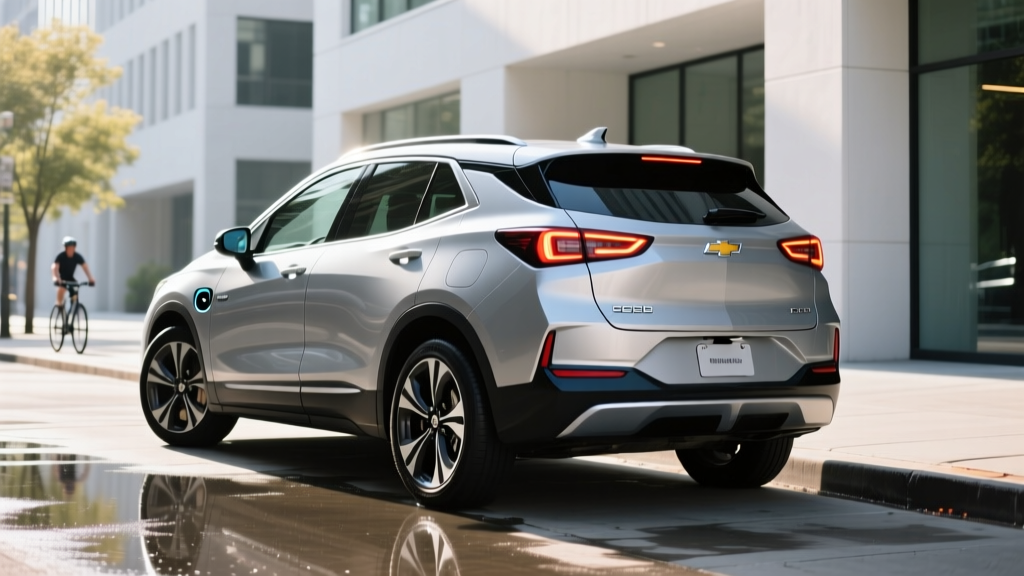
The 2026 Chevrolet Equinox EV remains one of the most accessible long-range electric crossovers on the market, and its pricing structure tells an interesting story about where affordable EVs are headed. Starting at $33,600 MSRP for the LT 2LT with the standard-range battery, the Equinox EV undercuts rivals like the Hyundai Ioniq 5 and Volkswagen ID.4 by several thousand dollars — and that's before factoring in the $7,500 federal tax credit for eligible buyers, which can now be applied as a point-of-sale rebate.
But MSRP is only part of the equation. After spending time with the Equinox EV's specs, charging behavior, and real-world efficiency data, the picture gets more nuanced. Higher trims push past $45,000, the DC fast-charging speed is adequate but not class-leading, and cold-weather range loss is a genuine consideration for northern-climate buyers. Here's the full breakdown.
2026 Chevy Equinox EV MSRP by Trim
Chevrolet offers the 2026 Equinox EV across four primary trim levels, with two battery pack options. The pricing ladder is straightforward, though destination charges and dealer-installed accessories can add up quickly.
| Trim | Battery | Drivetrain | EPA Range | MSRP |
|---|---|---|---|---|
| LT 2LT | Standard (85 kWh usable) | FWD | ~285 mi | $33,600 |
| LT 3LT | Extended (85 kWh usable) | FWD | ~319 mi | $37,200 |
| RS | Extended (85 kWh usable) | FWD | ~319 mi | $40,600 |
| RS Launch Edition (AWD) | Extended (85 kWh usable) | AWD (Dual-Motor) | ~285 mi | $43,400 |
All prices exclude the $1,395 destination charge. The entry-level LT 2LT is the value champion here — it's one of the cheapest ways to get into a new EV with over 280 miles of EPA-rated range. Stepping to the RS trim gets you sport-tuned suspension, a blacked-out appearance package, and additional driver-assist features, but the powertrain and battery remain identical to the 3LT.
Price After Federal Tax Credit
| Trim | MSRP + Dest. | §30D Credit | Effective Price |
|---|---|---|---|
| LT 2LT | $34,995 | Up to $7,500 | ~$27,495 |
| LT 3LT | $38,595 | Up to $7,500 | ~$31,095 |
| RS FWD | $41,995 | Up to $7,500 | ~$34,495 |
| RS AWD | $44,795 | Up to $7,500 | ~$37,295 |
Critical caveat: The IRS §30D credit is not automatic. Eligibility depends on three factors that change periodically:
- Buyer income caps: Modified AGI cannot exceed $150,000 (single), $225,000 (head of household), or $300,000 (joint filers).
- MSRP cap: SUVs and crossovers are capped at $80,000 — all Equinox EV trims clear this easily.
- Battery sourcing requirements: The critical-minerals and battery-component sourcing thresholds tighten annually. The Equinox EV's Ultium battery uses GM's domestic and allied-nation supply chain, which has qualified for the full $7,500 through recent model years, but always verify current-year status on fueleconomy.gov before purchasing.
Since 2024, buyers can transfer the credit to the dealer as a point-of-sale rebate, reducing the purchase price at the dealership rather than waiting for a tax refund. This effectively makes the LT 2LT a sub-$28,000 vehicle for qualifying buyers — a significant value proposition.
Range & Efficiency: EPA vs. Real World
The Equinox EV's Ultium platform uses an 85 kWh usable battery pack (approximately 89 kWh gross) with NMC (nickel-manganese-cobalt) chemistry. GM has not offered an LFP variant, which means you get higher energy density but should follow the standard 20-80% daily charging recommendation to minimize long-term degradation.
Real-World Expectation: In mixed driving at 65-75 mph, expect 270-290 miles from the 3LT/RS FWD trims. Highway-only driving at 80 mph drops this to roughly 245-260 miles. In freezing temperatures (below 32°F), plan for a 20-30% range reduction, bringing the FWD extended-range models to approximately 200-230 miles in deep winter conditions. The Equinox EV does not come standard with a heat pump on all trims — LT models use resistive cabin heating, which compounds cold-weather energy draw.
Efficiency on the FWD extended-range trims rates at 3.0-3.2 miles per kWh, translating to approximately 113 MPGe combined per EPA data. That's competitive with the Hyundai Ioniq 5 (114 MPGe combined) and slightly behind the Tesla Model Y (122 MPGe combined RWD). The AWD dual-motor variant sacrifices roughly 10% efficiency for the added traction and 288 horsepower.
Charging Speed: DC Fast, Level 2, and Level 1
Charging performance is where the Equinox EV shows its budget-conscious engineering. It's adequate for most use cases but won't impress anyone coming from a Hyundai E-GMP or Porsche 800V architecture.
| Charging Level | Power / Rate | Speed (mi/hr added) | Notes |
|---|---|---|---|
| Level 1 (120V) | ~1.4 kW | ~3-4 mi/hr | Emergency / overnight trickle only |
| Level 2 (240V, 48A) | 11.5 kW (onboard max) | ~34 mi/hr | Full charge in ~8 hours |
| DC Fast Charge | 150 kW peak | ~70 mi in 10 min | 10-80% in ~41 minutes |
The 150 kW peak DC fast-charge rate is the Equinox EV's most notable limitation for road-trippers. On a 350 kW Electrify America or Tesla Supercharger stall, the Equinox EV will only pull about half the available power. The charge curve is relatively flat from 10-50% SoC, then tapers progressively above 70%. A 10-80% session takes approximately 41 minutes, which is 10-15 minutes longer than an Ioniq 5 or Model Y on the same charger.
For home charging, the 11.5 kW onboard charger is a strong point. On a properly installed 48-amp Level 2 circuit (60-amp breaker), you'll add roughly 34 miles of range per hour — enough to fully replenish the battery overnight. A 240V/40A circuit (most common residential setup) will deliver about 9.6 kW and roughly 28 miles per hour, still sufficient for overnight charging.
The Equinox EV uses the NACS (Tesla) charge port as standard on 2025+ model years, granting native access to Tesla's Supercharger network without an adapter. For CCS-based networks like Electrify America and EVgo, a NACS-to-CCS adapter is required — Chevrolet includes one with new vehicles.
Performance & Drivetrain
The Equinox EV is tuned for comfort and efficiency, not performance. The single-motor FWD variant produces 213 horsepower and 236 lb-ft of torque, delivering a 0-60 mph time of approximately 8.2 seconds. That's leisurely by EV standards but perfectly adequate for highway merging and city driving.
The dual-motor AWD RS variant bumps output to 288 horsepower and 343 lb-ft of torque, cutting the 0-60 time to approximately 6.5 seconds. The added weight of the second motor and associated hardware reduces EPA range by about 34 miles compared to the FWD extended-range models.
Ride quality is a highlight. The Ultium platform's low center of gravity and GM's front strut / rear five-link independent suspension deliver composed handling and surprisingly good bump absorption for the price point. Cabin noise is well-managed, with acoustic laminated glass on the front windows.
Interior, Cargo, and Technology
Inside, the Equinox EV borrows heavily from GM's newer Blazer EV and Silverado EV playbook. The centerpiece is a 17.7-inch diagonal infotainment touchscreen (standard on 3LT and above; 11.3-inch on LT 2LT) paired with an 11-inch digital driver display. Both run Google Built-In with native Google Maps navigation, Google Assistant, and access to the Play Store.
Passenger and cargo dimensions:
- Front legroom: 43.1 inches
- Rear legroom: 37.8 inches
- Cargo volume (behind rear seats): 26.4 cu ft
- Cargo volume (rear seats folded): 57.2 cu ft
- Frunk: Not available — the Ultium platform's front subframe houses power electronics and HVAC components
The lack of a frunk is a missed opportunity that competitors like the Ford Mustang Mach-E and Hyundai Ioniq 5 exploit. Rear-seat legroom is adequate for adults but trails the Ioniq 5's generous 39.4 inches.
Driver-assist technology: All trims include Chevy Safety Assist (automatic emergency braking, lane-keeping assist, following distance indicator, automatic high beams). The Super Cruise hands-free driving system is available on RS trims as part of a technology package (~$2,200 add-on). Super Cruise is an SAE Level 2 system — it requires the driver to remain attentive and eyes on the road, monitored via an infrared camera on the steering column. It operates on over 750,000 miles of pre-mapped divided highways in the US and Canada.
Warranty & Battery Longevity
Chevrolet provides competitive warranty coverage for the Equinox EV:
- Battery & propulsion system: 8 years / 100,000 miles (whichever comes first), covering defects and capacity loss below 60% of original capacity
- Bumper-to-bumper: 3 years / 36,000 miles
- Powertrain (non-EV components): 5 years / 60,000 miles
The 60% capacity retention threshold is standard across the industry, though some buyers may wish GM had adopted the 70% threshold used by Hyundai and Kia. Real-world degradation data on the Ultium platform is still limited given its relatively recent launch, but early reports from fleet Equinox EVs and Cadillac Lyriqs suggest degradation in the 5-8% range over the first 60,000 miles with normal charging habits. The NMC chemistry benefits from GM's sophisticated thermal management system, which actively heats and cools the battery during charging and driving.
Pros, Cons, and the Competition
Pros
- Sub-$28K effective price after tax credit (LT 2LT)
- 319-mile EPA range on FWD extended trims
- Native NACS port — Supercharger access without adapter
- 11.5 kW Level 2 onboard charger (fast home charging)
- Spacious cabin with premium 17.7-inch screen on upper trims
- Super Cruise availability on RS trim
- Composed ride quality and low cabin noise
Cons
- 150 kW peak DC charging is slow for the class (41 min 10-80%)
- No frunk
- No heat pump on LT trims — cold-weather range suffers
- 213 HP FWD feels underpowered for an EV
- Rear legroom trails key competitors
- Super Cruise is an expensive add-on, not standard
How It Stacks Up
Against the Hyundai Ioniq 5 (~$42,400 base, 303 mi range, 240 kW charging), the Equinox EV wins on price by nearly $9,000 but loses on charging speed and rear-seat space. The Tesla Model Y (~$44,990 base, 320 mi range, 250 kW peak charging) is faster to charge and more efficient, but costs significantly more before incentives. The Volkswagen ID.4 (~$39,735 base, 291 mi range, 175 kW charging) is the closest rival in philosophy, though the Equinox EV undercuts it on price and offers more range on upper trims.
Look elsewhere if: You take frequent long road trips (the 150 kW charging will add stops), need maximum rear-seat space, or regularly drive in sub-freezing temperatures without a garage.
Frequently Asked Questions
What is the real-world range of the Chevy Equinox EV?
The EPA rates the FWD extended-range trims (3LT, RS) at 319 miles. In real-world mixed driving at highway speeds, expect 270-290 miles. In cold weather below freezing, plan for 200-230 miles from a full charge due to battery resistance and cabin heating demands.
How fast does the Equinox EV charge at home and on the road?
At home on a 240V/48A Level 2 charger, the Equinox EV charges at up to 11.5 kW, adding about 34 miles of range per hour for a full overnight charge. On DC fast chargers, it peaks at 150 kW, achieving a 10-80% charge in approximately 41 minutes.
Does the 2026 Equinox EV qualify for the $7,500 federal tax credit?
The Equinox EV has qualified for the full $7,500 §30D credit in recent model years due to GM's Ultium battery sourcing compliance. However, eligibility depends on your income (under $150K single / $300K joint), the vehicle's MSRP (under $80K — all trims qualify), and current-year battery-sourcing rules. Always verify on fueleconomy.gov and consult a tax professional. The credit can be transferred to the dealer at point of sale.
Is the Equinox EV worth buying over the Tesla Model Y or Hyundai Ioniq 5?
If budget is the primary factor, the Equinox EV is the clear winner — the LT 2LT at ~$27,500 after the credit is thousands less than either competitor. If you prioritize fast DC charging for road trips, the Ioniq 5 (240 kW) and Model Y (250 kW) are meaningfully quicker to recharge. The Equinox EV is the best value play; its rivals are the better all-around packages.
Does the Equinox EV have all-wheel drive?
Yes. The RS Launch Edition offers a dual-motor AWD configuration with 288 horsepower and an estimated 285 miles of range. It adds approximately $2,800 over the FWD RS trim.
What is the towing capacity?
The Equinox EV is rated for 1,500 pounds of towing capacity across all trims — sufficient for a small utility trailer or a pair of dirt bikes, but not suitable for boat or camper towing.