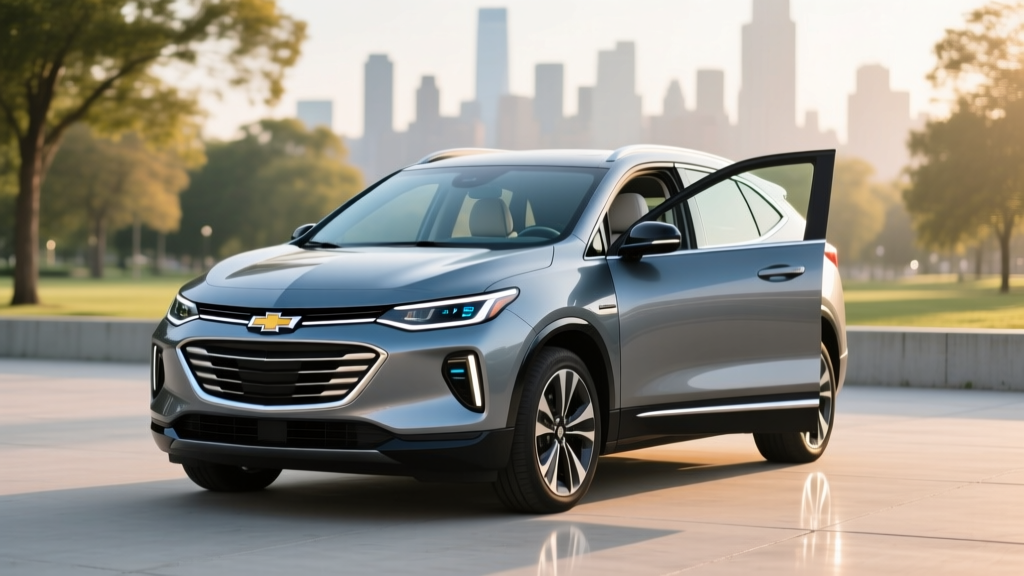
The 2026 Chevrolet Equinox EV occupies a rare space in the electric-vehicle market: a mainstream compact crossover that undercuts most rivals on price while delivering over 300 miles of EPA-estimated range. For buyers hunting Chevy Equinox EV discounts, the math is compelling — but only if you understand how federal incentives, dealer pricing, and trim-level choices interact. This review dissects the real cost of ownership, charging practicality, and everyday usability so you can determine whether the Equinox EV is the right electrified purchase for your garage.
2026 Chevy Equinox EV at a Glance
Before we dig into pricing strategy, here are the headline specifications every buyer should know. The Equinox EV rides on GM's Ultium platform and is available in front-wheel drive (FWD) and all-wheel drive (AWD) configurations across LT, RS, and Launch Edition trims.
| Spec | FWD (LT/RS) | AWD (RS/Launch) |
|---|---|---|
| EPA Range | 319 mi (LT FWD) | 285 mi (RS AWD) |
| Battery (usable) | ~85 kWh, NMC (Ultium) | |
| Horsepower | 213 hp | 288 hp |
| 0–60 mph | ~8.2 sec | ~6.6 sec |
| Max DC Fast Charge | 150 kW (peak) | |
| 10–80% DC Time | ~33 min | |
| Level 2 Home Charge | 11.5 kW (~34 mi/hr) | |
| Efficiency | ~117 MPGe / 29 kWh/100mi | ~107 MPGe / 31 kWh/100mi |
| Cargo (rear seats up) | 26.4 cu ft | |
| Cargo (rear seats folded) | 57.2 cu ft | |
| Rear Legroom | 38.1 in | |
| Battery Warranty | 8 yr / 100,000 mi | |
Sources: EPA fueleconomy.gov, Chevrolet Equinox EV official page.
Real-World Range: What the EPA Sticker Doesn't Tell You
LT FWD: 319 mi EPA — expect ~270–290 mi on mixed highway driving at 70+ mph, and as low as ~220–240 mi in sustained sub-freezing temperatures.
RS AWD: 285 mi EPA — expect ~240–260 mi highway, and ~195–215 mi in winter conditions.
The Equinox EV's 85 kWh (usable) Ultium battery uses NMC (nickel manganese cobalt) chemistry, which offers higher energy density than LFP but requires more careful thermal management. In our experience and consistent with third-party testing from outlets like InsideEVs and Edmunds, GM's Ultium packs hold up well in moderate climates but lose roughly 15–25% range in deep cold (below 20°F) due to cabin heating demands and reduced battery chemistry efficiency.
Highway driving above 70 mph also cuts into range more aggressively than city driving, where regenerative braking recovers energy. If your commute is mostly stop-and-go urban miles, you'll likely approach or even exceed the EPA figure. Sustained interstate travel at 75–80 mph is where the real-world gap widens.
Practical takeaway: AWD buyers planning regular road trips in northern climates should plan charging stops around a realistic 200-mile buffer in winter, not the 285-mile sticker.
Charging Speed: DC Fast, Level 2, and the Curve Reality
Charging speed is where the Equinox EV shows its mainstream positioning — it's adequate but not class-leading. The 150 kW peak DC fast-charge rate trails rivals like the Hyundai Ioniq 5 (which peaks at ~240 kW on 800V architecture), but it's competitive with the Volkswagen ID.4 and Nissan Ariya.
| Charge Level | Power | Speed / Time | Best For |
|---|---|---|---|
| Level 1 (120V) | ~1.4 kW | ~4 mi/hr | Emergency / overnight trickle |
| Level 2 (240V home) | 11.5 kW | ~34 mi/hr (full charge ~9 hr) | Daily home charging |
| DC Fast Charge | 150 kW peak | 10–80% in ~33 min | Road trips |
The charging curve matters more than the peak number. The Equinox EV hits 150 kW only in the 10–30% state-of-charge (SoC) window. Between 30–60%, it sustains roughly 110–120 kW. Above 80%, the rate tapers sharply to protect the NMC cells — expect 40–50 kW, which is why the 10–80% time is the standard metric rather than 0–100%. Charging from 80–100% can add another 25–30 minutes on DC, so plan your stops accordingly.
For home charging, the 11.5 kW onboard charger is a strong point. With a 48-amp Level 2 wall connector on a 60-amp circuit, you'll add roughly 34 miles of range per hour — enough to fully replenish the battery overnight. If your electrical panel is 200 amps or larger, installation typically runs $800–$2,000 depending on conduit distance. A panel upgrade to 200A adds $1,500–$3,000 in most markets.
The Equinox EV uses the NACS (North American Charging Standard) connector natively on 2025+ models, granting direct access to Tesla's Supercharger network — over 25,000 stalls in North America — without an adapter. This is a significant practical advantage over CCS-equipped rivals that still require a J3400 adapter for Supercharger access.
Performance and Drivetrain: Adequate, Not Thrilling
The FWD Equinox EV LT produces 213 hp from a single front-mounted motor, delivering a 0–60 mph time of approximately 8.2 seconds. It's perfectly adequate for merging and city driving but won't excite anyone coming from a sport-tuned EV.
The AWD RS and Launch Edition pair front and rear motors for 288 hp and a 0–60 time around 6.6 seconds. The dual-motor setup provides confident all-weather traction and noticeably better acceleration, though the Equinox EV's ~4,700-lb curb weight keeps it from feeling truly quick in the way a lighter performance EV might.
Regenerative braking offers one-pedal driving capability through Chevy's one-pedal mode, with a steering-wheel paddle for on-demand regen modulation. The ride quality is compliant and tuned for comfort over sportiness — this is a family crossover, not a track car.
Pricing, Trims, and Chevy Equinox EV Discounts
Here's where the Equinox EV makes its strongest case. The 2026 model year continues Chevy's aggressive pricing strategy, and dealer discounts have become more common as inventory has stabilized.
| Trim | Drivetrain | Base MSRP | Est. §30D Credit | Effective Price |
|---|---|---|---|---|
| LT 2 | FWD | $33,600 | Up to $7,500 | ~$26,100 |
| LT 3 | FWD | $36,400 | Up to $7,500 | ~$28,900 |
| RS | FWD | $39,600 | Up to $7,500 | ~$32,100 |
| RS | AWD | $42,100 | Up to $7,500 | ~$34,600 |
| Launch Edition | AWD | $43,400 | Up to $7,500 | ~$35,900 |
MSRP includes destination. Effective price assumes full $7,500 federal credit and does not include state/local incentives, dealer fees, or optional packages. Actual credit amount depends on battery-sourcing compliance and buyer income. Source: IRS §30D guidelines.
Federal Tax Credit Eligibility (§30D)
The Equinox EV is assembled in Spring Hill, Tennessee, and GM has worked to qualify its Ultium battery cells under the critical-minerals and battery-component sourcing rules. As of early 2026, most Equinox EV trims qualify for the full $7,500 federal tax credit — but eligibility is not automatic. Buyers must meet all of the following:
- Income caps: Modified AGI ≤ $150,000 (single), ≤ $225,000 (head of household), ≤ $300,000 (joint)
- MSRP cap: The Equinox EV is classified as an SUV/crossover (MSRP cap $80,000) — all trims qualify
- Battery sourcing: Critical minerals and battery components must meet phased-in percentage thresholds; verify with your dealer that the specific VIN qualifies
- Point-of-sale transfer: You can apply the credit as a down-payment reduction at the dealership rather than waiting for tax filing — this effectively lowers your out-of-pocket cost immediately
- Tax liability: If you take the credit on your return (not at point of sale), you must owe at least $7,500 in federal tax to capture the full amount
Finding Additional Chevy Equinox EV Discounts
Beyond the federal credit, several discount avenues exist:
- Dealer incentives: As of Q1 2026, GM has offered $1,000–$2,500 in dealer cash or customer cash on select Equinox EV trims to move inventory. Check GM's current offers page and negotiate from invoice price.
- Costco Auto Program / employer fleet pricing: If you're a Costco member or work for a company with GM supplier-discount access, you can stack these with federal credits.
- State and utility rebates: Many states and electric utilities offer $500–$3,000 in additional rebates. California's CVRP, Colorado's state credit, and various utility off-peak charging rebates can further reduce cost. Check your state energy office and utility provider.
- Home charging incentives: Some utilities offer $500–$1,000 toward Level 2 charger installation. The federal Alternative Fuel Vehicle Refueling Property Credit (§30C) may also cover up to 30% of home charging equipment and installation costs (capped at $1,000), subject to census-tract eligibility.
Interior, Tech, and Daily Livability
The Equinox EV's cabin is a step up from the outgoing gas Equinox, anchored by a standard 17.7-inch diagonal infotainment touchscreen running Google Built-In. This gives you native Google Maps navigation (critical for route-based battery preconditioning), Google Assistant voice control, and access to the Play Store for streaming apps.
An 11-inch digital driver display sits behind the steering wheel, and wireless Apple CarPlay and Android Auto are standard. A 6-speaker audio system is included; a Bose 7-speaker upgrade is available on RS and Launch trims.
Driver assistance: Chevy's Super Cruise — GM's hands-off, eyes-on Level 2 highway driving system — is available on RS and Launch Edition trims. Super Cruise operates on over 750,000 miles of mapped highways in North America and is genuinely one of the best Level 2 systems available. However, it is not self-driving: you must keep your eyes on the road, and the infrared driver-monitoring camera will issue warnings if you look away.
Super Cruise and Chevy's standard driver-assist suite (lane-keeping, adaptive cruise, automatic emergency braking) are SAE Level 2 systems. The driver must remain fully engaged and responsible for vehicle control at all times. No consumer vehicle sold today offers Level 3+ autonomous driving in the U.S.
Cargo and passenger space is competitive: 26.4 cu ft behind the rear seats and 57.2 cu ft with them folded. Rear legroom at 38.1 inches is generous. However, the Equinox EV lacks a front trunk (frunk) — the space is occupied by HVAC and power electronics — which some rivals like the Ford Mustang Mach-E and Hyundai Ioniq 5 offer for additional storage.
Pros, Cons, and the Competition
- Class-leading value: ~$26,100 effective price on LT FWD after tax credit
- 319 mi EPA range (LT FWD) beats most rivals at this price point
- Native NACS connector — direct Supercharger access, no adapter
- 11.5 kW Level 2 charging adds ~34 mi/hr at home
- Super Cruise availability on higher trims
- Spacious rear seat and solid cargo volume
- 8-year / 100,000-mile battery warranty
- 150 kW DC peak charge rate trails 800V rivals (Ioniq 5, EV6)
- No front trunk (frunk)
- FWD base model feels underpowered at 213 hp
- AWD range drops to 285 mi EPA
- Interior materials are competent but not premium
- Super Cruise not available on base LT trim
How It Stacks Up
The Equinox EV's primary competitors include the Hyundai Ioniq 5 (faster charging, more distinctive design, but higher base price), the Volkswagen ID.4 (similar range, AWD available, but CCS connector limits Supercharger access without adapter), and the Ford Mustang Mach-E (sportier driving dynamics, but more expensive and shorter range on base trims).
On pure price-per-mile-of-range, the Equinox EV LT FWD is difficult to beat in the 2026 market. If fast DC charging is your priority for frequent road trips, the Ioniq 5's 800V architecture (10–80% in ~18 minutes) is meaningfully faster. But if your driving is mostly local with occasional longer trips, the Equinox EV's value proposition is hard to argue against.
Who Should Buy the Chevy Equinox EV?
- You want the most range per dollar in a compact electric crossover
- Your daily commute is under 80 miles round-trip and you can charge at home
- You live in a moderate climate where NMC range loss is manageable
- You value native Supercharger access without an adapter
- You qualify for the full $7,500 federal credit and want to apply it at point of sale
- You regularly drive 300+ miles in a single trip and need the fastest possible DC charging
- You need a frunk for gear separation (consider Ioniq 5 or Mach-E)
- You want a performance-oriented EV (consider the Mach-E GT or Ioniq 5 N)
- You live in a region with extreme cold and no garage — LFP chemistry or a PHEV might suit better
Frequently Asked Questions
What is the real-world range of the Chevy Equinox EV?
The FWD LT achieves 319 miles EPA, but expect 270–290 miles in real-world mixed highway driving and 220–240 miles in sustained freezing temperatures. The AWD RS delivers 285 miles EPA, with real-world highway range around 240–260 miles and winter range around 195–215 miles.
How fast does the Equinox EV charge?
On DC fast charging, it peaks at 150 kW and charges from 10–80% in approximately 33 minutes. At home on a 240V Level 2 charger (11.5 kW), it adds about 34 miles of range per hour, fully recharging overnight in roughly 9 hours.
How much does the Equinox EV cost after tax credits?
The base LT FWD starts at $33,600 MSRP. With the full $7,500 federal §30D tax credit applied at point of sale, the effective price drops to approximately $26,100 before state incentives, dealer fees, and options. Higher trims range from ~$28,900 to ~$35,900 after the credit.
Does the Chevy Equinox EV qualify for the $7,500 federal tax credit?
Yes, as of early 2026, most Equinox EV trims qualify for the full $7,500 credit under IRS §30D. However, you must meet income caps ($150K single / $300K joint), the vehicle must have compliant battery sourcing (verify the VIN with your dealer), and the credit can be transferred at point of sale or claimed on your tax return.
Is the Equinox EV worth buying over the Hyundai Ioniq 5 or VW ID.4?
If your priority is lowest cost per mile of range and you mostly drive locally with home charging, the Equinox EV offers superior value. If DC fast-charging speed matters for frequent road trips, the Ioniq 5 charges significantly faster (10–80% in ~18 min vs. ~33 min). The ID.4 offers similar range but requires an adapter for Tesla Supercharger access.
What is the battery warranty on the Equinox EV?
Chevrolet covers the Ultium battery pack and electric powertrain for 8 years or 100,000 miles, whichever comes first. The warranty covers defects and capacity loss below a specified retention threshold (typically 60–70% of original capacity, per GM's terms). This is standard for the EV segment.