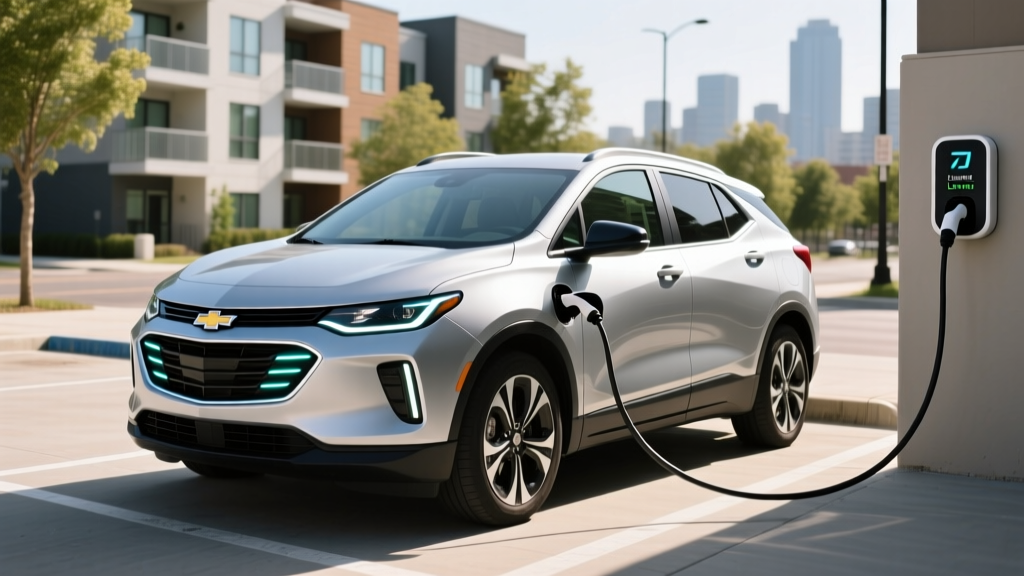
If you've been searching for a chevy equinox ev discount, you're not alone. The compact electric crossover has become one of the most aggressively discounted EVs on the market, thanks to a combination of federal tax credits, manufacturer incentives, and competitive dealer pricing. But separating the real savings from the marketing noise requires understanding exactly which trims qualify for what — and how stacking incentives can push the effective price well below the window sticker.
This guide breaks down the 2026 Chevy Equinox EV lineup with exact MSRP figures, current federal and manufacturer discounts, real-world range expectations, charging performance, and whether the savings justify the purchase versus key rivals like the Hyundai Ioniq 5, Tesla Model Y, and Ford Mustang Mach-E.
2026 Equinox EV Pricing and Discount Breakdown
The 2026 Chevy Equinox EV starts at $33,600 for the base LT trim with front-wheel drive and climbs to approximately $46,300 for a fully loaded RS AWD with the larger battery. But the sticker price is only the starting point — here's where discounts reshape the math.
| Trim | Drivetrain | MSRP | Federal §30D Credit | GM Discount* | Effective Price |
|---|---|---|---|---|---|
| LT (2LT) | FWD | $33,600 | Up to $7,500 | $0–$2,000 | ~$24,100–$26,100 |
| LT (2LT) | AWD | $36,600 | Up to $7,500 | $0–$2,000 | ~$27,100–$29,100 |
| RS (2RS) | FWD | $38,200 | Up to $7,500 | $0–$2,000 | ~$28,700–$30,700 |
| RS (2RS) | AWD | $41,900 | Up to $7,500 | $0–$2,000 | ~$32,400–$34,400 |
| RS Launch (3RS) | AWD | $46,300 | Up to $7,500 | $0–$2,000 | ~$36,800–$38,800 |
*GM periodically offers manufacturer discounts, dealer cash, or loyalty bonuses. Amounts vary by region, dealer, and inventory levels. Always confirm current incentives with your local Chevy dealer and check Chevrolet's official offers page.
Federal Tax Credit Eligibility (§30D)
The Equinox EV is assembled in Spring Hill, Tennessee, and its Ultium battery pack sources components that have historically met IRS §30D requirements for the full $7,500 credit. However, eligibility depends on several buyer-specific factors:
- MSRP cap: The Equinox EV qualifies as an SUV under IRS rules, so the $80,000 MSRP cap applies — all trims clear this easily.
- Income limits: Modified adjusted gross income must not exceed $150,000 (single), $225,000 (head of household), or $300,000 (joint filers).
- Battery sourcing: Critical minerals and battery component requirements tighten annually. Confirm current-year compliance on the IRS clean vehicle credit page or via the dealer's point-of-sale transfer paperwork.
- Point-of-sale transfer: As of 2024, buyers can transfer the credit to the dealer at purchase, reducing the purchase price directly rather than waiting to claim it at tax time. Most Chevy dealers support this.
Key takeaway: A qualifying buyer purchasing the base LT FWD with the full $7,500 point-of-sale credit and a $1,500 dealer discount pays an effective price near $24,600 — making it one of the least expensive new long-range EVs available in the U.S.
Range, Efficiency, and Real-World Expectations
The Equinox EV is offered with two Ultium battery sizes. The standard pack provides an EPA-estimated 315 miles (LT FWD), while the available larger pack pushes that to 319 miles (RS FWD). AWD trims see a modest reduction to approximately 285–300 miles EPA.
EPA estimate: 315 mi (LT FWD, standard battery) / 319 mi (RS FWD, extended battery)
Real-world highway (70+ mph): Expect ~260–280 mi. The Equinox EV's boxy crossover shape creates more aero drag than sleeker rivals, reducing highway efficiency.
Cold weather (below 30°F): Expect 20–30% range loss without preconditioning, dropping effective range to ~220–250 mi. The available heat pump (standard on RS trims) helps mitigate cabin-heating energy draw.
Efficiency ratings land around 110–115 MPGe combined, or roughly 29–31 kWh/100 mi depending on trim and drivetrain. That's competitive with the segment but trails the more aerodynamic Hyundai Ioniq 5 (~114–132 MPGe depending on trim).
| Spec | LT FWD | RS AWD |
|---|---|---|
| Battery (usable) | ~85 kWh (Ultium, NMC) | ~85 kWh (Ultium, NMC) |
| EPA Range | 315 mi | ~285 mi |
| Horsepower | 213 hp | 288 hp (dual motor) |
| 0–60 mph | ~8.0 sec | ~5.9 sec |
| Drivetrain | FWD (single motor) | AWD (dual motor) |
| Efficiency | ~115 MPGe / 29 kWh/100mi | ~110 MPGe / 31 kWh/100mi |
| Cargo (rear seats up) | 26.4 cu ft | 26.4 cu ft |
| Cargo (rear seats folded) | 57.2 cu ft | 57.2 cu ft |
| Rear legroom | 37.8 in | 37.8 in |
| Battery warranty | 8 years / 100,000 miles | |
| Base MSRP | $33,600 | $41,900 |
Charging Speed: DC Fast Charge and Home Level 2
Charging capability is where the Equinox EV makes a strong case for daily usability. The Ultium platform supports DC fast charging at up to 150 kW peak, though real-world sustained rates tell a more nuanced story.
| Charging Level | Power | Speed | Notes |
|---|---|---|---|
| Level 1 (120V) | ~1.4 kW | ~4 mi/hr | Emergency/trickle only |
| Level 2 (240V, 48A) | 11.5 kW | ~34 mi/hr | Full charge in ~9 hours |
| DC Fast Charge | Peak 150 kW | 10–80% in ~30 min | Tapers significantly above 80% SoC |
Charging-curve reality: The Equinox EV hits peak charge rate only between roughly 10–30% State of Charge. Above 50%, the curve tapers noticeably, and above 80%, speeds drop sharply to protect the NMC battery. On a road trip, plan for 25–35 minute stops at 150+ kW chargers (Electrify America, EVgo, or ChargePoint DC stations) to go from 10–80%. Charging from 80–100% can take an additional 30+ minutes — not worth the wait unless you need maximum range for the next leg.
The onboard AC charger at 11.5 kW is a standout: it's faster than many rivals (the base Ioniq 5 uses a 10.9 kW charger) and means a full overnight charge on a properly installed Level 2 home charger. Installation of a 240V/48A circuit typically runs $800–$2,000 depending on panel proximity and local permitting — confirm specifics with a licensed electrician.
Performance and Driving Dynamics
The Equinox EV isn't positioned as a performance crossover, but the AWD dual-motor RS delivers respectable acceleration. The FWD LT's 213 hp and ~8-second 0–60 time are adequate for commuting and merging, while the RS AWD's 288 hp and sub-6-second sprint make it genuinely quick off the line.
Ride quality leans comfort-oriented, with well-damped suspension tuning that absorbs road imperfections. The low center of gravity from the Ultium battery pack under the floor reduces body roll compared to the gas Equinox. Regenerative braking offers a one-pedal driving mode with adjustable regen levels through the infotainment system, though it doesn't quite bring the vehicle to a complete stop in all conditions — you'll still use the friction brake at very low speeds.
One limitation: the Equinox EV is not rated for towing. If you need an electric crossover with towing capability, the Ford Mustang Mach-E (up to 1,500 lbs with the California Route 1 package) or the Hyundai Ioniq 5 (up to 2,300 lbs with tow package) are better options.
Tech, Interior, and Driver Assistance
The 2026 Equinox EV's cabin centers on a 17.7-inch diagonal infotainment touchscreen — one of the largest standard displays in the compact EV segment. It runs GM's latest Ultifi-based software with wireless Apple CarPlay and Android Auto, Google Built-in (maps, assistant, Play Store), and over-the-air updates.
The driver faces an 11-inch digital instrument cluster. Physical buttons are minimal — most climate and vehicle settings route through the touchscreen, which some buyers find frustrating for quick adjustments while driving.
Driver assistance (SAE Level 2): Chevy's Super Cruise hands-free driving system is available on RS trims and remains one of the best Level 2 systems on the market, covering over 750,000 miles of compatible highways in the U.S. and Canada. It requires the driver to remain attentive (monitored via an infrared camera on the steering column) and does not handle city streets, construction zones, or unmapped routes. This is not self-driving — it's a supervised highway assist.
Standard Chevy Safety Assist includes automatic emergency braking, forward collision alert, lane keep assist, following distance indicator, and automatic high beams. Adaptive cruise control is standard on LT and above.
Notable Drawbacks
- No front trunk (frunk) — the entire under-hood area is occupied by power electronics.
- Rear visibility is compromised by thick C-pillars; a digital rearview camera mirror is available but not standard.
- Touchscreen-heavy controls can be distracting; limited physical climate buttons.
- Plastic-heavy interior on LT trims compared to premium-feeling rivals.
- No NACS (Tesla connector) port as standard — uses CCS1. A NACS adapter or future native NACS port is expected, but confirm with the dealer for current availability.
Pros, Cons, and Who Should Buy
Pros
- Effective price as low as ~$24,000 after tax credit and discounts
- 315+ miles EPA range on FWD trims
- 11.5 kW onboard AC charger (fast home charging)
- Spacious interior: 37.8 in rear legroom, 57.2 cu ft cargo
- Super Cruise available for hands-free highway driving
- 8-year/100,000-mile battery warranty
- Qualifies for full $7,500 federal tax credit (verify sourcing annually)
Cons
- 150 kW peak DC charging is slower than Ioniq 5 (240 kW) and Model Y (~250 kW)
- No frunk
- Not rated for towing
- CCS1 connector (not native NACS yet)
- Heavy touchscreen reliance for basic controls
- AWD range drops to ~285 mi
Who Should Buy the Equinox EV?
Choose the Equinox EV if: You want maximum range-per-dollar in a practical compact crossover, you charge primarily at home, your commute is under 100 miles round-trip, and you qualify for the full federal tax credit. The LT FWD at ~$24,000 effective is arguably the best value in the segment.
Look elsewhere if: You need fast DC charging for frequent road trips (Ioniq 5 or Model Y charge faster), you need towing capacity, you want a frunk, or you rely on Tesla Superchargers without an adapter.
How It Stacks Up Against Competitors
The Equinox EV competes in the most crowded EV segment. Here's how the discount-adjusted pricing compares:
| Model | Base MSRP | After §30D Credit | EPA Range (max) | Peak DC kW | 10–80% Time |
|---|---|---|---|---|---|
| Chevy Equinox EV LT FWD | $33,600 | ~$26,100 | 315 mi | 150 kW | ~30 min |
| Hyundai Ioniq 5 SE Std Range | $42,600 | ~$35,100 | 290 mi | 180 kW | ~25 min |
| Tesla Model Y (Long Range) | $44,990 | ~$37,490 | 320 mi | 250 kW | ~20 min |
| Ford Mustang Mach-E Select | $39,995 | ~$32,495 | 250 mi | 150 kW | ~33 min |
The Equinox EV's price advantage after discounts is substantial — often $6,000–$10,000 less than equivalently equipped rivals. The trade-off is slower DC charging and less performance-oriented dynamics. For daily commuters who charge at home, that trade-off is often worth it. For road-trip-heavy drivers, the Ioniq 5's 800V architecture and faster charging may justify the premium.
Ownership Costs and Long-Term Value
Beyond the purchase price, the Equinox EV offers low running costs. At the U.S. average electricity rate of ~$0.17/kWh (EIA data), charging the 85 kWh battery from empty costs roughly $14.45 — or about $0.046 per mile. Compare that to a gas compact crossover at 28 MPG and $3.30/gallon: $0.118 per mile. Over 15,000 annual miles, that's a fuel savings of approximately $1,080 per year.
The 8-year/100,000-mile battery and powertrain warranty covers defects and capacity loss below a defined threshold (typically 60–70% retention, per GM's warranty documentation). The NMC Ultium chemistry has shown strong early-cycle-life durability in GM's internal testing, though long-term independent degradation data for the Equinox EV specifically is still accumulating. Avoid frequent DC fast charging above 80% and regular 100% charges to maximize battery longevity — GM recommends daily charging to 80% for routine use.
Insurance premiums for the Equinox EV tend to run 10–20% higher than the gas Equinox, per industry averages for EVs. Get quotes before purchasing to factor this into your total cost of ownership.
Frequently Asked Questions
What is the real-world range of the 2026 Chevy Equinox EV?
The EPA rates the LT FWD at 315 miles, but real-world highway driving at 70+ mph typically yields 260–280 miles. In cold weather (below 30°F), expect 220–250 miles without preconditioning. City and suburban driving with regenerative braking can actually exceed the EPA estimate.
How fast does the Equinox EV charge?
On a DC fast charger, it peaks at 150 kW and charges from 10–80% in approximately 30 minutes. At home on a Level 2 (240V/48A) charger, the 11.5 kW onboard charger adds about 34 miles per hour, fully recharging the battery in roughly 9 hours.
How much does the Equinox EV cost after all discounts?
The base LT FWD starts at $33,600 MSRP. With the full $7,500 federal tax credit (point-of-sale transfer) and typical dealer discounts of $1,000–$2,000, the effective price can drop to approximately $24,100–$26,100. Higher trims scale proportionally.
Does the Chevy Equinox EV qualify for the $7,500 federal tax credit?
Yes, the Equinox EV is assembled in Tennessee and has historically qualified for the full $7,500 under IRS §30D. However, eligibility depends on your income (caps apply), the vehicle's MSRP (under the $80,000 SUV cap — all trims qualify), and current battery sourcing requirements. Always verify current-year rules with the IRS or your tax professional.
Is the Equinox EV worth buying over the Tesla Model Y or Ioniq 5?
It depends on your priorities. If lowest effective price and longest range-per-dollar matter most, the Equinox EV wins decisively. If you prioritize fast road-trip charging, Tesla Supercharger access, or performance, the Model Y is stronger. The Ioniq 5 offers the best balance of fast 800V charging, interior quality, and design — but at a higher price point even after credits.
What are the biggest pros and cons?
Pros: exceptional value after credits, 315-mile range, spacious interior, fast home AC charging, Super Cruise availability. Cons: slower DC charging than rivals, no frunk, no towing rating, CCS1 connector (not native NACS), touchscreen-heavy controls.