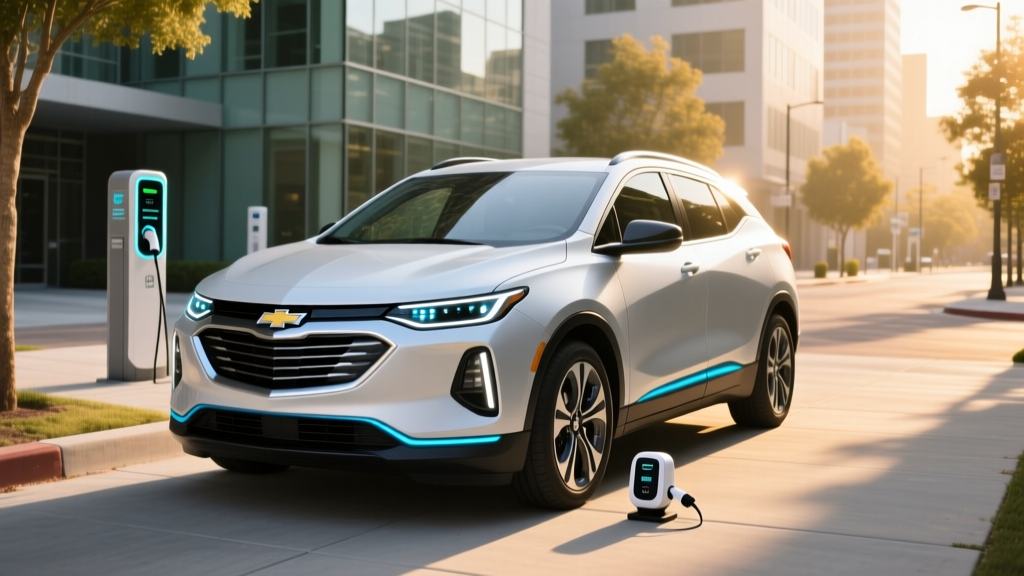
Are Chevy Equinox EV Deals Actually Worth It in 2026?
The 2026 Chevrolet Equinox EV starts at roughly $33,600 for the 2LT trim, but the headline MSRP rarely tells the whole story. Between the federal §30D clean vehicle credit, state rebates, utility incentives, and dramatically lower operating costs, the effective price and five-year cost of ownership can be substantially lower than the sticker suggests — or, if you miss a key eligibility rule, not much lower at all.
This guide dissects the real math behind Chevy Equinox EV deals in the 2026 model year: what you actually pay after incentives, what you spend on electricity versus gasoline, how insurance and maintenance factor in, and whether the Equinox EV holds its value well enough to make the numbers work long-term.
2026 Equinox EV: The Numbers That Matter
Before running the ownership math, here are the core specifications that drive cost and value:
| Spec | 2LT FWD | 3LT AWD |
|---|---|---|
| MSRP (base) | $33,600 | $43,400 |
| EPA Range | 319 mi | 285 mi |
| Battery (usable) | 85 kWh, NMC | 85 kWh, NMC |
| Peak DC Charge Rate | 150 kW | 150 kW |
| 10–80% DC Fast Charge | ~34 min | ~34 min |
| Level 2 AC Rate | 11.5 kW | 11.5 kW |
| Horsepower | 213 hp | 288 hp |
| 0–60 mph | ~8.2 sec | ~6.9 sec |
| Efficiency | ~3.3 mi/kWh | ~3.0 mi/kWh |
| Battery/Powertrain Warranty | 8 yr / 100,000 mi | 8 yr / 100,000 mi |
Real-world range note: EPA figures assume mixed driving at moderate temperatures. Expect roughly 260–280 miles from the 2LT FWD on sustained 75 mph highway trips, and 15–25% loss in freezing weather. The AWD 3LT's heavier curb weight and higher consumption narrow its real-world window to ~230–250 miles highway.
Federal Tax Credit: The $7,500 That Isn't Automatic
The 2026 Equinox EV is assembled at GM's Spring Hill, Tennessee plant, and GM has publicly positioned it to qualify for the full $7,500 §30D Clean Vehicle Credit. But eligibility is not universal. Current-year IRS rules impose hard caps on buyer income, vehicle MSRP, and battery component/mineral sourcing.
§30D Eligibility Checklist (2026 Rules)
- MSRP Cap: $80,000 for SUVs/pickups/vans; $55,000 for sedans. All Equinox EV trims clear this.
- Buyer AGI Cap: $300,000 joint / $225,000 head of household / $150,000 single. Exceed the cap in the delivery year or prior year, and the credit phases out to $0.
- Battery Components: Must be manufactured in North America (threshold tightens annually through 2029).
- Critical Minerals: A percentage must be sourced from the U.S. or a free-trade-agreement partner; the required share rises each year.
- FEOC Restriction: No battery components from a "foreign entity of concern" (primarily targeting certain Chinese suppliers).
- Point-of-Sale Transfer: Since 2024, you can transfer the credit to the dealer at purchase, reducing the drive-off price immediately — no waiting until tax filing.
- Non-refundable (unless transferred): If you claim it on your return, it can only offset tax liability; it does not generate a refund beyond taxes owed.
Effective price after credit: A 2LT FWD at $33,600 becomes roughly $26,100 if you qualify for the full $7,500 via point-of-sale transfer. The 3LT AWD at $43,400 drops to ~$35,900. These are the numbers dealers are actually advertising as "Equinox EV deals" in 2026 — but confirm eligibility with your tax professional before signing.
State, Local, and Utility Incentives: The Variable Layer
Federal credit is uniform; everything below it is geography-dependent.
Stackable Incentives to Ask About
- State rebates: California's CVRP, Colorado's state credit (up to $5,000 for income-qualified buyers), New York's Drive Clean rebate, and similar programs can stack with federal.
- Utility rebates: Many investor-owned utilities (PG&E, Con Edison, Xcel, Dominion) offer $500–$1,500 for EV purchase and additional rebates for Level 2 charger installation.
- HOV lane access: Several states grant single-occupant carpool access to EVs — a meaningful non-cash incentive in congested metros.
- Property/sales tax exemptions: States like Washington and New Jersey waive sales tax on EV purchases, saving thousands at signing.
Check AFDC's state incentive database for current programs in your zip code — rules change frequently.
Five-Year Total Cost of Ownership: Equinox EV vs. Gas Equinox
The strongest argument for the Equinox EV isn't the sticker discount — it's what you spend over the next 60 months. Below is a five-year TCO comparison using 15,000 miles/year, national-average electricity and fuel prices, and typical insurance/maintenance costs.
| Category | 2026 Equinox EV 2LT FWD | 2026 Equinox Gas AWD (2.0T) |
|---|---|---|
| Purchase (after incentives) | $26,100 | $32,500 |
| Energy (fuel / electricity) | $4,300 | $9,800 |
| Maintenance | $1,600 | $3,900 |
| Insurance (5 yr) | $9,400 | $7,600 |
| Depreciation (est.) | $11,200 | $13,800 |
| Total 5-Year Cost | $52,600 | $67,600 |
Assumptions: electricity at $0.16/kWh (national residential avg) with 80% home / 20% public DC mix; gasoline at $3.45/gal and 27 MPG combined; maintenance per AAA Your Driving Costs 2025 methodology; depreciation based on recent EV resale trends from Kelley Blue Book and Edmunds. Individual results vary by region, driving pattern, and credit eligibility.
Charging vs. Gasoline: Cost Per Mile
| Scenario | Cost / Mile | Annual (15k mi) |
|---|---|---|
| Equinox EV — home L2 @ $0.16/kWh | $0.048 | $720 |
| Equinox EV — public DC @ $0.48/kWh | $0.145 | $2,175 |
| Gas Equinox — 27 MPG @ $3.45/gal | $0.128 | $1,920 |
If you charge at home most nights, the EV's fuel cost is roughly one-third of the gas equivalent. But if you rely heavily on public DC fast chargers at $0.45–$0.55/kWh (common on Electrify America and EVgo), the savings compress dramatically. Home charging access is the single biggest determinant of EV operating economics.
Maintenance Savings: Where EVs Quietly Win
| Service | Equinox EV | Gas Equinox |
|---|---|---|
| Oil changes | None | ~$350/yr (2x/yr) |
| Transmission fluid | None (single-speed) | ~$250 @ 60k mi |
| Brake pads | 80k+ mi (regen-assisted) | 30–50k mi |
| Coolant / spark plugs | Rare | Periodic |
| Tire wear | Higher (EV weight + torque) | Lower |
| Cabin air filter | Same | Same |
The Equinox EV's regenerative braking significantly extends pad life — many owners report original pads past 80,000 miles. The offset: EVs are heavier (the 2LT FWD is ~4,300 lb) and deliver instant torque, which accelerates tire wear. Budget for one extra tire set over 75,000 miles compared to the gas version.
Insurance: The Line Item That Cuts Against You
EV insurance premiums are typically 15–25% higher than equivalent gas vehicles. The reasons are structural, not a pricing conspiracy:
- Higher repair costs: Battery pack protection structures, high-voltage cabling, and specialized labor drive claim severity.
- Total-loss thresholds: Even moderate battery enclosure damage can trigger a total-loss declaration.
- Parts availability: OEM EV body parts still have longer lead times than mature ICE platforms.
- Vehicle MSRP: Insurers price premiums partly on replacement cost, and EV MSRPs are still elevated.
For the Equinox EV 2LT, expect annual premiums around $1,800–$2,000 depending on your state, driving record, and coverage level — versus $1,500–$1,600 for the gas Equinox. Get quotes before buying. Multi-car and EV-specific discounts from insurers like Geico, Progressive, and State Farm can narrow the gap.
Depreciation: The Elephant in the Resale Room
EVs depreciated sharply in 2023–2024 as Tesla price cuts, Hertz fleet sell-offs, and rising inventory reset used-EV values. By 2026, the market has stabilized, but the Equinox EV still faces headwinds:
- Tax credit arbitrage: Every new buyer getting $7,500 off at point-of-sale effectively resets the used-car baseline lower.
- Battery health perception: Even with GM's 8-year/100,000-mile battery warranty (covering defects and excessive capacity loss, typically below 70% State of Health), used buyers discount EVs for perceived risk.
- Platform longevity: The Ultium-based Equinox EV is new architecture; long-term reliability data is still accumulating versus decades of small-block Chevy history.
Expect roughly 40–45% depreciation over 5 years / 75,000 miles for the Equinox EV, versus 35–40% for the gas version. The gap has narrowed from 2023 levels, but EVs are not yet value-retention leaders. If you plan to trade in at year 5, factor this into your math — and consider leasing instead, where the lessor absorbs residual risk.
Decision Framework: Is an Equinox EV Deal Right for You?
Buy the Equinox EV if:
- You qualify for the full $7,500 federal credit (income, MSRP, sourcing all clear).
- You can install a Level 2 home charger (240V / 40A+ circuit).
- Your daily driving is under 100 miles with occasional 250-mile road trips.
- You plan to keep the vehicle 5–8 years to amortize the higher insurance cost.
- Your state stacks additional rebates or sales-tax exemptions.
Stick with the gas Equinox (or wait) if:
- You exceed the §30D AGI caps and no state incentive fills the gap.
- You live in an apartment or lack reliable overnight charging access.
- You frequently tow (the Equinox EV's 1,500-lb tow rating trails the gas version).
- You trade vehicles every 2–3 years, where depreciation stings more.
Frequently Asked Questions
How much does it really cost to own an Equinox EV over 5 years?
Approximately $52,600 for a 2LT FWD driven 15,000 miles per year when you qualify for the full $7,500 federal credit and charge mostly at home. That's roughly $15,000 less than the gas Equinox over the same period, primarily from fuel and maintenance savings offsetting higher insurance and slightly steeper depreciation.
Do I qualify for the federal tax credit on the Equinox EV?
Most buyers do, but you must be under the AGI caps ($150k single / $300k joint), the vehicle must be under the $80k SUV MSRP cap (all trims are), and the battery must meet current-year critical-mineral and component-sourcing thresholds. Use the IRS's seller-report verification at the time of purchase and consult a tax professional to confirm your specific situation.
How much do I save on fuel and maintenance vs. the gas Equinox?
About $5,500 in fuel and $2,300 in maintenance over 5 years / 75,000 miles if you charge primarily at home. Public-DC-heavy drivers will save less on fuel — potentially under $2,000 over the same period.
Are EVs more expensive to insure than gas cars?
Yes, typically 15–25% higher premiums due to higher repair severity, battery-related total-loss risk, and elevated MSRP. For the Equinox EV, expect roughly $300–$400/year more than the gas model. Shop multiple insurers and ask about EV-specific discounts.
How well does the Equinox EV hold its value?
Expect roughly 40–45% depreciation over 5 years — worse than the gas Equinox but significantly improved from 2023–2024 EV resale levels. Leasing can transfer residual risk to the lessor and is worth considering if you trade frequently.
Does the Equinox EV support NACS (Tesla-style) charging?
GM began transitioning to NACS for the 2025 model year. The 2026 Equinox EV ships with a NACS charge port natively, granting direct access to Tesla Supercharger stalls (with V3/V4 adapters where needed) alongside Electrify America, EVgo, and other networks. No CCS adapter is required.
Bottom Line on Equinox EV Deals
The best 2026 Chevy Equinox EV deals aren't just about the advertised price — they're about stacking the $7,500 federal point-of-sale credit with state and utility incentives, securing low-cost home charging, and holding the vehicle long enough to let fuel and maintenance savings compound. Run your own numbers before you sign: plug in your local electricity rate, your actual annual mileage, and a real insurance quote. The spreadsheet, not the dealer's poster, is where the real deal lives.