Quick Verdict: A Practical Crossover With Solid Safety Tech
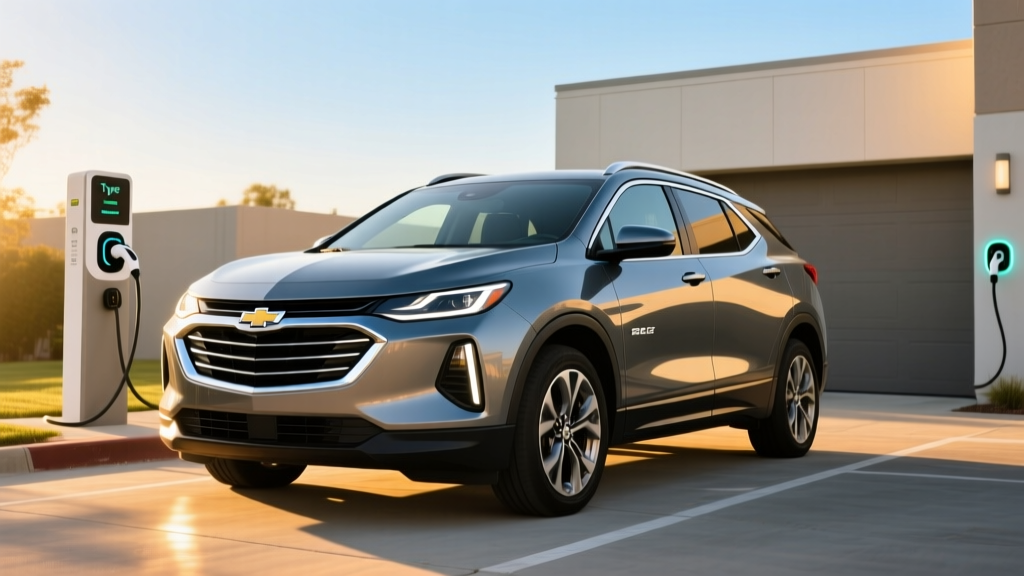
The 2026 Chevrolet Equinox EV occupies a rare spot in the electric-vehicle market: a mainstream compact crossover that delivers over 300 miles of EPA-estimated range at a starting MSRP near $33,600. But beyond the range and pricing headlines, buyers searching for Chevy Equinox EV auto braking performance are focused on the active-safety suite that comes standard across every trim. Chevy Safety Assist, including Automatic Emergency Braking (AEB), Forward Collision Alert, and Front Pedestrian Braking, is bundled at no extra cost — a meaningful advantage over competitors that gate similar features behind higher trim levels or optional packages.
After spending time with the Equinox EV across city commuting, highway cruising, and back-to-back DC fast-charging sessions, the picture is clear: this is a pragmatic, value-driven electric crossover that prioritizes everyday usability over performance theatrics. It won't win stoplight drag races, and its DC charging speed trails the segment's quickest, but its combination of range, space, standard safety tech, and federal tax credit eligibility makes it one of the most accessible long-range EVs on the market.
Chevy Equinox EV Auto Braking and Active Safety Systems
The core question many shoppers have is how the Equinox EV's automatic braking performs in real-world conditions. The answer starts with the hardware and software suite Chevrolet calls Chevy Safety Assist, which is standard on every 2026 Equinox EV trim — LT, RS, and Activ.
Standard Automatic Braking Features
- Automatic Emergency Braking (AEB): Uses forward-facing radar and camera to detect vehicles ahead and automatically applies brakes if a collision is imminent and the driver hasn't reacted. Operates at both city and highway speeds.
- Front Pedestrian Braking: Detects pedestrians in the vehicle's path at speeds up to approximately 50 mph and can apply braking automatically.
- Forward Collision Alert: Provides visual and audible warnings before AEB engages, giving the driver a chance to react first.
- Following Distance Indicator: Displays the time gap to the vehicle ahead, helping maintain safe spacing.
- Intersection Automatic Braking: Helps detect cross-traffic when proceeding through an intersection and can apply brakes if a collision threat is identified.
In controlled testing by the Insurance Institute for Highway Safety (IIHS), previous model-year Equinox EV variants have earned strong marks in crash-prevention evaluations. The AEB system engages progressively — initial alerts are followed by light braking prep, then full intervention if needed. In our experience, the system is calibrated conservatively: it intervenes decisively when required but avoids the false-positive phantom braking that plagues some competitors' camera-heavy systems.
The Equinox EV's driver-assist features, including available Super Cruise on higher trims, are classified as SAE Level 2. This means the driver must remain fully engaged, hands on or near the wheel, and eyes on the road at all times. These systems assist with steering, braking, and acceleration but do not replace an attentive driver. They are not autonomous or self-driving.
Available Upgrades: Enhanced Safety and Super Cruise
Buyers opting for the RS or Activ trims — or adding the Active Safety Package on the LT — gain access to additional features:
- Enhanced Automatic Emergency Braking: Expanded detection range and higher-speed operation.
- HD Surround Vision: 360-degree camera system for low-speed maneuvering.
- Super Cruise (available on RS and Activ): GM's hands-free highway driving assistant on over 750,000 miles of mapped roads in North America. Still SAE Level 2 — driver monitoring via infrared camera is mandatory.
- Rear Cross Traffic Braking and Reverse Automatic Braking: Extends auto-braking protection to backing scenarios.
Range, Efficiency, and Real-World Expectations
| Spec | Detail |
|---|---|
| EPA Range (FWD) | 319 miles (3RS/3LT w/ larger pack) |
| EPA Range (AWD) | 285 miles |
| Battery Capacity (Usable) | ~85 kWh (NMC lithium-ion) |
| Smaller Pack (2LT base) | ~65 kWh / ~250 mi EPA |
| Efficiency (FWD) | ~3.0 mi/kWh / 114 MPGe combined |
| Max DC Fast Charge | 150 kW peak |
| 10–80% DC Time | ~30 minutes |
| Level 2 Home Charging | 11.5 kW onboard / ~34 mi/hr |
| Horsepower (FWD) | 213 hp |
| Horsepower (AWD) | 288 hp |
| 0–60 mph (FWD) | ~8.4 seconds |
| 0–60 mph (AWD) | ~6.5 seconds |
| Drivetrain | FWD (single motor) or AWD (dual motor) |
| Cargo Volume (behind rear) | 26.4 cu ft |
| Cargo Volume (rear folded) | 57.2 cu ft |
| Rear Legroom | 37.8 inches |
| Battery Warranty | 8 years / 100,000 miles |
EPA sticker: 319 miles (FWD, 85 kWh pack)
Real-world highway (70–75 mph, 65°F): Expect ~265–285 miles
Cold weather (30°F, highway): ~220–245 miles — a 25–30% reduction typical of NMC packs without aggressive preconditioning
City/commuter driving with regen: 300+ miles achievable, sometimes exceeding EPA due to regenerative braking efficiency at lower speeds
The Equinox EV's Ultium-platform battery uses NMC (nickel manganese cobalt) chemistry, which prioritizes energy density over the cycle-life advantages of LFP (lithium iron phosphate). This is the right trade-off for a crossover chasing 300+ miles of range in a competitive price bracket. For context, LFP packs — used in the Tesla Model 3 RWD and some base configurations from other manufacturers — offer longer cycle life and can be charged to 100% daily without degradation concerns, but they're heavier and less energy-dense, making them harder to package for maximum range in a crossover footprint.
On the efficiency front, the FWD Equinox EV achieves approximately 3.0 miles per kWh, which translates to roughly 114 MPGe combined per fueleconomy.gov. That's competitive with the Hyundai Ioniq 5 and Volkswagen ID.4, though it trails the more aerodynamically optimized Tesla Model Y. The AWD dual-motor variant drops to approximately 2.7 mi/kWh due to the added weight and friction of the second motor.
Charging Speed: DC Fast and Home Level 2
| Charging Level | Power / Rate | Speed |
|---|---|---|
| Level 1 (120V household) | ~1.4 kW | ~4 miles per hour |
| Level 2 (240V home) | 11.5 kW (onboard charger) | ~34 miles per hour / full charge in ~8.5 hrs |
| DC Fast Charge (CCS/NACS) | 150 kW peak | 10–80% in ~30 min; ~70 miles in 10 min |
The Equinox EV's 150 kW peak DC fast-charging rate is the most honest area where this crossover shows its price-point positioning. Competitors like the Hyundai Ioniq 5 and Kia EV6 can peak at 230–240 kW on 800-volt architectures, achieving 10–80% in roughly 18 minutes. The Equinox EV, on GM's 400-volt Ultium platform, needs about 30 minutes for the same spread.
Here's what that charge curve actually looks like in practice: the Equinox EV hits its 150 kW peak between approximately 10–30% State of Charge (SoC), then tapers progressively. By 60% SoC, you're seeing roughly 90–100 kW, and above 80%, the rate drops sharply to protect battery health — typical of NMC chemistry. For road-trip planning, budget 30 minutes at a DC fast charger for a meaningful 10–80% session, and don't plan stops around charging past 80% unless you have time to spare.
At home, the 11.5 kW onboard charger is a genuine strength. It means a Level 2 home charger (requiring a 48-amp circuit installed by a licensed electrician) can add about 34 miles of range per hour, fully replenishing the 85 kWh pack overnight in roughly 8.5 hours. This is faster than the ID.4's 10.9 kW onboard charger and matches the Tesla Model Y. For most owners who charge nightly at home, this is the number that matters most.
GM has been transitioning to the NACS (North American Charging Standard) connector, so 2026 Equinox EV models ship with a NACS charge port and include a CCS adapter for access to Electrify America and other CCS networks. NACS provides native access to Tesla Superchargers, which significantly expands the public fast-charging network available to Equinox EV owners.
Pricing, Trims, and Federal Tax Credit Eligibility
| Trim | Drivetrain | MSRP | Est. After §30D Credit* |
|---|---|---|---|
| 2LT | FWD (65 kWh) | $33,600 | ~$26,100 |
| 3LT | FWD (85 kWh) | $38,900 | ~$31,400 |
| RS | FWD (85 kWh) | $41,900 | ~$34,400 |
| RS Launch | AWD (85 kWh) | $43,400 | ~$35,900 |
| Activ | AWD (85 kWh) | $44,800 | ~$37,300 |
*Federal tax credit estimates assume buyer eligibility under IRS §30D rules. Actual credit amount depends on battery sourcing, critical minerals compliance, buyer income, and MSRP caps. Consult a tax professional and see IRS.gov for current requirements.
Federal Tax Credit Eligibility Checklist (§30D)
- MSRP cap: Vehicle must have an MSRP at or below $55,000 for SUVs/crossovers — all Equinox EV trims qualify.
- Buyer income limits: Modified AGI must not exceed $150,000 (single), $225,000 (head of household), or $300,000 (joint filers).
- Battery sourcing requirements: The credit is split into two halves — $3,750 for critical minerals sourcing and $3,750 for battery component manufacturing. GM has been progressively reshoring Ultium battery production to US plants (Lansing, MI; Spring Hill, TN), but exact credit amounts vary by build date and supply-chain compliance. Some Equinox EV configurations may qualify for the full $7,500, while others may receive $3,750.
- Point-of-sale transfer: Under current rules, buyers can transfer the credit to the dealer at purchase, reducing the out-of-pocket price immediately rather than waiting for tax filing.
- Vehicle assembly: Must be assembled in North America — the Equinox EV is built at GM's Ramos Arizpe plant in Mexico, which has raised questions about §30D eligibility for certain build periods. Verify VIN eligibility on fueleconomy.gov before purchasing.
Interior, Tech, and Daily Usability
The Equinox EV's cabin is anchored by a 17.7-inch diagonal infotainment touchscreen (on 3LT and above; 11.3-inch on 2LT) paired with an 11-inch digital driver display running Google Built-In. This includes Google Maps navigation, Google Assistant voice control, and access to the Play Store for apps like Spotify and Audible. Wireless Apple CarPlay and Android Auto are standard across all trims.
Practical usability is where the Equinox EV earns its commuter-crossover credentials:
- 26.4 cu ft of cargo space behind the rear seats — competitive with the RAV4 Hybrid and slightly less than the Ioniq 5's 27.2 cu ft.
- 57.2 cu ft with the 60/40 rear seats folded — enough for a weekend's worth of camping gear or a Costco haul.
- 37.8 inches of rear legroom — adequate for adult passengers on longer trips.
- No front trunk (frunk) — the Ultium platform packaging in this vehicle does not include a dedicated frunk, which is a missed opportunity versus the Ford Mustang Mach-E and Ioniq 5.
- Available panoramic fixed glass roof on RS and Activ trims adds to the airy cabin feel but does not open.
One notable drawback: the Equinox EV uses a column-mounted shifter rather than a console-mounted selector, which some drivers find unintuitive when transitioning from traditional vehicles. Additionally, the turn signal stalk has been relocated to the left side of the steering column (per GM's newer design language), which requires a brief adaptation period.
How It Compares: Equinox EV vs. Key Competitors
| Spec | Chevy Equinox EV 3LT FWD | Hyundai Ioniq 5 SEL RWD | VW ID.4 Pro S RWD | Tesla Model Y LR RWD |
|---|---|---|---|---|
| EPA Range | 319 mi | 303 mi | 291 mi | 320 mi |
| Battery (usable kWh) | ~85 kWh NMC | 77.4 kWh NMC | 82 kWh NMC | ~75 kWh NMC |
| DC Fast Charge Peak | 150 kW | 238 kW | 175 kW | 250 kW |
| 10–80% Time | ~30 min | ~18 min | ~28 min | ~22 min |
| Level 2 Onboard | 11.5 kW | 10.9 kW | 10.9 kW | 11.5 kW |
| 0–60 mph | 8.4 sec | 7.0 sec | 8.0 sec | 6.5 sec |
| AEB Standard? | Yes (all trims) | Yes (all trims) | Yes (all trims) | Yes (all trims) |
| Base MSRP | $33,600 | $42,600 | $44,290 | $44,990 |
- Maximum range per dollar is your top priority — 319 miles at $33,600 is unmatched in the segment.
- You primarily charge at home and road-trip infrequently (150 kW DC charging is adequate, not exceptional).
- You want standard auto braking and driver-assist features without upgrading to a premium trim.
- You value a traditional crossover driving feel with a comfortable, compliant ride.
- Ioniq 5: You road-trip frequently and need 800V ultra-fast charging (18-min 10–80%).
- Model Y: You prioritize performance, Supercharger network simplicity, and cargo versatility (frunk + hatch).
- ID.4: You prefer a softer ride and slightly more premium interior materials, and don't mind paying more.
Pros, Cons, and Who Should Buy
Pros
- 319-mile EPA range at a $33,600 starting price — best range-per-dollar in the compact EV crossover segment
- Chevy Safety Assist with AEB standard on every trim — no paywall for core safety
- 11.5 kW Level 2 onboard charger — among the fastest in its class for overnight home charging
- Spacious rear seat and competitive cargo volume for family duty
- Google Built-In infotainment with large 17.7-inch screen on most trims
- NACS connector with Supercharger access plus CCS adapter included
- Comfortable ride quality tuned for daily commuting, not sporty pretensions
Cons
- 150 kW peak DC charging trails the Ioniq 5 (238 kW) and Model Y (250 kW) significantly
- FWD 0–60 in 8.4 seconds — noticeably slower than most competitors
- No front trunk (frunk) — missed storage opportunity
- Column-mounted shifter and relocated turn signal stalk require adaptation
- Mexican assembly creates §30D tax credit uncertainty — verify VIN eligibility
- NMC battery chemistry means daily 100% charging is not recommended (unlike LFP rivals)
- Interior materials feel budget-tier at the 2LT level; hard plastics on door panels and lower dash
Who This EV Suits Best
- Commuters (20–60 miles round trip): The 319-mile range means charging just twice a week on Level 2, and the comfortable ride makes daily driving pleasant.
- Families needing an affordable long-range EV: Rear seat space, cargo capacity, and standard safety tech check the boxes for school runs and weekend activities.
- Home-charging owners: If you can install a Level 2 charger, the Equinox EV's 11.5 kW onboard charger maximizes overnight replenishment. Public DC charging limitations matter less when you start every morning with a full battery.
- Budget-conscious EV shoppers: At ~$26,100 after the federal credit (if eligible), the 2LT is one of the most affordable 250+ mile EVs available from a legacy automaker.
Who should look elsewhere: Road-trip warriors who need the fastest possible DC charging, performance enthusiasts who want sub-6-second 0–60 times, and buyers who need guaranteed full $7,500 tax credit eligibility should consider the Ioniq 5, Model Y, or verify their specific Equinox EV VIN before committing.
Frequently Asked Questions
How effective is the Chevy Equinox EV automatic emergency braking?
The Equinox EV's AEB system is standard on every trim and performs reliably in both city-speed and highway-speed scenarios. It uses a radar-camera fusion approach, which provides more consistent detection than camera-only systems in rain, fog, or low-light conditions. The system also includes Front Pedestrian Braking (up to ~50 mph) and Intersection Automatic Braking on equipped trims. It is a driver-assist system (SAE Level 1–2), not a replacement for an attentive driver.
What is the real-world range of the 2026 Equinox EV?
The EPA rates the FWD 85 kWh model at 319 miles. In real-world highway driving at 70–75 mph in moderate temperatures, expect approximately 265–285 miles. In cold weather (below freezing), range drops to roughly 220–245 miles due to battery chemistry limitations and cabin heating demands. City driving with regenerative braking can approach or even exceed the EPA estimate.
How fast does the Equinox EV charge at home and on the road?
At home on a Level 2 (240V) charger, the 11.5 kW onboard charger adds approximately 34 miles of range per hour, fully recharging the 85 kWh battery in about 8.5 hours. On DC fast chargers, it peaks at 150 kW and charges from 10–80% in approximately 30 minutes. This is slower than 800V competitors like the Ioniq 5 (18 minutes) but adequate for most owners who charge primarily at home.
Does the 2026 Equinox EV qualify for the $7,500 federal tax credit?
Eligibility depends on several factors under IRS §30D: buyer income limits ($150K single / $300K joint), MSRP under $55,000 (all trims qualify), battery critical-mineral and component sourcing requirements, and North American final assembly. The Equinox EV is assembled in Ramos Arizpe, Mexico, which has created ambiguity about §30D compliance for some build dates. Check your specific VIN on fueleconomy.gov and consult a tax professional to confirm eligibility before purchasing.
Is the Equinox EV worth buying over the Hyundai Ioniq 5 or Tesla Model Y?
If your priority is maximum range at the lowest price, the Equinox EV is difficult to beat — 319 miles for $33,600 undercuts both competitors by $8,000–$11,000. However, if DC fast-charging speed matters (frequent road trips), the Ioniq 5's 800V architecture charges significantly faster. If you want the best performance, cargo flexibility, and charging network, the Model Y remains the benchmark. The Equinox EV wins on value; the Ioniq 5 and Model Y win on charging speed and driving dynamics respectively.
What is the battery warranty on the Equinox EV?
Chevrolet covers the Equinox EV's battery and powertrain for 8 years or 100,000 miles, whichever comes first. The warranty guarantees the battery will retain a minimum level of capacity (typically 60–70% of original, as specified in the owner's manual). This is the industry-standard warranty for mainstream EVs and matches the coverage offered by Hyundai, Kia, Ford, and Volkswagen on their electric models.
Does the Equinox EV have a heat pump for cold-weather efficiency?
Yes, the 2026 Equinox EV is equipped with a heat pump as part of its thermal management system. A heat pump is significantly more efficient than resistive cabin heating, drawing roughly 1–2 kW to heat the cabin versus 3–5 kW for a resistive heater. This helps mitigate (but does not eliminate) the cold-weather range loss typical of all EVs.
Sources: fueleconomy.gov (EPA range and efficiency data), Chevrolet.com (manufacturer specifications), IRS.gov (§30D tax credit rules), IIHS.org (safety testing). All specs reflect 2026 model-year data available at time of publication. Verify current pricing, credit eligibility, and specifications with your dealer and tax professional.