Quick Verdict: The Affordable Long-Range Crossover Done Mostly Right
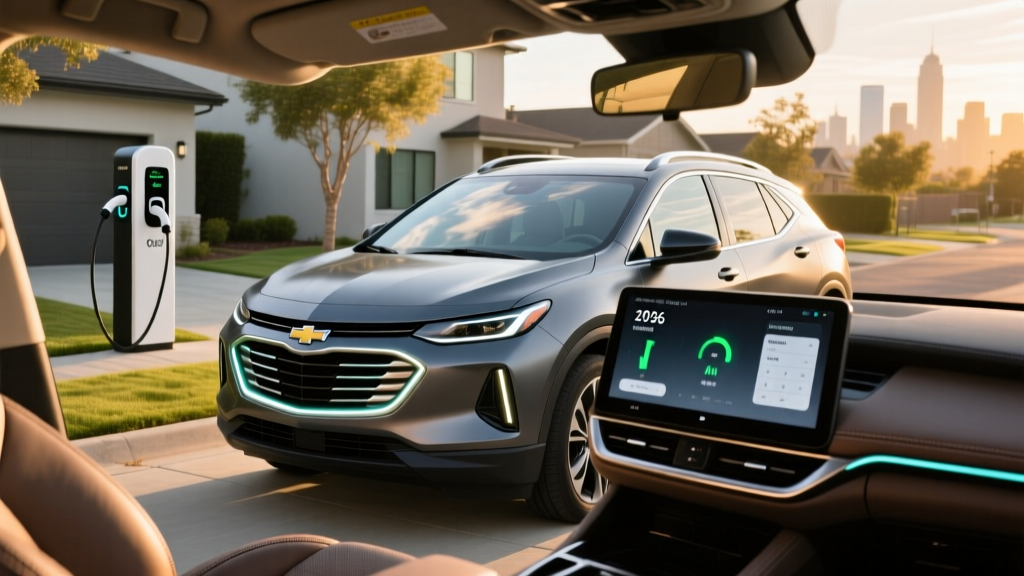
The 2026 Chevy Equinox EV occupies one of the most competitive slots in the electric-vehicle market: the ~$35,000 compact crossover. With an EPA-estimated 319 miles of range on the FWD LT trim, a usable 85 kWh Ultium battery, and standard DC fast-charging at up to 150 kW, Chevrolet has built a compelling daily driver that undercuts rivals like the Hyundai Ioniq 5 and Volkswagen ID.4 on price while matching or exceeding them on range.
But the Equinox EV isn't without compromises. Its charging speed lags behind 800V competitors, the dual-motor AWD variant sacrifices significant range, and the infotainment system's reliance on a portrait touchscreen means few physical controls. For buyers who prioritize range-per-dollar and home charging convenience over peak fast-charging performance, the 2026 Equinox EV deserves a serious look.
| Spec | LT FWD | RS FWD | RS AWD |
|---|---|---|---|
| EPA Range | 319 mi | 315 mi | 285 mi |
| Battery (usable) | ~85 kWh, NMC (Ultium) | ||
| Horsepower | 213 hp | 213 hp | 288 hp |
| 0-60 mph | ~8.3 sec | ~8.3 sec | ~6.5 sec |
| Peak DC Fast Charge | 150 kW | ||
| 10-80% DC Time | ~42 min | ||
| Level 2 Home Charge | 11.5 kW (~34 mi/hr) | ||
| MPGe (combined) | 111 MPGe | 109 MPGe | 98 MPGe |
| Base MSRP | $34,900 | $41,900 | $43,900 |
| Federal Tax Credit | Up to $7,500 (eligibility varies) | ||
| Battery Warranty | 8 yr / 100,000 mi | ||
Range & Efficiency: 319 Miles EPA, But Plan for Real-World Losses
The headline number for the 2026 Equinox EV is 319 miles of EPA-estimated range on the LT FWD trim, powered by GM's 85 kWh (usable) Ultium battery pack. That puts it ahead of the Volkswagen ID.4 (275 mi) and in the same ballpark as the Hyundai Ioniq 5 Long Range (303 mi) and Tesla Model Y Long Range (~320 mi), making it one of the longest-range EVs in its price class.
EPA sticker: 319 miles (LT FWD)
Highway driving (70-75 mph): Expect ~250-275 miles. EVs are less efficient at sustained highway speeds than in city driving due to the lack of regenerative braking opportunities and increased aerodynamic drag.
Cold weather (below 32°F): Expect 20-30% range reduction, yielding ~220-255 miles. The Equinox EV uses a heat pump on higher trims, which helps mitigate cabin-heating losses compared to resistive heaters, but battery chemistry still suffers in deep cold.
Best-case city/commuter: 310-325 miles is achievable with moderate speeds, warm weather, and liberal use of regenerative braking.
Efficiency on the FWD LT is rated at 111 MPGe combined (30 kWh/100 mi), which is competitive but not class-leading. The Hyundai Ioniq 5 achieves 114 MPGe combined, while the Tesla Model Y Long Range AWD hits 122 MPGe. The AWD RS drops to 98 MPGe (34 kWh/100 mi) — a meaningful penalty if your commute is long.
One practical note: GM's Ultium battery management includes a buffer above and below the displayed state of charge (SoC). You'll rarely see 0% or 100% on the gauge, which protects long-term battery health but means the displayed range is conservative relative to the raw kWh capacity.
Charging Speed: Adequate at Home, Modest on the Road
Charging is where the 2026 Equinox EV shows its most significant trade-off. On a DC fast charger, it peaks at 150 kW — respectable, but well behind 800V competitors like the Hyundai Ioniq 5 and Kia EV6, which peak at 230-250 kW and complete a 10-80% charge in roughly 18-25 minutes.
| Level | Power | Speed (miles added) | Notes |
|---|---|---|---|
| Level 1 (120V) | ~1.4 kW | ~3-4 mi/hr | Emergency/trickle only; full charge in 60+ hours |
| Level 2 (240V, 48A) | 11.5 kW | ~34 mi/hr | Full charge in ~9 hours; ideal for overnight home charging |
| DC Fast Charge | Peak 150 kW | ~170 mi in 30 min | 10-80% in ~42 min; tapers significantly above 80% |
The 10-80% DC fast-charge time of approximately 42 minutes is the number road-trippers should internalize. The Equinox EV's charge curve peaks around 150 kW at low SoC but tapers steadily after 50-60%, dropping to under 50 kW above 80%. This is typical for NMC-based batteries without 800V architecture, but it means you'll spend noticeably longer at chargers on a cross-country drive than you would in an Ioniq 5.
For home charging, the 11.5 kW onboard charger is a genuine strength. With a properly installed Level 2 home charger on a 240V/60A circuit, you'll add roughly 34 miles of range per hour — meaning a depleted battery reaches full overnight in about 9 hours. This is faster than the Tesla Model Y's 11.5 kW and comparable to most competitors. Most daily commuters will never need DC fast charging if they charge at home nightly.
Connector note: The 2026 Equinox EV comes with the NACS (Tesla-style) charge port, giving it native access to Tesla's Supercharger network without an adapter. This is a significant advantage over CCS-equipped rivals that require adapters for Supercharger access. For Electrify America and other CCS-only networks, GM includes a CCS adapter.
Performance & Driving Dynamics
The Equinox EV is tuned for comfort and efficiency, not sportiness. The single-motor FWD layout produces 213 horsepower and 236 lb-ft of torque, delivering a 0-60 mph time of approximately 8.3 seconds. That's adequate for highway merging and daily commuting but won't thrill anyone coming from a performance-oriented EV.
The dual-motor AWD RS variant bumps output to 288 hp and 343 lb-ft, cutting the 0-60 time to roughly 6.5 seconds. The AWD system provides better traction in snow and rain, but the range penalty — 285 miles versus 319 — is steep. Unless you regularly drive in inclement weather or need the extra grip, the FWD configuration is the smarter buy.
Ride quality is composed and quiet, with GM's suspension tuning absorbing highway imperfections well. The steering is light and numb by enthusiast standards, but for a family crossover, it's appropriately relaxed. Regenerative braking offers multiple levels selectable via steering-wheel paddles, and one-pedal driving mode is available for those who prefer it.
Interior, Cargo & Technology
The Equinox EV's cabin represents a clear step up from the outgoing gas-powered Equinox, with soft-touch materials on the dash and door panels, a flat floor (thanks to the skateboard battery platform), and generous passenger space. Front legroom measures 41.3 inches, with 37.8 inches in the rear — competitive with the Ioniq 5 and slightly ahead of the Model Y for rear-seat comfort.
Cargo volume is 26.4 cubic feet behind the rear seats and 57.2 cubic feet with the rear seats folded. That's slightly less than the Ioniq 5 (27.2 / 59.3 cu ft) but adequate for family hauling. There is no front trunk (frunk), which is a missed opportunity given the Ultium platform's packaging flexibility.
The centerpiece of the interior is a 17.7-inch portrait-oriented touchscreen running Google Built-In, which includes native Google Maps navigation, Google Assistant, and access to the Play Store for apps. A 11-inch digital instrument cluster sits behind the steering wheel. Wireless Apple CarPlay and Android Auto are standard.
Driver assistance: The Equinox EV comes with Chevy's Super Cruise preparation on higher trims, though the full hands-free driving feature requires a subscription and is only available on mapped highways. The standard Chevy Safety Assist suite includes automatic emergency braking, lane-keeping assist, adaptive cruise control, and blind-spot monitoring. Note: Super Cruise is an SAE Level 2 system — the driver must remain attentive and keep eyes on the road at all times.
Pricing, Trims & Federal Tax Credit Eligibility
The 2026 Equinox EV lineup starts at $34,900 for the LT FWD (including destination), making it one of the most affordable 300+ mile EVs on the market. Here's the trim breakdown:
| Trim | MSRP | Est. After $7,500 Credit | Key Features |
|---|---|---|---|
| LT FWD | $34,900 | ~$27,400* | 17.7" screen, cloth seats, 19" wheels, Safety Assist |
| LT AWD | $37,900 | ~$30,400* | Dual motor, 285 mi range, heated front seats |
| RS FWD | $41,900 | ~$34,400* | Sport styling, 21" wheels, power liftgate, 315 mi range |
| RS AWD | $43,900 | ~$36,400* | Dual motor, 288 hp, Super Cruise eligible |
*Estimated after point-of-sale federal tax credit. Actual eligibility depends on buyer income, battery sourcing, and MSRP caps under IRS §30D rules.
- MSRP cap: Vehicle must have an MSRP at or below $55,000 (SUVs/crossovers). All Equinox EV trims qualify.
- Buyer income cap: Modified AGI must not exceed $150,000 (single), $225,000 (head of household), or $300,000 (joint filers).
- Battery sourcing: Critical minerals and battery components must meet phased-in domestic-content thresholds. Verify current-year compliance at IRS.gov's eligible vehicle list before purchasing.
- Point-of-sale transfer: Eligible buyers can transfer the credit to the dealer at purchase, reducing the out-of-pocket price immediately rather than waiting for a tax refund.
Important: Tax credit eligibility changes frequently based on battery-sourcing rules. Consult a tax professional and verify on irs.gov before finalizing your purchase.
Ownership Costs & Warranty
GM backs the Equinox EV's battery and drive-unit components with an 8-year / 100,000-mile warranty, with a capacity-retention threshold of 60% — meaning GM will repair or replace the battery if it degrades below 60% of original capacity within the warranty period. This is on par with most competitors (Hyundai offers 10yr/100,000mi; Tesla offers 8yr/120,000mi at 70% retention).
The limited vehicle warranty covers 3 years / 36,000 miles bumper-to-bumper. Scheduled maintenance is minimal for an EV — no oil changes, no transmission fluid — but expect cabin air filter replacements, tire rotations, and brake-fluid checks.
Insurance premiums for the Equinox EV are typically 10-20% higher than the gas Equinox due to higher repair costs and battery replacement considerations, though they're generally lower than Tesla insurance costs. Get quotes from your insurer before purchasing.
Charging at home on a national-average electricity rate of $0.16/kWh costs roughly $13.60 for a full charge (85 kWh × $0.16), equating to about $0.043 per mile. Compare that to a 25-MPG gas crossover at $3.20/gallon: $0.128 per mile. Over 15,000 miles annually, the Equinox EV saves approximately $1,275 per year in fuel costs.
Pros & Cons
- 319 miles EPA range at $34,900 — best range-per-dollar in the segment
- NACS charge port — native Supercharger access without adapter
- 11.5 kW Level 2 charging — fast overnight home replenishment
- Spacious cabin with flat floor and generous rear legroom
- Google Built-In infotainment with native Maps and Assistant
- Eligible for full $7,500 federal tax credit (verify sourcing)
- Quiet, comfortable ride quality
- 150 kW peak DC charging — 10-80% in 42 min trails 800V rivals
- No front trunk (frunk) despite skateboard platform
- AWD range penalty is steep: 285 mi vs. 319 mi
- Portrait touchscreen controls nearly everything — learning curve
- Base LT trim uses cloth seats and lacks premium features
- Super Cruise requires subscription and is limited to mapped roads
Who Should Buy the 2026 Chevy Equinox EV?
- You want 300+ miles of range without spending over $40,000
- You charge primarily at home and don't road-trip frequently
- You want native Tesla Supercharger access via NACS
- You qualify for the $7,500 federal tax credit and want a sub-$28,000 effective price
- You prioritize ride comfort and cabin space over sporty handling
- You take frequent long road trips and need the fastest possible DC charging (consider Ioniq 5 or EV6)
- You need AWD and still want 300+ miles (limited options at this price)
- You prefer physical buttons and knobs for climate and audio controls
- You want a frunk for extra cargo flexibility
The 2026 Equinox EV is best understood as a commuter-first, value-oriented family crossover. It excels in the daily grind: quiet, comfortable, long-ranged, and cheap to fuel. It's less compelling as a cross-country road-trip machine where its 150 kW charging ceiling means longer stops. For the majority of EV buyers who drive under 50 miles round-trip and charge at home, the Equinox EV's combination of range, price, and Supercharger access is hard to beat.
Frequently Asked Questions
What is the real-world range of the 2026 Chevy Equinox EV?
The EPA rates the FWD LT at 319 miles, but real-world highway driving at 70-75 mph typically yields 250-275 miles. In cold weather (below 32°F), expect 20-30% less, or roughly 220-255 miles. City commuters using regenerative braking in mild weather can approach or slightly exceed the EPA number.
How fast does the Equinox EV charge?
On a DC fast charger, it peaks at 150 kW and takes approximately 42 minutes for a 10-80% charge. At home on a Level 2 (240V) charger, it charges at 11.5 kW, adding about 34 miles of range per hour — a full charge in roughly 9 hours.
Does the 2026 Equinox EV qualify for the $7,500 federal tax credit?
All trims fall under the $55,000 SUV MSRP cap. However, eligibility also depends on buyer income limits ($150K single / $300K joint), battery critical-mineral sourcing compliance, and assembly requirements. Verify current eligibility on fueleconomy.gov and irs.gov before purchasing, as sourcing rules change periodically.
How does the Equinox EV compare to the Hyundai Ioniq 5 and Tesla Model Y?
The Equinox EV offers more range than the Ioniq 5 (319 vs. 303 mi) at a lower starting price ($34,900 vs. ~$42,000), but the Ioniq 5 charges significantly faster (230 kW peak, 10-80% in ~18 min). The Tesla Model Y Long Range matches range (~320 mi) and charges faster (250 kW) but starts at ~$45,000 and has higher insurance costs. The Equinox EV wins on value; the Ioniq 5 and Model Y win on charging speed and tech polish.
What battery chemistry does the Equinox EV use?
The 2026 Equinox EV uses GM's Ultium platform with NMC (nickel-manganese-cobalt) lithium-ion chemistry. NMC offers higher energy density than LFP (lithium iron phosphate), which is how GM achieves 319 miles in a relatively compact battery pack. The trade-off is that NMC batteries are typically recommended to charge to 80% for daily use (rather than 100%) to maximize long-term longevity.
Does the Equinox EV have a frunk?
No. Despite using GM's dedicated Ultium skateboard platform, the Equinox EV does not include a front trunk. All cargo space is in the rear (26.4 cu ft behind the second row, 57.2 cu ft with seats folded).