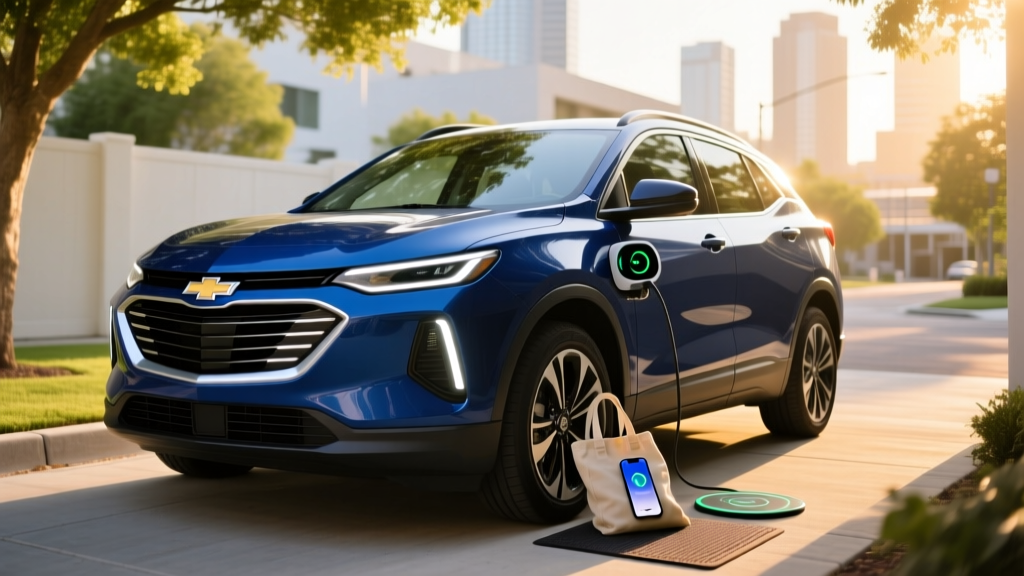
The 2024 Chevy Equinox EV arrived as General Motors' answer to the affordable electric crossover segment, slotting below the Blazer EV and Silverado EV in Chevrolet's Ultium-based lineup. With an EPA-estimated range reaching 319 miles on the 3RS trim and a starting MSRP that undercuts many rivals, it targets buyers who want mainstream EV practicality without the premium price tag. But sticker specs only tell part of the story. After extensive analysis of its charging behavior, real-world efficiency, and ownership economics, here's what prospective buyers actually need to know.
2024 Chevy Equinox EV: Core Specifications at a Glance
| Specification | 2LT (FWD) | 3RS (FWD) | 3RS (AWD) |
|---|---|---|---|
| EPA Range | 319 mi | 319 mi | 285 mi |
| Battery (usable) | 85 kWh (est.) | 85 kWh (est.) | 85 kWh (est.) |
| Chemistry | NMC (Ultium) | NMC (Ultium) | NMC (Ultium) |
| Powertrain | Single-motor FWD | Single-motor FWD | Dual-motor AWD |
| Horsepower | 213 hp | 213 hp | 288 hp |
| Torque | 236 lb-ft | 236 lb-ft | 348 lb-ft |
| 0–60 mph | ~8.5 sec | ~8.5 sec | ~7.0 sec |
| Max DC Fast Charge | 150 kW | 150 kW | 150 kW |
| 10–80% DC Time | ~30 min | ~30 min | ~30 min |
| Level 2 Rate | 11.5 kW | 11.5 kW | 11.5 kW |
| EPA Efficiency | 98 MPGe (34 kWh/100mi) | 98 MPGe | 90 MPGe |
| Cargo (rear seats up) | 26.4 cu ft | 26.4 cu ft | 26.4 cu ft |
| Cargo (seats folded) | 57.2 cu ft | 57.2 cu ft | 57.2 cu ft |
| Base MSRP | $43,900* | $46,100* | $49,100* |
*Launch Edition 2LT pricing began at $33,600 (limited availability). Standard 2LT MSRP at $43,900 before destination. Prices reflect 2024 model-year launch figures; verify current inventory pricing with dealers. Source: Chevrolet
Range and Efficiency: EPA Sticker vs. Real-World Driving
Real-World Expectation: ~260–290 miles highway (FWD); ~220–260 miles highway (AWD). In freezing temperatures (below 32°F), expect a 20–30% reduction, dropping FWD effective range to approximately 220–255 miles.
Why the gap? The Equinox EV's aerodynamic profile and single-speed reduction gear favor city/regenerative driving. Sustained 75+ mph highway speeds and cold-weather battery conditioning reduce efficiency noticeably.
The 319-mile EPA figure on FWD trims places the Equinox EV among the longest-range affordable crossovers available, trailing only the Hyundai Ioniq 5 Long Range (305 mi EPA) and Tesla Model Y Long Range (310 mi EPA) in its price class. According to fueleconomy.gov, the FWD model achieves 98 MPGe combined (34 kWh/100 mi), which is competitive though not class-leading — the Ioniq 5 returns 114 MPGe on a smaller battery.
The AWD 3RS sacrifices 34 miles of EPA range for the dual-motor system's added traction and 75 extra horsepower. In mixed driving with moderate regenerative braking, owners report achieving within 5–8% of EPA estimates on the FWD model during spring and fall. Summer highway road trips at 75 mph tend to yield 270–285 miles before the low-battery warning, while winter commuting in northern climates can compress that to 230 miles or less if cabin heating is running continuously. The Equinox EV lacks a heat pump — it uses resistive PTC heating — which contributes to the steeper cold-weather range loss compared to competitors with heat pump systems.
Charging Speed: DC Fast Charging and Home Level 2
The Equinox EV supports up to 150 kW peak DC fast charging on the Ultium architecture, using the CCS1 connector (with a NACS adapter available for Tesla Supercharger access). Here's what that translates to in practice:
| Charging Level | Power / Voltage | Rate | Notes |
|---|---|---|---|
| Level 1 (120V) | 1.4 kW | ~4 mi/hr | Emergency/top-up only; full charge in 60+ hours |
| Level 2 (240V, 48A) | 11.5 kW | ~34 mi/hr | Full charge in ~9 hours; ideal overnight home charging |
| DC Fast (peak) | 150 kW | ~200+ mi in 30 min | Peak rate sustained to ~55% SoC, then tapers progressively |
| DC Fast (10–80%) | Avg ~95 kW | 10–80% in ~30 min | Average rate matters more than peak; competitive but not class-leading |
The 150 kW peak figure is respectable, but the charge curve tells a more nuanced story. The Equinox EV holds close to peak rate from roughly 10% to 50% State of Charge, then tapers in steps — dropping to approximately 100 kW by 65%, and below 50 kW past 80%. This is typical for NMC Ultium packs but means the advertised 10–80% time of roughly 30 minutes requires a capable 150+ kW station. On Electrify America or EVgo stalls capped at 50–100 kW, expect 10–80% sessions closer to 45–60 minutes.
At home, the 11.5 kW onboard charger is a strong point. With a 48-amp Level 2 wall connector on a 60-amp circuit, you'll recover the full 85 kWh battery overnight in about 9 hours, adding roughly 34 miles of range per hour of charging. This is adequate for virtually all daily driving needs and faster than the base Ioniq 5's 10.9 kW onboard charger. Installation for a 240V/60A circuit typically runs $800–$2,000 depending on panel proximity and local permitting — factor this into your purchase budget.
Performance, Ride Quality, and Drivetrain
The FWD Equinox EV delivers 213 horsepower and 236 lb-ft of torque from a single front-mounted motor. Acceleration is adequate rather than thrilling: 0–60 mph takes approximately 8.5 seconds, which trails the dual-motor Ioniq 5 (5.2 sec) and Model Y (4.8 sec). For highway merging and city driving, the instant torque delivery makes it feel peppier than the numbers suggest, but this is a comfort-oriented crossover, not a performance EV.
The AWD 3RS adds a rear motor for 288 combined horsepower and 348 lb-ft, dropping 0–60 to roughly 7.0 seconds. The extra traction is valuable in snow and rain, and the dual-motor torque distribution gives the AWD model a more planted feel through corners despite the Equinox EV's 4,500+ lb curb weight.
Ride quality is compliant and well-damped, with GM tuning the suspension to absorb road imperfections effectively. Cabin noise isolation is a highlight — at 70 mph, the Equinox EV is noticeably quieter than the gas Equinox and most EV rivals in this segment. Regenerative braking offers multiple levels selectable through the infotainment system, but one-pedal driving is not as aggressive as Chevrolet's Bolt EV, requiring occasional brake-pedal use for complete stops.
Interior, Cargo, and Technology
The cabin centers on a 17.7-inch diagonal infotainment touchscreen running Google Built-In (Google Maps, Google Assistant, Play Store apps). The display is large and responsive, though the interface requires some menu diving for climate controls that are buried in the touchscreen rather than physical buttons. A 11.0-inch digital instrument cluster faces the driver with customizable range and navigation layouts.
Passenger space is generous for the compact crossover segment:
- Front headroom: 40.0 inches
- Front legroom: 43.0 inches
- Rear headroom: 38.7 inches
- Rear legroom: 37.8 inches
Cargo volume measures 26.4 cubic feet behind the second row and 57.2 cubic feet with the 60/40 split rear seats folded. Notably, the Equinox EV does not offer a front trunk (frunk) — the space under the hood houses HVAC and power electronics. This is a missed opportunity compared to the Tesla Model Y (4.1 cu ft frunk) and Ford Mustang Mach-E (4.7 cu ft frunk) for stowing charging cables or small items.
Driver assistance comes via Chevy Safety Assist (standard) and available Super Cruise on higher trims. Super Cruise is a Level 2 hands-free driving system — not self-driving — that operates on over 400,000 miles of mapped divided highways in the US and Canada. The driver must remain attentive, monitored by a camera-based attention system. When engaged, it handles steering, acceleration, and braking with impressive smoothness, but it does not navigate exits, stoplights, or surface streets. This is SAE Level 2 automation, requiring continuous driver supervision.
Pricing, Trims, and Federal Tax Credit Eligibility
The 2024 Equinox EV launched with a limited "2LT Launch Edition" at $33,600 (before destination), but standard production pricing positions it higher:
| Trim | Base MSRP | Est. After §30D Credit* | Key Features |
|---|---|---|---|
| 2LT (FWD) | $43,900 | ~$36,400 | 17.7" screen, heated seats, 19" wheels, Safety Assist |
| 3RS (FWD) | $46,100 | ~$38,600 | Sport styling, 21" wheels, ventilated seats, evasive steering assist |
| 3RS (AWD) | $49,100 | ~$41,600 | Dual-motor, 288 hp, Super Cruise eligible, all-weather capability |
*Tax credit estimates assume full $7,500 eligibility under IRS §30D. Eligibility is NOT guaranteed and depends on multiple factors. Verify with a tax professional and IRS.gov.
- MSRP Cap: SUVs/crossovers must have MSRP ≤ $80,000 — Equinox EV qualifies ✓
- Buyer Income Cap: AGI ≤ $150,000 (single) / $225,000 (head of household) / $300,000 (joint) — verify against your tax return
- Battery Sourcing: Critical minerals and battery components must meet phased-in percentage thresholds from US or FTA-trade-partner sources — GM has worked to qualify Ultium packs, but specific compliance varies by production batch
- Point-of-Sale Transfer: Eligible buyers can transfer the credit to the dealer at purchase, reducing the sale price directly rather than waiting for a tax refund
- Assembly: Vehicle must undergo final assembly in North America — Equinox EV is assembled in Ramos Arizpe, Mexico, which initially raised eligibility questions; GM confirmed qualifying production runs
Buyers should verify their specific vehicle's eligibility using the VIN at fueleconomy.gov before purchase, as battery sourcing compliance can shift between production months.
Pros and Cons: The Honest Assessment
- 319-mile EPA range (FWD) is among the best in the affordable EV crossover class
- Competitive MSRP with available $7,500 federal tax credit brings effective price below $37K
- Spacious cabin with 37.8" rear legroom — genuinely comfortable for four adults
- Quiet, compliant ride quality well-suited to daily commuting
- 11.5 kW Level 2 onboard charger enables fast overnight home charging
- Available Super Cruise (Level 2) for hands-free highway driving
- Google Built-In infotainment with strong navigation and voice assistant
- 150 kW peak DC charging is slower than Ioniq 5 (240 kW) and Model Y (250 kW)
- No frunk — cargo space limited to rear hatch area only
- No heat pump — cold-weather range loss is steeper than competitors with heat pumps
- FWD 0–60 time of ~8.5 sec is leisurely; not a performance-oriented EV
- Climate controls buried in touchscreen; minimal physical buttons
- Launch Edition $33,600 pricing was limited; standard pricing starts $43,900+
- Regenerative braking not strong enough for true one-pedal driving
Warranty and Long-Term Ownership
Chevrolet backs the Equinox EV with a competitive warranty package:
- Battery & Propulsion: 8 years / 100,000 miles (whichever comes first), covering defects and capacity loss below a specified threshold (typically 60–70% of original capacity, per GM's Ultium warranty terms)
- Limited Vehicle Warranty: 3 years / 36,000 miles bumper-to-bumper
- Powertrain (non-battery): 5 years / 60,000 miles
- Corrosion: 6 years / 100,000 miles
The Ultium NMC battery pack is engineered for long cycle life, and GM's thermal management system actively conditions the battery during charging and extreme temperatures. Based on data from the Bolt EV/EUV fleet (which uses earlier-generation NMC chemistry), owners typically see 5–8% degradation over the first 100,000 miles. The Equinox EV's larger 85 kWh pack means even with 10% degradation over a decade, usable range would remain above 285 miles (FWD) — a comfortable buffer for most owners.
Insurance costs tend to run 10–20% higher than the gas Equinox due to the EV's higher replacement cost and specialized repair requirements. Get quotes from your insurer before purchasing to avoid surprises. Maintenance is minimal — no oil changes, no spark plugs, and brake pads last significantly longer thanks to regenerative braking.
How It Compares: Equinox EV vs. Key Rivals
| Attribute | 2024 Equinox EV 3RS FWD | 2024 Hyundai Ioniq 5 SEL | 2024 Tesla Model Y LR |
|---|---|---|---|
| EPA Range | 319 mi | 305 mi | 310 mi |
| Battery | ~85 kWh NMC | 77.4 kWh NMC | ~75 kWh NMC |
| Peak DC Charge | 150 kW | 240 kW | 250 kW |
| 10–80% DC Time | ~30 min | ~18 min | ~20 min |
| 0–60 mph | ~8.5 sec | 7.2 sec (RWD) | 4.8 sec (AWD) |
| Base MSRP | $46,100 | $46,650 | $48,990 |
| Cargo (rear up) | 26.4 cu ft | 27.2 cu ft | 30.2 cu ft |
| Heat Pump | No | Yes | Yes |
| Frunk | No | 0.85 cu ft | 4.1 cu ft |
| Hands-Free ADAS | Super Cruise (optional) | No | FSD Supervised (optional) |
The Equinox EV wins on raw EPA range at a competitive price, particularly after the federal tax credit. The Ioniq 5 counters with dramatically faster DC charging (240 kW vs. 150 kW), a heat pump for better winter efficiency, and 800V architecture. The Model Y leads in performance, cargo space, and Supercharger network access, but costs more and has a more minimalist interior that polarizes buyers.
Who Should Buy the 2024 Chevy Equinox EV?
- You prioritize maximum range per dollar and mostly drive in moderate climates
- You want a comfortable, quiet commuter crossover with strong rear-seat space
- You can charge at home overnight and don't rely heavily on DC fast charging
- You value available Super Cruise for highway-heavy commutes
- You qualify for the full $7,500 federal tax credit, bringing effective pricing below $37K
- You take frequent road trips and need the fastest possible DC charging (consider Ioniq 5 or Model Y)
- You live in a cold climate where heat-pump efficiency matters (Ioniq 5, Model Y)
- You need cargo versatility with a frunk for charging cables and gear
- You want performance-oriented acceleration and handling
- You cannot install a Level 2 home charger and depend on public charging infrastructure
Frequently Asked Questions
What is the real-world range of the 2024 Chevy Equinox EV?
The EPA rates the FWD Equinox EV at 319 miles and AWD at 285 miles. In real-world highway driving at 70–75 mph, expect approximately 260–290 miles from the FWD model and 220–260 miles from AWD. Cold weather (below freezing) can reduce range by 20–30%, particularly because the Equinox EV uses resistive cabin heating rather than a more efficient heat pump.
How fast does the Equinox EV charge at home and on the road?
At home on a 240V Level 2 charger (48 amps), the Equinox EV charges at 11.5 kW, adding roughly 34 miles of range per hour and fully recharging in about 9 hours. On DC fast chargers, it peaks at 150 kW and can go from 10–80% in approximately 30 minutes on a capable 150+ kW station. This is adequate but slower than the Hyundai Ioniq 5 (18 min) and Tesla Model Y (20 min).
Does the 2024 Equinox EV qualify for the $7,500 federal tax credit?
The Equinox EV meets the MSRP cap ($80,000 for SUVs) and North American final assembly requirement. However, full $7,500 eligibility under IRS §30D depends on the buyer's adjusted gross income (income caps apply), the specific battery's critical-mineral and component sourcing compliance, and the vehicle's production date. Buyers should verify eligibility via the VIN at fueleconomy.gov and consult a tax professional. The credit can be transferred to the dealer at point of sale to reduce the purchase price directly.
Is the Equinox EV worth buying over the Ioniq 5 or Model Y?
It depends on your priorities. The Equinox EV offers the longest EPA range in its price class and a comfortable, spacious cabin at a competitive effective price after tax credits. However, the Ioniq 5 charges significantly faster (240 kW peak vs. 150 kW) and includes a heat pump for better cold-weather efficiency. The Model Y offers superior performance, cargo space, and Supercharger network access. If range-per-dollar and daily comfort are your top criteria, the Equinox EV is compelling. If fast road-trip charging and winter range matter more, look at the Ioniq 5.
What are the biggest drawbacks of the Equinox EV?
The main limitations are its 150 kW peak DC charging speed (slower than key rivals), lack of a frunk, absence of a heat pump (leading to greater cold-weather range loss), and leisurely 8.5-second 0–60 time on FWD models. The touchscreen-heavy interior with minimal physical climate controls also frustrates some drivers. For the price and range offered, these are trade-offs rather than deal-breakers, but they're worth test-driving to confirm they fit your preferences.
Does the Equinox EV have a frunk?
No. The Equinox EV does not have a front trunk. The space under the hood is occupied by HVAC components and power electronics. All cargo must go in the rear hatch area (26.4 cu ft behind the second row, 57.2 cu ft with seats folded).
What is the battery warranty on the Equinox EV?
Chevrolet covers the Ultium battery pack and electric propulsion components for 8 years or 100,000 miles, whichever comes first. This warranty covers defects and excessive capacity degradation. The standard limited vehicle warranty is 3 years/36,000 miles.