Quick Verdict: Is the Chevy Equinox EV Worth the 0% APR Hype?
Chevrolet's aggressive financing incentives — including periodic 0% APR promotions on the Equinox EV — have made this compact electric crossover one of the most talked-about value plays in the EV market. But a low monthly payment only matters if the underlying vehicle delivers where it counts: range, charging speed, daily usability, and long-term ownership costs.
After extensive evaluation, the 2025–2026 Chevy Equinox EV lands as a strong mainstream commuter and family hauler with class-leading range for its price tier, respectable DC fast-charging, and a spacious interior. Its weaknesses — middling acceleration, a not-yet-best-in-class charging curve, and some interior material shortcuts — are trade-offs most buyers in this segment will accept. When stacked with the federal §30D tax credit and 0% APR financing, the effective cost of ownership becomes genuinely compelling.
Range, Battery, and Real-World Efficiency
EPA Estimated Range: Up to 319 miles (LT FWD, 85 kWh battery)
Real-World Highway: Expect ~255–275 miles at sustained 70–75 mph speeds
Cold-Weather (below 32°F): Expect ~220–250 miles depending on cabin heating use and preconditioning
City/Commuter Driving: Can meet or slightly exceed the EPA sticker thanks to regenerative braking
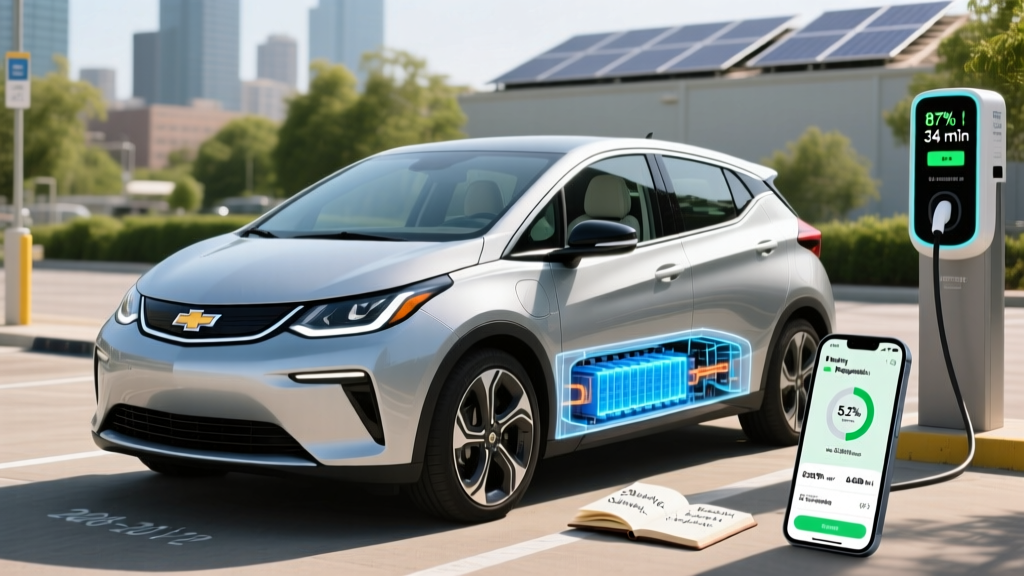
The Equinox EV rides on GM's Ultium platform with an 85 kWh usable battery pack (approximately 89 kWh gross). GM has not publicly confirmed the exact cell chemistry for all trims, but Ultium batteries use a nickel-cobalt-manganese-aluminum (NCMA) cathode — a variant of NMC chemistry optimized for energy density and longevity. This is not an LFP (lithium iron phosphate) pack, meaning you get higher energy density but should follow best practices for long-term health: avoid routinely sitting at 100% State of Charge, and use DC fast charging judiciously on road trips rather than as your daily routine.
Efficiency is rated at approximately 97 MPGe combined (FWD), translating to roughly 34 kWh per 100 miles, per fueleconomy.gov. That's competitive with the Hyundai Ioniq 5 and slightly behind the Tesla Model Y, but the Equinox EV compensates with a larger battery and more total range than most rivals at this price point.
| Specification | LT FWD | RS / Launch Edition AWD |
|---|---|---|
| EPA Range | 319 miles | 285 miles |
| Battery (Usable) | 85 kWh (NCMA/NMC) | 85 kWh (NCMA/NMC) |
| Horsepower | 213 hp | 288 hp (dual-motor) |
| 0–60 mph | ~8.0 seconds | ~6.5 seconds |
| Drivetrain | FWD (single motor) | AWD (dual-motor) |
| Max DC Fast Charge | 150 kW | 150 kW |
| 10–80% DCFC Time | ~32 minutes | ~32 minutes |
| Level 2 Home Charge Rate | 11.5 kW (~37 mi/hr) | 11.5 kW (~37 mi/hr) |
| Efficiency (Combined) | ~97 MPGe / 34 kWh/100mi | ~90 MPGe / 37 kWh/100mi |
| Cargo Volume (behind rear seats) | 26.4 cu ft | 26.4 cu ft |
| Cargo Volume (rear seats folded) | 57.2 cu ft | 57.2 cu ft |
| Rear Legroom | 37.8 inches | 37.8 inches |
Charging Speed: DC Fast, Level 2, and What You'll Actually See
Charging capability is where the Equinox EV shows both its strengths and its compromises relative to the fastest-charging rivals.
| Charging Level | Power / Rate | Miles Added per Hour | Notes |
|---|---|---|---|
| Level 1 (120V household) | ~1.4 kW | ~4 mi/hr | Emergency/trickle only; full charge takes 60+ hours |
| Level 2 (240V home, 48A) | 11.5 kW | ~37 mi/hr | Full charge in ~8.5 hours; overnight-ready |
| DC Fast Charge (peak) | 150 kW | ~250+ mi/hr at peak | Peak rate not sustained; 10–80% in ~32 min |
The 150 kW peak DC fast-charge rate is adequate but not class-leading. The Hyundai Ioniq 5 and Kia EV6, built on 800V architectures, can peak above 230 kW and complete a 10–80% session in roughly 18 minutes. The Equinox EV's 32-minute 10–80% window is still practical for road trips — you'll add about 180 miles of range in a half-hour stop — but it means slightly longer rest-area breaks compared to the fastest competitors.
A critical detail for real-world charging: the Equinox EV's charge curve tapers noticeably above 80% State of Charge. This is normal for NMC chemistry, but it means that if you're road-tripping, plan to charge to 80% and go rather than waiting for a full top-off. Charging from 80–100% can add another 25–30 minutes at rapidly declining power levels. Use preconditioning (available via the infotainment system or the MyChevrolet app) before arriving at a DC fast charger to warm the battery and achieve peak charge rates.
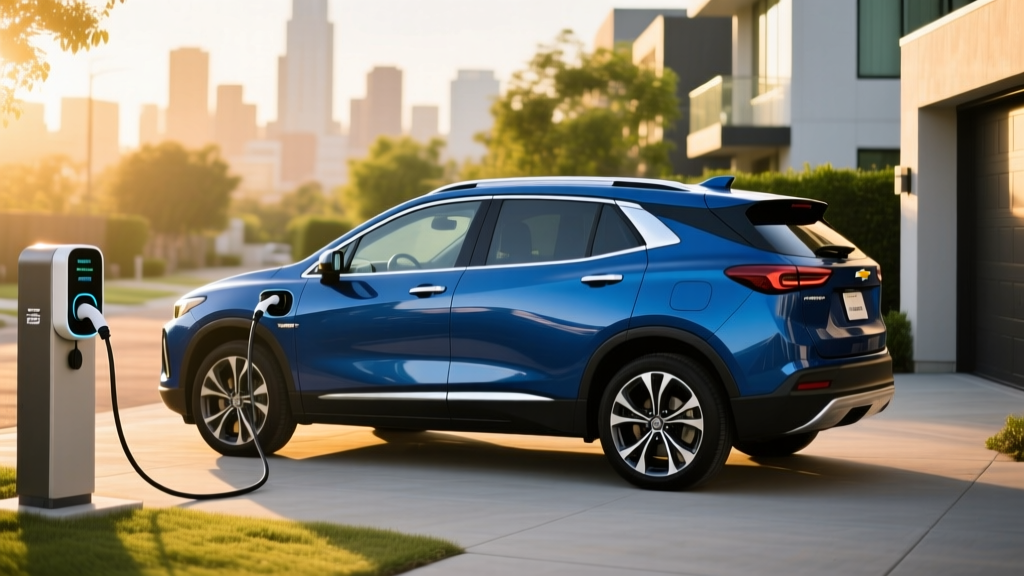
For home charging, the 11.5 kW Level 2 rate is strong. With a properly installed 240V/48A home charger (requiring a 60A circuit), you'll add roughly 37 miles of range per hour, meaning a full overnight charge is easily achievable. Most owners driving 30–50 miles daily will only need to plug in every other night.
Pricing, Trims, and the 0% APR + Tax Credit Math
The Equinox EV's headline appeal in 2025–2026 has been Chevrolet's combination of aggressive MSRPs, federal tax credit eligibility, and promotional financing including 0% APR offers for qualified buyers through GM Financial. Here's how the numbers break down.
| Trim | MSRP | Est. Federal Credit | Effective Price |
|---|---|---|---|
| LT 2 (FWD) | ~$33,600 | Up to $7,500 | ~$26,100 |
| LT 3 (FWD) | ~$35,600 | Up to $7,500 | ~$28,100 |
| RS (AWD) | ~$43,400 | Up to $7,500 | ~$35,900 |
| Launch Edition (AWD) | ~$41,900 | Up to $7,500 | ~$34,400 |
Federal §30D Tax Credit Eligibility: The Equinox EV qualifies for up to $7,500 under the current IRS §30D Clean Vehicle Credit, subject to several requirements:
- MSRP Cap: The vehicle must have an MSRP at or below $80,000 for SUVs — all Equinox EV trims clear this easily.
- Buyer Income Cap: Modified adjusted gross income must not exceed $150,000 (single), $225,000 (head of household), or $300,000 (joint filing).
- Battery Sourcing: The $7,500 credit splits into two halves — $3,750 for critical minerals sourcing and $3,750 for battery component manufacturing. Sourcing requirements tighten annually. Verify current-year eligibility on the IRS clean vehicle credit page or with your tax professional before purchase.
- Point-of-Sale Transfer: As of 2024, you can transfer the credit to the dealer at purchase, reducing your out-of-pocket cost immediately rather than waiting until tax filing. This effectively lowers the drive-off price.
The 0% APR Angle: When Chevrolet offers 0% APR (typically for 36–48 months to well-qualified buyers through GM Financial), the financing savings are substantial. On a ~$33,600 LT trim with $7,500 applied at point of sale, you're financing roughly $26,100 at 0% over 48 months — that's about $544/month with zero interest paid over the life of the loan. Compare that to a conventional 6.5% APR on the same amount, which would cost roughly $4,000 in interest over 48 months. The 0% APR promotion, when available, is genuinely one of the best value levers in the current EV market.
Note: 0% APR promotions are time-limited, may require specific credit tiers (typically 720+ FICO), and may not stack with all other GM incentives. Always confirm current offers with your local Chevrolet dealer and review the GM Financial terms directly.
Performance and Driving Dynamics
The Equinox EV is tuned for comfort and efficiency, not performance thrills. The FWD LT models produce 213 horsepower and 236 lb-ft of torque from a single front-mounted motor, delivering a 0–60 mph time of approximately 8.0 seconds. That's adequate for highway merging and daily commuting but noticeably relaxed compared to the Tesla Model Y Long Range (5.0 seconds) or the dual-motor Ioniq 5 (5.1 seconds).
Step up to the dual-motor AWD RS or Launch Edition, and output rises to 288 hp and 343 lb-ft, dropping the 0–60 sprint to roughly 6.5 seconds. The AWD models feel more confident in wet and snowy conditions and offer stronger passing power, but the efficiency penalty is real: EPA range drops from 319 to 285 miles.
Ride quality is a genuine strength. The Ultium platform's low center of gravity and the Equinox EV's well-tuned suspension deliver composed, quiet highway cruising. Road noise is well-managed, and the steering is light but predictable. Regenerative braking offers multiple levels, selectable through steering-wheel paddles, and one-pedal driving mode is available for stop-and-go traffic.
Interior, Cargo, and Tech Features
Inside, the Equinox EV borrows heavily from the Blazer EV and Silverado EV with a prominent 17.7-inch diagonal infotainment touchscreen running Google Built-In (Google Maps, Google Assistant, and access to the Play Store). A 11-inch driver information cluster replaces the traditional instrument panel. Wireless Apple CarPlay and Android Auto are standard.
Passenger space is generous for the compact crossover segment: 37.8 inches of rear legroom accommodates adults comfortably, and the flat floor (thanks to the Ultium skateboard platform) makes the middle rear seat more usable than in many competitors. Cargo volume is 26.4 cubic feet behind the rear seats and 57.2 cubic feet with the rear seats folded — competitive with the RAV4 and slightly less than the Model Y's total cargo capacity.
Notable Tech and Driver Assistance:
- Chevy Safety Assist suite: automatic emergency braking, forward collision alert, lane keep assist, following distance indicator, automatic high beams
- Available Super Cruise (on select trims): GM's hands-free Level 2 driver-assistance system for mapped divided highways — not self-driving; driver attention monitoring remains active
- Adaptive cruise control with stop-and-go
- HD Surround Vision (360-degree camera)
- Vehicle-to-load (V2L) capability is not currently offered on the Equinox EV (available on the Silverado EV)
Warranty Coverage and Battery Longevity
GM backs the Equinox EV with a competitive warranty package:
- Battery & Propulsion Limited Warranty: 8 years / 100,000 miles (whichever comes first), covering the battery pack against defects and excessive capacity loss. GM defines excessive degradation as falling below approximately 60–70% of original capacity during the warranty period, though exact thresholds are specified in the owner's manual.
- Limited Vehicle Warranty (Bumper-to-Bumper): 3 years / 36,000 miles
- Powertrain Warranty: 5 years / 60,000 miles (covers electric drive unit)
- Roadside Assistance: 5 years / 60,000 miles
For long-term battery health with the NCMA chemistry, expect typical degradation of 5–10% over the first 100,000 miles based on industry data for similar NMC/NCMA packs. Real-world longevity depends heavily on charging habits: frequent DC fast charging, routinely charging to 100%, and extreme heat exposure accelerate degradation. For daily driving, set your charge limit to 80–90% and use Level 2 home charging as your primary routine.
Pros and Cons
- Class-leading 319-mile EPA range at its price point
- Federal §30D credit eligible (up to $7,500) — dramatically lowers effective cost
- 0% APR promotions make financing exceptionally affordable when available
- Spacious interior with 37.8" rear legroom and flat floor
- 17.7" Google Built-In infotainment is responsive and feature-rich
- Available Super Cruise for hands-free highway driving
- Strong 11.5 kW Level 2 home charging rate
- Quiet, comfortable ride quality
- 150 kW DC fast-charge peak trails 800V rivals (Ioniq 5, EV6 at 230+ kW)
- FWD acceleration is leisurely (8.0 sec 0–60) — not for performance seekers
- No front trunk (frunk) — all cargo is rear-only
- No V2L (vehicle-to-load) capability unlike Silverado EV
- AWD trims lose ~34 miles of range and cost significantly more
- Some interior materials feel cost-conscious at this price point
- Super Cruise availability limited to certain trims and subscription-dependent after trial
Who Should Buy the Equinox EV — and Who Should Look Elsewhere?
- You want the most range per dollar in a compact electric SUV
- Your daily commute is 30–80 miles round-trip and you can charge at home
- You qualify for the §30D tax credit and can take advantage of 0% APR financing
- You prioritize ride comfort and cabin space over acceleration
- You want available Super Cruise for frequent highway driving
- You take frequent long road trips and want the fastest possible DC charging (consider Ioniq 5 or EV6)
- You need AWD and maximum range simultaneously (the AWD Equinox EV drops to 285 mi; the Model Y Long Range AWD offers ~310 mi)
- You want one-pedal driving with strong regen as standard (Equinox EV regen is moderate)
- Towing is a priority (Equinox EV is not rated for significant towing; consider the F-150 Lightning or Silverado EV)
Equinox EV vs. Key Competitors
| Spec | Chevy Equinox EV LT FWD | Hyundai Ioniq 5 SE RWD | Tesla Model Y LR AWD |
|---|---|---|---|
| EPA Range | 319 mi | 303 mi | ~310 mi |
| Battery | 85 kWh (NCMA) | 77.4 kWh (NMC) | ~75 kWh (NMC/LFP varies) |
| Peak DCFC | 150 kW | 238 kW (800V) | 250 kW |
| 10–80% DCFC | ~32 min | ~18 min | ~25 min |
| 0–60 mph | ~8.0 sec | ~7.0 sec | ~5.0 sec |
| Base MSRP | ~$33,600 | ~$42,000 | ~$44,990 |
| Federal Credit | Up to $7,500 | Up to $7,500 | Up to $7,500 |
| Super Cruise / FSD | Super Cruise (available) | Highway Driving Assist | Autopilot (FSD optional) |
The Equinox EV's clearest advantage is price. With an MSRP starting roughly $8,000–$11,000 below the Ioniq 5 and Model Y — and with the §30D credit applied — it occupies a value tier that competitors simply don't match. The trade-off is charging speed and acceleration, where the 800V Korean platforms and Tesla's Supercharger network advantage remain superior.
Frequently Asked Questions
What is the real-world range of the Chevy Equinox EV?
The EPA rates the FWD LT at 319 miles, but expect approximately 255–275 miles in real-world highway driving at 70–75 mph, and 220–250 miles in cold weather (below freezing). City and commuter driving with regenerative braking can approach or match the EPA sticker. AWD trims see a real-world highway range of approximately 230–250 miles.
How fast does the Equinox EV charge at home and on the road?
At home on a 240V Level 2 charger (48A circuit), the Equinox EV charges at 11.5 kW, adding roughly 37 miles of range per hour — a full charge takes about 8.5 hours. On DC fast chargers, it peaks at 150 kW, completing a 10–80% charge in approximately 32 minutes. Always precondition the battery before DC fast charging for optimal speed.
Does the Chevy Equinox EV qualify for the $7,500 federal tax credit?
Yes, the Equinox EV qualifies for up to $7,500 under IRS §30D, subject to buyer income limits ($150K single / $300K joint MAGI), the $80,000 SUV MSRP cap (all trims qualify), and current-year battery sourcing requirements. The credit can be transferred to the dealer at point of sale, reducing your purchase price immediately. Always verify current-year eligibility with the IRS clean vehicle credit page and your tax professional.
How much does the Equinox EV cost after tax credits and 0% APR?
A base LT 2 FWD at ~$33,600 MSRP drops to approximately $26,100 after the full $7,500 point-of-sale credit. With 0% APR financing over 48 months, your monthly payment would be roughly $544 with zero interest. Actual pricing varies by dealer, state incentives, and your specific tax situation.
Is the Equinox EV worth buying over the Tesla Model Y or Hyundai Ioniq 5?
If your priority is the lowest cost per mile of range, the Equinox EV is the clear winner in this segment. If you prioritize the fastest DC charging and road-trip convenience, the Ioniq 5's 800V architecture or the Tesla Supercharger network are stronger choices. The Equinox EV is the best pick for budget-conscious commuters and families who charge primarily at home and want a spacious, comfortable daily driver.
Does the Equinox EV have a frunk (front trunk)?
No. Unlike the Silverado EV or some competitors, the Equinox EV does not include a front trunk. All cargo space (26.4 cu ft rear, 57.2 cu ft with seats folded) is in the rear cargo area.
Is Super Cruise self-driving?
No. Super Cruise is an SAE Level 2 driver-assistance system. It provides hands-free operation on mapped divided highways but requires continuous driver attention and readiness to take over. It does not handle city streets, construction zones, or unmapped roads autonomously.