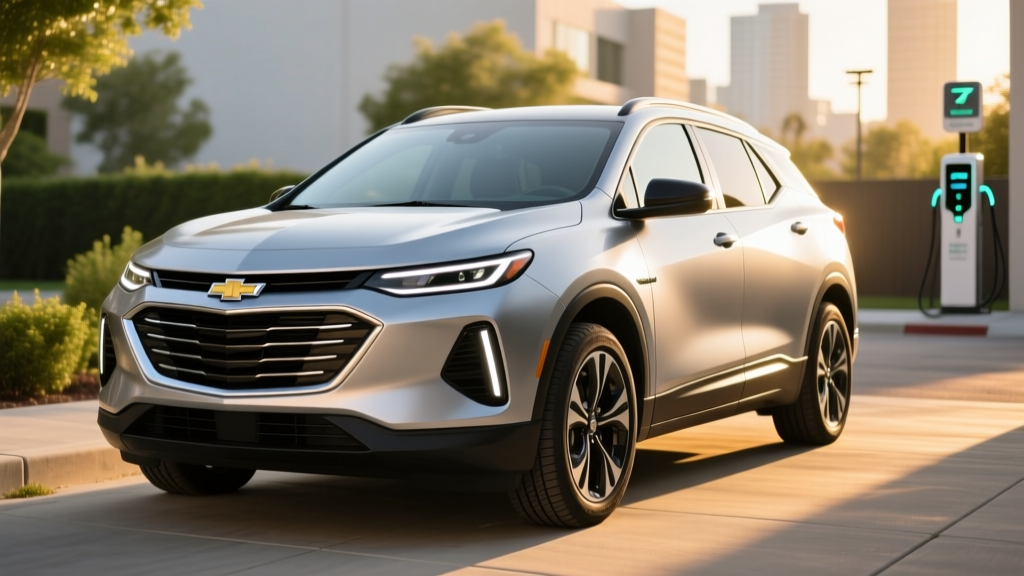
Quick Verdict: The 2025 Chevy Equinox EV delivers up to 319 miles of EPA-estimated range (RS Launch FWD) and starts around $33,600, making it one of the most affordable long-range electric SUVs on the market. It charges at up to 150 kW on DC fast chargers (10–80% in roughly 30 minutes) and qualifies for the full $7,500 federal tax credit under current IRS §30D rules when purchased through a dealership. If you can charge at home and drive under 250 miles daily, it's a compelling gas-car replacement. If you regularly tow, live in extreme cold, or rely solely on public charging, read the ownership realities below before committing.
Range, Battery, and Efficiency: The Real Numbers
The 2025 Equinox EV rides on GM's Ultium platform with an 85 kWh usable battery pack (NMC chemistry). Here's what the EPA says versus what you'll actually experience:
| Spec | FWD (LT/RS Launch) | AWD (RS Launch) |
|---|---|---|
| EPA Range | 319 mi (RS Launch FWD) | 285 mi (RS Launch AWD) |
| Usable Battery | 85 kWh (NMC) | |
| Efficiency (MPGe) | ~95 MPGe combined | ~90 MPGe combined |
| Energy Consumption | ~34 kWh/100 mi | ~37 kWh/100 mi |
| 0–60 mph | ~8.0 sec | ~7.5 sec |
| Horsepower | 213 hp | 288 hp |
| Towing Capacity | Not rated for towing | |
Real-World Range Reality: The 319-mile EPA figure is achievable in mild weather with mixed city/highway driving. Expect roughly 260–280 miles on a pure highway trip at 70+ mph. In freezing temperatures (below 32°F), range drops 20–30%, putting the FWD model at approximately 220–255 miles. The Equinox EV uses a heat pump, which mitigates some cold-weather loss compared to resistive heating, but physics still applies.
Source: EPA Fuel Economy — 2025 Chevrolet Equinox EV
Charging Speed: Home and DC Fast Charging
Understanding the difference between kW (power — how fast energy flows) and kWh (energy — the battery's total capacity) is essential. The Equinox EV's 85 kWh battery holds the energy; the charge rate in kW determines how quickly you refill it.
| Level | Power | Miles Added per Hour | Time (10–80%) |
|---|---|---|---|
| Level 1 (120V) | 1.4 kW | ~4 mi/hr | ~50+ hours |
| Level 2 (240V, 48A) | 11.5 kW | ~34 mi/hr | ~7 hours |
| DC Fast Charge | 150 kW peak | ~250 mi/hr (peak) | ~30 min |
The 150 kW peak DC charge rate is respectable but not class-leading — the Hyundai Ioniq 5 peaks at 240 kW on an 800V architecture. The Equinox EV's charge curve tapers noticeably above 80% state of charge (SoC), which is normal for NMC chemistry but means those last 20% take significantly longer. Plan your road-trip stops around 10–80% top-ups for the fastest turnaround.
For home charging, a Level 2 wallbox on a 240V/60A circuit is the practical daily solution. Most owners plug in overnight and wake up with a full battery. If your home has a 100A electrical panel, you may need a panel upgrade ($1,500–$3,000) before installing a Level 2 charger — consult a licensed electrician for a site assessment.
EV vs. Gas: Cost Comparison That Actually Matters
Let's compare the 2025 Equinox EV against the 2025 Chevy Equinox gas model (1.5L turbo, ~28 MPG combined) over 5 years and 75,000 miles:
| Cost Factor | Equinox EV (FWD LT) | Equinox Gas (FWD LT) |
|---|---|---|
| Base MSRP | $33,600 | $28,600 |
| Federal Tax Credit (§30D) | –$7,500 (if eligible) | $0 |
| Effective Purchase Price | $26,100 | $28,600 |
| Fuel/Energy (75K mi) | ~$3,150 (home charging) | ~$8,570 ($3.20/gal, 28 MPG) |
| Maintenance (5 yr) | ~$1,200 | ~$3,500 |
| Insurance (avg/yr) | ~$1,800 | ~$1,500 |
| 5-Year Total Cost | ~$39,450 | ~$49,670 |
The EV wins by roughly $10,000 over five years — but only if you qualify for the full federal credit and charge primarily at home. Public DC fast charging costs $0.35–$0.50/kWh in most areas, which raises the EV's energy cost to roughly $5,500–$6,500 over 75,000 miles, narrowing the gap.
Key assumptions: electricity at $0.14/kWh (national average), gas at $3.20/gallon, no state incentives included. Your mileage — literally — will vary. Source: IRS §30D Clean Vehicle Credit Rules
Tax Credit Eligibility: What You Actually Need to Know
The $7,500 federal EV tax credit under IRS §30D is not automatic. For 2025 purchases, you must meet ALL of the following:
- Income caps: Modified AGI ≤ $150,000 (single), $225,000 (head of household), $300,000 (joint)
- MSRP cap: Vehicle MSRP must not exceed $80,000 (SUVs/vans/pickups) — the Equinox EV clears this easily
- Battery sourcing: Critical minerals and battery components must meet phased domestic-content thresholds that tighten annually
- Point-of-sale transfer: You can transfer the credit to the dealer at purchase for an immediate price reduction, or claim it on your tax return
- Assembly: Vehicle must undergo final assembly in North America (the Equinox EV is built in Ramos Arizpe, Mexico — verify current eligibility at purchase)
The battery-sourcing requirements are the moving target. As of early 2025, the Equinox EV's Ultium battery qualifies for the full $7,500, but rules tighten each year. Always verify eligibility on the IRS clean vehicle credit page and confirm with your dealer before signing.
Real-World Ownership: What First-Time EV Buyers Miss
| Myth | Fact |
|---|---|
| "I'll save money no matter how I charge" | Public DC fast charging at $0.40/kWh costs nearly as much per mile as a 35 MPG gas car. Home charging is where savings live. |
| "319 miles means I never need to plan" | Highway driving at 75 mph in 90°F heat with A/C running drops range to ~250 miles. Winter drops it further. |
| "EVs need no maintenance" | Tires wear 20–30% faster due to vehicle weight and instant torque. Cabin filters, brake fluid, wipers, and washer fluid still need attention. |
| "The battery will need replacing" | GM warranties the battery for 8 years/100,000 miles against dropping below 70% capacity. Real-world degradation for NMC averages 10–15% over 8 years. |
| "Any electrician can install a charger" | You need a licensed electrician familiar with EVSE, a permit in most jurisdictions, and potentially a panel upgrade if your home is older. |
Home charging access is the single biggest ownership variable. If you have a garage or driveway with 240V access (or can install it), daily EV ownership is effortless — you wake up "full" every morning. If you live in an apartment or rely entirely on public charging, the Equinox EV's 30-minute fast-charge stops become a weekly time tax of 1–2 hours. Before buying, honestly assess your charging situation.
Climate matters. If you live in the upper Midwest or Northeast where temperatures regularly drop below freezing, budget 25–30% less range in winter and consider whether a garage (which keeps the battery warmer) is available. The heat pump helps, but it doesn't eliminate cold-weather losses.
Insurance, Depreciation, and the Hidden Costs
EV insurance premiums run 15–25% higher than equivalent gas vehicles due to higher repair costs, specialized parts, and battery-replacement risk. Expect to pay $1,600–$2,000/year depending on your state, driving record, and coverage level. Get quotes from at least three insurers before purchasing.
Depreciation is the wildcard. EV resale values have been volatile — some models depreciated faster than gas counterparts in 2023–2024 due to price cuts and rapid tech advancement. The Equinox EV's low starting price provides a buffer, but don't assume it will hold value like a Toyota RAV4. Plan to own it for 5+ years to ride out the depreciation curve.
Source: IIHS — 2025 Chevrolet Equinox EV Safety Ratings
Decision Framework: Should You Buy the 2025 Equinox EV?
Buy the Equinox EV if:
- You can install a Level 2 home charger (garage or driveway with 240V access)
- Your daily commute is under 100 miles round-trip
- You qualify for the $7,500 federal tax credit (income under caps, sourcing verified)
- You want a practical, no-frills electric SUV with 300+ mile range under $35,000
- You don't need towing capability
Skip it (or consider a PHEV/hybrid) if:
- You live in an apartment with no charging access and your area has sparse public chargers
- You regularly drive 300+ miles in a single trip in winter conditions
- You need to tow (the Equinox EV is not rated for towing)
- Your income exceeds the §30D caps and you won't benefit from the tax credit
- You want the fastest DC charging available — look at Hyundai/Kia's 800V platforms instead
Frequently Asked Questions
Does the 2025 Chevy Equinox EV qualify for the $7,500 tax credit?
As of early 2025, yes — it meets the MSRP cap, North American assembly, and battery-sourcing requirements. However, buyer income limits apply ($150K single / $300K joint), and sourcing rules tighten annually. Verify at the point of sale with your dealer and check the IRS clean vehicle credit page for the latest guidance.
What is the real-world range of the Equinox EV?
The EPA rates the FWD RS Launch at 319 miles. In real-world mixed driving at moderate temperatures, expect 280–300 miles. On a pure highway road trip at 70–75 mph, expect 260–280 miles. In freezing weather, expect 220–255 miles.
How long does it take to charge the Equinox EV at home?
On a Level 2 (240V, 48A) home charger delivering 11.5 kW, a full charge from 10% takes about 7 hours — easily done overnight. On a standard 120V outlet (Level 1), it takes 50+ hours, which is only practical for emergency top-ups or very low daily mileage.
Can the Equinox EV use Tesla Superchargers?
GM has adopted the NACS (North American Charging Standard) connector for newer models. Check your specific Equinox EV trim and build date — some 2025 models ship with NACS ports natively, while CCS-equipped models may require an adapter for Tesla Supercharger access. Confirm with your dealer.
How does the Equinox EV compare to the gas Equinox?
The gas Equinox starts ~$5,000 lower but costs more to fuel and maintain over time. With the $7,500 tax credit, the EV's effective price drops below the gas model, and 5-year total cost of ownership is roughly $10,000 less — assuming home charging and credit eligibility. The EV also offers smoother acceleration, one-pedal driving, and zero tailpipe emissions.
What's the battery warranty?
GM covers the Ultium battery pack for 8 years or 100,000 miles, whichever comes first, against capacity loss below 70% of original. This is standard for the industry and provides solid long-term protection.