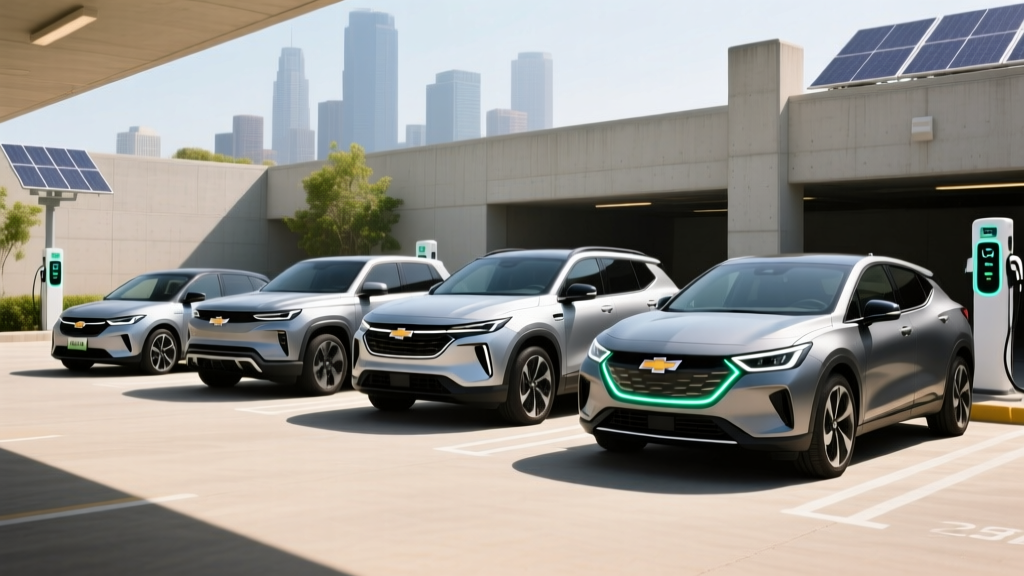
The Quick Answer: Which Chevy EV Should You Buy?
If you need an affordable daily commuter with 300+ miles of range, the 2026 Chevy Equinox EV (starting around $33,600) is the best value in Chevrolet's lineup. If you need more space, faster charging, and sportier performance, the Blazer EV ($44,600+) delivers up to 324 EPA miles and 190 kW DC fast charging. For truck buyers, the Silverado EV ($55,000+) offers up to 440 miles of range and serious utility — but at a premium. All three qualify for the federal §30D tax credit of up to $7,500 for eligible buyers, which can now be transferred at the point of sale to reduce your purchase price immediately.
Chevy's 2026 EV Lineup: Side-by-Side Specs
Chevrolet has streamlined its electric portfolio around the Ultium platform. The Bolt EV and Bolt EUV were discontinued after 2023, and Chevy now focuses on three core Ultium-based models. Here's how they stack up with exact figures:
| Spec | 2026 Equinox EV | 2026 Blazer EV | 2026 Silverado EV |
|---|---|---|---|
| EPA Range (max) | 319 mi | 324 mi | 440 mi (WTB) |
| Battery (usable, kWh) | 85 kWh (NMC) | 102 kWh (NMC) | 200 kWh (NMC) |
| Peak DC Fast Charge | 150 kW | 190 kW | 350 kW |
| 10–80% DC Charge Time | ~32 min | ~28 min | ~20 min |
| Level 2 Rate (kW) | 11.5 kW | 11.5 kW | 19.2 kW |
| Horsepower (max AWD) | 288 hp | 557 hp (SS) | 754 hp (RST) |
| 0–60 mph (best) | ~7.4 sec | ~3.4 sec (SS) | ~4.5 sec (RST) |
| Base MSRP | ~$33,600 | ~$44,600 | ~$55,000 |
| Battery Warranty | 8 yr / 100k mi | 8 yr / 100k mi | 8 yr / 100k mi |
Real-World Range vs. EPA Sticker
EPA numbers assume a mix of city and highway driving at moderate temperatures. In real-world conditions:
- Highway-only at 75 mph: Expect ~15–20% less than EPA. The Equinox EV drops to roughly 260–275 miles; the Blazer EV to ~270–280 miles.
- Cold weather (below 30°F): Range can fall 20–30% due to cabin heating and battery chemistry limitations. The Silverado EV's massive 200 kWh pack helps absorb this hit — you'll still see 300+ miles even in freezing temps.
- Preconditioning matters: All three models support battery preconditioning for DC fast charging. Use it — skipping preconditioning in cold weather can add 15+ minutes to your charge time.
Charging at Home and on the Road: What It Actually Costs
Chevy EVs use the NACS (Tesla-style) connector as standard for 2026, giving you native access to the Tesla Supercharger network — the largest and most reliable DC fast-charging network in the U.S. This is a significant advantage over CCS-equipped competitors still reliant on Electrify America or EVgo.
| Level | Power (kW) | Miles Added/Hour | Best For |
|---|---|---|---|
| Level 1 (120V outlet) | 1.4 kW | ~3–5 mi/hr | Overnight top-ups, low-mileage drivers |
| Level 2 (240V home) | 11.5–19.2 kW | ~30–55 mi/hr | Daily charging, full overnight refill |
| DC Fast Charge | 150–350 kW | ~500–1,200 mi/hr (peak) | Road trips, quick stops |
Home Charging Installation: Budget Reality
A Level 2 home charger is essential for convenient EV ownership. Here's what installation actually costs:
| Component | Typical Cost Range |
|---|---|
| Level 2 charger hardware | $350–$700 |
| Electrician labor (240V/50A circuit) | $600–$1,500 |
| Permit & inspection | $100–$300 |
| Electrical panel upgrade (if needed) | $1,500–$3,000 |
| Total (no panel upgrade) | $1,050–$2,500 |
| Total (with panel upgrade) | $2,550–$5,500 |
Many homes with 200A electrical panels won't need an upgrade. If you have an older home with a 100A panel, budget for the upgrade. Always get a quote from a licensed electrician before purchasing equipment.
Cost to Charge vs. Gas: The Numbers
Using the national average electricity rate of ~$0.17/kWh and gas at ~$3.30/gallon (2026 averages):
- Equinox EV: ~3.0 kWh/mile efficiency means roughly $0.051/mile on electricity vs. $0.132/mile in a comparable 25 MPG gas Equinox.
- Annual savings (12,000 miles): Approximately $970/year in fuel savings with the Equinox EV.
- DC fast charging on road trips: Supercharger rates average $0.25–$0.35/kWh, so road-trip fueling costs more than home charging but still typically undercuts gas.
Federal Tax Credit: Who Actually Gets $7,500?
The IRS §30D clean vehicle credit offers up to $7,500, but eligibility is not universal. Here's the 2026 checklist:
- Income caps: Modified AGI ≤ $150,000 (single), ≤ $225,000 (head of household), ≤ $300,000 (joint).
- MSRP caps: ≤ $55,000 for sedans/wagons; ≤ $80,000 for SUVs, vans, and trucks.
- Battery sourcing: Required percentages of critical minerals and battery components must be sourced from the U.S. or FTA partners — these thresholds increase yearly.
- Point-of-sale transfer: You can transfer the credit to the dealer to reduce your purchase price at checkout rather than waiting for a tax refund.
- Assembly: Vehicle must undergo final assembly in North America.
For 2026, the Equinox EV and Blazer EV (both built in Mexico or the U.S. on the Ultium platform) are expected to qualify for the full or partial credit — but battery sourcing requirements tighten each year. Always verify current eligibility on fueleconomy.gov and consult IRS.gov §30D guidance before purchasing. Tax professionals can confirm your personal eligibility.
EV vs. Gas Equinox: Total Cost of Ownership Over 5 Years
Let's compare the 2026 Equinox EV 2LT (~$37,000 before credit) against the 2026 gas Equinox LT (~$31,000) over 5 years and 60,000 miles:
| Cost Category | Equinox EV 2LT | Gas Equinox LT |
|---|---|---|
| Purchase price (after $7,500 credit) | $29,500 | $31,000 |
| Fuel/energy (60k miles) | $3,060 | $7,920 |
| Maintenance (5 years) | $1,200 | $3,500 |
| Insurance (est. 5 years) | $8,500 | $7,200 |
| Depreciation (est.) | $11,800 | $13,950 |
| Estimated 5-Year Total | $54,060 | $63,570 |
The EV wins on total cost by roughly $9,500 over five years, driven by fuel savings, lower maintenance (no oil changes, less brake wear from regen), and stronger resale value. The tradeoff: EV insurance premiums run ~15–20% higher on average due to repair costs and parts pricing. Home charging access is the biggest variable — if you rely entirely on public DC fast charging, your energy costs could double, narrowing the gap significantly.
Common Misconceptions About Chevy EVs
| Myth | Fact |
|---|---|
| "The battery will need replacing in 5 years." | GM's Ultium batteries carry an 8-year/100,000-mile warranty with a capacity retention threshold (typically 70%). Real-world degradation data shows NMC packs losing ~10–15% over 100k miles with normal use. |
| "You can't road-trip an EV." | The Silverado EV's 440-mile range and 350 kW charging (adding ~200 miles in 10 minutes) makes road trips practical. The Equinox EV's 319 miles plus NACS Supercharger access covers most routes with one 25–30 minute stop. |
| "Charging takes too long." | Home Level 2 charging refills overnight while you sleep — 8–10 hours for a full charge. DC fast charging adds 200+ miles in 20–30 minutes on a road trip. The charging curve slows above 80% SoC, so plan to charge to 80% and go. |
| "EVs don't work in cold climates." | Range drops 20–30% in sub-freezing temps — real, but manageable. The Equinox EV's heat pump (standard on most trims) recovers significant efficiency. Preconditioning while plugged in preserves range. |
| "The tax credit is gone." | The §30D credit remains active for 2026 with point-of-sale transfer. Battery sourcing requirements are stricter, but Chevy's Ultium platform was designed with North American sourcing in mind. Verify per-model on fueleconomy.gov. |
Decision Framework: Which Chevy EV Is Right for You?
Choose the Equinox EV if:
- Your budget is under $40,000 (before credit)
- You drive under 40 miles/day and want 300+ mile range for weekend trips
- You value low running costs over performance
- You want the most affordable entry into the Supercharger network
Choose the Blazer EV if:
- You need a midsize SUV with more cargo room and rear-seat space
- You want fast DC charging (190 kW) for frequent road trips
- Performance matters — the SS trim does 0–60 in 3.4 seconds
- Budget of $45,000–$55,000 works for you
Choose the Silverado EV if:
- You need truck utility: towing (up to 10,000 lbs), a bed, and work-site capability
- You want maximum range (440 miles) to minimize charging stops
- You have a budget above $55,000 and can absorb higher insurance costs
- You need V2L (vehicle-to-load) to power tools or equipment on-site
Skip all three and consider a PHEV if:
- You can't install a home charger (apartment, street parking only)
- You regularly drive 400+ miles in rural areas with sparse charging infrastructure
- You need one vehicle to do everything in a charging-desert region
First-Time EV Buyer Checklist
Before you sign, make sure you've addressed these practical ownership factors:
- Home charging: Confirm your electrical panel can support a 240V/50A circuit. Get an electrician quote before buying the car.
- Daily driving pattern: If your commute is under 50 miles round-trip, even Level 1 (120V) charging can work — but Level 2 is strongly recommended.
- Climate: If you live in sub-freezing regions for 3+ months, budget for 25% winter range loss and confirm the trim includes a heat pump.
- Tax credit verification: Check fueleconomy.gov for the specific trim's credit status. Rules change, and not every trim qualifies equally.
- Insurance quotes: Get EV-specific quotes before purchasing. Expect 15–20% higher premiums than a comparable gas model.
- Public charging apps: Download PlugShare, the Tesla app (for Superchargers), and your utility's EV rate plan. Many utilities offer off-peak rates as low as $0.06–$0.10/kWh.
- Maintenance mindset: No oil changes, no spark plugs, minimal brake wear. Budget for tire rotation, cabin air filter, and washer fluid — that's about it.
Frequently Asked Questions
Are Chevy electric vehicles reliable?
Chevy's Ultium-platform EVs are relatively new, so long-term reliability data (10+ years) doesn't exist yet. However, the simpler powertrain (no multi-speed transmission, no exhaust system, fewer moving parts) inherently reduces failure points. GM's 8-year/100,000-mile battery and powertrain warranty provides solid coverage. Check NHTSA.gov for any active recalls or technical service bulletins on the specific model year.
Can I charge a Chevy EV at a Tesla Supercharger?
Yes. Starting with 2025 models, Chevy EVs come with a native NACS charge port, meaning you can plug directly into any Tesla Supercharger without an adapter. This gives Chevy owners access to 25,000+ Supercharger stalls nationwide — the most reliable public charging network in the U.S.
How long does a Chevy EV battery last?
GM warranties Ultium batteries for 8 years or 100,000 miles against capacity loss below a specified threshold (typically 70% state of health). Based on NMC chemistry degradation curves from other manufacturers, expect roughly 10–15% capacity loss at 100,000 miles with normal charging habits. Avoid routinely charging to 100% or letting the battery sit at 0% for extended periods to maximize longevity.
Is the Chevy Bolt coming back?
GM announced a next-generation Bolt EV built on a more affordable Ultium-derived platform, expected for the 2026 or 2027 model year. Final specs, pricing, and availability have not been confirmed. If budget is your top priority and you can wait, the next-gen Bolt could undercut the Equinox EV's starting price significantly.
What's the cheapest Chevy EV I can buy right now?
The 2026 Equinox EV starts at approximately $33,600 (LT trim). After the $7,500 federal tax credit (if eligible), the effective price drops to around $26,100 — making it one of the most affordable 300+ mile EVs on the market. Factor in ~$1,500–$2,500 for home charger installation, and your total entry cost is roughly $27,600–$28,600.