Quick Answer: Is the Chevy Electric Pickup Worth It?
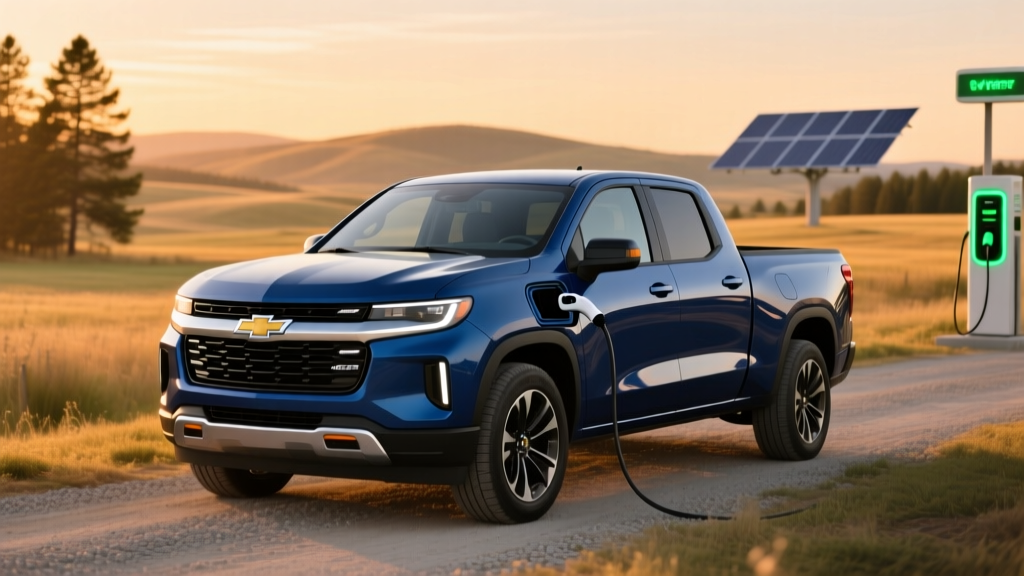
The 2026 Chevy Silverado EV is currently the longest-range Chevy electric pickup on the market, with the Work Truck (WT) Extended Range achieving an EPA-estimated 492 miles on its ~200 kWh Ultium battery. Pricing starts at $33,600 (WT Fleet) and reaches $105,000+ for the RST Max Range. Real-world highway range drops to roughly 380–420 miles at 70 mph, and cold-weather losses can shave 20–30%. DC fast charging peaks at 350 kW on Max Range trims (10–80% in ~45 min). Federal §30D tax credit eligibility is limited to trims under the $80,000 MSRP cap that meet critical-mineral and battery-sourcing rules — always verify with a tax professional before purchase.
2026 Silverado EV Lineup: Trims, Range, and Pricing
Chevy's electric pickup strategy centers on the Silverado EV, built on GM's Ultium platform alongside the GMC Sierra EV and Cadillac Escalade IQ. For 2026, the lineup spans from fleet-oriented work trucks to the premium RST. Here's the full spec breakdown:
| Trim | MSRP | EPA Range | Battery (usable kWh) | HP / Torque | 0–60 mph | Peak DC kW | 10–80% Time |
|---|---|---|---|---|---|---|---|
| WT Fleet | $33,600 | 266 mi | ~85 kWh (NMC) | 510 / 615 lb-ft | ~5.8 s | 200 kW | ~32 min |
| WT Extended Range | $55,400 | 492 mi | ~200 kWh (NMC) | 510 / 615 lb-ft | ~5.8 s | 350 kW | ~45 min |
| LT Extended Range | $75,400 | 408 mi | ~200 kWh (NMC) | 645 / 785 lb-ft | ~4.5 s | 350 kW | ~45 min |
| RST Max Range | $105,000 | 492 mi | ~200 kWh (NMC) | 754 / 785 lb-ft | ~4.5 s | 350 kW | ~45 min |
Sources: fueleconomy.gov, Chevrolet Silverado EV configurator. All figures EPA-estimated or manufacturer-published; real-world results vary.
Real-World Range Reality Check
EPA sticker: 492 miles (WT Extended Range / RST Max Range)
Expect on the highway (70 mph sustained): ~380–420 miles — large pickups face significant aerodynamic drag that reduces efficiency at speed.
Cold weather (below freezing): ~340–390 miles — NMC chemistry loses 20–30% capacity in sub-32°F conditions, though the Silverado EV's heat pump helps mitigate cabin energy draw.
Towing: Expect 150–250 miles depending on trailer weight and terrain. Chevy rates the Silverado EV at up to 12,500 lbs towing (WT), but range drops roughly 40–50% under heavy load.
Silverado EV vs Gas Silverado: Cost and Efficiency Comparison
For buyers cross-shopping the Chevy electric pickup against a traditional Silverado 1500, the math involves a higher upfront price offset by fuel and maintenance savings. Here's a 5-year ownership comparison:
| Cost Factor | Silverado EV WT Ext. Range ($55,400) | Silverado 1500 LT Gas (~$52,000) |
|---|---|---|
| Purchase Price (MSRP) | $55,400 | $52,000 |
| Est. Federal Tax Credit (§30D) | $0–$7,500 (see eligibility below) | $0 |
| Fuel / Energy (5 yr, 75,000 mi) | $3,200–$5,400 (home charging) | $11,250 (20 MPG, $3.00/gal) |
| Maintenance (5 yr) | $800–$1,200 | $2,500–$3,500 |
| Insurance (5 yr avg) | $9,500–$12,000 | $7,500–$9,000 |
| Est. 5-Year Total Cost | $61,400–$73,000 | $73,250–$75,750 |
Key takeaway: The Silverado EV can break even or save money over 5 years primarily through fuel savings — roughly $6,000–$8,000 less in energy costs if you charge at home. However, insurance premiums for electric trucks run 15–25% higher than gas equivalents, and the tax credit is not guaranteed for every buyer or trim.
Efficiency by the Numbers
The Silverado EV WT Extended Range achieves approximately 47 MPGe combined (EPA) — roughly equivalent to 2.1 kWh per mile. A gas Silverado 1500 4WD with the 5.3L V8 averages 19 MPG combined. For fleet operators covering high miles, the per-mile energy cost advantage of electric is substantial: roughly $0.06–$0.10/mile on home electricity vs $0.15–$0.20/mile on gasoline.
Charging the Silverado EV: Home, Public, and What It Costs
Charging a large-battery electric pickup requires planning — especially the Extended Range and Max Range models with ~200 kWh packs.
| Level | Power | Miles Added per Hour | Full Charge Time (200 kWh) | Best For |
|---|---|---|---|---|
| Level 1 (120V outlet) | 1.4 kW | ~2–3 mi/hr | ~80+ hours | Emergency top-off only |
| Level 2 (240V, 48A) | 11.5 kW | ~20–24 mi/hr | ~18–20 hours | Daily home charging |
| Level 2 (240V, 80A) | 19.2 kW | ~35–40 mi/hr | ~10–12 hours | High-mileage / fleet |
| DC Fast (200 kW) | 200 kW | ~200 mi in 20 min | 10–80% ~32 min | Road trips (WT Fleet) |
| DC Fast (350 kW) | 350 kW peak | ~200 mi in 12 min | 10–80% ~45 min | Road trips (Ext/Max Range) |
Home Charging Installation: What to Budget
| Item | Cost Range |
|---|---|
| Level 2 Charger (hardwired, 48–80A) | $500–$1,200 |
| Electrician labor (run 240V, 60–100A circuit) | $800–$2,500 |
| Permit / inspection | $100–$400 |
| Electrical panel upgrade (if needed: 200A service) | $1,500–$3,500 |
| Total typical install | $1,400–$4,100 |
Important: The 200 kWh battery on Extended Range models means a standard 48A Level 2 charger takes roughly 18–20 hours for a full charge. Most owners won't fully deplete and recharge daily — a typical 50–80 mile commute requires only 3–4 hours of Level 2 charging overnight. But if you regularly tow or drive 200+ miles daily, consider an 80A circuit for faster home replenishment. Always consult a licensed electrician for your specific panel capacity.
Charging Cost: Home vs Public
At the US average residential electricity rate of ~$0.17/kWh, fully charging the 200 kWh pack at home costs roughly $34. Public DC fast charging averages $0.35–$0.55/kWh, making a 10–80% session approximately $50–$77. For maximum savings, home charging is essential — public-only charging narrows or eliminates the cost advantage over gas.
Federal Tax Credit and Incentives: What You Can Actually Claim
The IRS §30D Clean Vehicle Credit offers up to $7,500 for qualifying new EVs, but eligibility for the Silverado EV is nuanced. Here's the checklist:
- MSRP cap: Pickup trucks must be under $80,000 MSRP. This eliminates the RST Max Range ($105,000) and likely the LT Extended Range ($75,400 is close but eligible). The WT Fleet and WT Extended Range ($33,600–$55,400) qualify on price.
- Buyer income cap: Modified AGI must not exceed $150,000 (single), $225,000 (head of household), or $300,000 (joint filing).
- Battery sourcing: Critical minerals and battery components must meet phased-in percentage thresholds from US or FTA-partner countries. GM manufactures Ultium cells in Ohio and Tennessee, but sourcing requirements tighten annually — verify current-year compliance on IRS.gov.
- Point-of-sale transfer: As of 2024, eligible buyers can transfer the credit to the dealer for an immediate price reduction at purchase, rather than waiting for a tax refund.
- Commercial vehicle exception (§45W): The WT Fleet trim may qualify under the separate commercial clean vehicle credit, which has different rules and no MSRP cap — consult a tax professional.
Bottom line: Don't assume $7,500 off. Check IRS guidance for the specific VIN and model year before committing. State incentives (Colorado, California, etc.) may stack on top — see your state's energy office for current programs.
Real-World Ownership: What First-Time EV Truck Buyers Must Know
Driving Patterns That Work (and Don't)
Ideal use case: Daily commuting under 100 miles round-trip with home Level 2 charging. The Silverado EV excels here — you'll wake up to a full battery every morning and rarely visit a public charger.
Challenging use case: Frequent long-distance towing. A 6,000+ lb trailer cuts range by 40–50%, and DC fast charging a 200 kWh battery still takes 45+ minutes. If you tow cross-country monthly, a diesel or hybrid truck may still be more practical.
Climate consideration: In northern states with sustained sub-freezing winters, budget for 20–30% range loss. Preconditioning the battery (available via the Chevy app while plugged in) recovers some efficiency and improves charge speeds in cold weather.
Maintenance Differences
The Silverado EV eliminates oil changes, spark plugs, transmission fluid, and exhaust system maintenance. Brake pad life extends significantly due to regenerative braking — many EV owners report original pads lasting 80,000+ miles. You'll still need tire rotations, cabin air filters, coolant checks, and wiper fluid. GM's battery warranty covers 8 years / 100,000 miles against defects and capacity loss below a stated threshold (typically ~70% retention).
Insurance Reality
EV truck insurance premiums run 15–25% higher than comparable gas trucks due to higher repair costs and battery replacement values. Get quotes from your provider before purchasing — the annual premium difference ($400–$600+) affects your total cost of ownership calculation.
Common Misconceptions About the Chevy Electric Pickup
| Myth | Fact |
|---|---|
| "Electric trucks can't tow." | The Silverado EV WT is rated for up to 12,500 lbs. Towing capacity isn't the issue — range while towing is. Plan charging stops accordingly. |
| "The battery will need replacing in 5 years." | NMC Ultium batteries are warrantied for 8 years/100,000 miles. GM's degradation data and industry averages suggest 10–15% capacity loss over 100,000 miles — the truck will still have ~85%+ of original range. |
| "You'll save $7,500 no matter what." | The §30D credit has income, MSRP, and battery-sourcing requirements. Some trims and some buyers won't qualify. Always verify before purchase. |
| "It charges as fast as a gas truck fills up." | Even at 350 kW peak, a 10–80% charge takes ~45 minutes. Peak rate isn't sustained — the charge curve tapers significantly above 60% SoC to protect the battery. |
| "Any outlet will charge it." | A standard 120V outlet adds ~2–3 miles per hour — essentially useless for a 200 kWh battery. A 240V Level 2 home circuit is practically mandatory for daily ownership. |
Decision Framework: Should You Buy the Silverado EV?
Choose the Silverado EV If:
- You have home charging access (garage, driveway, or landlord-installed Level 2) — this is the single biggest factor in EV satisfaction.
- Your daily driving is under 150 miles and you want to virtually eliminate fuel costs for commuting.
- You want maximum range — the 492-mile EPA figure (WT Extended Range) is among the longest of any EV on sale, period.
- You need a work truck with low operating costs — fleet operators covering 20,000+ miles/year save significantly on fuel and maintenance.
- You value instant torque and quiet operation — 615+ lb-ft from standstill makes the EV notably quicker than gas V8 Silverados in daily driving.
Consider Gas or Hybrid Instead If:
- You frequently tow heavy loads long-distance — range loss and charging time make cross-country towing impractical today.
- You lack home charging and rely solely on public infrastructure — charging costs approach gas costs, and convenience drops significantly.
- Your budget is strictly under $35,000 — the base WT Fleet is priced competitively but targets commercial buyers; retail trims start higher.
- You live in a rural charging desert — if the nearest DC fast charger is 60+ miles away, range anxiety becomes a legitimate daily concern.
The Hybrid Middle Ground
If you're not ready for full electric, the Chevy Silverado 1500 with the 3.0L Duramax diesel delivers 27 MPG highway — a strong compromise for high-mileage drivers who tow. The Ford F-150 PowerBoost hybrid offers 22–24 MPG combined with no range compromise. Neither qualifies for the §30D credit.
Frequently Asked Questions
What is the real-world range of the Chevy Silverado EV?
The EPA rates the WT Extended Range and RST Max Range at 492 miles. In real-world highway driving at 70 mph, expect 380–420 miles. In cold weather (below 32°F), plan for 340–390 miles. Towing cuts range to 150–250 miles depending on load.
How long does it take to charge the Silverado EV at home?
On a 48A Level 2 home charger (11.5 kW), a full charge of the 200 kWh battery takes approximately 18–20 hours. However, most daily driving (50–80 miles) requires only 3–4 hours of charging. An 80A circuit cuts full-charge time to ~10–12 hours.
Does the Chevy electric pickup qualify for the $7,500 tax credit?
Some trims may qualify under IRS §30D. The WT Fleet ($33,600) and WT Extended Range ($55,400) fall under the $80,000 MSRP cap for trucks. However, buyer income limits and battery-sourcing requirements apply. The RST Max Range ($105,000) exceeds the MSRP cap. Always verify eligibility at IRS.gov and with a tax professional.
Can the Silverado EV tow as much as a gas Silverado?
The Silverado EV WT is rated for up to 12,500 lbs of towing, competitive with many gas Silverado 1500 configurations. The difference is range: towing a heavy trailer reduces EV range by 40–50%, meaning 150–250 miles between charges. For occasional short-distance towing, the EV works well. For frequent long-haul towing, gas or diesel remains more practical.
How does the Silverado EV compare to the Ford F-150 Lightning?
The F-150 Lightning offers up to 320 miles of EPA range (Extended Range battery) at a lower starting price (~$55,000 for the XLT). The Silverado EV trades higher pricing for significantly more range (up to 492 mi). The Lightning charges faster in practice due to its smaller battery (~10–80% in ~30 min at 150 kW). If range is your priority, the Silverado EV wins. If value and charging speed matter more, the Lightning is compelling.
What's the battery warranty on the Silverado EV?
GM covers the Ultium battery for 8 years or 100,000 miles, whichever comes first, against defects and excessive capacity degradation. The exact retention threshold is specified in the warranty documentation — typically around 70% of original capacity.