The Short Answer on the Chevy Camaro EV
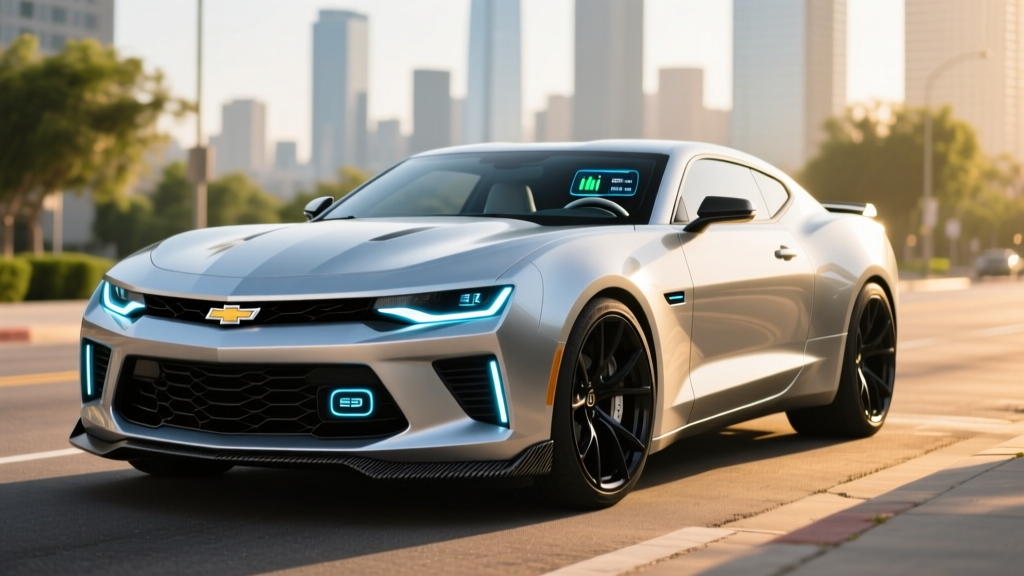
As of early 2026, there is no production Chevy Camaro EV on sale. GM discontinued the sixth-generation Camaro after the 2024 model year and has not officially announced a dedicated electric successor. However, GM has confirmed that the Camaro nameplate will return on its Ultium battery platform, and industry reporting points to a possible reveal in the 2027–2028 timeframe. If you need an electric muscle car today, the closest alternatives are the Dodge Charger Daytona EV, Ford Mustang Mach-E GT, and Tesla Model 3 Performance.
Why the Chevy Camaro EV Doesn't Exist Yet
When GM pulled the plug on the gas-powered Camaro in January 2024, the company left the door open for an electric revival. CEO Mary Barra confirmed that the Camaro brand would continue, and GM's investment in the Ultium platform — the same architecture underpinning the Blazer EV, Silverado EV, and Cadillac Lyriq — makes an electric Camaro technically feasible. But GM has been deliberate about its EV rollout sequence, prioritizing high-volume SUVs and trucks where margins and demand currently align.
The Camaro has historically sold in lower volumes than GM's crossover lineup. In its final year, the sixth-gen Camaro moved roughly 32,000 units in the U.S. — a fraction of the Equinox or Silverado. GM needs to justify the engineering investment in a performance-oriented EV against that demand reality, which is why the Camaro EV remains in the pipeline rather than on dealer lots.
What We Can Project: Range, Power & Platform Specs
While no official specs exist, we can make informed projections based on the Ultium platform's current capabilities across GM's existing EV lineup. Here's what a production Camaro EV could look like if it follows the Blazer EV SS and Silverado EV trajectory:
| Spec | Estimated Range | Basis |
|---|---|---|
| Battery Capacity | 85–102 kWh usable (NMC) | Blazer EV uses ~102 kWh; a lighter coupe could use a smaller pack |
| EPA Range | 280–340 miles | Blazer EV SS rated at 292 mi; a lighter, more aero coupe body could push higher |
| Peak DC Fast Charge | 190–220 kW | Consistent with current Ultium 400V architecture; 800V upgrade possible by 2028 |
| 10–80% Charge Time | ~24–30 minutes | Blazer EV achieves 10–80% in ~28 min at 190 kW |
| Horsepower | 500–700+ HP (dual motor AWD) | Blazer EV SS produces 615 HP; Camaro SS heritage demands high output |
| 0–60 mph | 3.0–3.8 seconds | Comparable to Mustang Mach-E GT (3.5s) and Charger Daytona Scat Pack (3.3s) |
| Level 2 AC Charging | 11.5–19.2 kW | Standard Ultium onboard charger capability |
| Starting MSRP | $55,000–$65,000 (est.) | Blazer EV SS starts at ~$61,000; coupe premium possible |
Real-World Range Reality: If the Camaro EV achieves an EPA rating around 310 miles, expect roughly 250–270 miles in sustained highway driving at 70+ mph, and potentially 200–220 miles in sub-freezing winter conditions. Performance driving will further compress range — aggressive acceleration and high speeds are the fastest way to drain any EV battery.
How the Camaro EV Would Compare to Today's Electric Muscle
If GM launches a Camaro EV, it will enter a segment with established competitors. Here's how the projected specs stack up against what you can buy right now:
| Spec | Dodge Charger Daytona R/T | Ford Mustang Mach-E GT | Tesla Model 3 Performance |
|---|---|---|---|
| EPA Range | 308 mi | 280 mi | 315 mi |
| Battery (usable) | 93.9 kWh (NMC) | 91 kWh (NMC) | 79 kWh (NMC) |
| Horsepower | 496 HP | 480 HP | 510 HP |
| 0–60 mph | 4.7 sec | 3.5 sec | 2.9 sec |
| Peak DC Charge | 183 kW | 150 kW | 250 kW |
| 10–80% Time | ~32 min | ~38 min | ~25 min |
| Starting MSRP | $59,595 | $59,995 | $54,990 |
| Federal Tax Credit (§30D) | Eligibility varies — check IRS sourcing rules | Eligibility varies | Up to $7,500 (point-of-sale) |
A Camaro EV would need to match or exceed the Charger Daytona's muscle-car credentials — sound, presence, and straight-line punch — while competing with the Tesla Model 3 Performance on charging speed and tech. That's a narrow needle to thread.
Real Costs: What Ownership Would Actually Look Like
Let's ground the fantasy in numbers. If the Camaro EV launches at an estimated $60,000 MSRP, here's what the total ownership picture looks like over five years compared to a late-model gas Camaro SS:
| Cost Category | Camaro EV (Projected) | Gas Camaro SS (2023, Used ~$38K) |
|---|---|---|
| Purchase Price | $60,000 | $38,000 |
| Federal Tax Credit | Up to –$7,500 (if eligible) | $0 |
| Effective Purchase | $52,500 | $38,000 |
| Fuel/Energy (60K mi) | ~$3,600 (home charging at $0.14/kWh) | ~$10,800 (18 MPG avg at $3.50/gal) |
| Maintenance (60K mi) | ~$1,200 (tires, cabin filter, fluid top-offs) | ~$4,500 (oil, brakes, plugs, belts) |
| Insurance (5-yr avg) | ~$12,500 (performance EV premium) | ~$10,000 |
| Depreciation (est.) | ~$22,000 | ~$14,000 |
| 5-Year Total | ~$91,800 | ~$77,300 |
The EV saves significantly on fuel and maintenance — roughly $10,500 over five years — but the higher purchase price, insurance premiums, and steeper depreciation on a new vehicle widen the gap. The economics improve if you qualify for the full §30D credit, charge primarily at home on off-peak rates, and hold the car beyond five years. But the upfront cost difference is real and shouldn't be glossed over.
Home charging is critical. Without Level 2 access at home or work, you'll rely on public DC fast charging, which costs $0.35–$0.55/kWh at networks like Electrify America and EVgo — erasing much of the fuel savings and adding time to your routine. A Level 2 home charger installation typically runs $800–$2,500 depending on panel capacity and wiring distance.
Common Misconceptions About a Camaro EV
| Myth | Fact |
|---|---|
| "The Camaro EV is available to order now." | GM has not opened orders or released a production Camaro EV. Any configurators or pre-order pages are speculative or third-party. |
| "An EV can't feel like a muscle car." | Instant torque delivery means EVs launch harder than gas equivalents. The Charger Daytona EV hits 60 mph in 4.7 seconds with a synthetic exhaust sound profile. EVs can absolutely deliver muscle-car acceleration. |
| "I'll save money immediately switching to an EV." | Higher purchase prices, insurance, and potential home-charging installation costs mean breakeven often takes 4–7 years depending on mileage and local electricity rates. |
| "The battery will need replacing in a few years." | GM's Ultium batteries carry an 8-year/100,000-mile warranty covering defects and capacity loss below 70%. Real-world degradation data from existing Ultium vehicles shows roughly 5–8% loss over the first 100K miles. |
| "It'll qualify for the full $7,500 tax credit." | §30D eligibility depends on MSRP caps, buyer income limits, battery component sourcing, and critical mineral requirements that change annually. Always verify on irs.gov before purchasing. |
What First-Time EV Buyers Should Know Before Waiting
If you're drawn to the Camaro nameplate and considering going electric, here's what matters before you commit to waiting for a vehicle that doesn't have a firm release date:
1. Charging infrastructure is your real bottleneck, not range. A 300-mile EV with no home charging is more frustrating than a 220-mile EV you plug in every night. Before shopping for any EV, confirm you can install a Level 2 charger (240V, 40–48 amp circuit) at home or have reliable workplace charging.
2. Cold weather cuts range 20–30%. If you live in the upper Midwest or Northeast, a projected 310-mile Camaro EV could deliver 210–250 miles in January. That's still plenty for most daily driving, but road trips require more planning.
3. kW is power, kWh is energy. The battery capacity (kWh) determines how far you can drive. The charge rate (kW) determines how fast you recharge. A 100 kWh battery with a 200 kW peak charge rate will add roughly 150 miles in 15 minutes under ideal conditions — but charge speed tapers significantly above 80% State of Charge.
4. Insurance costs more for performance EVs. Higher repair costs, specialized parts, and the vehicle's power output all push premiums up. Get quotes before assuming the EV will cost the same to insure as a comparable gas car.
Decision Framework: Should You Wait or Buy Now?
Choose to Wait for the Camaro EV If:
- You currently own a Camaro or another gas muscle car and aren't in a rush to replace it
- You have home Level 2 charging access or can install it
- The Camaro's heritage, styling, and brand identity are non-negotiable for you
- You're comfortable with a 2027–2028 earliest availability and potential first-model-year risks
- Your daily commute is under 80 miles round-trip (covering real-world range in all seasons)
Buy an Available EV Now If:
- Your current vehicle needs replacement within 12 months
- You want established charging reliability and proven battery degradation data
- Fast DC charging speed matters (Tesla Supercharger network remains the most reliable)
- You want to lock in current §30D tax credit eligibility before sourcing rules tighten further
- You're open to the Mustang Mach-E GT, Charger Daytona, or Model 3 Performance as legitimate alternatives
Frequently Asked Questions
Has GM officially confirmed a Camaro EV release date?
No. GM has stated the Camaro nameplate will return on the Ultium platform but has not provided a specific model year, reveal date, or pricing. Industry analysts expect a reveal no earlier than 2027 for a 2028 model year.
Will the Camaro EV use the same battery as the Blazer EV?
Likely yes, in terms of cell chemistry and module architecture. The Ultium platform shares NMC battery modules across GM's lineup. However, a Camaro EV's lower, lighter coupe body may use a slightly smaller pack (85–95 kWh) optimized for performance rather than the Blazer's 102 kWh pack tuned for range and cargo capacity.
Could the Camaro EV get an 800V architecture for faster charging?
Current Ultium vehicles use a 400V architecture, limiting peak DC charge rates to roughly 190–220 kW. GM has indicated it's exploring higher-voltage systems for future performance models. If the Camaro EV launches in 2028, an 800V system enabling 300+ kW peak charging is plausible but unconfirmed.
Will it qualify for the $7,500 federal EV tax credit?
It depends on the MSRP at launch, your household income, and GM's battery sourcing at the time of purchase. Under current IRS §30D rules, the vehicle MSRP must not exceed $55,000 for sedans/coupes, and buyer AGI must fall below $150,000 (single) or $300,000 (joint). Battery component and critical mineral sourcing requirements also apply. A performance-oriented Camaro EV priced above $55,000 could fail the MSRP cap — consult a tax professional before relying on the credit.
What's the best electric muscle car I can buy today?
The Dodge Charger Daytona R/T ($59,595) offers the most traditional muscle-car identity with 496 HP and 308 miles of range. The Ford Mustang Mach-E GT ($59,995) delivers 480 HP with a proven platform. The Tesla Model 3 Performance ($54,990) is the quickest (2.9 sec 0–60) with the fastest charging (250 kW peak) but lacks the heritage styling. Each is a legitimate performance EV — the right choice depends on whether you prioritize brand heritage, charging speed, or straight-line acceleration.
Should I install a home charger before buying any EV?
Yes, if possible. A Level 2 home charger (7.7–11.5 kW) adds 25–45 miles of range per hour of charging, meaning an overnight session fully replenishes any daily driving. Installation costs range from $800 for a simple 240V outlet near your panel to $2,500+ if you need a panel upgrade or long conduit runs. Get a quote from a licensed electrician before purchasing your EV.