Quick Verdict: The Bolt Still Punches Above Its Weight
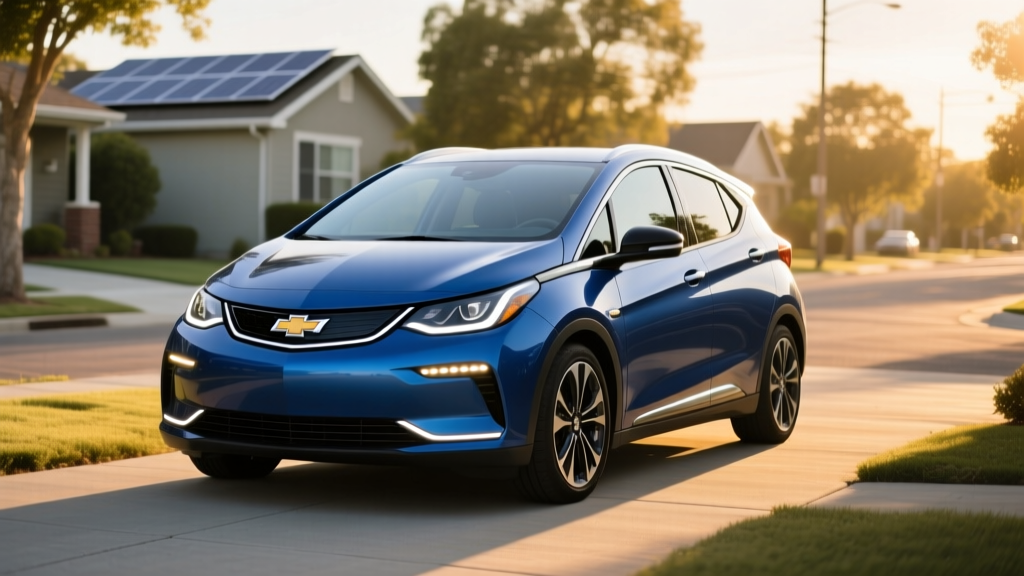
If you've been searching for chevy bolt weight data alongside range, pricing, and charging specs, you've landed on the right teardown. The refreshed Chevrolet Bolt EV and slightly larger Bolt EUV remain the entry point into new EV ownership for under $30,000 before incentives — and that's before you factor in the federal tax credit. For 2026, Chevy has carried over the Ultium-adjacent battery pack architecture introduced with the last-generation refresh, keeping the curb weight competitive while delivering class-leading efficiency for its price bracket.
The Bolt's curb weight matters more than you might think. Heavier EVs consume more energy per mile, wear through tires faster, and take longer to stop. The Bolt's relatively svelte platform (compared to crossover rivals weighing 4,500+ lbs) is a big reason it achieves over 4 miles per kWh on the highway. Let's get into the exact numbers.
Spec Table: 2026 Chevy Bolt EV & EUV at a Glance
| Spec | Bolt EV (2LT) | Bolt EUV (Premier) |
|---|---|---|
| Curb Weight | 3,563 lbs | 3,765 lbs |
| EPA Range | 259 miles | 247 miles |
| Battery (usable) | 65 kWh (NMC) | 65 kWh (NMC) |
| Max DC Fast Charge | 55 kW peak | 55 kW peak |
| 10–80% DCFC Time | ~50 minutes | ~50 minutes |
| Level 2 Charge Rate | 11.5 kW (~39 mi/hr) | 11.5 kW (~39 mi/hr) |
| Motor Output | 200 hp / 266 lb-ft | 200 hp / 266 lb-ft |
| 0–60 mph | 6.5 seconds | 7.0 seconds |
| Drivetrain | FWD (single motor) | FWD (single motor) |
| EPA Efficiency | 120 MPGe (28 kWh/100mi) | 115 MPGe (29 kWh/100mi) |
| Cargo (rear seats up) | 16.6 cu ft | 16.3 cu ft |
| Cargo (rear seats folded) | 54.6 cu ft | 56.9 cu ft |
| Rear Legroom | 36.0 in | 39.1 in |
| Base MSRP | $27,895 | $29,395 |
| Battery Warranty | 8 yr / 100,000 mi | 8 yr / 100,000 mi |
Source: fueleconomy.gov and Chevrolet media specifications.
Why the Chevy Bolt's Weight Matters for Range and Efficiency
At 3,563 pounds for the hatchback EV and 3,765 pounds for the EUV, the Bolt is lighter than most compact electric crossovers. The Hyundai Kona Electric, for comparison, sits around 3,700 lbs, while the Volkswagen ID.4 tips the scales at over 4,600 lbs. That weight advantage translates directly into efficiency: the Bolt EV achieves 28 kWh per 100 miles on the EPA combined cycle — one of the lowest consumption figures in its class.
Lower mass also means less kinetic energy to manage during regenerative braking, which improves real-world efficiency in stop-and-go city driving. In our experience, city commuters regularly beat the EPA combined rating in warm weather, seeing 4.2–4.5 miles per kWh. Highway driving at 75 mph drops that to roughly 3.4–3.7 mi/kWh, and cold-weather commutes (below 30°F) with cabin heat can push consumption above 35 kWh/100mi.
EPA Estimate: 259 miles (Bolt EV) / 247 miles (Bolt EUV)
Real-World Expectation: 230–250 miles in mixed driving; 200–220 miles sustained highway at 75 mph; 170–200 miles in sub-freezing winter conditions with cabin heat. Cold weather reduces range 20–30% due to battery chemistry limitations and resistive heating load. Preconditioning the battery while plugged in recovers some of this loss.
Charging Speed: The Bolt's Most Debated Spec
Here's where we have to be blunt: the Bolt's DC fast-charging speed is its biggest limitation for road-trippers. Peak DC charge rate is 55 kW — competitive when the car launched, but far behind today's 150–350 kW standard on vehicles like the Ioniq 5 or Tesla Model 3. A 10–80% session takes roughly 50 minutes at a compatible CCS station, and the charge curve tapers noticeably above 60% state of charge.
For daily driving, this barely matters. Most Bolt owners charge at home on Level 2, and the onboard 11.5 kW charger is excellent — it adds roughly 39 miles of range per hour, meaning a full overnight top-up from 20% takes about 5–6 hours on a 48-amp home station. Level 1 (120V) trickle charging adds about 4 miles per hour, which works for low-mileage commuters with access to a standard outlet.
| Charging Level | Power (kW) | Miles Added/Hour | Full Charge Time |
|---|---|---|---|
| Level 1 (120V, 12A) | ~1.4 kW | ~4 mi/hr | ~48 hours (0–100%) |
| Level 2 (240V, 48A) | 11.5 kW | ~39 mi/hr | ~6 hours (0–100%) |
| DC Fast (CCS, 55 kW peak) | 55 kW (peak) | ~150 mi/hr (to 60%) | ~50 min (10–80%) |
Charge times are estimates based on EPA efficiency of 28 kWh/100mi. Actual rates depend on station output, battery temperature, and state of charge. The Bolt's charge curve holds near peak kW from roughly 10–55% SoC, then tapers to ~30 kW through 80%. Always precondition the battery via the vehicle's charge-scheduling feature before DC fast charging.
Performance, Drivetrain, and What 200 HP Feels Like at 3,563 Pounds
The Bolt uses a single front-mounted permanent-magnet motor producing 200 horsepower and 266 lb-ft of torque. That's routed exclusively to the front wheels — no AWD option exists. The 0–60 mph time of 6.5 seconds (EV hatchback) is genuinely quick for a sub-$30K vehicle and puts it ahead of most gas-powered compact hatchbacks. The EUV, carrying an extra ~200 lbs of wheelbase and structure, runs 0–60 in about 7.0 seconds.
Instant torque at 0 rpm makes the Bolt feel faster than its numbers suggest in city driving. Merging onto highways and passing maneuvers are confident. Where the weight shows is in cornering — the Bolt leans noticeably in aggressive turns, and the eco-oriented tires prioritize low rolling resistance over grip. This is a commuter car, not a canyon carver, and that's perfectly fine for its target buyer.
One-pedal driving is available and well-calibrated, allowing most city driving without touching the brake pedal. The regenerative braking system recovers energy efficiently, and the friction brakes rarely engage unless you need hard stopping power — which extends brake pad life considerably.
Tax Credit Eligibility and Real Out-the-Door Pricing
The Bolt's pricing is its headline act. With a base MSRP starting under $28,000, it undercuts nearly every new EV on the market. But the real story is what happens when you layer in the federal tax credit under IRS §30D rules.
| Trim | MSRP | Est. Federal Credit | Effective Price |
|---|---|---|---|
| Bolt EV 2LT | $27,895 | Up to $7,500* | ~$20,395 |
| Bolt EUV LT | $29,395 | Up to $7,500* | ~$21,895 |
| Bolt EUV Premier | $33,295 | Up to $7,500* | ~$25,795 |
*Federal tax credit eligibility depends on multiple factors. The point-of-sale transfer option allows dealers to apply the credit as a down payment reduction at purchase.
- MSRP Cap: Vehicle MSRP must be ≤ $55,000 for cars/hatchbacks (Bolt qualifies ✓)
- Buyer Income Cap: AGI must not exceed $150K single / $225K head of household / $300K joint
- Battery Sourcing: Critical minerals and battery components must meet escalating domestic-content thresholds — verify current-year compliance on the DOE/IRS eligible vehicle list
- Point-of-Sale Transfer: You can elect to transfer the credit to the dealer at purchase, reducing your down payment rather than waiting for a tax refund
- Consult a tax professional — eligibility is based on your specific tax situation and current-year IRS guidance
Interior, Cargo, and Tech: Practical Over Premium
The Bolt's cabin is functional rather than luxurious. Hard plastics are prevalent, but build quality is solid and everything fits well. The 10.2-inch infotainment touchscreen runs Chevrolet's latest interface with wireless Apple CarPlay and Android Auto, built-in Google Maps navigation (on higher trims), and a Wi-Fi hotspot. The digital driver display is 8 inches and configurable.
Cargo space is generous for the segment: 16.6 cubic feet behind the rear seats in the hatchback (54.6 cu ft folded), and the EUV offers slightly more at 56.9 cu ft with seats down thanks to its longer wheelbase. Rear legroom in the EUV is notably better at 39.1 inches versus the hatchback's 36.0 inches — a meaningful difference for families with rear-facing car seats or tall passengers.
Driver-assistance tech includes Chevy Safety Assist as standard: automatic emergency braking, forward collision alert, lane keep assist, following distance indicator, and automatic high beams. Available Super Cruise (on EUV Premier) provides hands-free driving on over 400,000 miles of mapped highways — but it remains an SAE Level 2 system requiring driver attention and eye monitoring. It is not autonomous driving.
- Lowest entry price for a new 250+ mile EV
- Excellent efficiency (28 kWh/100mi)
- Strong Level 2 home charging (11.5 kW)
- Peppy 200 hp motor for city driving
- Generous cargo space for the footprint
- Federal tax credit eligible (verify sourcing)
- DC fast charging limited to 55 kW
- No AWD or heat pump option
- Interior materials feel budget-grade
- Cold-weather range loss is significant
- No front trunk (frunk)
- CCS connector — no native NACS access without adapter
Who Should Buy the Chevy Bolt (and Who Shouldn't)
Choose the Bolt EV if: You're a commuter driving under 80 miles round-trip, you have home Level 2 charging, you want the lowest cost per mile of any new EV, and you rarely take road trips over 200 miles.
Choose the Bolt EUV if: You need the extra rear legroom for family duty, you want available Super Cruise for highway commuting, and the $1,500 upcharge over the hatchback is acceptable.
Look elsewhere if: You frequently road-trip and need 150+ kW DC fast charging, you live in a cold climate where a heat pump matters, you need AWD for snow, or you want premium interior materials. Consider the Hyundai Kona Electric, Tesla Model 3, or VW ID.4 instead.
Battery Chemistry, Degradation, and Warranty Coverage
The Bolt's 65 kWh (usable) battery pack uses NMC (nickel-manganese-cobalt) lithium-ion chemistry. NMC offers higher energy density than LFP (lithium iron phosphate), which is how Chevy fits this much capacity into a relatively compact and light package — directly contributing to the Bolt's favorable curb weight of 3,563 lbs.
The trade-off with NMC is slightly faster long-term degradation compared to LFP and sensitivity to sustained high states of charge. Best practice: keep daily charging to 80% and only charge to 100% when you need the full range. Chevy's battery management system includes a buffer (the 65 kWh figure is usable capacity, not total cell capacity), which helps protect longevity.
GM covers the battery and powertrain for 8 years or 100,000 miles, whichever comes first, warranting against defects and excessive capacity loss (below 60% of original capacity). Real-world data from first-generation Bolt owners (2017–2022) shows most packs retaining 90–95% capacity at 60,000 miles when not regularly DC fast-charged or held at 100% SoC.
Frequently Asked Questions
What is the curb weight of the Chevy Bolt?
The 2026 Chevy Bolt EV hatchback has a curb weight of approximately 3,563 pounds, while the longer-wheelbase Bolt EUV weighs about 3,765 pounds. Both are lighter than most competing electric crossovers, contributing to the Bolt's class-leading efficiency of 28 kWh per 100 miles.
What is the real-world range of the Chevy Bolt?
The EPA rates the Bolt EV at 259 miles and the EUV at 247 miles. In real-world mixed driving, expect 230–250 miles in moderate temperatures. Sustained highway driving at 75 mph reduces that to roughly 200–220 miles, and sub-freezing winter conditions with cabin heat can drop range to 170–200 miles.
How fast does the Chevy Bolt charge at home and on DC fast chargers?
At home on a 240V Level 2 charger, the Bolt charges at up to 11.5 kW, adding about 39 miles of range per hour — a full charge takes roughly 6 hours. On DC fast chargers, the Bolt peaks at 55 kW, achieving a 10–80% charge in approximately 50 minutes. This is the vehicle's main limitation for road-trippers.
Does the Chevy Bolt qualify for the federal EV tax credit?
The Bolt is listed on the IRS eligible vehicle list and can qualify for up to $7,500 under §30D, but eligibility depends on your income (AGI caps apply), battery sourcing requirements that change annually, and the vehicle's MSRP (must be ≤ $55,000 for cars). The point-of-sale transfer option lets you apply the credit as a down payment reduction. Always verify current eligibility at fueleconomy.gov and consult a tax professional.
Is the Chevy Bolt worth buying over competitors like the Kona Electric or Model 3?
If your priority is the lowest possible purchase price for a practical commuter EV with 250+ miles of range, the Bolt is unmatched. The Hyundai Kona Electric offers similar range with slightly faster DC charging (100+ kW on newer models) but costs more. The Tesla Model 3 provides superior DC charging (250 kW), a more extensive charging network, and a more premium interior — but starts roughly $10,000 higher. For budget-conscious buyers with home charging, the Bolt remains the value champion.
Does the Bolt have all-wheel drive?
No. Both the Bolt EV and EUV are front-wheel drive only with a single motor. If AWD is essential for your climate or driving conditions, you'll need to look at competitors like the Tesla Model Y, Hyundai Ioniq 5, or Subaru Solterra.