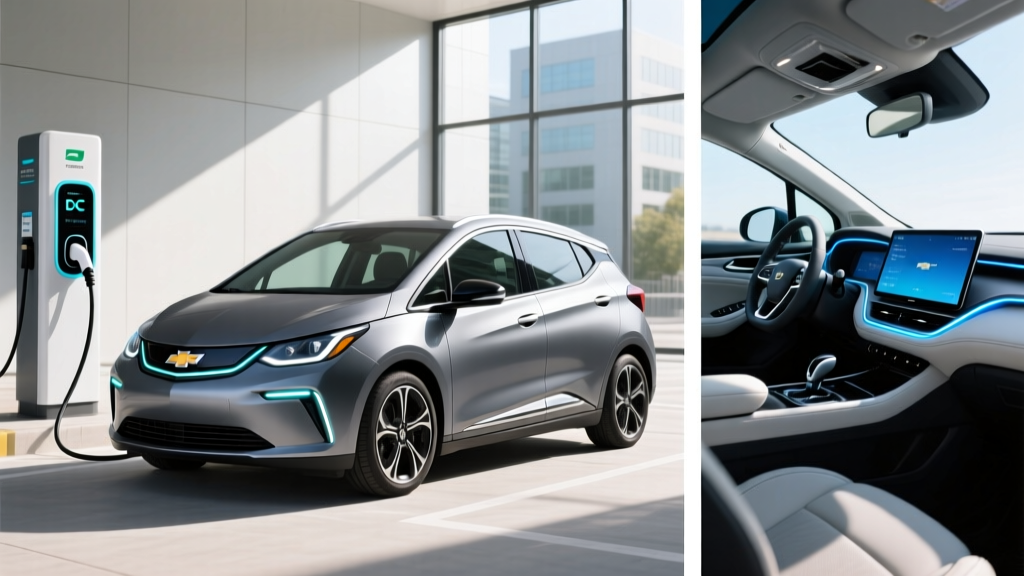
The Chevrolet Bolt has long held its position as one of the most accessible battery-electric vehicles on the market, and the redesigned 2026 model arriving in late 2025 builds on that legacy with a new Ultium-based platform, faster DC charging, and a refreshed interior. If you're researching Chevy Bolt specifications before visiting a dealership, this profile breaks down every number that matters — from real-world range expectations and charging-curve behavior to IRS §30D tax credit eligibility under current-year rules.
Before we get into the details, one note on timing: General Motors confirmed the next-generation Bolt for the 2026 model year at CES 2024, with production targeted for late 2025 at the Orion Assembly plant in Michigan. Pricing and final EPA certification figures below reflect GM's announced specifications and fueleconomy.gov data where available. Always confirm exact numbers with your dealer at purchase, as EPA certification can shift slightly between pre-production and final release.
Quick Verdict: Who the 2026 Chevy Bolt Is For
The 2026 Bolt targets budget-conscious commuters and urban drivers who need a practical daily EV with sub-$30,000 pricing and reliable home charging. It is not a road-trip champion — its DC fast-charging speed, while improved over the previous generation, still trails competitors like the Hyundai Kona Electric and the base Tesla Model 3. If your driving is 90% local with occasional 200-mile highway runs, the Bolt delivers outstanding value. If you regularly drive 300+ miles between chargers, look elsewhere.
Choose the 2026 Chevy Bolt if: You commute under 60 miles daily, have home Level 2 charging access, want the lowest entry price in the EV segment, and prioritize city efficiency over highway fast-charging speed.
Look at the Hyundai Kona Electric or Tesla Model 3 instead if: You take frequent 250+ mile road trips, need 150+ kW DC fast-charging, or require all-wheel drive for snow-belt winters.
Range and Efficiency: EPA Sticker vs. Real-World Miles
| Metric | Value |
|---|---|
| EPA Estimated Range | 255 miles (FWD, 1LT trim) |
| Battery Capacity (Usable) | ~65 kWh (Ultium, LFP chemistry) |
| Combined MPGe | 120 MPGe (est.) |
| Energy Consumption | ~28 kWh/100 mi |
| Drivetrain | Front-Wheel Drive (single motor) |
Real-World Range Expectations: The EPA 255-mile sticker assumes a mix of city and highway driving at moderate temperatures. Here's what to actually plan for:
- City/suburban commuting (under 50 mph): Expect 260–280 miles — EVs are most efficient at low speeds with regenerative braking recapturing energy.
- Sustained highway driving (70–75 mph): Expect 210–230 miles. Aerodynamic drag at highway speed is the biggest range killer in any EV.
- Cold weather (below 30°F): Expect 175–200 miles. The Bolt's LFP battery is more resilient to cold degradation than NMC chemistries, but cabin heating and battery thermal management still draw significant energy. The 2026 Bolt includes a standard heat pump (new for this generation), which reduces winter range loss compared to the outgoing model's resistive heater.
- Hot weather (above 95°F with A/C): Expect 225–245 miles. Less impactful than cold, but sustained A/C use still costs 5–10% range.
The switch to LFP (lithium iron phosphate) chemistry in the Ultium-based Bolt is a deliberate trade-off. LFP cells sacrifice roughly 10–15% energy density versus NMC (nickel manganese cobalt), which is why the Bolt's range didn't leap higher despite the new platform. What LFP gives you instead is a longer cycle life (3,000+ full charge cycles before significant degradation), better thermal stability, and the ability to routinely charge to 100% without the accelerated wear that NMC batteries experience at full state of charge. For a daily commuter that charges at home every night, LFP is arguably the better chemistry choice.
Charging Speed: DC Fast Charge, Level 2, and Level 1
Charging speed is where the 2026 Bolt makes its biggest generational leap — and where it still shows its budget positioning. The previous Bolt EV and EUV were infamous for capping DC fast charging at 55 kW, making road trips painful. The 2026 model more than doubles that rate, but it still won't match the 150–250 kW peaks of pricier competitors.
| Charging Level | Power (kW) | Speed / Time | Notes |
|---|---|---|---|
| Level 1 (120V household) | ~1.4 kW | ~4 mi/hr of charging | Emergency/trickle only; full charge in ~46 hours |
| Level 2 (240V home) | 11.5 kW (48A) | ~35 mi/hr; 0–100% in ~7 hours | Standard overnight charging; requires 60A circuit |
| DC Fast Charge (CCS/NACS) | 115 kW peak | 10–80% in ~30 minutes | Peak rate at low SoC; tapers significantly above 80% |
Understanding the DC fast-charging curve: The 115 kW peak only applies when the battery is at a low state of charge (roughly 10–40%) and properly preconditioned. As the battery fills, the charge rate drops — you'll see roughly 70–80 kW between 50–70% SoC, and it tapers to under 30 kW above 85%. This is normal lithium-ion behavior, not a Bolt-specific flaw. The practical implication: plan your road-trip stops around 10–80% charges rather than trying to fill to 100% at a fast charger, where you'll sit for diminishing returns.
The 2026 Bolt ships with a NACS (North American Charging Standard) port as standard, giving it native access to Tesla's Supercharger network — a significant advantage for road-trip charging reliability. A CCS adapter is available for Electrify America and other CCS-based networks. GM's transition to NACS across its lineup means Bolt owners gain access to 20,000+ Supercharger stalls nationwide without an adapter.
Home Charging Tip: The Bolt's 11.5 kW Level 2 onboard charger is among the best in its price class. To get this full rate, you'll need a hardwired Level 2 station on a dedicated 60-amp circuit (or a 48A continuous draw). If your home has a standard NEMA 14-50 outlet on a 50A breaker, you'll get roughly 9.6 kW (about 29 mi/hr) — still plenty for overnight charging. Have a licensed electrician assess your panel capacity before installation; a 200-amp service panel is generally sufficient, but older homes with 100-amp panels may need an upgrade ($1,500–$3,000).
Performance: 0–60, Horsepower, and Drivetrain
| Performance Metric | 2026 Bolt (1LT / 2LT) |
|---|---|
| Motor Output | 200 hp / 236 lb-ft torque |
| 0–60 mph | ~6.5 seconds (est.) |
| Drivetrain | Front-Wheel Drive (single front motor) |
| Top Speed | ~93 mph (electronically limited) |
| Towing Capacity | Not rated for towing |
The 200-horsepower single-motor setup is carried over in output from the previous generation's permanent-magnet motor, but the Ultium platform's lower center of gravity and revised suspension tuning make the 2026 Bolt feel more planted through corners. Instant electric torque (236 lb-ft available from 0 RPM) gives the Bolt strong city acceleration and confident highway merging. The 6.5-second 0–60 time won't impress Tesla Model 3 Performance owners, but it's quick for a sub-$30,000 hatchback and perfectly adequate for daily driving.
Regenerative braking offers multiple levels via steering-wheel paddles, including a one-pedal driving mode that brings the car to a complete stop without touching the brake pedal. This is especially useful in stop-and-go traffic and extends range in city driving.
Pricing, Trims, and Federal Tax Credit Eligibility
| Trim | Base MSRP | Est. After §30D Credit | Key Features |
|---|---|---|---|
| 1LT | $26,990 | ~$19,490* | 11" infotainment, wireless CarPlay/Android Auto, Super Cruise prep, heat pump |
| 2LT | $30,490 | ~$22,990* | Adds: adaptive cruise, HD surround camera, heated seats/steering, Bose audio, DC fast charging standard |
*Tax credit estimates assume full §30D eligibility. Your actual credit depends on tax liability, income limits, and battery sourcing compliance. See details below.
Federal Tax Credit: §30D Eligibility Checklist
The 2026 Chevy Bolt's eligibility for the full $7,500 federal tax credit under IRS §30D depends on meeting ALL of the following requirements:
- MSRP Cap: The Bolt qualifies — at $26,990–$30,490, it is well below the $55,000 cap for sedans/hatchbacks. ✅
- Buyer Income Cap: Your modified adjusted gross income (MAGI) must not exceed $150,000 (single filer), $225,000 (head of household), or $300,000 (joint filers). Check your prior-year or current-year tax return — whichever is lower. ⚠️
- Battery Component Manufacturing: A percentage of battery components must be manufactured or assembled in North America. GM's Ultium cells are produced at U.S. joint-venture plants (Ultium Cells LLC in Ohio and Tennessee), which positions the Bolt favorably — but the exact percentage thresholds increase annually under the Inflation Reduction Act. Verify current-year compliance at irs.gov or with your tax professional. ⚠️
- Critical Minerals Sourcing: A percentage of critical minerals in the battery must be sourced from the U.S. or free-trade-agreement countries. This threshold also increases annually. ⚠️
- Point-of-Sale Transfer: As of 2024, you can transfer the credit to the dealer at purchase, reducing your out-of-pocket cost immediately rather than waiting to claim it on your tax return. The dealer must be IRS-registered. ✅ Available
- Tax Liability: The credit is non-refundable — you must have at least $7,500 in federal tax liability to claim the full amount. If your liability is lower, the credit is reduced (unless transferred at point of sale, which is not limited by tax liability under current rules). ⚠️
Bottom line: The Bolt's low MSRP and domestic battery production make it one of the more likely candidates for the full credit, but annual sourcing-threshold increases mean eligibility is not guaranteed. Always check the latest fueleconomy.gov tax credit listings before purchasing.
Interior, Cargo Space, and Technology
| Dimension / Feature | 2026 Bolt |
|---|---|
| Cargo Volume (rear seats up) | ~20 cu ft |
| Cargo Volume (rear seats folded) | ~54 cu ft |
| Rear Legroom | ~36.0 inches |
| Front Headroom | ~40.0 inches |
| Infotainment Screen | 11.0" touchscreen, wireless Apple CarPlay & Android Auto |
| Driver Display | 8.0" digital instrument cluster |
| Charging Ports | USB-C (front), USB-A (rear) |
The 2026 Bolt's interior is a meaningful step up from the previous generation's plastic-heavy cabin. Soft-touch materials on the dashboard and door panels, a flat-floor architecture (thanks to the Ultium pack's low-slung layout), and a wider center console give the cabin a more premium feel without pushing the price into luxury territory. The 11-inch infotainment screen runs GM's latest Ultifi-based software with over-the-air updates, and wireless phone charging is standard on 2LT trims.
Cargo space remains competitive for the hatchback segment — roughly 20 cubic feet behind the rear seats handles groceries, gym bags, and a couple of carry-ons easily. Fold the 60/40 rear seats and you get approximately 54 cubic feet, enough for IKEA runs or camping gear. There is no front trunk (frunk) — the Bolt's front motor packaging leaves no room for one.
Driver Assistance and Safety Tech
Every 2026 Bolt comes standard with Chevy Safety Assist, which includes:
- Automatic Emergency Braking with pedestrian detection
- Lane Keep Assist with lane departure warning
- Following distance indicator
- Intelligent Speed Assist
- Automatic high beams
The 2LT trim adds Adaptive Cruise Control and GM's Enhanced Automatic Parking Assist. Notably, GM has indicated that Super Cruise (its hands-free Level 2 highway driving system) will be available on the Bolt for the first time — likely as a subscription-based option on 2LT trims. Super Cruise enables hands-free driving on 750,000+ miles of compatible divided highways in the U.S. and Canada, with a driver-monitoring camera ensuring your eyes remain on the road.
SAE Automation Level: Super Cruise and Chevy Safety Assist are SAE Level 2 driver-assistance systems — the driver must remain attentive and is fully responsible for vehicle operation at all times. These are not self-driving systems. Only Level 4 services like Waymo operate without a human driver in defined areas.
Battery Warranty, Degradation, and Longevity
| Warranty | Coverage |
|---|---|
| Battery Pack | 8 years / 100,000 miles (retains ≥60% capacity) |
| Powertrain (Motor, Inverter) | 5 years / 60,000 miles |
| Bumper-to-Bumper | 3 years / 36,000 miles |
| Roadside Assistance | 5 years / 60,000 miles |
GM's 8-year/100,000-mile battery warranty with a 60% capacity retention threshold is standard for the industry (matched by Hyundai, Kia, and most others). In practice, LFP chemistry degrades more slowly than NMC — data from fleet LFP packs suggests most owners will see 90%+ capacity retention at the 8-year mark under normal use. The Bolt's LFP pack also allows routine 100% charging without the accelerated degradation that NMC owners worry about, which effectively gives you more usable daily range over the vehicle's life.
If the battery does need replacement outside warranty, current Ultium pack replacement costs are estimated at $8,000–$14,000 depending on capacity and labor — though prices are expected to decline as Ultium production scales. Most Bolt owners will never need a pack replacement during typical ownership.
Pros, Cons, and How It Compares
✅ Pros
- Lowest starting MSRP in the EV hatchback segment ($26,990)
- LFP battery allows daily 100% charging with minimal degradation
- NACS port provides native Tesla Supercharger access
- Heat pump standard (better cold-weather range than outgoing model)
- Strong Level 2 charging rate (11.5 kW) for overnight home charging
- Well below MSRP cap for federal tax credit eligibility
- Competitive cargo space for the hatchback class
❌ Cons
- DC fast charging at 115 kW peak trails competitors (Kona Electric: ~150 kW)
- Front-wheel drive only — no AWD option for snow/ice traction
- No frunk (front trunk) for additional storage
- Not rated for towing
- Super Cruise availability and pricing not yet confirmed at launch
- Highway real-world range drops to ~210–230 miles — limits road-trip comfort
Key Competitor Snapshot
| Model | EPA Range | DC Fast Charge | Base MSRP |
|---|---|---|---|
| 2026 Chevy Bolt | 255 mi | 115 kW | $26,990 |
| Hyundai Kona Electric | 261 mi | ~150 kW | ~$32,975 |
| Nissan LEAF (SV Plus) | 212 mi | ~100 kW (CHAdeMO) | ~$36,000 |
| Tesla Model 3 (RWD) | 272 mi | ~170 kW | ~$38,990 |
The Bolt wins on price — by a wide margin. The Kona Electric offers slightly more range and faster DC charging but costs $6,000 more. The Tesla Model 3 offers the best charging infrastructure and tech but starts $12,000 higher. For pure value-per-mile of range, the Bolt is difficult to beat, especially after the federal tax credit.
Frequently Asked Questions
What is the real-world range of the 2026 Chevy Bolt?
The EPA rates the 2026 Bolt at 255 miles. In real-world driving, expect roughly 260–280 miles in city commuting, 210–230 miles on sustained highway trips at 70+ mph, and 175–200 miles in sub-30°F winter conditions. The standard heat pump helps mitigate cold-weather losses compared to the previous generation.
How fast does the 2026 Bolt charge at home and on the road?
At home on a 240V Level 2 charger, the Bolt accepts up to 11.5 kW, adding roughly 35 miles of range per hour — a full charge takes about 7 hours. On DC fast chargers, it peaks at 115 kW, reaching 10–80% in approximately 30 minutes. The charge rate tapers significantly above 80% SoC.
Does the 2026 Chevy Bolt qualify for the $7,500 federal EV tax credit?
The Bolt's MSRP ($26,990–$30,490) is well below the $55,000 hatchback cap, and its U.S.-built Ultium battery positions it favorably for the critical-mineral and battery-component sourcing requirements. However, eligibility depends on your income (must be under $150K single / $300K joint), annual sourcing-threshold changes, and your federal tax liability. Check IRS §30D guidelines and consult a tax professional before relying on the credit.
Is the 2026 Bolt worth buying over the Hyundai Kona Electric or Tesla Model 3?
If your priority is the lowest purchase price and your driving is mostly local, the Bolt offers exceptional value — especially after the tax credit. If you take frequent road trips or need faster DC charging, the Kona Electric (~150 kW peak) or Model 3 (~170 kW peak) are better choices, though both cost significantly more. The Bolt is the best budget EV commuter; it's not the best road-trip EV.
Does the 2026 Bolt have all-wheel drive?
No. The 2026 Bolt is front-wheel drive only, with a single front-mounted motor producing 200 hp. If AWD is essential for your climate, consider the Hyundai Ioniq 5, Kia EV6, or Tesla Model 3 Long Range AWD.
Can I charge the Bolt at Tesla Superchargers?
Yes. The 2026 Bolt ships with a native NACS (Tesla) charging port, giving you direct access to Tesla's Supercharger network without an adapter. A CCS adapter is also available for use with Electrify America and other CCS-based networks.
What is the Bolt's battery warranty?
GM covers the Bolt's Ultium battery pack for 8 years or 100,000 miles, whichever comes first, with a minimum 60% capacity retention guarantee. The LFP chemistry is expected to exceed this threshold significantly under normal use patterns.
Sources: EPA fueleconomy.gov, Chevrolet.com EV lineup, IRS §30D Clean Vehicle Credits. All specifications reflect announced 2026 model-year data and are subject to change prior to final EPA certification. Verify with your dealer and tax professional before purchasing.