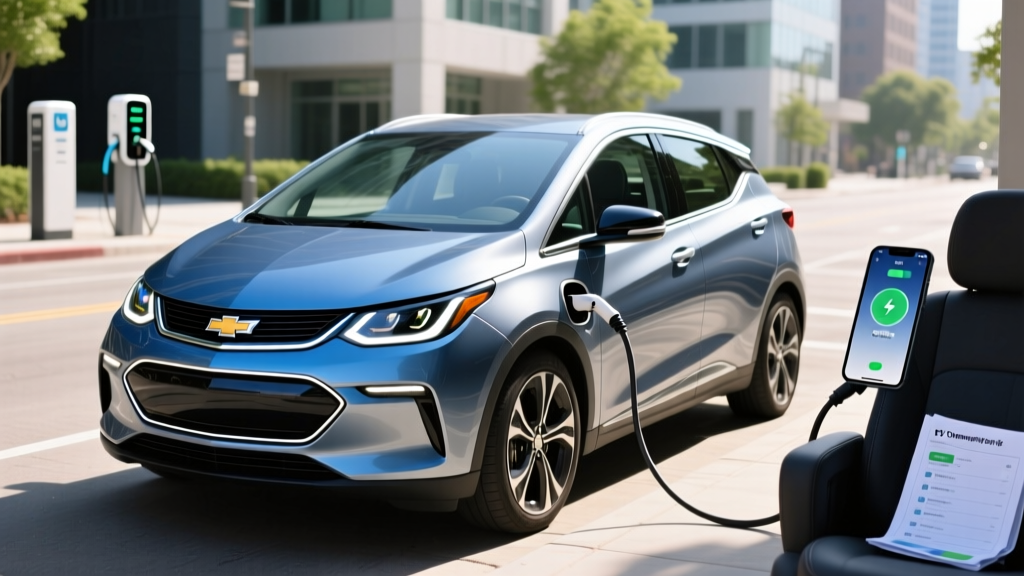
The "Nova EV" name has circulated in forums and rumor mills for years, but as of early 2026, Chevrolet has not announced a production vehicle called the Nova EV. What does exist is the redesigned 2026 Chevrolet Bolt EV (second generation, built on the updated BEV3 platform) — the spiritual successor many assumed would wear the Nova badge. If you've been searching for a "Nova EV," you're almost certainly looking for this car: an affordable, compact electric hatchback targeting the budget-EV segment.
The Quick Answer
The 2026 Chevy Bolt EV starts at approximately $28,900 MSRP (before incentives), offers an EPA-estimated 255 miles of range from a ~65 kWh LFP battery, and supports DC fast charging at up to 115 kW (10–80% in roughly 30 minutes). It qualifies for a partial or full §30D federal tax credit depending on battery-sourcing compliance and your income. Real-world highway range is closer to 210–230 miles; expect 170–190 miles in freezing weather. If you need a sub-$30K EV for commuting and city driving, it's one of the strongest options available. If you road-trip frequently or lack home charging, read the ownership caveats below.
Range, Battery & Charging: The Numbers That Matter
The 2026 Bolt EV uses a 65 kWh (usable) lithium iron phosphate (LFP) battery pack. LFP chemistry trades some energy density for longer cycle life, lower degradation, and reduced reliance on cobalt and nickel — a practical choice for a budget commuter car. According to fueleconomy.gov, the combined EPA range is 255 miles.
EPA vs. Real-World Range
| Condition | Estimated Range |
|---|---|
| EPA Combined (sticker) | 255 mi |
| Highway (70 mph, 75°F) | ~215–230 mi |
| City / Stop-and-go (75°F) | ~250–270 mi |
| Winter highway (30°F) | ~175–200 mi |
| Winter city (30°F) | ~200–220 mi |
Why the gap? EVs lose range at sustained highway speeds (aerodynamic drag scales with velocity squared) and in cold weather (cabin heating and reduced battery chemical efficiency). The Bolt EV uses a heat pump for climate control, which mitigates some winter loss compared to resistive heaters.
Charging Speeds
| Level | Power | Miles Added/Hour | Notes |
|---|---|---|---|
| Level 1 (120V outlet) | ~1.4 kW | ~4 mi/hr | Emergency / overnight trickle |
| Level 2 (240V, 48A) | ~11.5 kW | ~34 mi/hr | Full charge in ~6 hours |
| DC Fast Charge (peak) | 115 kW | ~250 mi/hr (at peak) | 10–80% in ~30 min |
The 115 kW DC fast-charge peak is modest compared to 800V competitors (Hyundai Ioniq 5 peaks at 240 kW). The Bolt's charge curve holds near peak until about 55% SoC, then tapers progressively. A 10–80% session takes approximately 30 minutes on a 150+ kW CCS or NACS station (Chevy has transitioned to the NACS connector for 2026, granting access to Tesla Supercharger V3/V4 stalls with no adapter). Above 80%, charging slows sharply — plan to unplug at 80% on road trips to save time.
Cost Breakdown: Bolt EV vs. Comparable Gas Hatchback
To understand real ownership economics, let's compare the 2026 Bolt EV against a natural cross-shop: the 2026 Honda Civic Hatchback (gas, CVT, ~$27,500 MSRP). We'll model 5 years / 60,000 miles with home Level 2 charging at the US average electricity rate of $0.17/kWh and gas at $3.50/gallon.
| Category | 2026 Bolt EV (1LT) | 2026 Honda Civic Hatch (LX) |
|---|---|---|
| Base MSRP | $28,900 | $27,500 |
| Federal Tax Credit (§30D) | Up to $7,500* | $0 |
| Effective Purchase Price | ~$21,400 | $27,500 |
| Fuel/Energy (60K mi) | $1,870 (11,000 kWh) | $6,300 (1,800 gal) |
| Maintenance (60K mi) | ~$400 | ~$1,800 |
| Insurance (5-yr avg) | ~$9,200 | ~$7,800 |
| 5-Year Total Cost | ~$32,870 | ~$43,400 |
*§30D Tax Credit Caveats: The up-to-$7,500 credit requires meeting battery-component and critical-minerals sourcing thresholds (phased annually under the Inflation Reduction Act). Your modified adjusted gross income must not exceed $150K (single) / $300K (joint). The Bolt's MSRP is well under the $55,000 car cap. Point-of-sale transfer is available — you can apply the credit as a down-payment reduction at the dealer. Always verify current eligibility on IRS.gov and consult a tax professional.
The Bolt EV saves roughly $10,500 over 5 years in this scenario, driven primarily by the tax credit and dramatically lower fuel and maintenance costs. EVs have no oil changes, no spark plugs, no transmission fluid, and regenerative braking extends pad life significantly. However, EV insurance premiums tend to run 15–25% higher due to repair-cost dynamics — factor that in.
EV vs. Gas vs. Hybrid: Which Powertrain Fits Your Life?
Not everyone should buy a BEV. Here's a practical decision framework:
Choose the Bolt EV (BEV) If:
- You have access to home Level 2 charging (garage or driveway with a 240V circuit)
- Your daily round-trip commute is under 100 miles
- You road-trip fewer than 4 times per year (or don't mind 30-min charge stops)
- You want the lowest per-mile operating cost and qualify for the tax credit
Choose a PHEV (e.g., Toyota Prius Prime) If:
- You lack reliable home charging but want some electric-only driving
- You road-trip frequently and don't want to plan around DC fast chargers
- You want EV-like city commuting with gas-car highway freedom
Choose a Gas Car (e.g., Civic Hatchback) If:
- You live in an apartment with no charging access and no workplace charger
- You regularly drive 300+ miles in a day in rural areas with sparse charging infrastructure
- Upfront budget is extremely tight and you don't qualify for incentives
Real-World Ownership: What First-Time EV Buyers Must Know
Home Charging Is Non-Negotiable (For Most Buyers)
The Bolt EV's Level 1 (120V) charging adds only ~4 miles per hour — that's 48 miles overnight, which works if your daily driving is minimal. For practical ownership, you need Level 2. Budget $500–$1,500 for a quality Level 2 wall connector (e.g., ChargePoint Home Flex, Emporia Vue) and $800–$2,500 for electrician installation (running a 240V/50A circuit to your garage). If your electrical panel is maxed out or you need a service upgrade from 100A to 200A, add $1,500–$3,500. Total home-charging setup: $1,300–$7,500 depending on panel condition and run length.
Public Charging: Better Than You Think, Worse Than You Hope
With the NACS connector, the 2026 Bolt EV can access Tesla Superchargers (over 25,000 stalls in North America) plus Electrify America, EVgo, and ChargePoint networks. Reliability has improved — Tesla's network consistently hits 95%+ uptime — but non-Tesla networks still suffer occasional broken stalls and payment-app friction. Download multiple network apps before road trips. Use PlugShare or A Better Routeplanner to map stops.
Cold Weather Is Real (But Manageable)
If you live in Minnesota, Montana, or New England, expect 20–30% range loss in sustained sub-freezing temperatures. The Bolt's heat pump helps, but preconditioning (warming the battery and cabin while plugged in before departure) is essential. Set departure times in the Chevy app, and you'll leave with a warm car and full range — this is one of the most underappreciated EV ownership perks.
Performance, Tech & Daily Livability
| Spec | 2026 Bolt EV 1LT | 2026 Bolt EV 2LT |
|---|---|---|
| Motor Output | 200 hp / 236 lb-ft | 200 hp / 236 lb-ft |
| 0–60 mph | ~6.5 sec | ~6.5 sec |
| Drivetrain | FWD | FWD |
| Battery (usable) | 65 kWh, LFP | 65 kWh, LFP |
| EPA Range | 255 mi | 248 mi (larger wheels) |
| EPA Efficiency | 120 MPGe (28 kWh/100mi) | 117 MPGe |
| DC Fast Charge | 115 kW peak | 115 kW peak |
| Cargo Volume | 22.3 cu ft (rear up) / 56.1 cu ft (folded) | Same |
| Base MSRP | $28,900 | $32,400 |
| Battery/Powertrain Warranty | 8 yr / 100,000 mi | 8 yr / 100,000 mi |
The 200 hp single-motor setup is brisk for city merging and confident at highway speeds. Instant torque from 0 rpm makes the Bolt feel quicker than its 6.5-second 0–60 suggests. The 2LT trim adds adaptive cruise control, a 360° camera, heated seats/steering wheel, and a Bose audio system — worth the $3,500 premium if you commute in traffic.
The infotainment system runs an 11.3-inch touchscreen with wireless Apple CarPlay and Android Auto. Chevy's Super Cruise (Level 2 hands-free driving on mapped highways) is available as a $2,200 option on the 2LT. Important: Super Cruise is SAE Level 2 — you must remain attentive, eyes on the road, ready to take over instantly. It is not autonomous driving.
Common Misconceptions, Corrected
| Myth | Fact |
|---|---|
| "EV batteries need replacing every 5 years" | LFP batteries degrade ~2–3% per year under normal use. At 8 years, expect ~85–90% state of health. The Bolt's warranty guarantees ≥70% capacity retention at 8 yr / 100,000 mi. Most EV batteries outlast the car. |
| "EVs are worse for the environment because of electricity generation" | Even on the US average grid mix (which includes coal and gas), an EV produces 60–70% fewer lifetime emissions than a comparable gas car (per Union of Concerned Scientists analysis). As the grid decarbonizes, that gap widens. |
| "You can't road-trip in an EV" | You can, but it requires planning. A 600-mile trip in the Bolt takes ~11 hours including two 30-minute charge stops vs. ~9.5 hours in a gas car. For 2–3 road trips per year, the tradeoff is manageable. For weekly long-haul driving, a PHEV may be better. |
| "The tax credit is $7,500 for everyone" | The §30D credit phases based on battery-component sourcing (50% of components must be manufactured/assembled in North America for 2026) and critical-minerals sourcing. You must also meet income caps. Check the IRS's qualifying vehicle list before purchasing. |
| "Level 2 charging at home costs thousands per month" | At $0.17/kWh, charging the Bolt's 65 kWh battery from empty to full costs ~$11. Driving 1,000 miles/month uses ~280 kWh, costing ~$48. The average American spends $150–$200/month on gasoline. |
The Verdict: Who Should Buy the 2026 Bolt EV?
The 2026 Bolt EV is a purpose-built value play. It doesn't offer 350 miles of range, 800V ultra-fast charging, or luxury materials. What it delivers is a sub-$22,000 effective price (after tax credit), 255 miles of EPA range, low running costs, and a practical hatchback form factor. If you can charge at home and your life doesn't demand 400-mile single-day drives, it's one of the most financially rational EV purchases available in 2026.
Pros
- Lowest effective price in the EV market after §30D credit
- LFP battery: longer cycle life, less degradation anxiety
- NACS connector: native Supercharger access, no adapter
- Heat pump included standard (better winter efficiency)
- Surprisingly quick (236 lb-ft instant torque)
Cons
- 115 kW DC fast charge is slow vs. 800V competitors
- FWD only — no AWD option for snow-belt buyers
- Real-world winter range drops to ~175 mi on highway
- Insurance premiums run 15–25% higher than gas equivalents
- Super Cruise costs $2,200 extra and is Level 2 only
Frequently Asked Questions
Is there a "Chevy Nova EV" for 2026?
No. Chevrolet has not announced a vehicle called the Nova EV. The 2026 Chevy Bolt EV (second generation) is the brand's affordable compact EV. The "Nova" name persists in forums and speculative articles, but it is not a production model.
How long does the Bolt EV battery last?
LFP chemistry typically retains 85–90% capacity after 8 years of normal use. Chevrolet warrants the battery for 8 years / 100,000 miles with a minimum 70% state-of-health guarantee. Full replacement, if ever needed, currently runs $8,000–$12,000 out of warranty, though prices continue to decline.
Can I charge the 2026 Bolt EV at a Tesla Supercharger?
Yes. The 2026 Bolt EV comes with a native NACS (North American Charging Standard) port, meaning you can plug directly into Tesla Supercharger V3 and V4 stalls without an adapter. This is a significant advantage over older CCS-equipped vehicles that require a J1772-to-NACS adapter.
What's the real cost per mile to drive the Bolt EV?
At the US average electricity rate of $0.17/kWh and the Bolt's efficiency of 28 kWh/100 miles, your energy cost is approximately $0.048 per mile. A comparable gas car at 33 MPG and $3.50/gallon costs $0.106 per mile — more than double.
Do I need to upgrade my electrical panel for home charging?
Maybe. A Level 2 charger draws 48 amps continuous (on a 60A breaker). If your home has a 200A panel with available capacity, installation is straightforward ($800–$2,500). If you have a 100A panel that's near capacity, a service upgrade to 200A adds $1,500–$3,500. Get a quote from a licensed electrician before purchasing the car.
Does the Bolt EV qualify for the full $7,500 federal tax credit?
It depends on your income, the battery's component sourcing for the specific build month, and MSRP caps. The Bolt's MSRP is well under the $55,000 sedan/hatch cap. Income limits are $150K single / $300K joint MAGI. Verify current eligibility on IRS.gov before committing. The credit can be transferred to the dealer as a point-of-sale price reduction.