2026 Chevy Bolt EUV: The Budget EV Benchmark Returns
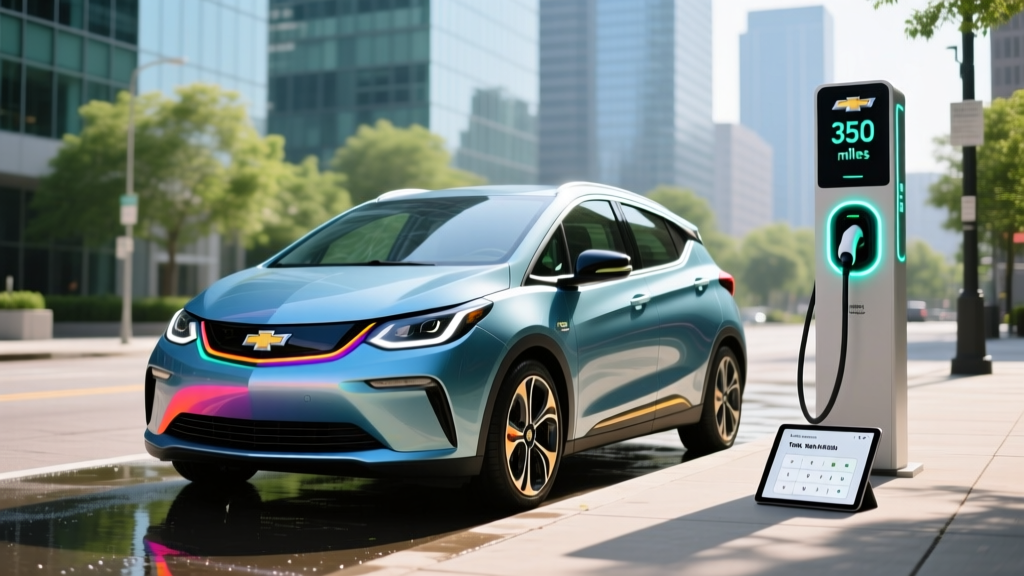
The Chevrolet Bolt EUV re-entered the market for the 2026 model year on GM's dedicated Ultium platform, replacing the older BEV2 architecture that powered the original Bolt hatchback and EUV crossover. For buyers scanning chevy bolt lease specials, the 2026 EUV represents one of the most affordable paths into a modern electric crossover with competitive range, faster DC charging, and native NACS compatibility. Starting at $26,900 before incentives, it undercuts nearly every rival in the compact electric SUV segment while delivering 259 miles of EPA-estimated range.
This review covers the 2026 Bolt EUV in full: real-world range expectations, charging speeds, battery chemistry, pricing across trims, federal tax credit eligibility under current IRS §30D rules, and how it stacks up against the Hyundai Kona Electric, Nissan Leaf, and Kia Niro EV.
Spec Overview: 2026 Chevy Bolt EUV at a Glance
| Specification | 2026 Chevy Bolt EUV |
|---|---|
| EPA Range | 259 miles |
| Battery Capacity | 65 kWh usable (NMC chemistry) |
| Drivetrain | FWD, single motor |
| Horsepower / Torque | 200 hp / 236 lb-ft |
| 0-60 mph | 7.0 seconds |
| Max DC Fast Charge | 150 kW peak |
| 10-80% DC Charge Time | ~28 minutes |
| Level 2 Home Charging | 11.5 kW (44 miles/hr) |
| Efficiency | 120 MPGe combined / 28 kWh/100 mi |
| Cargo Volume (rear seats up/down) | 26.5 / 54.3 cu ft |
| Rear Legroom | 39.1 inches |
| Base MSRP (LT) | $26,900 |
| Battery Warranty | 8 years / 100,000 miles |
Range and Efficiency: Real-World Expectations
Real-World Highway (70+ mph): ~220-235 miles
Cold Weather (below 32°F): ~185-210 miles
Mixed Commute (city/suburban): ~250-265 miles
The 2026 Bolt EUV's 65 kWh Ultium battery pack uses NMC (nickel manganese cobalt) chemistry, which offers higher energy density than LFP alternatives — a key reason GM achieves 259 EPA miles in a relatively compact package. The EPA rates the Bolt EUV at 120 MPGe combined (125 city / 114 highway), translating to roughly 28 kWh per 100 miles.
Real-world range tells a more nuanced story. On sustained highway driving at 70-75 mph, expect 220-235 miles before needing to charge. EVs consume more energy at highway speeds due to aerodynamic drag, and the Bolt EUV's crossover profile creates more wind resistance than a low-slung sedan. In freezing temperatures, range drops 15-25% due to battery heating demands and cabin climate load — plan for roughly 185-210 miles in deep winter conditions.
For city and suburban commuting with frequent regenerative braking opportunities, the Bolt EUV can approach or slightly exceed its EPA sticker. The one-pedal driving mode maximizes energy recapture, making stop-and-go traffic an efficiency advantage rather than a penalty.
Charging Speed: DC Fast Charge and Home Level 2
| Charging Level | Power | Speed | Notes |
|---|---|---|---|
| Level 1 (120V household) | ~1.4 kW | ~4 miles/hr | Emergency/trickle only |
| Level 2 (240V home) | 11.5 kW | ~44 miles/hr | Full charge in ~6.5 hours |
| DC Fast Charge (peak) | 150 kW | ~180 miles/hr at peak | 10-80% in ~28 min |
| DC Fast Charge (sustained avg) | ~100 kW avg | ~120 miles/hr avg | Curve tapers above 80% |
The biggest upgrade on the Ultium-platform Bolt EUV is DC fast charging. The original Bolt was infamous for its 55 kW peak charge rate, which made road trips painful. The 2026 model peaks at 150 kW on NACS-equipped chargers (native NACS port is standard), delivering a 10-80% charge in approximately 28 minutes under ideal thermal conditions.
However, peak kW is not sustained kW. The Bolt EUV's charge curve ramps quickly to 150 kW between 10-30% State of Charge, then progressively tapers. From 50-80%, expect sustained rates closer to 80-100 kW. This is typical for NMC batteries in this class — the Hyundai Kona Electric and Kia Niro EV exhibit similar curves. Preconditioning the battery via the navigation system's charge-routing feature is essential for hitting peak rates at DC stations.
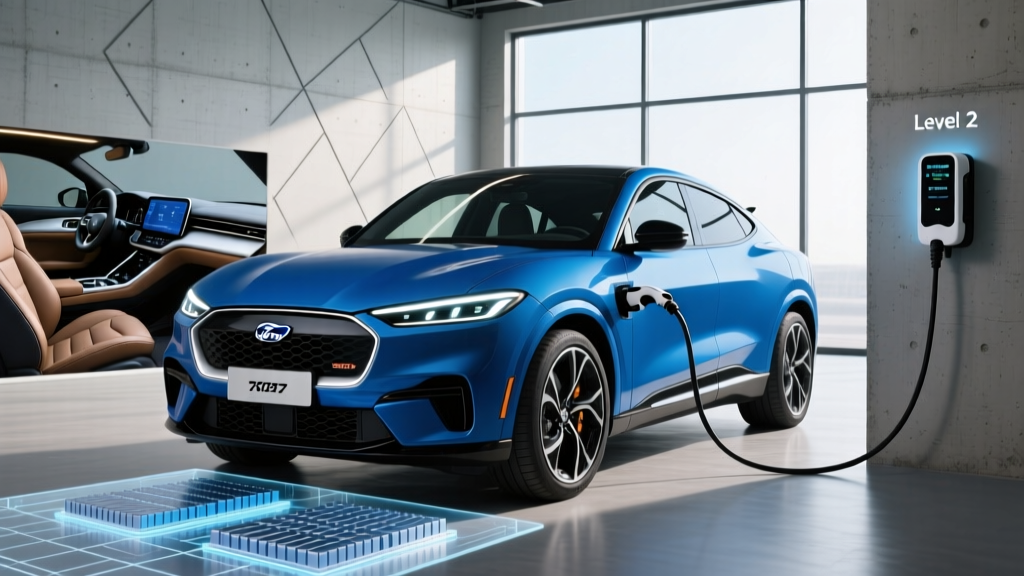
At home on a 240V Level 2 circuit, the Bolt EUV's 11.5 kW onboard charger adds roughly 44 miles of range per hour, meaning a depleted battery reaches full in about 6.5 hours. Most owners charging overnight from 20-80% will need roughly 4 hours. Installation of a home Level 2 charger (hardwired 48A circuit) typically runs $800-$2,000 depending on panel proximity and local permitting — factor this into your total budget.
Pricing, Trims, and Federal Tax Credit Eligibility
| Trim | Base MSRP | As-Tested (typical options) | Est. After §30D Credit |
|---|---|---|---|
| LT | $26,900 | $27,800 (w/ floor mats, cargo net) | ~$19,400* |
| RS | $29,400 | $31,200 (w/ panoramic roof, Tech Pkg) | ~$21,900* |
| Premier | $32,500 | $35,100 (w/ all packages) | ~$25,000* |
*Estimated prices assume full $7,500 federal tax credit eligibility. Actual credit depends on buyer income, battery sourcing, and MSRP caps per IRS §30D rules.
The 2026 Bolt EUV qualifies for the full $7,500 federal tax credit under current IRS §30D rules, provided the buyer meets all requirements:
- MSRP Cap: The Bolt EUV's base MSRP across all trims falls well under the $80,000 SUV/van cap for new clean vehicles.
- Buyer Income Limits: Modified AGI must not exceed $150,000 (single), $225,000 (head of household), or $300,000 (married filing jointly).
- Battery Sourcing: GM sources critical minerals and battery components from USMCA trade partners. As of 2026, the Bolt EUV meets both the critical-minerals and battery-component requirements for the full $7,500 ($3,750 + $3,750).
- Point-of-Sale Transfer: Buyers can transfer the credit to the dealer at purchase, reducing the out-of-pocket price immediately rather than waiting for a tax refund.
For lease deals, the tax credit situation differs. Under §30D, the credit applies to the purchaser. In a lease, the leasing company (lessor) technically owns the vehicle and claims the credit. Many automakers pass this savings to the lessee as a capitalized-cost reduction (lowering monthly payments), but this is not legally required. GM Financial has historically passed the full $7,500 through to Bolt lease customers, making lease specials particularly attractive. Always confirm with the dealer that the credit is applied as a cap-cost reduction before signing.
Chevy bolt lease specials in early 2026 have been advertised in the $199-$279/month range (36-month term, $2,500-$3,999 due at signing) depending on trim and regional incentives. These figures assume the $7,500 credit is applied. Shop multiple dealerships and check GM's national offers page for current programs.
Performance and Driving Dynamics
The 2026 Bolt EUV's single front-mounted motor produces 200 horsepower and 236 lb-ft of torque, propelling the crossover from 0-60 mph in approximately 7.0 seconds. That's a meaningful improvement over the prior-generation Bolt EUV's 130 hp / 9.3-second sprint, and it puts the new model in line with rivals like the Kona Electric (201 hp, 7.2 sec) while trailing the Volkswagen ID.4 (282 hp, 5.7 sec with RWD).
Acceleration is immediate and linear — the hallmark of a single-speed EV drivetrain. City merging and highway on-ramps feel effortless. The FWD layout means some torque steer under hard acceleration from a stop, but the traction control system manages it competently. There is no AWD option, which may deter buyers in heavy-snow regions, though the low center of gravity from the floor-mounted battery pack provides stable handling.
Ride quality is tuned for comfort over sportiness. The suspension absorbs potholes and expansion joints well, though body roll is noticeable in aggressive cornering. The steering is light and numb — fine for parking lots, less engaging on back roads. Regenerative braking offers multiple levels via steering-wheel paddles, and the one-pedal mode brings the EUV to a complete stop without touching the brake pedal in most conditions.
Interior, Cargo, and Technology
The Bolt EUV's cabin is a step up from its predecessor, with a 17.7-inch diagonal infotainment touchscreen running GM's latest Ultifi software. Wireless Apple CarPlay and Android Auto are standard, along with wireless phone charging on RS and Premier trims. The digital instrument cluster measures 11 inches and provides customizable range, efficiency, and navigation readouts.
Passenger space is generous for the class: 39.1 inches of rear legroom outpaces the Kona Electric (36.5 in) and rivals many midsize sedans. Cargo volume measures 26.5 cubic feet behind the rear seats and 54.3 cu ft with the 60/40 split folded — enough for a weekend trip for four or a Costco run with seats down.
Driver-assistance technology includes GM's Super Cruise on Premier trims (and as an option on RS). Super Cruise is an SAE Level 2 hands-free system for compatible divided highways — the driver must remain attentive and eyes on the road at all times. It covers over 750,000 miles of mapped highways in North America. This is not autonomous driving; it is a supervised driver-assist system, but it's one of the best in the industry for reducing fatigue on long highway stretches.
Standard safety tech across all trims includes automatic emergency braking, lane-keep assist, following-distance indicator, and IntelliBeam auto high beams. The Bolt EUV earned top marks from NHTSA, though IIHS ratings for the 2026 model year should be confirmed before purchase.
Pros and Cons
Pros
- Lowest starting MSRP in the electric crossover segment ($26,900)
- Full $7,500 federal tax credit eligibility — effective price as low as ~$19,400
- 259 miles EPA range is competitive for the price point
- 150 kW DC fast charging is a massive improvement over the prior generation
- Generous rear legroom (39.1 in) and practical cargo space
- Native NACS port — full access to Tesla Supercharger network
- Super Cruise availability (Level 2 hands-free highway driving)
- Attractive lease specials when $7,500 credit is passed through
Cons
- No AWD option — a drawback for snow-belt buyers
- FWD torque steer under hard acceleration
- NMC chemistry degrades slightly faster than LFP over 10+ years
- DC charge curve tapers noticeably above 80% SoC
- Interior materials are hard-plastic-heavy on LT trim
- Super Cruise only available on Premier or as RS option (adds cost)
- No front trunk (frunk) — space is used for power electronics
2026 Bolt EUV vs. Key Competitors
At this price point, the Bolt EUV's closest rivals are the Hyundai Kona Electric (261 mi EPA, ~$33,000), the Kia Niro EV (239 mi EPA, ~$39,600), and the Nissan Leaf (212 mi EPA on SV Plus, ~$28,140). The Bolt EUV undercuts all three on price while matching or beating their range figures. The Kona Electric offers slightly more range (261 mi) but at a $6,100 premium. The Niro EV is more spacious but costs over $12,000 more. The Leaf, while affordable, is limited by its CHAdeMO connector (shrinking fast-charge network) and shorter range.
For buyers prioritizing value and lease affordability, the Bolt EUV is the segment leader. For those needing AWD, more cargo space, or a frunk, stepping up to the Hyundai Ioniq 5 or VW ID.4 (both starting around $42,000-$44,000) makes sense — but at nearly double the Bolt's credit-adjusted price.
Who Should Lease the 2026 Chevy Bolt EUV?
- You want the most affordable new EV with 250+ miles of range
- Your commute is under 80 miles round-trip with home charging access
- You qualify for the full $7,500 federal tax credit (income within limits)
- You primarily drive in mild-to-moderate climates (no heavy snow requirement)
- You want access to the Tesla Supercharger network via native NACS
- You need AWD for harsh winters (consider the Ioniq 5 or Subaru Solterra)
- You regularly tow (Bolt EUV is not rated for towing)
- You frequently road-trip 400+ miles and want 300+ mi range (step up to an Ioniq 5 or Model Y)
- You want LFP chemistry for maximum long-term cycle life (consider the Tesla Model 3 RWD)
The 2026 Bolt EUV is ideal for cost-conscious commuters, urban and suburban drivers, and first-time EV buyers who want a proven platform with modern charging speeds. Lease specials make it especially compelling for drivers who prefer to swap vehicles every 36 months and avoid long-term battery-degradation risk.
Frequently Asked Questions
What is the real-world range of the 2026 Chevy Bolt EUV?
The EPA rates it at 259 miles. In real-world highway driving at 70+ mph, expect 220-235 miles. In freezing weather, plan for 185-210 miles. City commuting with regen braking can approach or slightly exceed the EPA figure.
How fast does the Bolt EUV charge at home and on DC fast chargers?
On a 240V Level 2 home charger, it adds about 44 miles per hour (11.5 kW), fully charging in ~6.5 hours. On DC fast chargers, it peaks at 150 kW, delivering a 10-80% charge in approximately 28 minutes, though the charge curve tapers above 80% SoC.
How much does the 2026 Bolt EUV cost after the federal tax credit?
The LT trim starts at $26,900. With the full $7,500 §30D credit applied at point of sale, the effective price drops to approximately $19,400 before destination charges, taxes, and registration. Eligibility requires meeting IRS income caps and battery-sourcing rules.
Does the Chevy Bolt EUV qualify for the $7,500 federal EV tax credit?
Yes, as of 2026, the Bolt EUV qualifies for the full $7,500 credit under IRS §30D, meeting both critical-minerals and battery-component sourcing requirements. Buyers must fall within income limits ($150K single / $300K joint) and the MSRP must be under $80,000 — both easily satisfied by the Bolt EUV.
Are Chevy Bolt lease specials worth it compared to buying?
Leasing can be advantageous because GM Financial typically passes the $7,500 credit as a cap-cost reduction, lowering monthly payments. Lease specials in the $199-$279/month range are common. However, you won't build equity and will face mileage limits (typically 10,000-12,000 mi/yr). If you drive more or want to keep the vehicle long-term, buying may be better.
Is the Bolt EUV worth it vs. the Hyundai Kona Electric or Tesla Model 3?
If budget is the priority, the Bolt EUV wins on price by $6,000-$10,000 while offering nearly identical range. The Kona Electric provides slightly more range (261 mi) and a more premium interior. The Model 3 offers more range (272-363 mi), faster charging, and RWD/AWD options but starts at $38,990. The Bolt EUV is the value king; the others offer refinement or performance advantages at higher cost.
What is the Bolt EUV's battery warranty?
GM covers the Ultium battery pack for 8 years or 100,000 miles, whichever comes first, against defects and excessive capacity loss (below 60% of original capacity). The powertrain is similarly covered. This is standard for the industry and provides adequate protection, though some competitors offer longer bumper-to-bumper coverage.