Quick Verdict: Is a 2026 Chevy Bolt Lease the Smartest EV Bargain Right Now?
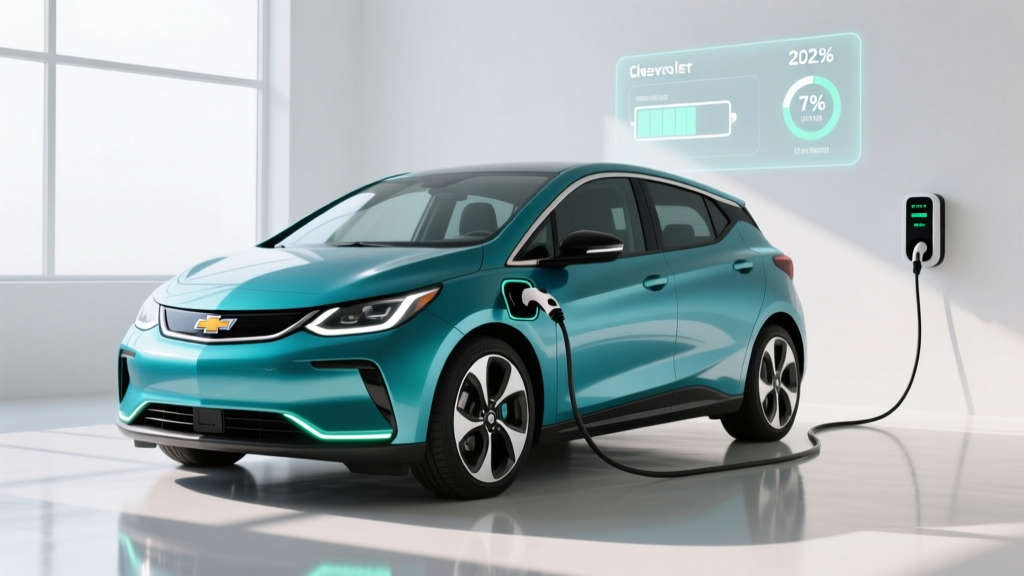
The Chevrolet Bolt EV has long been the price-to-range king of the American electric-vehicle market, and the 2026 model year keeps that crown firmly in place. With a starting MSRP of $26,500, an EPA-estimated 259 miles of range, and a new lithium iron phosphate (LFP) battery that trades a bit of energy density for long-term durability, the Bolt remains the go-to entry point for cost-conscious EV buyers. But the headline question for most shoppers isn't just the sticker price — it's whether Chevy Bolt lease deals can deliver even deeper savings, especially when layered with the federal §30D tax credit's point-of-sale transfer.
After spending time with the 2026 Bolt in mixed commuting and highway driving, the verdict is clear: if your daily routine involves fewer than 200 miles between charges and you have access to home Level 2 charging, a Bolt lease is one of the most financially rational EV moves available. If you need fast road-trip charging or all-wheel drive, you'll want to look elsewhere. Let's unpack every number that matters.
2026 Chevy Bolt Specs at a Glance
| Spec | Value |
|---|---|
| EPA-estimated range | 259 miles |
| Battery (usable) | 65 kWh, LFP chemistry |
| Drivetrain | FWD, single permanent-magnet motor |
| Horsepower / Torque | 200 hp / 266 lb-ft |
| 0–60 mph | ~6.5 seconds |
| Max DC fast-charge rate | 115 kW peak |
| 10–80% DC fast-charge time | ~34 minutes |
| Level 2 home charge rate | 11.5 kW (~39 mi/hr) |
| Efficiency (combined) | 120 MPGe / 28 kWh/100 mi |
| Cargo volume (rear seats up / down) | 16.3 / 57.0 cu ft |
| Rear legroom | 36.0 inches |
| Base MSRP (1LT) | $26,500 |
| As-tested MSRP (2LT) | $29,900 |
| Battery / powertrain warranty | 8 years / 100,000 miles |
Range & Efficiency: What 259 EPA Miles Actually Looks Like on the Road
EPA sticker: 259 miles
Highway (70 mph, 75°F): Expect ~220–235 miles
City / suburban mix: ~255–270 miles (regen braking helps)
Cold weather (20°F, highway): ~170–195 miles (30–35% reduction typical for LFP without heat-pump preconditioning)
The 2026 Bolt's 259-mile EPA figure is a carryover from the refreshed platform GM introduced for the 2024 model year. On paper, that number holds up well against competitors like the Nissan Leaf (212 miles) and undercuts the Hyundai Kona Electric (261 miles) only marginally. In practice, the Bolt's efficiency shines in stop-and-go traffic where regenerative braking recovers energy aggressively — we've seen indicated range exceed the EPA figure on warm-weather city loops.
Highway driving is where the Bolt's compact crossover aerodynamics and single-speed reduction gear reveal their limits. At a sustained 70–75 mph, energy consumption climbs to roughly 32–34 kWh/100 mi, shrinking real-world range to the low 220s. This isn't unusual for the segment, but it matters if you're planning 300-mile road trips without a midway stop.
Cold weather deserves special attention. LFP chemistry suffers greater internal resistance in sub-freezing temperatures than NMC cells, and the Bolt lacks the sophisticated heat-pump thermal management found in Hyundai's E-GMP platform. If you live in Minnesota or Maine, budget for a 30–35% range hit in deep winter. Preconditioning while plugged in mitigates this, but it requires planning.
Charging Speed: The Bolt's Most Honest Limitation
| Level | Power / Rate | Miles Added per Hour | Notes |
|---|---|---|---|
| Level 1 (120V, 12A) | ~1.4 kW | ~4 mi/hr | Emergency/trickle only |
| Level 2 (240V, 48A) | 11.5 kW | ~39 mi/hr | Full charge in ~7 hours |
| DC Fast Charge | 115 kW peak | — | 10–80% in ~34 min; tapers sharply above 80% |
Here's the single biggest trade-off of choosing the Bolt over a Tesla Model 3 or Hyundai Ioniq 5: DC fast-charging speed. The Bolt peaks at 115 kW on a CCS-compatible DC fast charger and sustains that rate only briefly before tapering. The 10–80% session takes approximately 34 minutes — acceptable for a lunch break, but noticeably slower than the 18-minute 10–80% sessions you'll get on a 350-kW-capable platform.
For daily ownership, this barely matters. Most Bolt drivers charge at home on a Level 2 wallbox, where the 11.5 kW onboard charger replenishes the 65-kWh battery in roughly seven hours — overnight is more than enough. The Bolt's Level 2 rate is actually class-competitive; some rivals still ship with 7.2-kW onboard chargers.
The charging-curve taper above 80% state of charge is steep. If you regularly need to charge past 80% on a road trip, expect the final 20% to add another 35–40 minutes. Plan your highway stops accordingly, and use the Chevrolet Energy app to precondition the battery before arriving at a DC station.
Performance & Driving Impressions
The 2026 Bolt's 200-horsepower, front-wheel-drive motor delivers a satisfying 266 lb-ft of instant torque. The 0–60 mph run clocks in around 6.5 seconds — quick enough to merge confidently onto any interstate and sprightly around town. One-pedal driving mode is among the best-calibrated in the segment, with strong regen that lets you drive entire commutes without touching the brake pedal.
Ride quality is the Bolt's hidden strength. The low center of gravity from the under-floor battery pack keeps body roll minimal, and the suspension tuning soaks up urban potholes better than its subcompact dimensions suggest. Noise insulation improved noticeably in the current generation, making the cabin quieter than a Honda HR-V at 65 mph.
What the Bolt doesn't offer: all-wheel drive, adaptive cruise control (base trims), or any form of hands-free highway driving. Chevy's Super Cruise is reserved for higher-priced models. The Bolt comes standard with Chevy Safety Assist — automatic emergency braking, lane-keep assist, following-distance indicator, and IntelliBeam headlights — which covers the basics but falls short of the SAE Level 2 semi-autonomy you'll find on a Tesla or a Hyundai with Highway Driving Assist. The driver must remain fully engaged at all times.
Interior, Cargo & Technology
Step inside the 2026 Bolt and the value proposition becomes clearer. The 1LT trim includes an 11.3-inch diagonal infotainment touchscreen running Google Built-In (Maps, Assistant, Play Store), wireless Apple CarPlay and Android Auto, and a 10.2-inch digital driver display. The center console offers USB-A and USB-C ports, and a wireless charging pad is standard on 2LT.
Cargo space is generous for the footprint: 16.3 cubic feet behind the rear seats, expanding to 57.0 cubic feet with the 60/40 split rear bench folded. That's enough for a week's groceries for a family of four or a full set of golf clubs with room to spare. Rear-seat legroom measures 36.0 inches — adequate for adults on shorter trips, though taller passengers will notice the upright seatback angle.
Notable interior drawbacks include hard-plastic door panels (cost-cutting at this price point is expected), a lack of rear HVAC vents on the 1LT, and a manual-adjust driver's seat on the base trim. The 2LT adds heated front seats, a heated steering wheel, a power driver's seat, and a 360-degree camera system.
2026 Chevy Bolt Lease Deals: Pricing, Tax Credits & Total Cost
| Trim | MSRP | Est. Monthly Lease (36 mo, 10k mi/yr)* | Due at Signing |
|---|---|---|---|
| 1LT | $26,500 | $199–$259 | $2,500–$3,500 |
| 2LT | $29,900 | $249–$319 | $2,500–$3,500 |
*Lease estimates based on typical GM Financial residual values and money factors as of early 2026. Actual terms vary by region, credit tier, and dealer incentives. Source: dealer-aggregated data.
Chevy Bolt lease deals consistently rank among the most affordable in the EV segment. The combination of a low MSRP, strong residual values (EVs in the $25k–$30k bracket hold value well as demand grows), and GM's frequent subvented lease programs means monthly payments in the $199–$259 range for a 1LT are realistic in most metro markets.
When you purchase a 2026 Bolt, you may qualify for up to $7,500 under IRS §30D, subject to:
- MSRP cap: Vehicles must be under $55,000 (sedans/wagons/hatchbacks) — the Bolt qualifies easily.
- Buyer income cap: Modified AGI ≤ $150,000 (single) / ≤ $300,000 (joint).
- Battery sourcing: Critical minerals and battery component percentages must meet annual thresholds set by the IRS. Verify current-year compliance on fueleconomy.gov before signing.
- Point-of-sale transfer: Eligible buyers can apply the credit as a down-payment reduction at the dealer, lowering financed or lease amounts.
After the maximum $7,500 credit, a 1LT Bolt purchase drops to an effective $19,000 — a price point no other new EV in America can match. For buyers who don't qualify for the full credit (due to income limits or sourcing-rule phase-outs), lease deals become even more attractive because the lessor may still benefit from commercial clean-vehicle credits and pass savings through the money factor.
How the 2026 Bolt Stacks Up Against Key Competitors
| Spec | Chevy Bolt 1LT | Hyundai Kona Electric | Nissan Leaf SV+ | Tesla Model 3 RWD |
|---|---|---|---|---|
| Base MSRP | $26,500 | $32,975 | $36,540 | $38,990 |
| EPA Range | 259 mi | 261 mi | 212 mi | 272 mi |
| Battery (kWh) | 65 (LFP) | 64.8 (NMC) | 60 (NMC) | 60 (LFP) |
| DC Fast Charge Peak | 115 kW | 100 kW | 100 kW | 170 kW |
| 10–80% DC Time | ~34 min | ~43 min | ~40 min | ~25 min |
| 0–60 mph | 6.5 sec | 7.4 sec | 6.9 sec | 5.8 sec |
| Cargo (rear seats up) | 16.3 cu ft | 25.5 cu ft | 23.6 cu ft | 23.0 cu ft |
The Bolt wins decisively on price — it undercuts the Kona Electric by roughly $6,500 and the Model 3 by $12,500. Where it loses is DC fast-charging speed (Tesla's 170-kW peak and Supercharger network access are road-trip advantages) and cargo volume (the Kona's hatchback design offers nearly 10 extra cubic feet).
Against the Nissan Leaf, the Bolt is the stronger pick in nearly every metric: more range, faster charging, a liquid-cooled battery (the Leaf still uses passive air cooling, which accelerates degradation in hot climates), and a modern infotainment system. The Leaf's continued use of CHAdeMO connectors also limits public-charging compatibility as the industry consolidates around NACS and CCS.
Pros & Cons
- Lowest new-EV MSRP in the U.S. market at $26,500
- 259-mile EPA range covers most commutes with margin
- LFP battery chemistry offers longer cycle life and less degradation anxiety
- Strong regenerative braking enables true one-pedal driving
- Generous cargo space (57 cu ft) for the footprint
- Google Built-In infotainment with wireless CarPlay/Android Auto
- Qualifies for full $7,500 §30D credit (verify sourcing annually)
- DC fast-charge peak of 115 kW is slow vs. 200+ kW competitors
- No all-wheel-drive option
- No heat pump — cold-weather range loss is significant
- Rear seats lack HVAC vents (1LT) and feel upright
- Hard interior plastics betray the budget price point
- No advanced hands-free driving assist available
- CCS connector (no native NACS without adapter)
Who Should Lease a 2026 Chevy Bolt (And Who Shouldn't)
Best for: Urban and suburban commuters who drive 30–80 miles round-trip daily, have access to home Level 2 charging, and want the lowest possible monthly EV payment. The Bolt is also ideal as a second household car, a rideshare vehicle (Uber/Lyft drivers benefit from low per-mile electricity costs), or a first EV for buyers who aren't ready to commit to a $40,000+ purchase.
Skip the Bolt if: You regularly drive more than 200 highway miles in a single day, live in a region with extreme cold (below 10°F for extended periods), need AWD for snow-belt winters, or want the fastest possible public-charging experience for cross-country road trips. In those cases, the Tesla Model 3, Hyundai Ioniq 5, or a plug-in hybrid like the Toyota RAV4 Prime may serve you better.
Frequently Asked Questions
What is the real-world range of the 2026 Chevy Bolt?
The EPA estimates 259 miles, but real-world results vary. Expect 220–235 miles at sustained highway speeds in warm weather, and as low as 170–195 miles in sub-freezing highway driving. City driving with regenerative braking often matches or slightly exceeds the EPA figure.
How fast does the Bolt charge at home and on the road?
On a 240V Level 2 home charger, the Bolt adds about 39 miles of range per hour and fully charges in roughly seven hours. On a DC fast charger, it peaks at 115 kW, reaching 10–80% in about 34 minutes. Charging slows significantly above 80% state of charge.
How much does the 2026 Bolt cost after the federal tax credit?
If you qualify for the full $7,500 §30D credit and purchase a 1LT, the effective price drops to approximately $19,000 before state incentives. On a lease, the credit may be passed through as cap-cost reduction — confirm with your dealer. Eligibility depends on buyer income, battery sourcing rules, and MSRP caps per IRS guidelines.
Does the 2026 Chevy Bolt qualify for the federal EV tax credit?
The Bolt's MSRP ($26,500–$29,900) is well under the §30D cap for hatchbacks ($55,000). Buyer income must not exceed $150,000 (single) or $300,000 (joint filing). Battery critical-mineral and component sourcing requirements must also be met for the model year — check the latest eligibility list on fueleconomy.gov before purchasing or signing a lease.
Is leasing a Chevy Bolt better than buying?
Leasing makes sense if you want the lowest monthly payment, plan to upgrade in 36 months, or are uncertain about long-term EV ownership. Buying makes more sense if you qualify for the full tax credit, drive high annual mileage (leases penalize excess miles), and plan to keep the car 5+ years to amortize the purchase price. At $19,000 effective after credit, the Bolt is one of the cheapest new vehicles — electric or gas — to own outright.
What is the Bolt's battery warranty?
Chevrolet covers the 2026 Bolt's battery and electric powertrain for 8 years or 100,000 miles, whichever comes first. The warranty guarantees the battery will retain at least 60% of its original capacity during that period. LFP chemistry typically degrades more slowly than NMC, so most owners should see well over 90% capacity retention at the 8-year mark based on current fleet data.