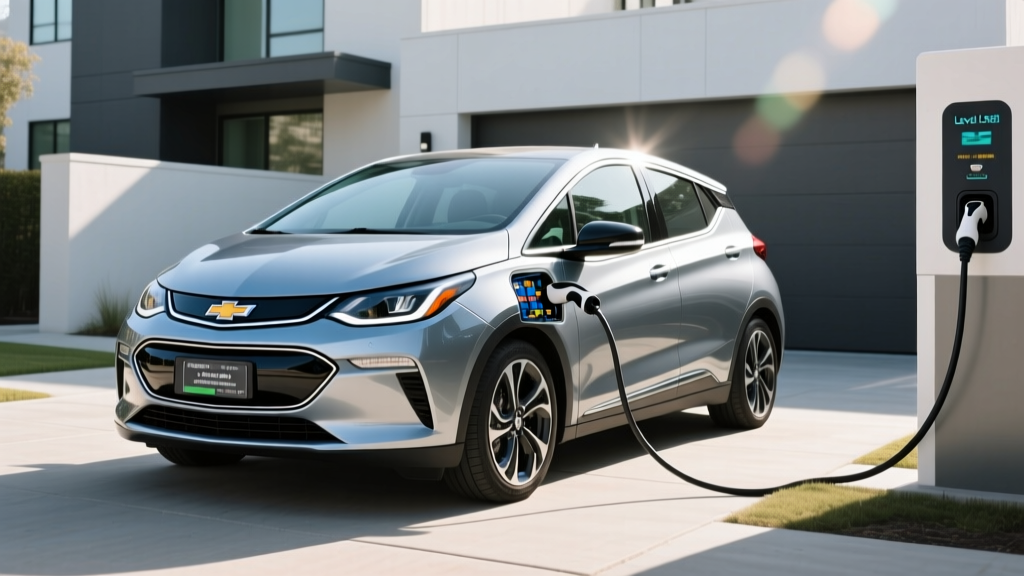
The Chevrolet Bolt has lived two lives. The original Bolt EV and EUV (2017–2023) became one of the best-selling affordable electric cars in America — and then became the subject of the largest EV battery recall in history. Now, for the 2026 model year, GM has resurrected the Bolt nameplate on an updated Ultium-based platform, promising to leave those lithium-ion fire fears behind. But do the old Chevy Bolt issues still haunt the nameplate, and what should prospective buyers know before signing on the dotted line?
This guide breaks down the Bolt's recall history, the engineering changes in the current-generation model, real-world range and charging performance, and whether the 2026 Bolt EVU earns its place against rivals like the Hyundai Kona Electric and Nissan Leaf.
The Original Bolt Recall: What Happened and Why It Matters
Any honest discussion of Chevy Bolt issues starts with the battery recall. In August 2021, GM recalled all 141,000 Bolt EV and EUV vehicles after discovering that manufacturing defects in LG Chem battery cells — specifically folded separators and torn anode tabs — could cause short circuits and, in rare cases, thermal runaway fires. At least two vehicles caught fire while parked and unattended.
GM's response was sweeping: a complete battery pack replacement for every affected vehicle, at a cost exceeding $2 billion. Owners were initially told to park outside, avoid charging overnight, and limit charge to 90% — restrictions that persisted for months while replacement packs were manufactured. By mid-2023, virtually all original Bolt owners had received new battery modules.
2026 Bolt EVU: A New Platform, New Chemistry
The 2026 Chevrolet Bolt EVU (Electric Utility Vehicle) is not a carryover. It rides on a refreshed version of GM's BEV3 architecture with an Ultium-sourced LFP (lithium iron phosphate) battery pack — a critical departure from the NMC chemistry that caused the original recall. LFP cells are inherently more thermally stable, resist thermal runaway better, and tolerate daily 100% charging without accelerated degradation. They are also cheaper to produce, which keeps the Bolt's price aggressive.
| Specification | Value |
|---|---|
| EPA Range (est.) | 261 miles |
| Battery Capacity (usable) | 65 kWh (LFP chemistry) |
| Drivetrain | FWD, single motor |
| Horsepower | 200 hp |
| Torque | 266 lb-ft |
| 0–60 mph | ~6.5 seconds |
| DC Fast Charge (peak) | 115 kW (CCS/NACS adapter) |
| 10–80% DC Charge Time | ~32 minutes |
| Level 2 Charge Rate | 11.5 kW (~37 mi/hr) |
| EPA Efficiency | 120 MPGe combined / 28 kWh/100 mi |
| Cargo Volume (rear seats up) | 25.4 cu ft |
| Cargo Volume (rear seats folded) | 57.2 cu ft |
| Rear Legroom | 36.8 inches |
| Battery Warranty | 8 years / 100,000 miles |
| Base MSRP (2LT) | $28,900 (incl. destination) |
Real-World Range: What the EPA Number Doesn't Tell You
The EPA rates the 2026 Bolt EVU at 261 miles of combined range. That number is competitive with the Hyundai Kona Electric (261 mi) and comfortably ahead of the base Nissan Leaf (212 mi). But as with every EV, the sticker is a best-case blend of city and highway driving at moderate temperatures.
In real-world highway testing at 70–75 mph with climate control active, expect closer to 220–235 miles before you need to find a charger. LFP batteries are slightly heavier per kWh than NMC, which modestly reduces efficiency at sustained high speeds. In cold weather (below 30°F), range loss of 20–30% is typical, dropping effective range to roughly 180–210 miles depending on cabin heat usage. The Bolt EVU includes a resistance heater but does not offer a heat pump — a notable omission that competitors like the Kona Electric and Tesla Model Y include to preserve winter range.
For daily commuting and city driving, the 261-mile figure is achievable and even conservative, thanks to regenerative braking that recaptures energy in stop-and-go traffic.
Charging: The Bolt's Persistent Weakness
If there's one area where Chevy Bolt issues linger in spirit, it's charging speed. The original Bolt was notorious for its 55 kW peak DC fast-charge rate — painfully slow for road trips. The 2026 Bolt EVU improves substantially to 115 kW peak, but that still trails the segment. The Hyundai Kona Electric hits 100+ kW, while the Kia EV6 and Tesla Model Y can accept 200+ kW on capable chargers.
| Charge Level | Power / Rate | Time or Miles Added |
|---|---|---|
| Level 1 (120V household) | ~1.4 kW | ~4 miles per hour |
| Level 2 (240V, 48A) | 11.5 kW | ~37 miles per hour; full charge in ~6.5 hrs |
| DC Fast Charge (peak) | 115 kW (CCS) | 10–80% in ~32 minutes |
The 10–80% DC fast-charge time of roughly 32 minutes is acceptable for a budget EV but means longer road-trip stops than you'd experience in a Kia EV6 (18 min) or Tesla Model Y (15 min on V3 Superchargers). The charge curve also tapers noticeably above 80% SoC — a characteristic of LFP chemistry — so plan to unplug at 80% for the best time efficiency.
On the connector front, the 2026 Bolt EVU ships with a CCS1 port. GM provides a NACS adapter (or has one available at no extra cost for early buyers) enabling access to Tesla's Supercharger network — a significant advantage for road-trip flexibility. Per Chevrolet's charging page, the adapter supports up to the car's 115 kW peak.
Pricing, Trims, and Federal Tax Credit Eligibility
The 2026 Bolt EVU launches in a single 2LT trim at $28,900 including destination. A fully loaded example with adaptive cruise, panoramic sunroof, and premium audio lands around $32,500. This pricing positions the Bolt as one of the least expensive new EVs in America.
| Item | Amount |
|---|---|
| Base MSRP (2LT, incl. destination) | $28,900 |
| As-Tested (loaded options) | ~$32,500 |
| Federal §30D Tax Credit (if eligible) | Up to $7,500 |
| Estimated After-Credit Price | ~$21,400 – $25,000 |
Federal tax credit eligibility (§30D): The Bolt EVU is assembled in Orion Township, Michigan, and GM has structured its battery sourcing to meet critical-mineral and battery-component thresholds under current IRS rules. However, qualification for the full $7,500 credit depends on:
- Buyer income caps: Modified AGI must not exceed $150,000 (single), $225,000 (head of household), or $300,000 (joint).
- MSRP cap: The vehicle must have an MSRP at or below $55,000 for SUVs/wagons — the Bolt EVU clears this easily.
- Battery sourcing requirements: Critical minerals and battery components must meet phased percentage thresholds from US or FTA-partner countries. GM has indicated Bolt EVU compliance, but the IRS updates eligible-vehicle lists periodically.
- Point-of-sale transfer: Eligible buyers can apply the credit at purchase, reducing out-of-pocket cost immediately rather than waiting for tax filing.
Always confirm current eligibility on the IRS clean vehicle credit page before purchasing, as sourcing rules tighten annually.
Tech, Safety, and Driver Assistance
The 2026 Bolt EVU carries a 17.3-inch diagonal infotainment touchscreen running GM's latest Ultifi-based software with wireless Apple CarPlay and Android Auto, Google built-in navigation, and over-the-air update capability. A 10.2-inch digital instrument cluster sits behind the steering wheel.
Standard driver-assistance features under the Chevy Safety Assist suite include:
- Automatic emergency braking with pedestrian detection
- Lane-keep assist with lane-departure warning
- Following-distance indicator and adaptive cruise control
- Rear cross-traffic alert and blind-spot monitoring
- HD surround-view camera
What the Bolt EVU does not offer: GM's Super Cruise hands-free driving system is not available on the Bolt platform. This is an SAE Level 2 driver-assist vehicle — you must keep your hands on the wheel and eyes on the road at all times. If hands-free highway driving is a priority, the Chevrolet Equinox EV or a Ford Mustang Mach-E with BlueCruise are better fits.
2026 Bolt EVU vs. Key Competitors
Where does the Bolt stand against the affordable-EV field?
- Hyundai Kona Electric: Matches the Bolt at 261 miles EPA range, offers a heat pump for better cold-weather performance, and charges at a comparable rate. MSRP starts ~$33,000 — roughly $4,000 more than the Bolt before credits. More refined interior.
- Nissan Leaf: Still uses CHAdeMO (a declining connector standard) and offers only 212 miles in its longest-range trim. Cheaper at ~$29,000, but the charging ecosystem disadvantage is hard to overlook.
- Tesla Model Y: Far more range (310+ mi), faster charging, Supercharger-native access, and available FSD Supervised. But starts around $44,000 — a different price tier entirely.
- Used first-gen Bolt (2020–2023): Available for $15,000–$22,000 with 259 miles of range. Eligible for the $4,000 used-EV credit (subject to income caps and dealer reporting). A strong value play if the recall battery replacement is confirmed.
Pros
- Lowest MSRP among new long-range EVs
- LFP battery chemistry: safer, longer-lasting, 100% daily charge friendly
- Spacious hatchback cargo area (57.2 cu ft)
- NACS adapter enables Tesla Supercharger access
- Strong federal tax credit eligibility (potential ~$21,400 after credit)
- Generous 8-year/100,000-mile battery warranty
Cons
- 115 kW peak DC charging is slow for road trips vs. 200+ kW rivals
- No heat pump — cold-weather range suffers more than competitors
- FWD only — no AWD option for snow-belt buyers
- No Super Cruise or hands-free driving option
- Brand perception still recovering from the original battery recall
- Single trim limits customization
Who Should Buy the 2026 Chevy Bolt EVU?
The Bolt EVU is a purpose-built commuter and city/suburban EV. If your daily drive is under 100 miles round-trip, you charge at home overnight on Level 2, and you take road trips fewer than five times a year, the Bolt is one of the best value propositions in the EV market — especially after the federal tax credit.
It is not the right pick if you frequently drive long highway distances in winter (the charging speed and lack of heat pump will frustrate), need AWD for mountain or heavy-snow driving, or want cutting-edge driver-assist technology. For those use cases, budget up for a Kona Electric, Equinox EV AWD, or Tesla Model Y.
Frequently Asked Questions
Are the original Chevy Bolt battery fire issues fixed?
Yes. GM replaced the battery packs in all 141,000 recalled first-generation Bolt EV and EUV vehicles (2017–2023). The 2026 Bolt EVU uses entirely different LFP chemistry on the Ultium platform, which is inherently more resistant to thermal runaway. The original defect was specific to LG Chem NMC cells manufactured during a narrow production window.
What is the real-world range of the 2026 Bolt EVU?
Expect 220–235 miles at highway speeds (70–75 mph) in mild weather, and 180–210 miles in freezing temperatures. The EPA combined estimate is 261 miles, which is achievable in mixed city/suburban driving with regenerative braking active.
How fast does the Bolt EVU charge at home and on the road?
On a Level 2 home charger (11.5 kW), the Bolt adds about 37 miles of range per hour and charges fully in roughly 6.5 hours. On a DC fast charger, it peaks at 115 kW and reaches 10–80% in approximately 32 minutes — slower than rivals like the EV6 or Model Y.
Does the 2026 Bolt EVU qualify for the $7,500 federal tax credit?
The Bolt EVU meets MSRP and domestic-assembly requirements. Full $7,500 credit eligibility depends on buyer income limits ($150K single / $300K joint MAGI) and current-year battery-sourcing thresholds per IRS §30D. Confirm eligibility at irs.gov before purchase. Point-of-sale transfer is available.
Should I buy a new 2026 Bolt EVU or a used first-gen Bolt?
A used 2020–2023 Bolt with a confirmed recall battery replacement offers exceptional value ($15K–$22K, potentially $4,000 less with the used-EV credit). A new 2026 Bolt EVU gives you modern LFP chemistry, NACS/Supercharger access, updated tech, and a fresh warranty. If budget allows, the new model eliminates recall-era uncertainty and future-proofs your charging access.
Does the Bolt EVU have a heat pump?
No. The 2026 Bolt EVU uses a conventional resistance heater for cabin warmth, which draws more energy from the battery in cold weather than a heat pump would. This contributes to the 20–30% winter range loss typical of this vehicle.
The Chevy Bolt nameplate has been through more public scrutiny than almost any other EV on the market. The 2026 Bolt EVU is GM's answer: a safer battery, competitive range, and a price that undercuts the field. It's not the fastest-charging or most tech-forward EV you can buy — but at a potential $21,400 after federal incentives, it may be the most practical one for the majority of American drivers.