Quick Verdict: The Value King Gets a Much-Needed Charging Upgrade
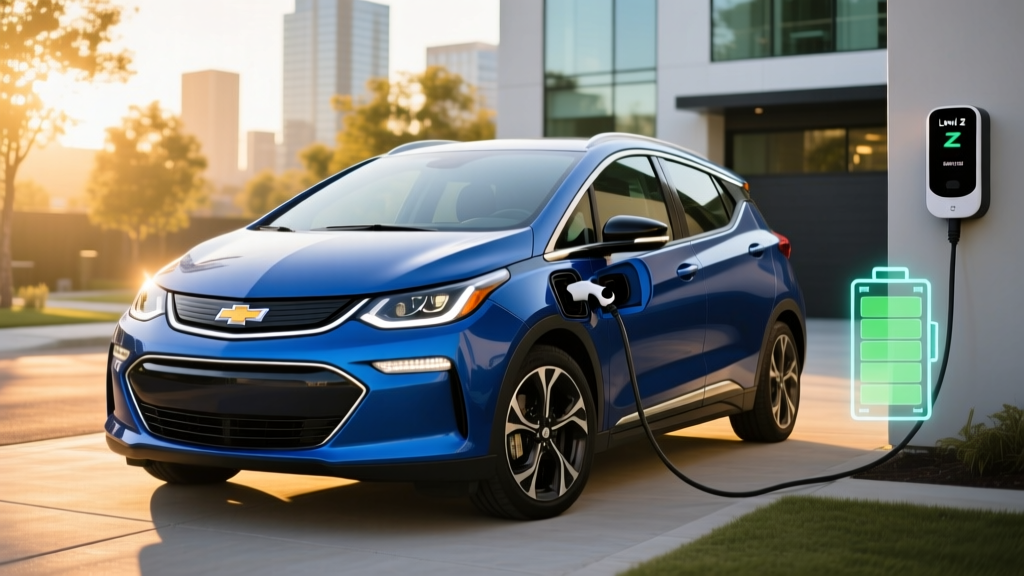
The 2026 Chevy Bolt EV Premier returns with a refreshed platform that finally addresses the previous generation's most glaring weakness: painfully slow DC fast charging. While the outgoing Bolt capped at 55 kW, the 2026 model pushes to a peak of 115 kW on DC fast chargers — cutting 10-80% charge time nearly in half. Combined with its sub-$32,000 starting price, 259-mile EPA range, and a well-equipped Premier trim, the Bolt EV remains one of the most compelling entry points into full electric ownership in 2026.
But this is still a front-wheel-drive compact hatchback built for urban and suburban duty. If your life involves regular 300-mile road trips or you need all-wheel drive for snow-belt winters, you'll want to look elsewhere. For everyone else — commuters, second-car households, and budget-conscious EV adopters — the Bolt EV Premier delivers where it counts.
| Spec | Value |
|---|---|
| EPA Range | 259 miles |
| Battery (usable) | 65 kWh, NMC (nickel manganese cobalt) |
| Peak DC Fast Charge | 115 kW (CCS1) |
| 10-80% DC Charge Time | ~32 minutes |
| Level 2 Home Charging | 11.5 kW (48A) — ~39 mi/hr |
| Motor Output | 200 hp / 266 lb-ft torque |
| 0-60 mph | 6.5 seconds |
| Drivetrain | Front-wheel drive (single motor) |
| Efficiency | 120 MPGe combined / 28 kWh/100 mi |
| Cargo Volume | 16.3 cu ft (rear seats up) / 57.0 cu ft (folded) |
| Base MSRP (Premier) | $31,995 |
| Battery Warranty | 8 years / 100,000 miles |
Real-World Range: What the EPA Number Doesn't Tell You
Real-World Expectation: ~220-240 mi highway (70-75 mph); ~190-210 mi in freezing temps with cabin heat; ~250-265 mi mixed city/suburban driving in mild weather.
The EPA's 259-mile figure for the Bolt EV Premier is achievable — but primarily in city and suburban driving where regenerative braking recovers energy at every stoplight. The Bolt's efficiency shines in stop-and-go traffic, where its 120 MPGe combined rating translates into real-world thriftiness around town.
Highway driving is a different story. At sustained 70-75 mph speeds, expect to use roughly 28-31 kWh/100 mi depending on elevation changes and wind. That drops your effective range to around 220-240 miles before you'd want to find a charger. In sub-freezing temperatures (below 32°F), the NMC battery's internal resistance increases and cabin heating draws significant energy — plan for 25-35% range reduction, putting you in the 175-200 mile territory on the coldest days.
One practical advantage: the Bolt's One-Pedal Driving mode with aggressive regen can squeeze an extra 10-15 miles out of city range versus normal driving mode. If you commute in traffic-heavy corridors, you'll regularly beat the EPA sticker.
Charging: The Big Upgrade — and Remaining Limitations
The previous-generation Bolt's 55 kW DC fast-charge ceiling was its single biggest flaw for anyone who road-tripped. The 2026 Bolt EV doubles that to 115 kW peak, a meaningful improvement that transforms the car's highway-trip viability.
| Charging Level | Power | Speed | Typical Use |
|---|---|---|---|
| Level 1 (120V outlet) | 1.2 kW | ~4 mi/hr | Overnight trickle / emergency |
| Level 2 (240V, 48A) | 11.5 kW | ~39 mi/hr | Home / workplace daily charging |
| DC Fast Charge (CCS1) | Peak 115 kW | 10-80% in ~32 min | Road trips / quick top-ups |
The charge curve matters. The 115 kW peak only holds between roughly 10-50% state of charge. Above 60%, the rate tapers to 70-80 kW, and above 85% it drops further to protect battery longevity. A full 10-80% session takes approximately 32 minutes at a properly rated 150+ kW CCS station. If you arrive at a charger with a warm battery (after highway driving or using the Bolt's battery preconditioning feature via the navigation system), you'll see the best speeds. Plug in cold, and peak rates may be 20-30% lower.
For home charging, the 11.5 kW onboard charger is excellent for this price class. A full 0-100% charge takes about 6.5 hours on a Level 2 home station — meaning you'll wake up with a full battery every morning with a standard overnight plug. Most Bolt owners will rarely, if ever, need DC fast charging for daily life.
Connector note: The 2026 Bolt EV uses the CCS1 (J1772 Combo) connector. Chevrolet has announced that future models will transition to NACS (Tesla's connector), but the 2026 Bolt retains CCS1. A NACS adapter is available from Chevrolet for Supercharger access, though at reduced charge speeds due to the adapter's electrical limits.
Performance and Driving Impressions
The single front-mounted motor produces 200 horsepower and 266 lb-ft of torque — sent exclusively to the front wheels. The 0-60 mph time of 6.5 seconds is respectable for a compact hatchback and feels quicker than the number suggests thanks to the instant torque delivery characteristic of all EVs.
Off the line, the Bolt EV Premier pulls cleanly from stoplights and merges onto highways without drama. Where it shows its budget origins is in cornering dynamics and high-speed stability. The suspension tuning prioritizes ride comfort over sportiness — you'll feel body roll on twisty back roads, and the eco-focused tires prioritize low rolling resistance over grip. This is a competent commuter, not a canyon carver.
The steering is light and precise at parking-lot speeds, making the Bolt exceptionally easy to maneuver in tight urban spaces. Visibility is good in all directions, and the turning radius is tight. For daily commuting and errand-running, the driving experience is genuinely pleasant and stress-free.
Interior, Tech, and the Premier Trim Advantage
The Premier trim justifies its price premium over the base LT with several meaningful upgrades:
- 11-inch diagonal infotainment touchscreen with wireless Apple CarPlay and Android Auto
- Heated front and rear seats plus heated steering wheel
- Leatherette seating surfaces (perforated)
- Bose premium 7-speaker audio system
- Wireless phone charging pad
- Adaptive cruise control with stop-and-go
- HD Surround Vision 360-degree camera system
The infotainment system runs GM's latest interface with responsive touch inputs and a logical menu structure. Physical climate controls remain — a welcome decision in an era of screen-only interfaces. The digital instrument cluster is configurable and clearly displays range, energy flow, and navigation prompts.
Driver assistance falls under GM's Chevy Safety Assist suite, which includes automatic emergency braking, forward collision alert, lane keep assist with lane departure warning, following distance indicator, and IntelliBeam automatic high beams. The Premier's adaptive cruise control adds highway comfort but remains a SAE Level 2 system — you must keep your hands on the wheel and eyes on the road at all times. This is not GM's hands-free Super Cruise system, which is reserved for higher-priced models.
Cargo space measures 16.3 cubic feet behind the rear seats and 57.0 cubic feet with the 60/40 split rear seats folded. Rear-seat legroom is 36.0 inches — adequate for average-height adults on shorter trips but snug for tall passengers on long hauls. The hatchback design makes loading bulky items straightforward.
Pricing, Trims, and Federal Tax Credit Eligibility
| Trim | MSRP | Key Additions |
|---|---|---|
| 1LT | $27,495 | Base model, 259-mi range, 11" screen, Safety Assist |
| 2LT | $29,695 | Heated seats/steering, leatherette, Bose audio |
| Premier | $31,995 | Adaptive cruise, 360° camera, wireless charging, premium wheels |
The Premier trim at $31,995 represents strong value when you factor in its standard equipment. A comparably equipped Hyundai Kona Electric or Nissan Leaf prices $2,000-$5,000 higher, and neither offers the same combination of range and DC fast-charge speed at this price point.
- ✅ Vehicle MSRP under $55,000 cap for sedans/hatchbacks (Bolt qualifies)
- ⚠️ Buyer adjusted gross income must not exceed $150,000 (single) / $300,000 (joint) — verify current IRS limits
- ⚠️ Battery critical-mineral and component sourcing requirements must be met for full $7,500 — partial credit ($3,750) may apply depending on supply-chain compliance
- ✅ Point-of-sale transfer available — apply credit as a down payment reduction at the dealer
- ⚠️ Vehicle must be new, placed in service in 2026, and purchased for personal use in the US
At full $7,500 credit eligibility, the Bolt EV Premier effectively costs $24,495 — a price that is remarkably difficult to beat for any new vehicle, let alone an EV with 259 miles of range. Even at the partial $3,750 credit, the effective price of $28,245 remains highly competitive.
Ownership Costs: Warranty, Efficiency, and Long-Term Value
Chevrolet backs the Bolt EV's battery and electric powertrain components with an 8-year / 100,000-mile limited warranty (whichever comes first), covering defects and capacity loss below 60% of original capacity. The bumper-to-bumper warranty covers 3 years / 36,000 miles, with roadside assistance for 5 years / 60,000 miles.
The NMC battery chemistry in the Bolt has demonstrated strong long-term durability in previous generations. Real-world data from high-mileage Bolt owners shows typical degradation of 8-12% over the first 100,000 miles — well within the warranty threshold. GM's active thermal management system (liquid cooling and heating) helps maintain battery health across climates.
Efficiency in practice: At an average electricity cost of $0.15/kWh and the Bolt's 28 kWh/100 mi combined consumption, you're spending roughly $4.20 per 100 miles on electricity. Compare that to a 30 MPG gas car at $3.50/gallon ($11.67 per 100 miles), and the Bolt saves approximately $7.47 per 100 miles driven. Over 15,000 annual miles, that's roughly $1,120 in annual fuel savings before accounting for reduced maintenance (no oil changes, fewer brake replacements due to regen).
How the Bolt EV Premier Stacks Up Against Competitors
| Spec | Chevy Bolt EV Premier | Hyundai Kona Electric SEL | Nissan Leaf SV Plus |
|---|---|---|---|
| EPA Range | 259 mi | 261 mi | 212 mi |
| Battery | 65 kWh NMC | 64.8 kWh NMC | 60 kWh NMC |
| Peak DC Charge | 115 kW | 100 kW | 50 kW (CHAdeMO) |
| 10-80% Time | ~32 min | ~40 min | ~60 min |
| 0-60 mph | 6.5 sec | 7.2 sec | 6.9 sec |
| MSRP (comparable trim) | $31,995 | $35,400 | $34,300 |
| Connector | CCS1 | CCS1 / NACS adapter | CHAdeMO |
The Bolt EV Premier's value proposition is clear: it undercuts both competitors by $2,000-$4,000 while matching or exceeding them in range, charging speed, and performance. The Kona Electric offers a slightly more refined interior and is available with NACS, while the Leaf's aging CHAdeMO connector is increasingly a liability as CCS and NACS dominate public charging infrastructure.
Pros, Cons, and Who Should Buy the Bolt EV Premier
- Best-in-class value — lowest MSRP for 250+ mi range
- Significantly improved 115 kW DC fast charging
- Strong 200 hp motor with quick off-the-line response
- Excellent 11.5 kW Level 2 home charging
- Premier trim loaded with features at $32K
- Low operating cost (~$4.20/100 mi)
- Compact hatchback practicality with 57 cu ft max cargo
- Front-wheel drive only — no AWD option
- CCS1 connector (not native NACS)
- Rear seat legroom tight for tall passengers
- No hands-free driving system (no Super Cruise)
- Cold-weather range loss is significant (25-35%)
- Road-trip charging still slower than 800V competitors
- Ride quality can feel firm over broken pavement
- Daily commuters driving 20-80 miles round-trip with home charging access
- Budget-conscious buyers wanting a new EV under $32K (or ~$24.5K after credit)
- Urban and suburban households needing a practical, efficient second car
- First-time EV buyers who want range confidence without a premium price
- You regularly drive 250+ miles between charging stops
- You need AWD for snow or off-pavement traction
- You want hands-free highway driving capability
- You tow anything (Bolt EV is not rated for towing)
Frequently Asked Questions
What is the real-world range of the 2026 Chevy Bolt EV Premier?
The EPA rates the Bolt EV Premier at 259 miles. In real-world driving, expect 220-240 miles at highway speeds, 250-265 miles in mixed city driving, and 175-200 miles in freezing temperatures with cabin heat active. Preconditioning the battery and using One-Pedal Driving mode can help maximize range.
How fast does the Bolt EV charge at home and on DC fast chargers?
At home on a Level 2 (240V, 48A) charger, the Bolt adds approximately 39 miles of range per hour, with a full 0-100% charge taking about 6.5 hours. On DC fast chargers, it peaks at 115 kW and charges from 10-80% in approximately 32 minutes. A standard 120V outlet (Level 1) adds only about 4 miles per hour.
Does the 2026 Chevy Bolt EV qualify for the $7,500 federal tax credit?
The Bolt EV Premier's $31,995 MSRP falls well under the $55,000 sedan/hatchback cap. However, full $7,500 credit eligibility depends on the buyer's income (under $150K single / $300K joint), battery critical-mineral sourcing compliance, and the vehicle being new and placed in service in the US. Partial credit ($3,750) may apply if some sourcing requirements aren't met. Verify current rules at IRS.gov and consult a tax professional.
Is the Bolt EV Premier worth buying over the Hyundai Kona Electric or Nissan Leaf?
For most buyers prioritizing value, yes. The Bolt EV Premier undercuts the Kona Electric by over $3,000 and the Leaf by $2,300 while matching or beating both on range and charging speed. The Kona offers a more premium interior feel, and the Leaf's CHAdeMO connector is increasingly outdated. The Bolt's combination of price, range, and feature content makes it the strongest value pick in the compact EV segment.
What are the biggest drawbacks of the Chevy Bolt EV Premier?
The primary limitations are front-wheel drive only (no AWD option), a CCS1 connector rather than native NACS, tight rear-seat legroom for tall adults, no hands-free driving system, and significant range reduction in cold weather. The 115 kW peak DC charge rate, while improved, still trails 800V-architecture competitors that charge at 200+ kW.
How long will the Bolt EV's battery last?
Chevrolet warranties the battery for 8 years or 100,000 miles against defects and capacity loss below 60%. Previous-generation Bolt batteries have shown 8-12% degradation over 100,000 miles in real-world use. With proper care — avoiding frequent 100% charges, minimizing DC fast charging in extreme heat, and using preconditioning — the NMC battery should provide reliable service well beyond the warranty period. Battery replacement costs, if needed out of warranty, typically range from $12,000-$16,000 including labor.