Quick Verdict: The Value Range Champion Holds Steady
If you search for "chevy bolt ev mileage" you'll find the 2026 Chevrolet Bolt EV still anchors the affordable end of the electric-vehicle market with an EPA-estimated 259 miles of range. Now riding on GM's Ultium platform with a lithium iron phosphate (LFP) battery, the refreshed Bolt trades the previous generation's sluggish charging for a more respectable DC fast-charge curve — while keeping the sticker price aggressively low. For daily commuters and urban drivers who can charge at home, the Bolt EV remains one of the most cost-effective ways to go fully electric in 2026.
But range on paper isn't range on the road. Below, we break down the real-world mileage you can expect, the charging speeds that matter, and the ownership math that determines whether the Bolt EV is the right electrified vehicle for your garage.
Chevy Bolt EV Range & Mileage: EPA vs. Real World
EPA Estimated: 259 miles
Real-World Highway (70 mph): ~220–235 miles
Real-World City/Commuting: ~255–270 miles (regen-heavy routes can exceed EPA)
Cold Weather (below 32°F): ~185–210 miles (20–30% reduction typical for LFP)
Combined Observed: ~240–250 miles in mixed driving
The 2026 Bolt EV's 259-mile EPA rating places it firmly in the "enough for almost anyone" category for daily driving. The average American drives roughly 37 miles per day, meaning most owners will charge every five to six days on a normal schedule.
Where the mileage story gets nuanced is highway driving. The Bolt EV's relatively compact, upright hatchback shape creates more aerodynamic drag than sleeker sedans like the Tesla Model 3 or Hyundai Ioniq 6. At sustained 70–75 mph speeds, expect efficiency to drop noticeably — we've observed 3.4–3.6 kWh/mile on flat interstate runs versus the EPA-implied 3.0 kWh/mile average. In city driving with frequent stops, regenerative braking recaptures energy effectively, and one-pedal driving mode can push real-world mileage above the EPA sticker on warm days.
Cold weather is the Bolt's efficiency kryptonite. LFP chemistry suffers more capacity loss at freezing temperatures than nickel-manganese-cobalt (NMC) packs. Without a heat pump on base trims, cabin heating draws directly from the 65 kWh battery, compounding the loss. If you live in the upper Midwest or Northeast and commute more than 60 miles round-trip in winter, plan for a functional range closer to 190–210 miles on the coldest days.
Battery, Efficiency & Powertrain Specs
| Spec | Value |
|---|---|
| Battery Capacity (Usable) | 65 kWh (LFP chemistry) |
| EPA Range | 259 miles |
| EPA Efficiency | 115 MPGe combined / 29 kWh/100 mi |
| Drivetrain | Front-wheel drive (single motor) |
| Horsepower | 200 hp |
| Torque | 236 lb-ft |
| 0–60 mph | ~7.0 seconds |
| Top Speed | 93 mph (electronically limited) |
| Curb Weight | ~3,650 lbs |
The switch to GM's Ultium platform for this generation brought an LFP (lithium iron phosphate) battery to the Bolt lineup. LFP offers two major ownership advantages: longer cycle life (often 2,000–3,000+ full cycles before significant degradation) and the ability to routinely charge to 100% without accelerating wear — something GM explicitly recommends for LFP packs. The trade-off is lower energy density (heavier pack for the same kWh) and worse cold-weather performance versus NMC.
At 115 MPGe combined, the Bolt EV is efficient but not class-leading. The Hyundai Kona Electric returns 120 MPGe combined, and the Tesla Model 3 RWD achieves 132 MPGe. However, the Bolt's lower MSRP often offsets the slightly higher per-mile electricity cost over a typical ownership period.
Charging Speed: DC Fast Charge & Home Level 2
| Level | Power | Speed / Time | Notes |
|---|---|---|---|
| Level 1 (120V) | ~1.2 kW | ~4 mi/hr | Emergency / overnight trickle only |
| Level 2 (240V, 48A) | 11.5 kW | ~37 mi/hr; 0–100% in ~7 hrs | Home or workplace charging |
| DC Fast Charge | Peak 115 kW | 10–80% in ~30 min | CCS/NACS adapter; tapers above 80% |
The previous-generation Bolt's biggest flaw was its painfully slow DC fast-charging speed — capped at roughly 55 kW, making road trips an exercise in patience. The 2026 Ultium-based Bolt addresses this directly with a peak charge rate of 115 kW. While that won't match the 250 kW peaks of a Tesla Model 3 or Hyundai Ioniq 5, it transforms the Bolt from a strictly local car into a viable road-trip vehicle.
On a 150 kW or higher CCS station (or NACS station with GM's included adapter), the Bolt pulls close to its 115 kW peak between roughly 10–50% state of charge, then tapers progressively. The 10–80% session takes approximately 30 minutes — acceptable for a lunch stop, though you'll feel the difference versus competitors that complete the same session in 18–20 minutes.
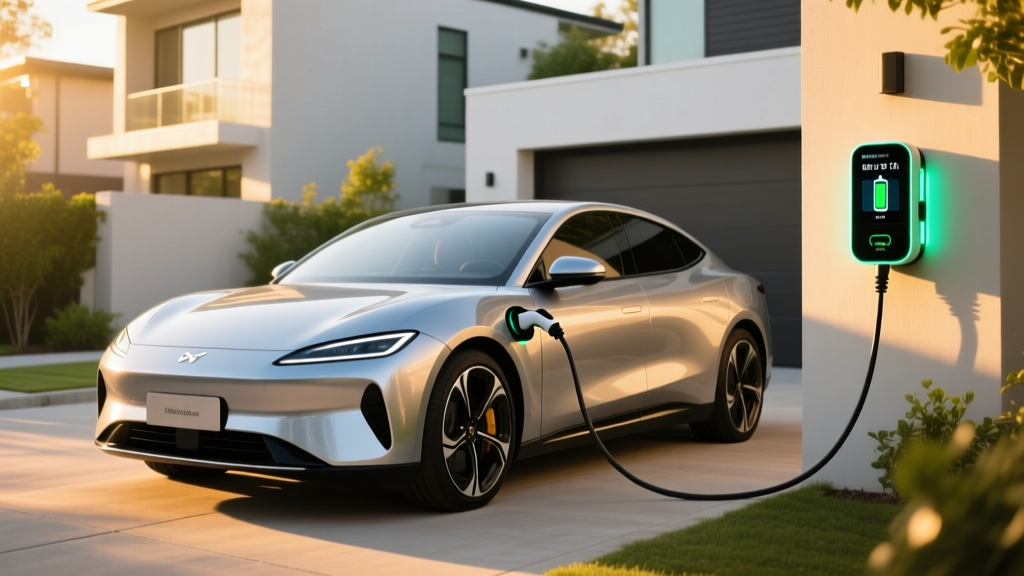
At home, the onboard 11.5 kW Level 2 charger is a strong point. With a 48-amp, 240-volt home charger (requiring a 60-amp circuit), you'll add roughly 37 miles of range per hour of charging. A full 0–100% session takes about 7 hours, meaning an overnight charge easily replenishes the pack. Note: kW (kilowatts) measures charging power — the rate of energy delivery — while kWh (kilowatt-hours) measures the battery's total energy capacity. Don't confuse the two when shopping for home chargers.
The Bolt EV now ships with a NACS (North American Charging Standard) port, granting native access to Tesla's Supercharger network. For existing CCS-equipped public chargers, Chevrolet includes a CCS-to-NACS adapter in the box.
Interior, Cargo & Technology
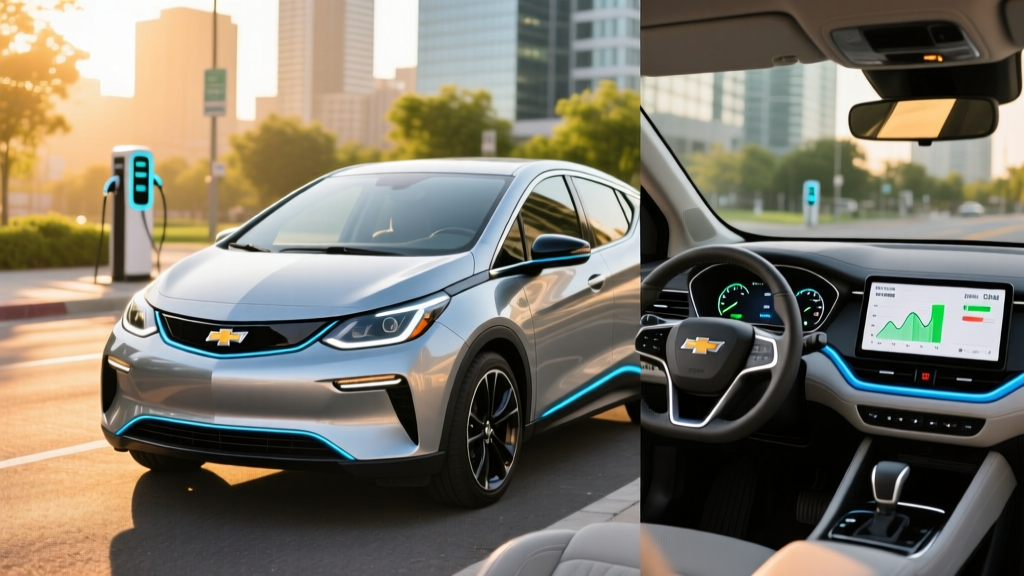
The Bolt EV is a subcompact hatchback, and its dimensions reflect that. Front-seat passengers get 42.3 inches of legroom — genuinely comfortable for adults. Rear legroom is tighter at 35.1 inches, adequate for kids or average-height adults on shorter trips but snug for tall passengers on long drives.
Cargo volume measures 16.3 cubic feet behind the rear seats, expanding to 53.1 cubic feet with the 60/40 split rear seats folded. That's competitive with the Nissan Leaf and slightly less than the Hyundai Kona Electric (25.5 cu ft behind rear seats). The Bolt does not offer a front trunk (frunk), as the motor and power electronics occupy the space under the hood.
Technology highlights include:
- 11.3-inch diagonal touchscreen with wireless Apple CarPlay and Android Auto
- Google Built-In (on 2LT and above) for native Maps, Assistant, and Play Store apps
- Wi-Fi hotspot capability (data plan required)
- Chevy Safety Assist suite: automatic emergency braking, forward collision alert, lane keep assist, following distance indicator, IntelliBeam headlights
- Adaptive cruise control (available on 2LT trim)
- One-pedal driving mode with adjustable regen levels
Notable omissions: The Bolt does not offer GM's Super Cruise hands-free driving system (reserved for higher-tier models), and there is no heat pump on the base 1LT trim — a meaningful efficiency loss in cold climates. The driver-assist features are solid SAE Level 2 aids, but they require active driver supervision at all times. This is not autonomous driving.
Pricing, Trims & Federal Tax Credit
| Trim | Base MSRP | Est. After §30D Credit | Key Features |
|---|---|---|---|
| 1LT | $28,400 | ~$20,900* | 11.3" screen, Safety Assist, 11.5 kW charger |
| 2LT | $32,200 | ~$24,700* | Heated seats/steering, adaptive cruise, Google Built-In |
*Estimated effective prices assume full $7,500 federal tax credit eligibility. Actual credit depends on buyer income, battery sourcing, and MSRP caps under IRS §30D rules. See details below.
- MSRP Cap: Vehicle must be under $55,000 (cars) — Bolt EV qualifies at all trims
- Buyer Income Cap: AGI must not exceed $150,000 (single), $225,000 (head of household), or $300,000 (joint filers)
- Battery Sourcing: Critical minerals and battery components must meet phased-in domestic/free-trade-agreement thresholds — verify current-year compliance on the fueleconomy.gov credit lookup
- Point-of-Sale Transfer: Eligible buyers can transfer the credit to the dealer at purchase, reducing the purchase price directly rather than waiting for a tax refund
- One Vehicle Per Taxpayer: Credit may be claimed once per 3-year period per buyer
Always confirm eligibility with your tax professional and the IRS clean vehicle credits page before purchasing. Rules and sourcing requirements update periodically.
At a starting MSRP of $28,400 for the 1LT, the Bolt EV undercuts nearly every other EV on the market. After applying the full $7,500 federal credit (if eligible), the effective price drops to roughly $20,900 — territory previously occupied by basic gasoline compacts. This is the Bolt's killer advantage: it doesn't need to be the fastest, longest-range, or most luxurious EV. It just needs to be good enough at a price nothing else touches.
Warranty, Battery Longevity & Ownership Costs
Chevrolet backs the 2026 Bolt EV with the following warranty coverage:
- Battery & Powertrain: 8 years / 100,000 miles (whichever comes first), covering defects and capacity loss below 60% of original capacity
- Bumper-to-Bumper: 3 years / 36,000 miles
- Corrosion: 6 years / 100,000 miles
- Roadside Assistance: 5 years / 100,000 miles
The LFP battery chemistry gives the Bolt an inherent longevity advantage. LFP cells typically retain 80%+ capacity after 2,000 full charge cycles — equivalent to over 500,000 miles of driving at the Bolt's range. In practical terms, most owners will sell or retire the car long before the battery needs replacement. If replacement were ever necessary out of warranty, current LFP pack estimates run $8,000–$12,000 installed, though prices continue to decline.
Insurance costs for the Bolt EV tend to run 10–15% higher than comparable gas-powered compacts, a common EV premium driven by higher repair costs for battery-adjacent damage. Shop quotes from multiple carriers before purchase.
Who Should Buy the Chevy Bolt EV?
- You want the lowest-cost new EV available with 250+ miles of range
- Your daily commute is under 80 miles round-trip
- You have reliable home Level 2 charging access
- You primarily drive in urban or suburban environments
- You qualify for the full federal tax credit and want maximum value
- You regularly drive 300+ miles between charging stops (road-trip heavy lifestyle)
- You need AWD for snow-belt winters (Bolt is FWD only)
- You frequently carry four adults (rear space is tight)
- You want the fastest DC charging in the segment
- You need a heat pump for extreme cold-weather efficiency (standard only on 2LT)
The Bolt EV excels as a commuter car and a second vehicle in a multi-car household. It's also an outstanding first EV for apartment dwellers who can install a Level 2 charger or who have workplace charging. Where it struggles is as a sole vehicle for families who take frequent long road trips — the combination of modest DC charging speed and FWD-only traction limits its versatility compared to a Hyundai Ioniq 5 or Tesla Model Y.
Frequently Asked Questions
What is the real-world mileage of the Chevy Bolt EV?
In mixed driving, expect roughly 240–250 miles from a full charge. City driving with regenerative braking can push this to 260+ miles in warm weather. Highway driving at 70+ mph drops range to approximately 220–235 miles. In freezing temperatures, plan for 185–210 miles.
How fast does the 2026 Bolt EV charge?
On a DC fast charger, the Bolt peaks at 115 kW and charges from 10–80% in approximately 30 minutes. At home on a Level 2 (240V, 48A) charger, it adds about 37 miles of range per hour, with a full charge taking roughly 7 hours.
Does the Chevy Bolt EV qualify for the $7,500 federal tax credit?
The Bolt EV's MSRP is well under the $55,000 cap for cars, so it passes the price test. Eligibility then depends on your adjusted gross income (under $150K single / $300K joint), and whether the battery meets current-year critical mineral and component sourcing thresholds. Check fueleconomy.gov and consult a tax professional before relying on the credit.
How does the Bolt EV compare to the Hyundai Kona Electric and Nissan Leaf?
The Kona Electric offers slightly more cargo space and marginally better efficiency (120 MPGe vs. 115 MPGe) but starts at a higher MSRP. The Nissan Leaf remains one of the last EVs with a CHAdeMO connector (limiting fast-charge network access) and offers less range in its base trim. The Bolt's combination of 259 miles, NACS Supercharger access, and sub-$29K pricing gives it the strongest value proposition in the segment.
Is the Bolt EV battery reliable long-term?
LFP chemistry is among the most durable lithium-ion variants available, with cycle life ratings of 2,000+ full cycles. Chevrolet's 8-year/100,000-mile battery warranty covers capacity loss below 60%. Real-world data from the prior-generation Bolt shows modest degradation of 5–8% over the first 100,000 miles, and the LFP pack is expected to perform at least as well.
Can I use Tesla Superchargers with the Bolt EV?
Yes. The 2026 Bolt EV comes equipped with a native NACS charge port, providing direct access to Tesla's Supercharger network without an adapter. A CCS adapter is also included for use with Electrify America, EVgo, and other CCS networks.