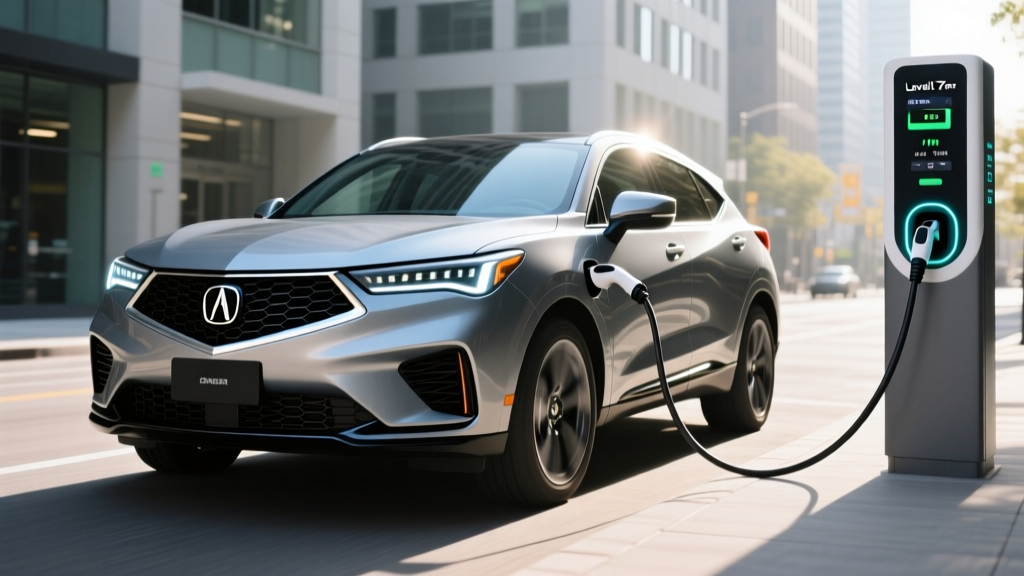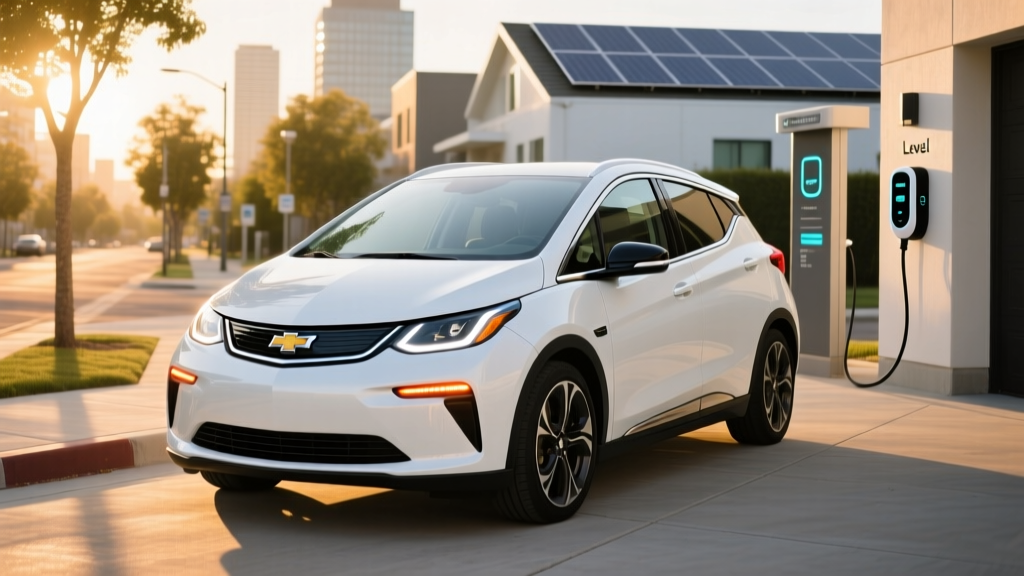
The Chevy Bolt EV in 2026: A Budget EV Benchmark
The Chevrolet Bolt EV returns for the 2026 model year with a refreshed platform, NACS charging port compatibility, and a starting MSRP around $28,900 — keeping it among the most affordable new electric vehicles on the US market. For buyers weighing a Chevy Bolt EV lease versus purchase, the math hinges on more than just the monthly payment. Real ownership costs involve charging infrastructure, insurance premiums that run 15-25% higher than comparable gas cars, maintenance savings from regenerative braking, and a federal tax credit landscape that has shifted significantly since the Inflation Reduction Act reshaped eligibility.
This guide breaks down the total cost of owning or leasing a 2026 Chevy Bolt EV over five years, including the exact federal tax credit requirements under IRS §30D, state incentive variability, fuel and maintenance savings with concrete per-mile math, and the depreciation trends that make leasing particularly attractive for this segment.
2026 Chevy Bolt EV: Key Specs at a Glance
| Spec | Value |
|---|---|
| EPA Estimated Range | 259 miles (1LT); expect ~220-235 mi highway, ~190 mi in freezing temps |
| Battery Capacity | 65 kWh usable, NMC (nickel manganese cobalt) chemistry |
| DC Fast Charge Peak | 115 kW (10-80% in ~30 minutes); tapers significantly above 80% |
| Level 2 AC Charge Rate | 11.5 kW (~39 miles of range per hour) |
| Charging Port | NACS (native Tesla Supercharger access); CCS adapter available |
| Motor Output | 200 hp / 266 lb-ft torque, front-wheel drive |
| 0-60 mph | ~6.5 seconds |
| EPA Efficiency | 120 MPGe combined (28 kWh/100 mi) |
| Base MSRP (1LT) | $28,900 (before incentives) |
| Battery/Powertrain Warranty | 8 years / 100,000 miles (minimum 70% capacity retention) |
Federal Tax Credit: Do You Actually Qualify for $7,500?
The federal EV tax credit under IRS §30D offers up to $7,500 for qualifying new clean vehicles, but eligibility depends on a matrix of requirements that disqualify many buyers and some vehicle configurations. For the 2026 Chevy Bolt EV, the credit is available as a point-of-sale transfer — meaning the dealer applies it as an immediate price reduction rather than requiring you to claim it on your tax return.
- Buyer Income Caps (Modified AGI): $150,000 single filer / $225,000 head of household / $300,000 joint filers — if your AGI exceeds these in either the purchase year or prior year, you are ineligible
- Vehicle MSRP Cap: $55,000 for sedans/hatchbacks (the Bolt EV at ~$28,900-$33,000 easily qualifies)
- Battery Component Manufacturing: A percentage of battery components must be manufactured or assembled in North America (threshold increases annually; verify current-year requirement on irs.gov)
- Critical Minerals Sourcing: A percentage of critical minerals must be sourced from the US or a free-trade-agreement country (threshold increases annually)
- Final Assembly: Vehicle must undergo final assembly in North America (the Bolt EV is assembled in Orion Township, Michigan — qualifies)
- Point-of-Sale Transfer: You may transfer the credit to the dealer at purchase for an immediate price reduction, or claim it on your federal tax return — but you cannot do both
- One Credit Per Vehicle, One Credit Per Taxpayer Per Year: You can only claim the credit once per vehicle and are limited in how many credits you claim annually
Lease Consideration: When you lease a Bolt EV, the tax credit technically goes to the lessor (the financing company), not to you. However, most major lessors pass the $7,500 through as a capitalized cost reduction, effectively lowering your monthly payment. Always confirm with the dealer that the lease quote reflects the passed-through credit — some advertised lease deals already include it, while others do not.
Used Bolt EV Alternative: If the new-vehicle credit doesn't apply to you (income too high, or battery-sourcing rules phase out), the previously owned clean vehicle credit offers up to $4,000 (or 30% of the sale price, whichever is lower) on used EVs priced at $25,000 or less, with lower income caps ($75,000 single / $150,000 joint).
5-Year Total Cost of Ownership: Bolt EV vs Gas Compact
To evaluate whether a Chevy Bolt EV lease or purchase makes financial sense, we compared five-year ownership costs against a typical gas-powered compact hatchback (representative of a Toyota Corolla or Honda Civic) priced in the $26,000-$30,000 range. The Bolt EV starts at $28,900 before incentives; after applying the full $7,500 federal credit, the effective purchase price drops to approximately $21,400.
| Cost Category | 2026 Chevy Bolt EV | Gas Compact Hatchback |
|---|---|---|
| Purchase Price (after incentives) | $21,400 (with $7,500 credit) | $28,000 |
| Fuel/Energy (5 years, 15,000 mi/yr) | $3,150 (home charging at $0.14/kWh) | $10,500 (at $3.50/gal, 30 MPG) |
| Maintenance (5 years) | $1,200 | $3,500 |
| Insurance (5 years) | $9,500 | $7,500 |
| Depreciation (estimated) | $8,500 | $7,000 |
| Total 5-Year Cost | $43,750 | $56,500 |
| Net Savings (EV vs Gas) | ~$12,750 over 5 years | |
Charging Cost Per Mile: The Real Math
The Bolt EV consumes approximately 28 kWh per 100 miles (EPA combined). Your actual cost per mile depends entirely on where and how you charge:
| Charging Method | Cost per kWh | Cost per Mile |
|---|---|---|
| Home Level 2 (national avg electricity) | $0.14/kWh | $0.039/mile |
| Home Level 2 (California, high-rate tier) | $0.30/kWh | $0.084/mile |
| Home Level 2 (off-peak time-of-use rate) | $0.08/kWh | $0.022/mile |
| Public DC Fast Charging (avg network pricing) | $0.40/kWh | $0.112/mile |
| Tesla Supercharger (varies by location) | $0.28-$0.48/kWh | $0.078-$0.134/mile |
| Gas car comparison (30 MPG, $3.50/gal) | — | $0.117/mile |
At the national average home electricity rate, the Bolt EV costs roughly $0.04 per mile — less than one-third the cost of a 30 MPG gas car. However, if you rely exclusively on public DC fast charging, your per-mile cost can equal or exceed gasoline. Home charging access is the single biggest determinant of EV operating cost savings.
Maintenance Savings: Where the Bolt EV Wins Clearly
Electric vehicles eliminate the most common recurring maintenance items associated with internal combustion engines. Over five years and 75,000 miles, the Bolt EV avoids:
| Service Item | Gas Car (5-Year Cost) | Bolt EV (5-Year Cost) |
|---|---|---|
| Oil changes (synthetic, ~$60 each × 10) | $600 | $0 |
| Transmission fluid service | $200 | $0 (single-speed reduction gear) |
| Spark plugs | $300 | $0 |
| Engine air filter | $150 | $0 (cabin filter only, ~$80) |
| Brake pads and rotors | $800-$1,200 | $0-$200 (regen braking preserves pads; many EVs exceed 100k mi on original pads) |
| Coolant flush | $200 | $150 (battery thermal loop, longer intervals) |
| Tire rotation (both vehicles) | $250 | $250 |
| Cabin air filter | $150 | $80 |
| Total Estimated Maintenance | $2,650-$3,050 | $480-$680 |
Regenerative braking is the hidden maintenance hero. Because the Bolt EV's motor handles most deceleration by converting kinetic energy back into battery charge, the friction brakes see far less use. Many EV owners report original brake pads at 80,000+ miles. The trade-off: EVs are heavier (the Bolt EV weighs ~3,500 lbs), which can accelerate tire wear slightly. Budget for a tire replacement around 40,000-50,000 miles.
Insurance Costs: The Uncomfortable Reality
EV insurance premiums run 15-25% higher than equivalent gas vehicles, and the Bolt EV is no exception. According to industry data, the average annual premium for a Bolt EV is approximately $1,800-$2,000, compared to $1,400-$1,600 for a gas compact hatchback.
The reasons are structural, not arbitrary:
- Higher repair costs: EV battery packs and power electronics are expensive to replace after collision damage. Even minor rear-end impacts can trigger battery safety inspections costing thousands.
- Specialized labor: High-voltage system repairs require certified technicians, and fewer shops have this capability, driving up labor rates.
- Total-loss thresholds: Insurers may total an EV at lower damage thresholds because battery replacement ($14,000-$16,000 for the Bolt EV's pack) pushes repair costs above the vehicle's actual cash value.
- Vehicle weight: Heavier vehicles cause more damage to other cars in multi-vehicle accidents, increasing liability exposure.
Cost mitigation: Shop quotes from insurers with dedicated EV programs (some offer discounts for home-charger installation or low annual mileage). Bundling home and auto, maintaining a clean driving record, and choosing higher deductibles can narrow the gap. Over five years, budget roughly $2,000 more in insurance for the Bolt EV than for a gas equivalent.
Depreciation and Resale Value: Why Leasing Makes Sense
EV depreciation has been volatile. Between 2023 and 2025, used EV values dropped sharply — driven by Tesla's aggressive new-vehicle price cuts, growing used EV supply, and consumer uncertainty about battery longevity and evolving technology. The Bolt EV was particularly affected when Chevrolet slashed new-vehicle pricing, instantly compressing used values.
For the 2026 Bolt EV, expect the following depreciation trajectory:
- Year 1: 15-20% depreciation (typical for new vehicles, slightly elevated for EVs)
- Year 3: 40-50% cumulative depreciation (vs 30-40% for a gas compact)
- Year 5: 55-65% cumulative depreciation (vs 45-55% for a gas compact)
The Bolt EV's estimated 5-year depreciation of ~$8,500 (from a $21,400 post-credit effective price) is moderate in absolute dollars because the starting price is low. However, as a percentage of original MSRP ($28,900), the picture is less favorable.
State, Local, and Utility Incentives: Stack Your Savings
Beyond the federal §30D credit, many states, municipalities, and electric utilities offer additional incentives that can further reduce the cost of a Bolt EV purchase or lease. These vary enormously by jurisdiction and change frequently, so always verify current availability.
- State purchase rebates: California's CVRP (up to $7,000 for income-qualified buyers), Colorado's $5,000 state tax credit, Massachusetts MOR-EV ($3,500), and others — check your state energy office for current programs
- Utility rebates: Many electric utilities offer $500-$1,500 rebates for EV purchases and an additional $300-$1,000 for home Level 2 charger installation
- HOV lane access: States including California, Colorado, and Virginia grant single-occupant carpool lane access to qualifying EVs — a significant commute-time benefit
- Reduced registration fees: Some states waive or reduce annual EV registration fees; others impose higher fees to offset lost gas tax revenue (check your state's DMV)
- Time-of-use electricity rates: Utilities in many regions offer off-peak charging rates as low as $0.05-$0.10/kWh for EV owners who install a smart Level 2 charger
Incentive amounts, eligibility, and availability vary by state, utility, and program year. Always verify with your state energy office, local utility, and the Alternative Fuels Data Center before making a purchase decision.
Lease vs Buy Decision Framework for the Bolt EV
Whether a Chevy Bolt EV lease or purchase makes more financial sense depends on your specific situation:
Choose a LEASE if:
- You want to avoid depreciation risk in a volatile used-EV market
- You drive fewer than 12,000-15,000 miles per year (within typical lease limits)
- You prefer lower monthly payments and a new vehicle every 2-3 years
- You want to "test" EV ownership before committing long-term
- The lessor passes the full $7,500 federal credit through as a cap cost reduction
Choose to BUY if:
- You drive more than 15,000 miles per year (lease overage penalties add up fast)
- You plan to keep the vehicle 5+ years (amortizing the purchase price over a longer period)
- You qualify for the full $7,500 federal credit and stack state/utility incentives
- You want to modify the vehicle (aftermarket wheels, wraps, etc.)
- You have home charging access and will capture maximum fuel savings
Frequently Asked Questions
How much does it really cost to own a Chevy Bolt EV over 5 years?
Approximately $43,750 over five years (75,000 miles) including purchase price after the $7,500 federal credit, home charging, insurance, maintenance, and estimated depreciation. This compares to roughly $56,500 for a similar gas compact — a net savings of about $12,750, heavily dependent on qualifying for the full tax credit and charging primarily at home.
Do I qualify for the $7,500 federal EV tax credit on the Bolt EV?
You qualify if your modified adjusted gross income is below $150,000 (single) or $300,000 (joint), the vehicle's MSRP is under $55,000 (it is, at ~$28,900), and the battery meets current-year critical-mineral sourcing and North American component manufacturing thresholds. The Bolt EV is assembled in Michigan. Check current sourcing requirements on irs.gov as these thresholds tighten annually. If leasing, confirm the lessor passes the credit through as a cap cost reduction.
How much do I save on fuel and maintenance with the Bolt EV?
Fuel savings run approximately $7,350 over five years at national average electricity rates ($0.14/kWh) versus $3.50/gallon gasoline at 30 MPG. Maintenance savings add another $2,000-$2,500, primarily from eliminated oil changes, spark plugs, and dramatically reduced brake wear from regenerative braking. Combined, fuel and maintenance savings total roughly $9,500-$10,000 over five years — though this shrinks if you rely on expensive public DC fast charging.
Are EVs more expensive to insure than gas cars?
Yes, typically 15-25% more expensive. The Bolt EV averages $1,800-$2,000 annually versus $1,400-$1,600 for a gas compact. Higher repair costs (especially battery-related), specialized labor requirements, and greater vehicle weight all contribute. Over five years, budget approximately $2,000 more for insurance. Shopping multiple insurers and bundling policies can reduce this gap.
How well does the Chevy Bolt EV hold its value?
Moderately. Expect roughly 55-65% depreciation over five years — somewhat steeper than gas compacts (45-55%) due to rapid EV technology advancement, competitive pricing pressure, and consumer uncertainty about long-term battery health. This is precisely why leasing is popular for the Bolt EV: it transfers depreciation risk to the lessor. The Bolt's low starting price means absolute-dollar depreciation remains manageable (~$8,500 over five years from the post-credit effective price).
Can I charge the 2026 Bolt EV at Tesla Superchargers?
Yes. The 2026 Bolt EV comes equipped with a native NACS (North American Charging Standard) port, providing direct access to Tesla's Supercharger network — the most extensive and reliable DC fast charging network in North America. At Superchargers and other DC networks, the Bolt peaks at 115 kW, delivering a 10-80% charge in approximately 30 minutes. For Level 2 home charging, the 11.5 kW onboard charger adds roughly 39 miles of range per hour.